
UV Protection for Art Prints and Paintings: A Practical Guide
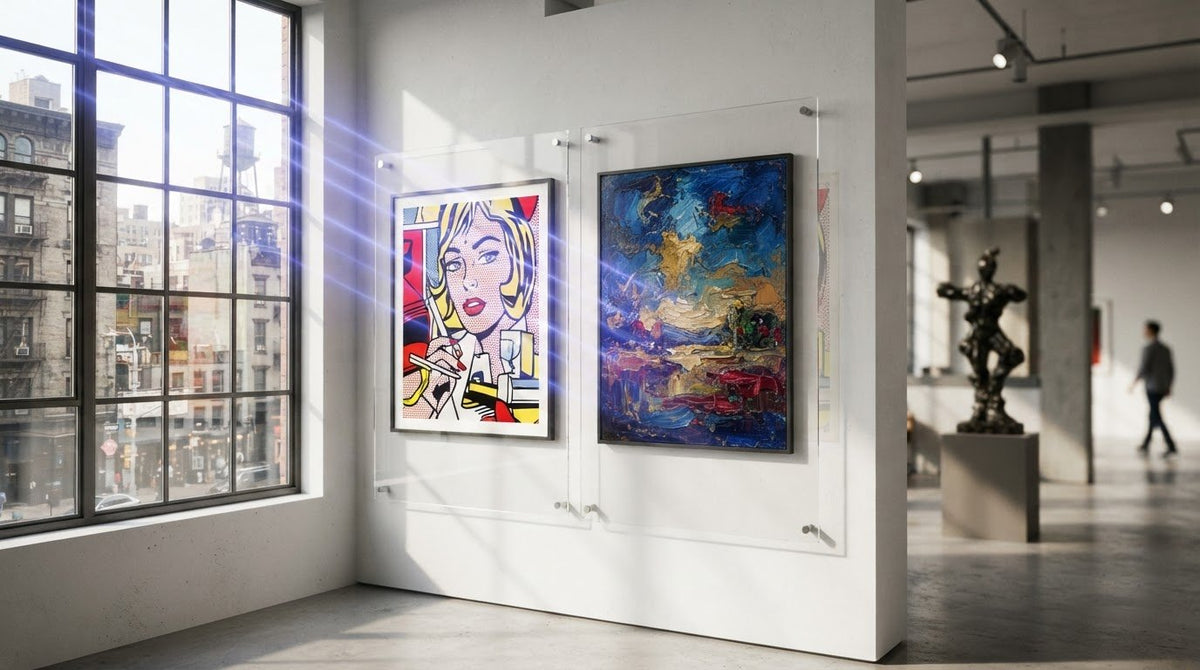
UV-filtering glazing can reduce one source of exposure, but it cannot make artwork immune to light. Sunlight reaching a print or painting is a reasonable concern, yet indoor light and the duration of exposure matter too. UV protection for art prints and paintings is one part of preservation, not a guarantee.
Different materials respond differently to light. Works on paper are generally more vulnerable than oil paintings, and damage can build gradually. This guide explains how UV exposure affects prints and paintings, what UV-filtering glazing and window films can and cannot do, and which display habits can reduce preventable exposure. It also covers practical trade-offs, including how glazing may affect reflections or the view of the work, and when to ask a qualified conservator to assess a particular piece.
Key Takeaways
- UV protection for art prints and paintings reduces ultraviolet exposure, but it does not prevent every form of light-related deterioration.
- Check whether direct sunlight reaches the artwork, then consider a position with indirect light before choosing protective glazing.
- Include display conditions and visible changes in a regular check of your artwork.
- Avoid household cleaners or treatments that have not been verified for the artwork. Consult a qualified conservator if you are unsure how to proceed.
UV Protection for Art Prints and Paintings: What It Can, and Cannot, Do
UV protection for art prints and paintings means reducing the ultraviolet radiation that reaches the work, usually with UV-filtering glazing or window film. It addresses one part of light exposure. Visible light can still contribute to fading or other change, and UV protection cannot prevent deterioration caused by every environmental factor.
Materials respond differently. A print’s sensitivity depends on its paper, printing process, inks or other colorants, and condition. Works on paper can be particularly vulnerable to light. Paintings vary too: pigments, binders, varnish, and support all affect how an individual oil painting responds. No single protection claim describes every medium or object.
Does UV-filtering glass stop art from fading?
No. UV-filtering glass reduces ultraviolet exposure, but visible light can still cause damage over time. The result depends on the artwork’s materials and condition, along with the intensity and duration of exposure. Glazing is one preventive measure, not a guarantee against fading.
This distinction matters for prints, including original character art prints, where both paper and printing materials affect the work’s response to light. Paintings have their own material variables. Neither category has a universal level of light sensitivity.
Light management is part of preventive conservation, alongside attention to other environmental conditions. UV filtering can reduce one exposure, but it does not remove the need to consider how and where a work is displayed.
How to Reduce UV Exposure When Displaying Prints and Paintings
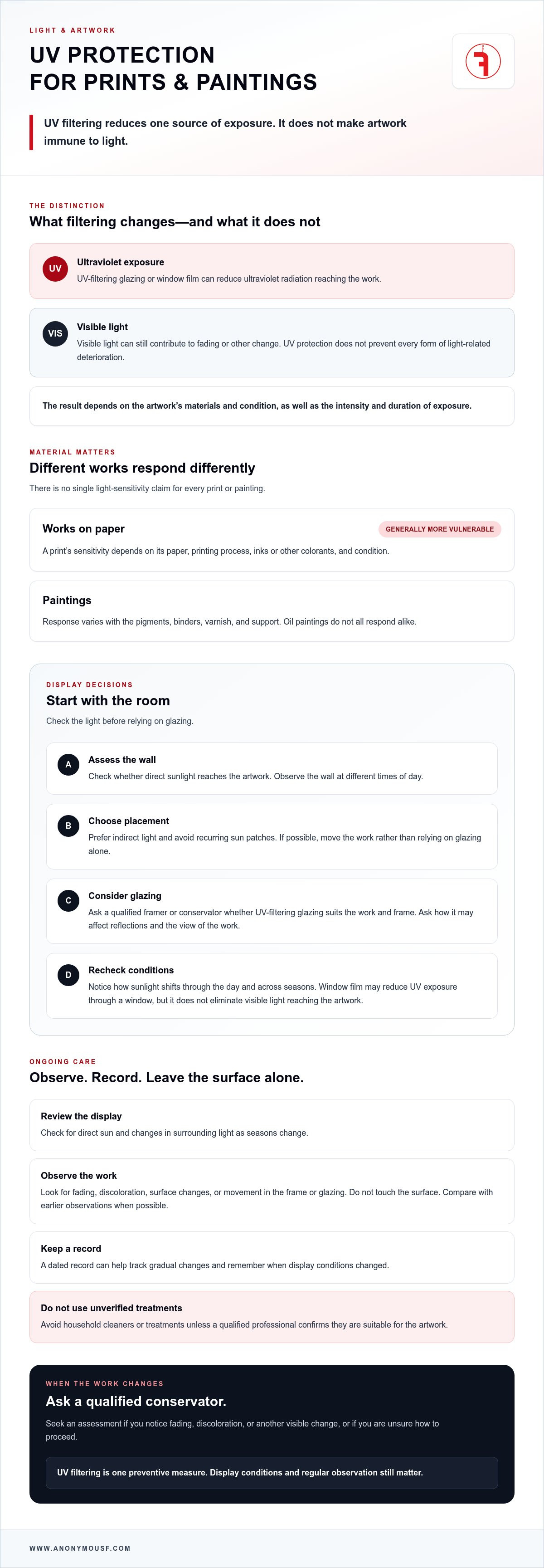
Start with the room before choosing a frame or glazing. Use this sequence to identify the main exposure and decide what to change:
- Assess: Check whether direct sunlight reaches the artwork. Observe the wall at different times of day, not just when you first choose the spot.
- Choose placement: Prefer a position with indirect light, away from recurring sun patches. If possible, move the work rather than relying on glazing alone.
- Consider glazing: Ask a qualified framer or conservator whether UV-filtering glazing suits the artwork and its frame. Ask how the glazing may affect reflections and the appearance of the work.
- Monitor: Recheck the display as sunlight shifts through the day and across seasons. Window film may reduce ultraviolet exposure through a window, but it does not eliminate visible light reaching the artwork.
UV protection for art prints and paintings works best as one part of careful display. The National Park Service Museum Handbook discusses light and UV radiation as causes of damage to museum collections. Reducing prolonged direct sunlight is sensible, but neither glazing nor placement eliminates every risk. Framing choices should account for the work’s materials, condition, and presentation. A qualified framer or conservator can advise on the specific piece.
Where should you hang art to limit light exposure?
Check the wall at different times of day. A spot that appears shaded in the morning may receive direct sun later. Notice whether sunlight falls on the artwork itself, rather than judging only by how bright the room feels. If a bright display area is the only practical location, moving or rotating works can reduce repeated exposure to the same piece. Display decisions also shape how works relate to one another; displaying a contemporary art collection involves both placement and viewing conditions.
A Long-Term Care Routine for Art Prints and Paintings
Care is a pattern of observation, not a treatment. Check whether daylight reaches the work as the seasons change, and note changes to its position, glazing, or room conditions. Periodically look for fading, discoloration, surface changes, or signs that the frame or glazing has shifted. A dated record of what you observe can help you track gradual changes and remember when display conditions changed.
- Review the display: Check for direct sun and changes in the surrounding light.
- Observe the work: Look for visible changes without touching the surface. Compare its appearance with earlier observations when possible.
- Keep materials untouched: Do not clean, alter, or treat artwork with household products unless a qualified professional confirms they are suitable.
The museum conservation lighting guide offers further context on managing light around collections. UV protection for art prints and paintings can reduce one source of exposure, but regular observation still matters.
When does artwork need professional conservation advice?
Seek a qualified conservator’s assessment if you notice fading, discoloration, or a change to the surface, or if you are uncertain about the work’s materials and appropriate care. Prints, works on paper, and paintings can respond differently, so an online guide cannot assess an individual object’s condition.
This section provides preventive guidance, not a condition assessment or restoration service. For material context, oil on canvas works are one example of a painting medium. The needs of a particular work depend on its materials and condition.
Keep Light Management Practical
UV protection for art prints and paintings reduces ultraviolet exposure, but it does not prevent every form of light-related change. Check for direct sunlight, favor indirect light where possible, and monitor the work as display conditions shift.
Make observation part of routine care. Note visible changes, avoid unverified household cleaners or treatments, and seek a qualified conservator’s advice if the surface changes or the materials are uncertain. A general guide cannot assess an individual artwork.
These considerations apply across media. Fringe offers limited edition prints, oil paintings, and hybrids on paper, as well as character-based collectible toys. The right care for any artwork depends on its materials and condition.
Keep a record of changes to the display and artwork over time. If light exposure shifts or visible changes appear, reassess the placement and seek advice suited to the work’s materials. Explore Fringe’s art and collectible works, and choose a display position that helps limit direct light.
Frequently Asked Questions
Does UV-protective glass prevent art from fading?
No. UV-protective glass reduces ultraviolet exposure, but it does not block all visible light or prevent every cause of fading and deterioration. The effect depends on the artwork’s materials, condition, and cumulative exposure. Treat glazing as one preventive measure, not a guarantee. For valuable or particularly light-sensitive work, a qualified framer or conservator can advise on suitable protection.
Can sunlight damage art prints and paintings?
Yes. Direct sunlight can expose artwork to intense light, and damage can accumulate with continued exposure. Prints and works on paper may respond differently from paintings because their papers, inks, pigments, and binders vary. Sunlight is not the only concern: indoor light can also contribute to change over time. Reduce prolonged direct exposure rather than relying on a frame alone.
Is indirect light safe for displaying artwork?
Indirect light is generally preferable to direct sunlight because it reduces intense exposure, but it is not a guarantee against fading. Light damage depends on both intensity and duration, so even a shaded display can accumulate exposure over time. Check the artwork at different times of day, especially if sunlight moves across the room, and reassess when seasons or furnishings change.
How should I protect an art print from UV exposure?
Start by placing the print where direct sunlight will not fall on it for prolonged periods. Consider UV-filtering glazing suited to the print and its frame, and ask a qualified framer or conservator if you are unsure about the materials. UV protection for art prints and paintings reduces one source of exposure, but visible light can still cause change. Monitor the print and avoid unverified cleaning products.

Article by
Fringe

Read more

How to Clean a Bronze Sculpture Safely: A Collector’s Guide
Polish is not proof of care. If you’re searching for how to clean a bronze sculpture safely, first distinguish loose dust from patina, corrosion, or another surface change. The goal of routine clea...
Read more
Art Collecting for Beginners: A Practical Guide
A first collection is defined by its criteria, not its price tag. The most useful art collecting for beginners tips start with deciding what you want to live with, then applying that standard consi...
Read more
Leave a comment
This site is protected by hCaptcha and the hCaptcha Privacy Policy and Terms of Service apply.