

How to Clean a Bronze Sculpture Safely: A Collector’s Guide
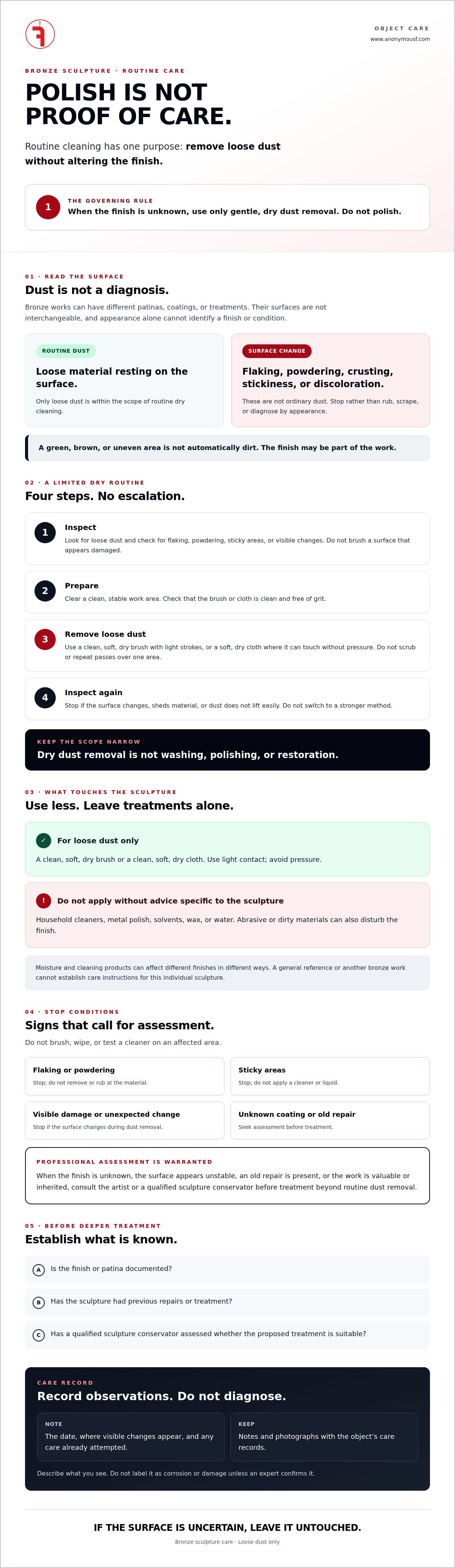
Polish is not proof of care. If you’re searching for how to clean a bronze sculpture safely, first distinguish loose dust from patina, corrosion, or another surface change. The goal of routine cleaning is to remove dust without altering the finish.
A brush or cloth can disturb a finish if it is abrasive, dirty, or used with pressure. Moisture and cleaning products can also affect different finishes in different ways. This guide explains how to remove ordinary dust, what signs mean you should stop, and when to consult a qualified conservator instead of testing a cleaner or polish.
Bronze sculptures can differ in materials and finish, so don’t assume one method is suitable for every work. Record what you observe and any care you’ve attempted. Describe visible changes without labeling them as dirt, patina, or damage unless an expert confirms it. Base care on what’s known about the individual sculpture.
Key Takeaways
- Bronze sculptures can have different patinas, coatings, or treatments, so don’t assume their surfaces respond alike.
- Learn how to clean a bronze sculpture safely by limiting routine care to gentle removal of loose dust.
- Inspect the surface before and after dusting, and stop if you notice flaking, powdering, stickiness, or an unexpected change.
- Unknown coatings, old repairs, and inherited or valuable works call for assessment by a qualified conservator before treatment.
Why safe bronze sculpture cleaning starts with the surface
For routine care, safe cleaning has a narrow purpose: remove loose surface dust without changing the sculpture’s finish. It doesn’t mean polishing, removing discoloration, or applying a cleaner because the bronze looks dull.
Bronze sculptures may have different patinas, coatings, or other treatments, and their surfaces aren’t interchangeable. The Bronze sculpture page provides material and casting context, but it can’t identify the finish on a particular work. Fringe creates original bronze sculptures, and care should be confirmed for the individual work with the artist or a qualified conservator.
When a bronze finish is unknown, use only gentle dry dust removal and don’t polish. The finish may be part of the work, not a layer of dirt.
How to tell routine dust from a surface change
Routine dust is loose material resting on the surface. Discoloration, crusting, flaking, or powdering isn’t ordinary dust, so stop rather than rub or scrape at it. A clean, soft, dry brush or cloth may lift loose dust, but pressure and repeated passes can disturb a vulnerable surface.
Appearance alone can’t reliably distinguish patina from corrosion or coating damage. Don’t assume a green, brown, or uneven area is dirt or should be removed. For material context, see the Quiet Boy bronze sculpture page; it doesn’t establish care instructions for other works. If you’re unsure what you’re seeing, leave the surface untouched and seek an expert assessment.
How to clean a bronze sculpture safely, step by step
For ordinary dust, how to clean a bronze sculpture safely comes down to a limited, dry routine. Don’t try to restore shine or remove marks. If the finish is unknown or the surface appears unstable, stop and seek advice before cleaning.
- Inspect. Look for loose dust and check for flaking, powdering, sticky areas, or visible changes. Don’t brush a surface that appears damaged.
- Prepare. Clear a clean, stable work area. Check that your brush or cloth is clean and free of grit that could scratch the finish.
- Remove loose dust. Use a soft, dry brush with light strokes, or a soft, dry cloth where it can touch the surface without pressure. Don’t scrub or make repeated passes over one area.
- Inspect again. Stop if the surface changes, sheds material, or the dust doesn’t lift easily. Don’t escalate to a stronger method.
Dry dust removal is not washing, polishing, or restoration. It addresses only loose material on the surface.
What tools to use, and what to leave untouched
Use only a clean, soft, dry brush or cloth for loose dust. Avoid abrasive or dirty materials, including cloths that may hold grit. Don’t apply household cleaners, metal polish, solvents, wax, or water without advice specific to the sculpture’s finish. These treatments can affect surfaces differently.
The American Institute for Conservation’s guide to caring for metal objects offers broader reference material, but it doesn’t identify the finish on an individual work. The Quiet Boy bronze sculpture is an example of Fringe’s bronze work, not a care specification. Confirm instructions for the specific sculpture with the artist or a qualified conservator.
When to stop cleaning and ask a bronze conservator
Stop if the surface is flaking, powdering, sticky, visibly damaged, or changing unexpectedly during dust removal. Don’t brush, wipe, or test a cleaner on the affected area. These signs call for assessment, not more pressure.
An unknown coating or evidence of an old repair changes the risk of treatment. Valuable or inherited works also warrant professional assessment before anything beyond routine dust removal. A conservator can examine the surface and advise on appropriate next steps. Appearance alone isn’t enough to identify the finish or its condition.
Knowing how to clean a bronze sculpture safely includes knowing when not to continue. Record what you observe and any care already attempted. Note the date, where the visible changes appear, and the materials used. Describe what you see rather than labeling it as corrosion or damage without an expert’s assessment.
Questions to ask before any deeper treatment
Before using a liquid, coating, or polishing compound, establish what is known about the object:
- Is the finish or patina documented?
- Has the sculpture had previous repairs or treatment?
- Has a qualified sculpture conservator assessed whether the proposed treatment is suitable?
The C.M. Russell Museum’s guide to caring for bronze sculpture provides general care context, but it can’t determine the right treatment for an individual work. Keep notes and photographs with the object’s care records, and avoid presenting an observation as a confirmed diagnosis.
If the surface is uncertain, leave it untouched.
Keep the surface, and your records, intact
Knowing how to clean a bronze sculpture safely starts with a limited goal: remove loose dust without changing the finish. Patinas, coatings, and prior repairs can make two bronze surfaces respond differently, so appearance alone isn’t enough to choose a treatment.
Use a clean, soft, dry brush or cloth for ordinary dust. Stop if the surface flakes, powders, feels sticky, changes unexpectedly, or appears damaged. Before considering liquids, wax, or polishing compounds, ask a qualified sculpture conservator to assess the work. Record what you observe and any care attempted, without treating an impression as a confirmed diagnosis.
Fringe creates original bronze sculptures, but care requirements can vary from one work to another. Confirm sculpture-specific instructions with the artist or a qualified conservator before treating a piece.
Frequently Asked Questions
Can I use metal polish on a bronze sculpture?
No. Metal polish can change a sculpture’s surface by removing or altering patina, coatings, or other treatments. A brighter finish isn’t necessarily the original or intended finish. For ordinary dust, use a clean, soft, dry brush or cloth. If the surface needs more than dusting, ask a qualified sculpture conservator before applying polish or another product.
How often should I clean a bronze sculpture?
There isn’t one schedule that suits every bronze sculpture. Dust only when loose material is present, and avoid repeated wiping simply to maintain a particular shine. Check the surface as part of routine observation. If you see a change, flaking, powdering, or stickiness, stop rather than increase cleaning. A conservator can advise on a schedule for the specific work and its finish.
What should I do if my bronze sculpture has green marks?
Don’t scrub or polish green marks. Their appearance alone can’t confirm whether they’re part of the patina, corrosion, or a change to a coating. Stop cleaning that area and note where the marks appear. Photographs can help document changes over time. If the marks are crusted, spreading, or accompanied by flaking or powdering, ask a qualified sculpture conservator to assess the surface.
Can I clean a bronze sculpture with water?
Don’t use water unless the finish-specific care instructions support it. Bronze works may have different patinas, coatings, or treatments, and appearance alone won’t establish whether moisture is suitable. For routine dust, use a clean, soft, dry brush or cloth. If you’re unsure how to clean a bronze sculpture safely beyond dry dusting, consult the artist or a qualified conservator first.
Explore Fringe’s original bronze sculptures, and ask the artist for care guidance before treating a work.

Article by
Fringe

Read more
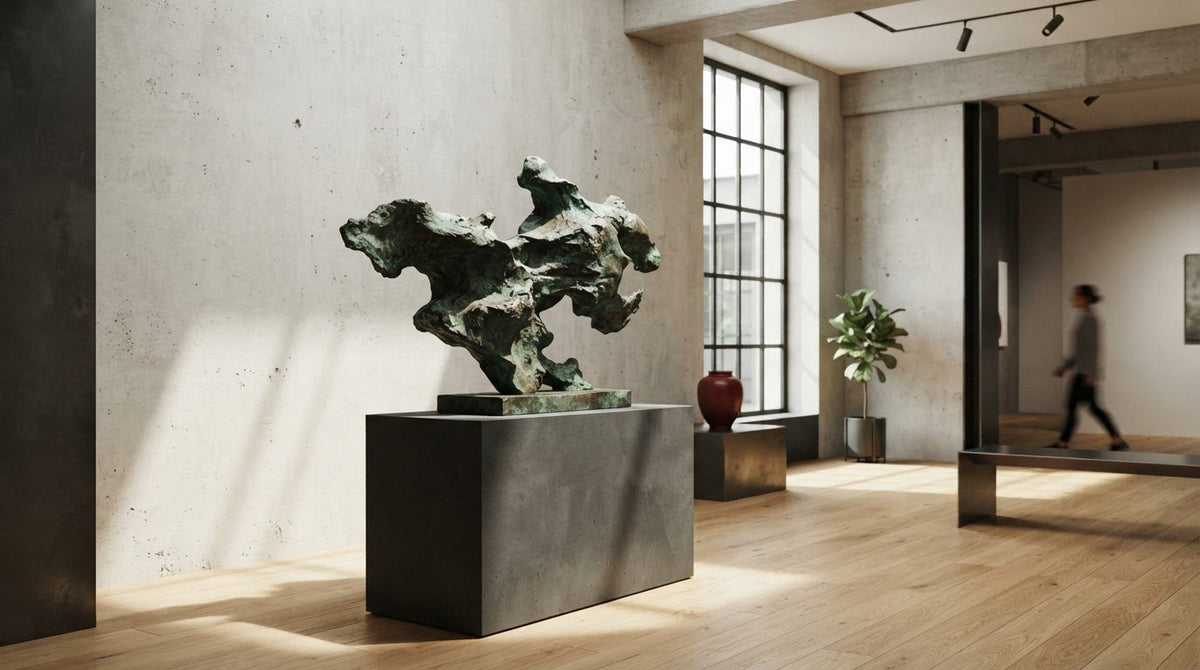
Pedestals and Stands for Bronze Sculptures in Modern Interiors
Choosing bronze sculptures for modern interiors means considering both the artwork and how it will be displayed. A pedestal should support the sculpture, provide stability, and set it at a suitable...
Read more
UV Protection for Art Prints and Paintings: A Practical Guide
UV-filtering glazing can reduce one source of exposure, but it cannot make artwork immune to light. Sunlight reaching a print or painting is a reasonable concern, yet indoor light and the duration ...
Read more
Leave a comment
This site is protected by hCaptcha and the hCaptcha Privacy Policy and Terms of Service apply.