
Modern Pop Art Trends: The Specification of the Physical Object in 2026
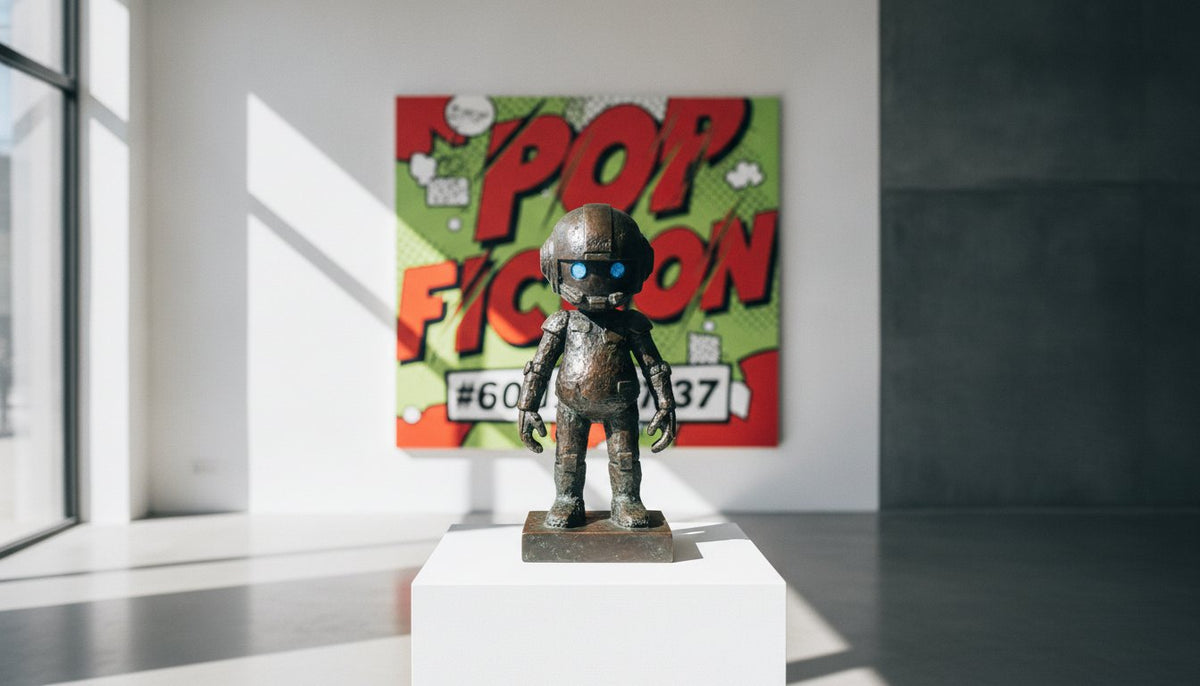
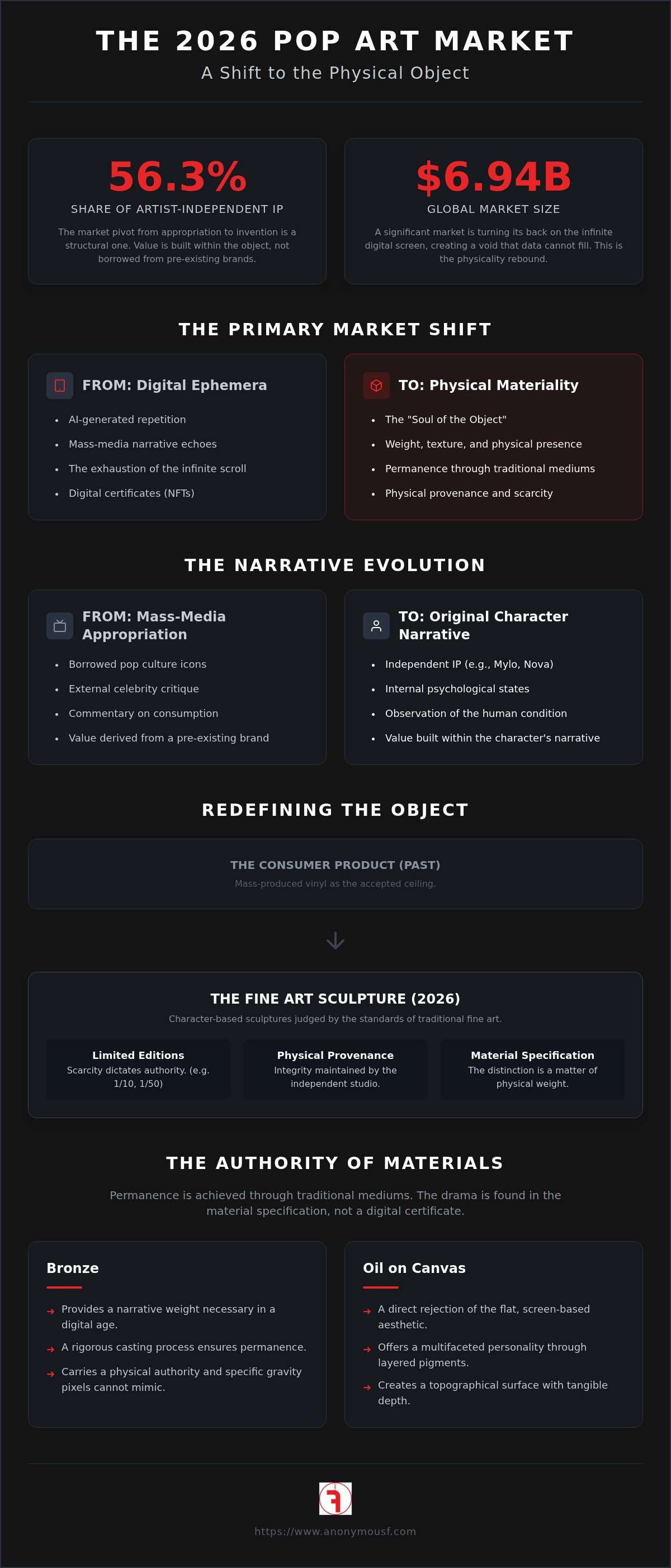
Not everyone understands why a 6.94 billion dollar market is turning its back on the infinite digital screen. That's rather the point. You've likely felt the exhaustion of the algorithm, where AI-generated repetition and mass-media echoes have stripped the narrative weight from the canvas. The oversaturation of the ephemeral has created a void that data cannot fill. As we look at modern pop art trends in 2026, the focus has shifted from the critique of mass consumption toward the specification of the physical object.
This analysis provides an authoritative look at the transition from borrowed icons to original character narratives. You will see how the 56.3 percent share of artist-independent IP is reshaping the landscape of investment-grade pieces. We examine the permanence of bronze and the depth of oil on canvas as the primary drivers of value. These sections detail the intersection of material truth and the emotional register of the contemporary collector.
Key Takeaways
- Analyze the shift from mass-media appropriation toward original character narratives that focus on internal psychological states.
- Identify the modern pop art trends driving the 2026 preference for physical materiality over digital ephemera.
- Distinguish between consumer products and fine art sculptures by examining the rigorous specification of bronze and oil on canvas.
- Understand how limited edition sizes and physical provenance define the current standard for investment-grade pop art.
The Transition from Mass Consumption to Original Character Narrative
Modern pop art trends in 2026 are defined by the departure from existing pop culture icons. The era of the mass-media mirror is closing. In its place, the "Original Character" trend prioritizes internal psychological states over the external celebrity critique central to Neo-pop art. Narrative weight is now carried by figures that don't exist in mass media until the artist creates them. This isn't a commentary on what we buy. It's an observation of how we feel.
Figures like Mylo and Nova represent this shift toward independent narrative universes. These aren't licensed properties or corporate mascots. They are independent IP. The 2026 market reflects this shift, with artist-independent toys holding a 56.3 percent share of the global art toy market. This is a structural pivot from appropriation to invention. The value isn't derived from a pre-existing movie or brand. It's built within the physical object itself.
Mylo and the Architecture of Internal Reflection
Original characters serve as vessels for universal human struggle. This is the transition from "Low Culture" appropriation to "High Narrative" construction. The work doesn't rely on the recognition of a brand. It relies on the recognition of a shared vulnerability. Mylo by Fringe serves as a case study in this character-based pop art. The narrative is established through the character's posture and the weight of the material. Mylo exists as oil on canvas or bronze sculpture. These mediums provide a permanent anchor for the narrative. The object doesn't need a screen to tell its story. It simply exists.
Materiality as a Counter-Trend to Digital Saturation
The 2026 market shows a distinct preference for the physical object over digital ephemera. Digital saturation has reached a point of exhaustion. Collectors are returning to the "Soul of the Object," prioritizing material facts like weight, texture, and physical presence. Modern pop art trends are no longer tethered to the infinite scroll. The rejection of NFTs isn't an oversight. It's a calculated decision. It's a commitment to permanence. This shift is visible in the evolution of art toys from mass-produced plastic to high-narrative sculptures in metal and oil.
Permanence is achieved through traditional mediums: bronze, oil on canvas, and hybrids on paper. These materials carry a physical authority that pixels cannot mimic. A bronze sculpture has a specific gravity. An oil painting has a topographical surface. These truths are the primary drivers of contemporary value. The drama is found in the material specification, not in a digital certificate. This is the "Physicality Rebound" that the market is currently witnessing.
The Permanence of Bronze and Oil on Canvas
Bronze casting provides a narrative weight that feels necessary in a digital age. The process is rigorous. It results in a form that resists the ephemeral nature of modern media. Oil on canvas serves as a direct rejection of the flat, screen-based aesthetic common in early pop art. It offers a multifaceted personality through layered pigments. You can find a deeper analysis of these material choices in Pop Art Original Artwork: The Specification of the Physical Object. The value of the work is a settled matter of its physical existence. It's why Fringe focuses on these tangible foundations.
The Evolution of the Collectable Toy into Fine Art Sculpture
Not everyone understands why a character figure carries the same weight as a traditional bronze. That's rather the point. The definition of the object has changed. Collectable toys in 2026 are no longer consumer products; they are character-based sculptures. This shift is a central pillar of modern pop art trends. The market no longer accepts mass-produced vinyl as the ceiling. Instead, the focus has moved to the rigorous specification of the physical piece. Collectors now apply the same provenance standards to character figures as they do to traditional bronze work. The value resides in the intersection of the character's narrative and the physical rarity of the edition. When collecting contemporary Pop Art, the distinction between a toy and a sculpture is found in the material and the numbering. It's a matter of weight.
Limited Editions and the Weight of Provenance
The drama of the object is found in its scarcity. Edition sizes, such as 1/10 or 1/50, dictate the authority of the collectable. These numbers aren't marketing; they are the boundary of the work's existence. The independent studio plays a critical role here. It maintains the integrity of the physical character by controlling the casting and finishing processes. This ensures the soul of the character isn't lost to industrial scale. The work remains intimate. The demand for physical rarity is one of the most significant modern pop art trends in the current landscape. For a deeper understanding, see The Soul of the Object: A Guide to Collectible Designer Toys in 2026. The physical object stands as a testament to the character's internal state. It's a quiet, heavy truth in a world of digital noise. The object exists because the artist decided it should, and the edition size ensures it remains a rare human connection rather than a commodity.
The Future of the Physical Fragment
Not everyone understands the necessity of physical weight in a digital age. That's rather the point. The shift toward original character narratives like Mylo and Nova marks a permanent departure from the appropriation of the past. Modern pop art trends in 2026 are defined by the density of bronze and the topography of oil on canvas. These material facts provide a grounding that digital ephemera cannot replicate. The evolution of the collectable toy into a high-art sculpture relies on the specification of limited edition sizes and the soul of the physical object. Authenticity remains a matter of material truth. The narrative weight of a physical creation is a settled matter for those who prioritize depth. The current availability of original character oil paintings and bronze sculptures is maintained at the Fringe studio. It's a return to permanence in a world of digital noise.
Frequently Asked Questions
What defines the modern pop art movement in 2026?
Modern pop art trends in 2026 are defined by the transition from mass-market appropriation to the construction of original character narratives. The market valuation for art toys is estimated at 6.94 billion dollars. Navigating such a significant market requires artists to maintain a precise digital presence alongside their physical work; to discover how to manage this social media strategy effectively, learn more about frik.io. This movement prioritizes the internal psychological states of figures like Mylo and Nova. It's an emphasis on the physical specification of the object over the reproduction of corporate icons.
The shift away from digital NFTs is driven by a collector-led demand for permanence and tactile authority. Digital assets don't have the narrative weight found in traditional mediums. In 2026, the market prefers the "Soul of the Object." Collectors are prioritizing assets that exist independently of a screen. This rejection ensures the work remains a tangible fragment. It's a matter of permanence.
How do original character narratives differ from traditional pop art appropriation?
Original character narratives differ from traditional appropriation by focusing on internal psychological depth rather than external celebrity critique. Traditional pop art used existing mass-media icons to mirror consumer culture. Modern pop art creates independent figures like Gutinke to explore universal human experiences. This approach moves the work from commentary to high-narrative construction, relying on original IP rather than borrowed recognition. This same appreciation for deep, original storytelling is also found in the world of independent digital literature, with collections curated by Books by Ron.
Contemporary collectors prioritize materials that convey durability and material truth. Bronze sculptures and oil on canvas are the primary mediums of the 2026 market. Bronze provides a specific gravity that resists the ephemeral. Oil on canvas offers a topographical depth that digital prints cannot replicate. These material facts, including edition sizes and weight, are the essential drivers of modern pop art trends.

Article by
Fringe

Read more
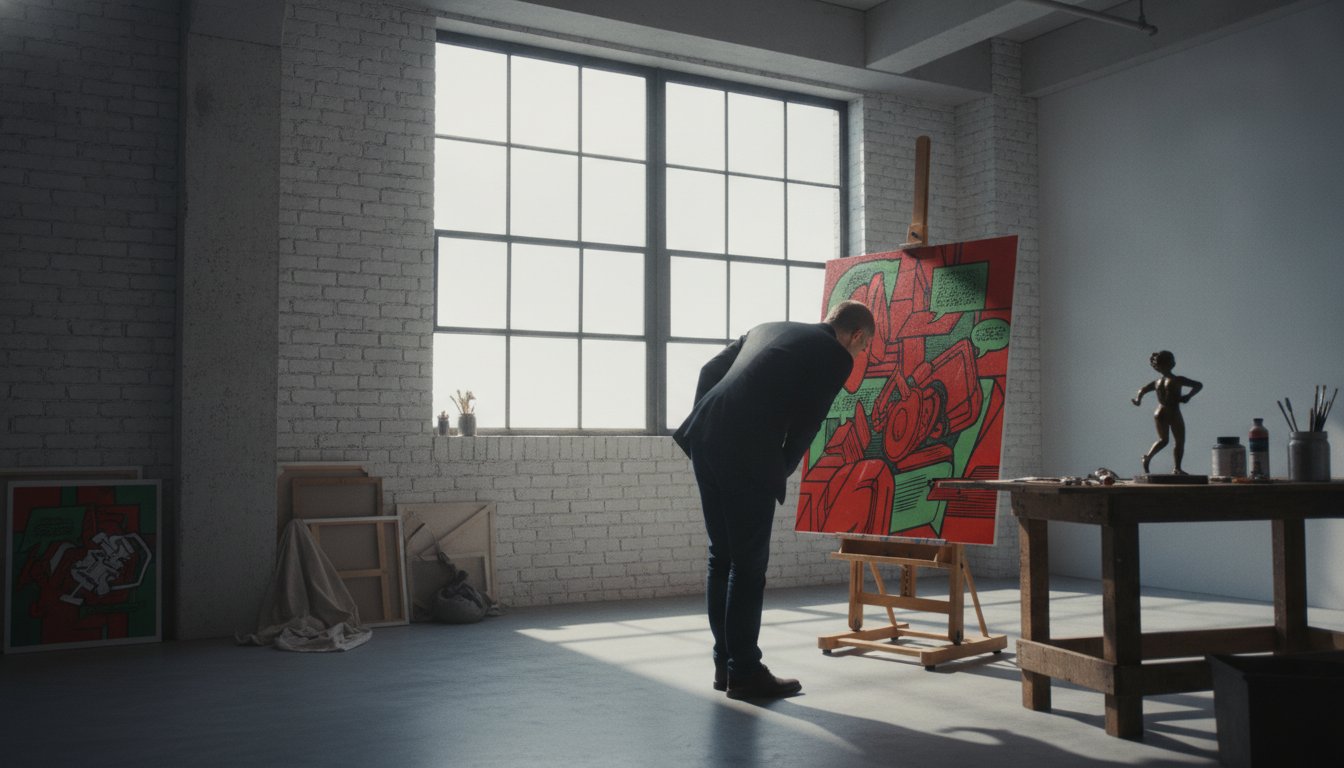
Buying Pop Art Directly from the Artist: The Specification of Provenance
Not everyone understands Mylo. That’s rather the point. For the serious collector, the gallery wall often acts as a barrier that inflates costs while diluting the artist's original intent. You unde...
Read more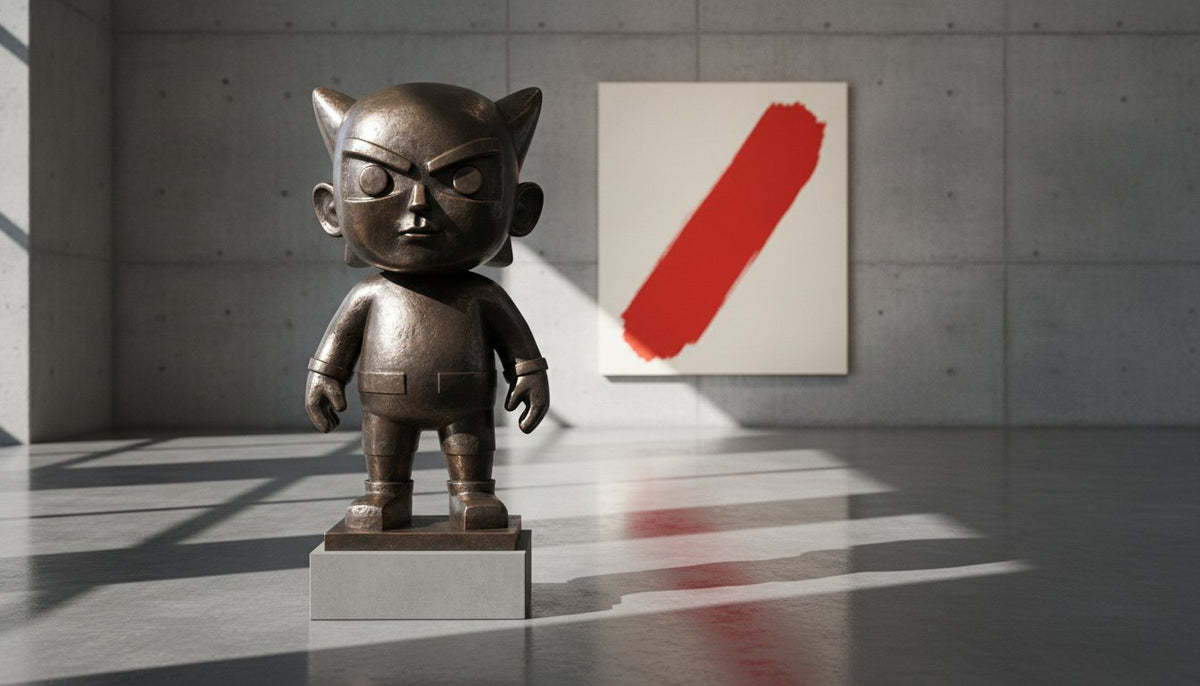
Bronze Sculpture Investment Value: The Specification of Permanent Assets (2026)
Not everyone understands Mylo. That's rather the point. The contemporary art market is often saturated with mass-produced objects, making it difficult to find clarity in edition sizes or true rarit...
Read more
Leave a comment
This site is protected by hCaptcha and the hCaptcha Privacy Policy and Terms of Service apply.