
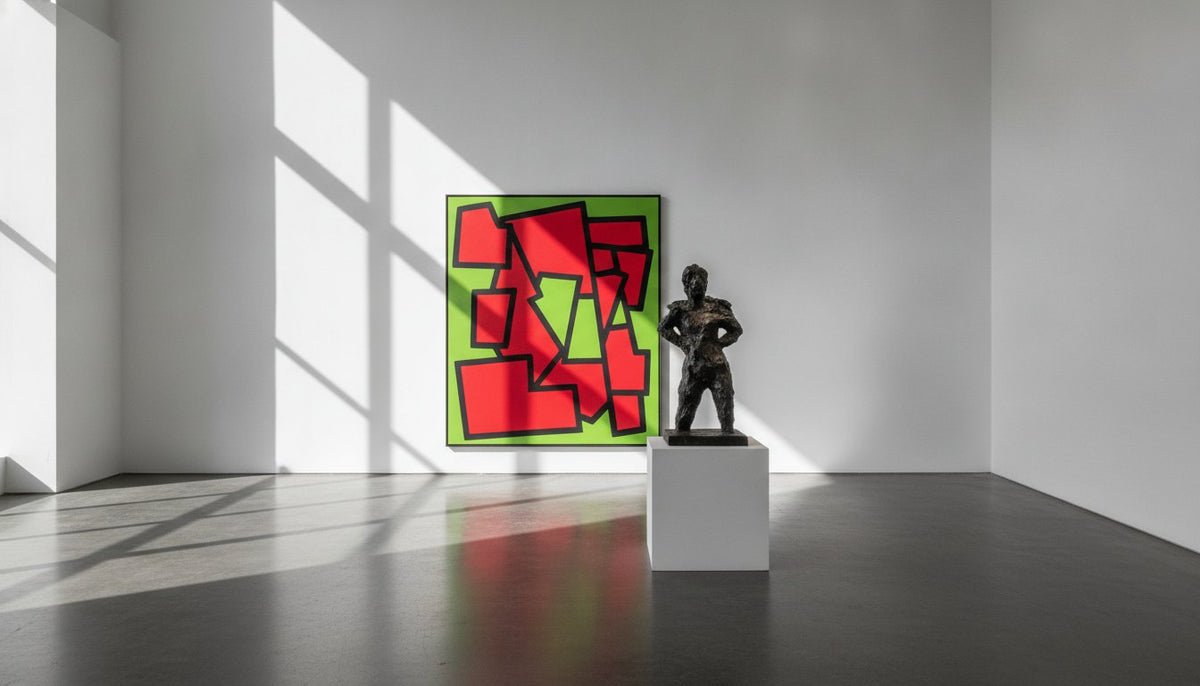
Building a Cohesive Contemporary Art Collection: The Specification of Intent
Not every acquisition contributes to a legacy. That's rather the point. You've likely felt the quiet frustration of a room filled with significant pieces that refuse to speak to one another. It's the difference between a gallery and a storage unit. Building a cohesive contemporary art collection is less about aesthetic symmetry and more about the rigorous specification of narrative weight.
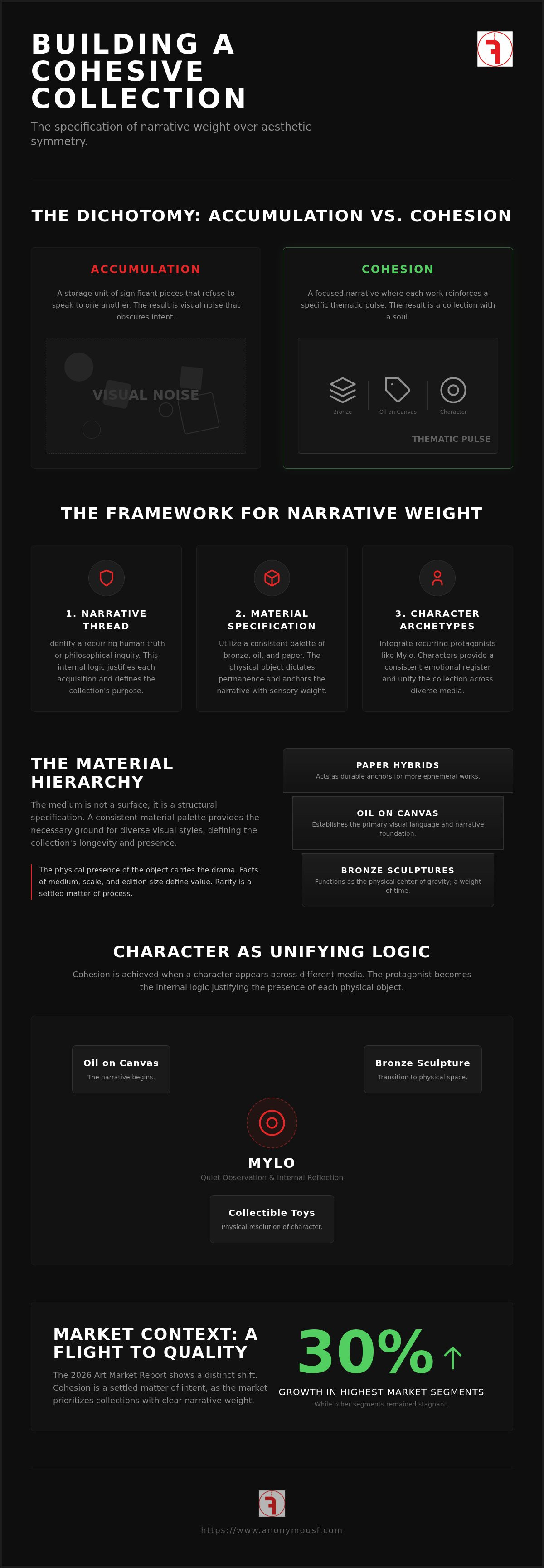
A collection should possess a soul that persists after the lights are dimmed. This framework moves past the decorative to focus on the material truth of bronze, oil on canvas, and hybrids on paper. You'll gain a technical understanding of how to select works that reinforce a specific thematic pulse. The 2026 Art Market Report shows a distinct flight to quality, where the highest segments grew by 30% while others remained stagnant. Cohesion is a settled matter of intent.
Key Takeaways
- Identify a recurring human truth or philosophical inquiry to transition from an accumulation of objects to a focused narrative.
- Utilize a consistent palette of bronze, oil on canvas, and paper hybrids to provide structural permanence across diverse visual styles.
- Integrate character archetypes like Mylo to establish the emotional register necessary for building a cohesive contemporary art collection.
- Prioritize the technical specification of the physical object to ensure that every acquisition reinforces the collection's narrative weight.
The Narrative Architecture of a Contemporary Collection
A collection without a pulse is merely a storage unit. Most holdings are accumulations of objects that lack a shared specification, resulting in a visual noise that obscures the artist's intent. When building a cohesive contemporary art collection, the collector must look beyond the surface of a single piece to find the recurring human truth that binds the set together. This narrative thread acts as the internal logic. It justifies why one work belongs while another, perhaps equally competent, does not.
The assembly functions best as a character study. Each acquisition reveals a different facet of a singular theme, such as the tension between internal reflection and external performance. This approach ensures the assembly possesses a soul rather than just a price tag. The logic of the set becomes a settled matter of philosophical inquiry once the core narrative is established.
The Logic of Thematic Consistency
Maintaining a steady emotional register requires a focus on duality. A collection might explore the intersection of vulnerability and bold pop aesthetics, ensuring that the transition between works feels intentional. When evaluating how a pop art original artwork contributes to the narrative weight of a room, consider its emotional frequency. The work should reinforce the overarching inquiry without creating jarring shifts in tone. This consistency is achieved through a rigorous selection process that prioritizes the narrative pulse over decorative matching. A cohesive collection doesn't ask for permission to exist; it simply states its purpose through its recurring themes.
Materiality and the Specification of the Physical Object
The physical medium dictates the permanence and presence of the collection. Bronze, oil, and paper aren't merely surfaces. They are the structural specifications that define the work's longevity. When building a cohesive contemporary art collection, the selection of a consistent material palette provides a necessary ground for diverse visual styles. Digital or flat media often lacks the textural depth found in oil on canvas. This depth creates a sensory weight that anchors the room.
Bronze sculptures function as the physical center of gravity. They introduce a weight of time, acting as durable anchors for more ephemeral works like limited edition prints or paper hybrids. A collection that ignores this material hierarchy often feels untethered. The physical presence of the object carries the drama. It's a matter of choosing materials that possess the authority to occupy space for generations.
The Weight of Bronze and Oil
Collectors utilize original character oil paintings to establish the primary visual language. These works provide the narrative foundation. Integrating bronze sculptures allows the character narratives to transition from two dimensions into the physical space. This transition is a matter of material authority. Limited edition numbering for these physical pieces establishes the rarity and provenance of the multiple. It ensures that the soul of the collection is backed by undecorated facts of production. The oil on canvas works from Fringe illustrate this material specification. Rarity is a settled matter of edition size and process. Facts of medium and scale define the value.
Assembling Character Archetypes: Mylo, Nova, and Gutinke
Not everyone understands Mylo. That’s rather the point. Building a cohesive contemporary art collection requires a focus on recurring protagonists that anchor the narrative. Original characters serve as the protagonists within this framework, providing a consistent emotional register across multiple acquisitions. Mylo represents a specific state of quiet observation and internal reflection. Nova and Gutinke provide contrasting archetypes, detailing the complexities of the heart through different visual lenses. These figures allow for a broader study of the human condition without diluting the collection's thematic pulse.
Cohesion is achieved when these characters appear across different media. A narrative that begins on oil on canvas might find its physical resolution in collectable toys. This cross-media presence ensures the collection functions as a unified character study. The character becomes the internal logic that justifies the presence of each physical object. It's a methodical approach to building a cohesive contemporary art collection where the subject matter dictates the medium.
Direct Studio Acquisition and Provenance
Acquiring works directly from an independent studio ensures authenticity and clear provenance. This direct line of ownership is a settled matter of value. In the current market, collectible designer toys are recognized as legitimate pillars of contemporary art collections. They possess the same narrative weight as traditional media when supported by limited edition numbering. The final specification of a collection is defined by the ability to recognize the soul within the object. It's about the truth of the character rather than the category of the medium. This focus on artistic essence allows narratives to extend into functional pieces; for instance, you can check out Amaatra Creations to see how intuitive paintings are reimagined as luxury silk wraps. A collection built on these archetypes possesses a soul that persists regardless of market trends. The provenance remains undecorated and absolute.
Defining the Final Specification
A collection is finished when its internal logic is undeniable. Building a cohesive contemporary art collection is a technical exercise in narrative weight and material specification. It's the transition from owning objects to stewarding a character study. By prioritizing the permanence of bronze and the textural depth of oil on canvas, you ensure the assembly possesses a soul that persists. Every acquisition must reinforce the recurring human truth identified at the start of the process.
Fringe operates as an independent artist-owned studio, producing original character narratives across physical media. These are limited edition works, defined by their numbering and process rather than market trends. The physical works of Fringe are available for acquisition for those who recognize the soul of the object. Every creation is a physical art piece, grounded in the reality of the medium. The intent is now specified.
Frequently Asked Questions
What defines a cohesive art collection in 2026?
Cohesion is defined by the presence of a recurring human truth rather than visual matching. In 2026, market data indicates a flight to quality where the segment for works over $10 million grew by 30%. This suggests that collectors are prioritizing pieces with established narrative weight. A collection's pulse is a settled matter of intent, grounded in the physical authority of the object.
Can a collection be cohesive if it includes different artists and media?
Cohesion persists across diverse media when an internal logic justifies each acquisition. Building a cohesive contemporary art collection often involves mixing oil on canvas with bronze sculptures to explore different facets of a single character study. The medium serves the story. If the narrative thread remains steady, the transition between an independent studio's physical media feels intentional rather than random.
Why is the physical medium important for collection cohesion?
The physical medium dictates the permanence and sensory presence of the set. Oil on canvas provides a specific textural depth, while bronze sculptures act as durable anchors for the room. These materials carry a weight of time that digital formats cannot replicate. A consistent material palette ensures that diverse visual styles remain grounded in a shared physical specification.
How do original character archetypes contribute to an art collection?
Character archetypes like Mylo function as recurring protagonists that guide the viewer through the collection's narrative. They establish a steady emotional register of quiet observation or internal reflection. This character-based approach allows the collector to explore the human condition across multiple pieces. Cohesion is achieved when the same soul is recognized within different physical objects, from bronze to paper hybrids.

Article by
Fringe

Read more

The Acquisition of Bronze: A Technical and Narrative Specification
Not everyone understands Mylo. That’s rather the point. Acquiring contemporary bronze requires a recognition of the distinction between mass-produced resin and molten metal. You likely understand t...
Read more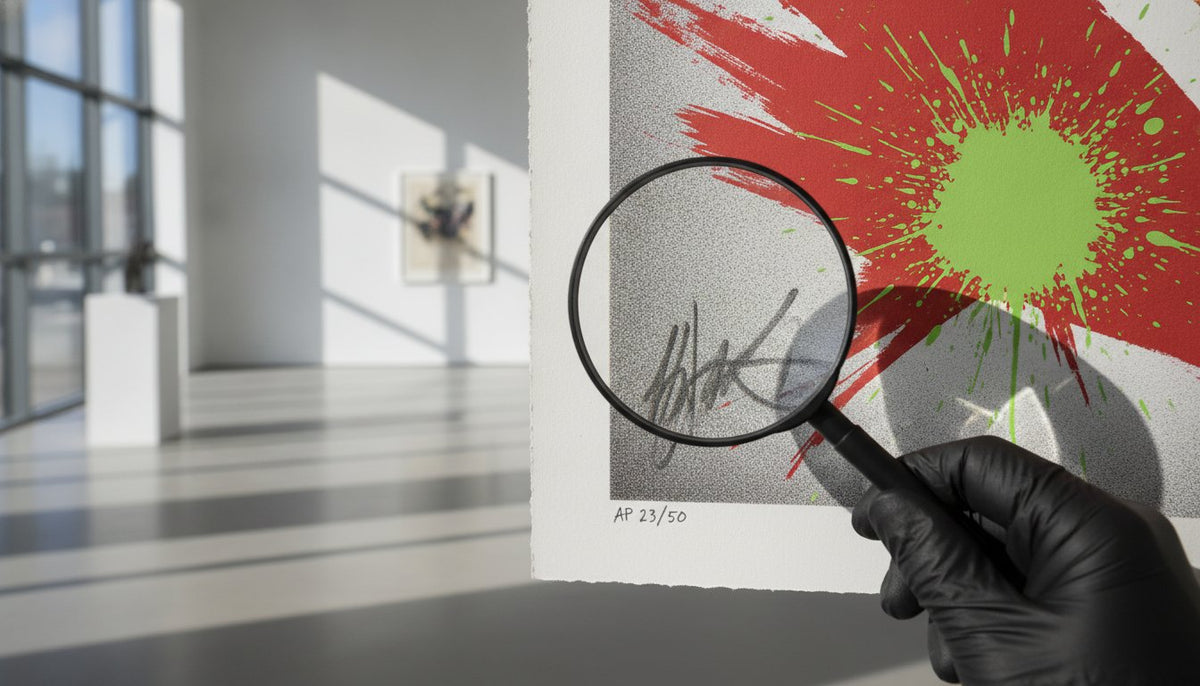
Verification of Limited Edition Art Prints: A Technical Guide
Not everyone understands the weight of a physical edition. That's rather the point. A reproduction mimics the image, but it fails to replicate the intent held within the paper and ink. Knowing how ...
Read more
Leave a comment
This site is protected by hCaptcha and the hCaptcha Privacy Policy and Terms of Service apply.