
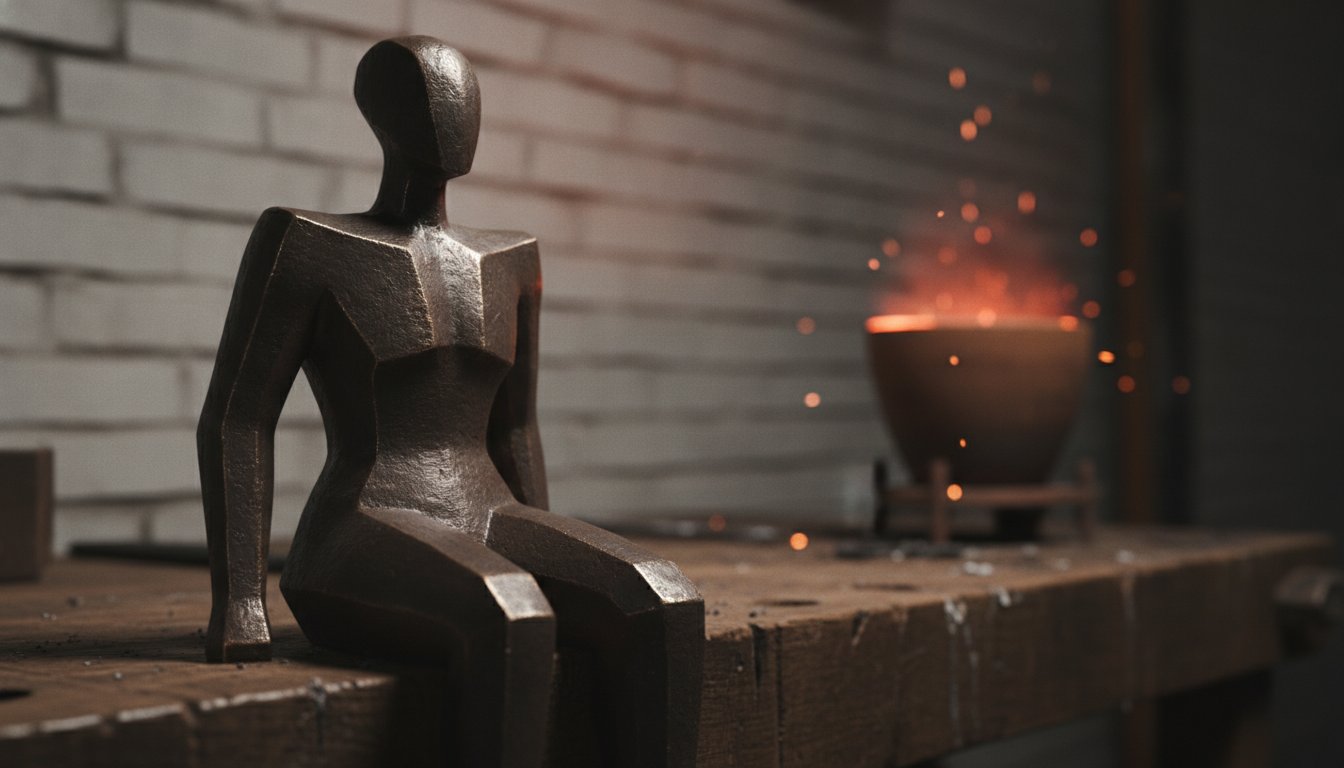
The Acquisition of Bronze: A Technical and Narrative Specification
Not everyone understands Mylo. That’s rather the point. Acquiring contemporary bronze requires a recognition of the distinction between mass-produced resin and molten metal. You likely understand that the value of an object is found in its physical permanence. This guide to acquiring original bronze sculptures provides a definitive analysis of the material facts and narrative weight required to collect work with total confidence. It's a matter of technical specification rather than decoration.
The lost-wax casting process is a methodical ritual of fire and precision. It creates a physical record of the artist's intent through limited edition numbering and verified studio provenance. Understanding the transition from oil on canvas to a three-dimensional character requires an appreciation for the weight of the metal itself. A bronze sculpture is a static truth. It exists regardless of whether the world chooses to observe it.
Key Takeaways
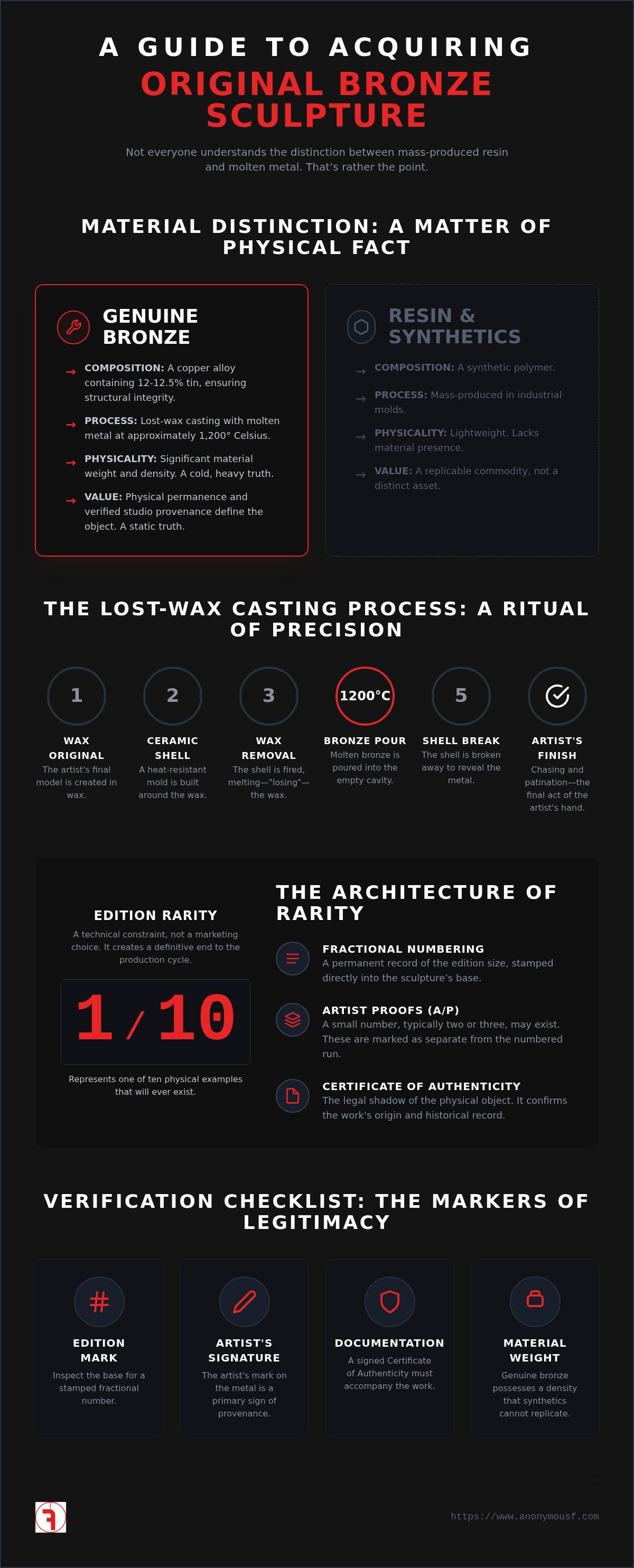
- Differentiate genuine molten bronze from resin by identifying the material facts of the 1,200-degree Celsius lost-wax casting process.
- Verify edition rarity through fractional numbering on the sculpture’s base, where a figure like 1/10 represents a strictly limited physical run.
- Consult this guide to acquiring original bronze sculptures to evaluate the provenance and technical specifications of character-based work.
- Recognize the narrative intent of characters like Mylo as they transition from oil on canvas into permanent three-dimensional metal.
The Physicality of the Medium: Lost-Wax Casting and Material Truth
Bronze is an alloy consisting primarily of copper, typically containing 12 to 12.5% tin. This specific chemical composition grants the metal its structural integrity and its ability to hold fine detail. Unlike synthetic alternatives, bronze possesses a significant material weight. This density provides the object with a physical presence that vinyl or resin cannot replicate. It's a heavy, cold truth that requires no justification.
The lost-wax process remains the definitive method for creating high-fidelity metal work. It involves creating a ceramic shell around a wax original. This shell is fired to melt the wax away, creating a negative space for molten metal at approximately 1,200 degrees Celsius. This technique has persisted throughout the history of bronze sculpture because it captures every nuance of the original mark. This guide to acquiring original bronze sculptures identifies the casting process as the primary marker of authenticity. Originality is defined by the artist’s direct involvement in the chasing and patination of the metal surface. The surface is not merely a finish; it is the final act of the artist’s hand.
The Specification of the Casting Process
The transition from a clay character model to the final bronze form requires multiple stages of technical refinement. The foundry acts as a partner in execution, yet the artist remains the final authority on the metal's texture. A bronze sculpture is a permanent record of the artist’s hand, frozen in metal. Characters like Mylo or Quiet Boy are no longer just concepts. They are physical weights. The alloy ensures the narrative survives the environment. It's a matter of technical specification rather than mere decoration.
The Architecture of Rarity: Edition Sizes and Provenance
Rarity in contemporary bronze is defined by the strict limitation of the multiple. Limited edition sculptures are produced in a fixed quantity, denoted by a fraction stamped into the lower quadrant of the metal. If an edition is set at 10, exactly 10 physical examples will ever exist. A small number of artist proofs may exist alongside the main edition, typically limited to two or three pieces, but these are clearly marked as separate from the numbered run.
Establishing provenance for a contemporary work requires the artist’s mark on the metal and a signed Certificate of Authenticity. The Certificate of Authenticity acts as the legal shadow of the physical object. It confirms the work's origin from the studio and its place within the historical record of the character. The lost-wax casting process ensures that each piece in a small edition retains the precise detail of the artist's original model.
This guide to acquiring original bronze sculptures identifies rarity as a fundamental component of an object's market position. The rarity of the multiple is not a marketing choice but a technical constraint. It creates a definitive end to the production cycle. It's a matter of ensuring the work remains a distinct asset rather than a mass-market commodity.
Verifying the Authenticity of a Multiple
A collector should inspect the base for a stamped edition number and the artist's signature. These marks are permanent records of the work's legitimacy, typically located on the lower quadrant of the sculpture. The Paradox of Permanence describes the phenomenon where a multiple retains the soul of the original work while existing as a distinct physical entity. The weight of the metal provides a security that digital or mass-produced items lack. Reviewing the Mylo collection demonstrates how these technical specifications manifest in physical form. Rarity is a settled matter of fact.
The Character in Form: Narrative Intent in Contemporary Bronze
Bronze transforms the ephemeral nature of pop art into a permanent record. Character-based sculpture, such as Mylo or Quiet Boy, translates internal human states into three-dimensional metal. This creates a specific tension. Pop culture is often viewed as disposable, existing only in the digital or temporary realm. Fine art bronze is defined by its endurance through time. This guide to acquiring original bronze sculptures views the medium as the final evolution of a character's narrative. Every character carries a specific weight. It moves beyond aesthetics into a study of human connection.
The Narrative Weight of Mylo and Quiet Boy
The Pop Art Original Artwork specification applies directly to these bronze figures. The choice of patina reflects the emotional register of the subject. Dark oxidisation suggests a withdrawal into the self. Polished highlights reveal a vulnerability to the light. These technical decisions are informed by understanding sculpture editions as finite expressions of a singular vision. We collect these objects because they hold the weight of our own unsaid stories.
Acquiring a bronze is an investment in the physical manifestation of a story. It requires a commitment to the material truth of the character. The object exists as a silent witness to the complexities of the heart. It's a settled matter. The narrative survives because the alloy demands it. The presence of the character in the room changes the atmosphere. It provides a grounding force that digital media cannot offer.
The Permanence of the Narrative Object
Bronze is a final commitment to the material truth of a character. This guide to acquiring original bronze sculptures has detailed the transition from 1,200-degree molten alloy to the permanent record of the artist's hand. Original character bronze sculptures are cast in limited editions to ensure the architecture of rarity remains a settled matter. Each work is accompanied by a signed Certificate of Authenticity, providing the legal shadow for the physical weight of the metal.
We collect these figures because they hold the weight of unsaid stories in a digital age. The permanence of the alloy ensures the character lives beyond the moment. The Bronze Collections are available for acquisition at Fringe. Choosing a bronze is a decision to ground a narrative in three-dimensional reality. It's a quiet, enduring observation of the human condition that will last as long as the metal itself.
Frequently Asked Questions
How do I distinguish between a molten bronze and a cold-cast resin sculpture?
Molten bronze is a metallic alloy cast at 1,200 degrees Celsius, whereas cold-cast resin is a plastic polymer mixed with metal powder. You can identify genuine bronze by its weight and thermal conductivity. Bronze feels cold to the touch. It possesses a density that resin cannot match. This guide to acquiring original bronze sculptures emphasizes that resin lacks the permanent material truth found in molten metal.
What is the significance of the edition number on a bronze sculpture?
The edition number is a fractional stamp, such as 1/12, located on the base of the work. It establishes the technical limit of the production run, ensuring that no more than the stated quantity will ever exist. This number is a fundamental component of the object's provenance. It transforms a character into a finite asset with a verified place in the studio's history.
How should a bronze sculpture be maintained to preserve its patina?
Preservation of the patina requires minimal intervention and the avoidance of abrasive chemicals. Dust the surface with a soft, dry cloth to prevent the accumulation of moisture. For long-term maintenance, apply a thin layer of microcrystalline wax to seal the metal from atmospheric oxidation. This process maintains the emotional register of the character's surface without compromising the integrity of the original casting.
What does the term "Artist Proof" mean in the context of a limited edition?
An Artist Proof, marked as AP, is a sculpture produced outside the primary numbered edition for the artist’s personal archive. These pieces are identical in material and process to the numbered multiples. They typically represent 10% to 15% of the total run. An Artist Proof carries the same narrative weight and technical specification as any other piece in the limited edition.

Article by
Fringe

Read more
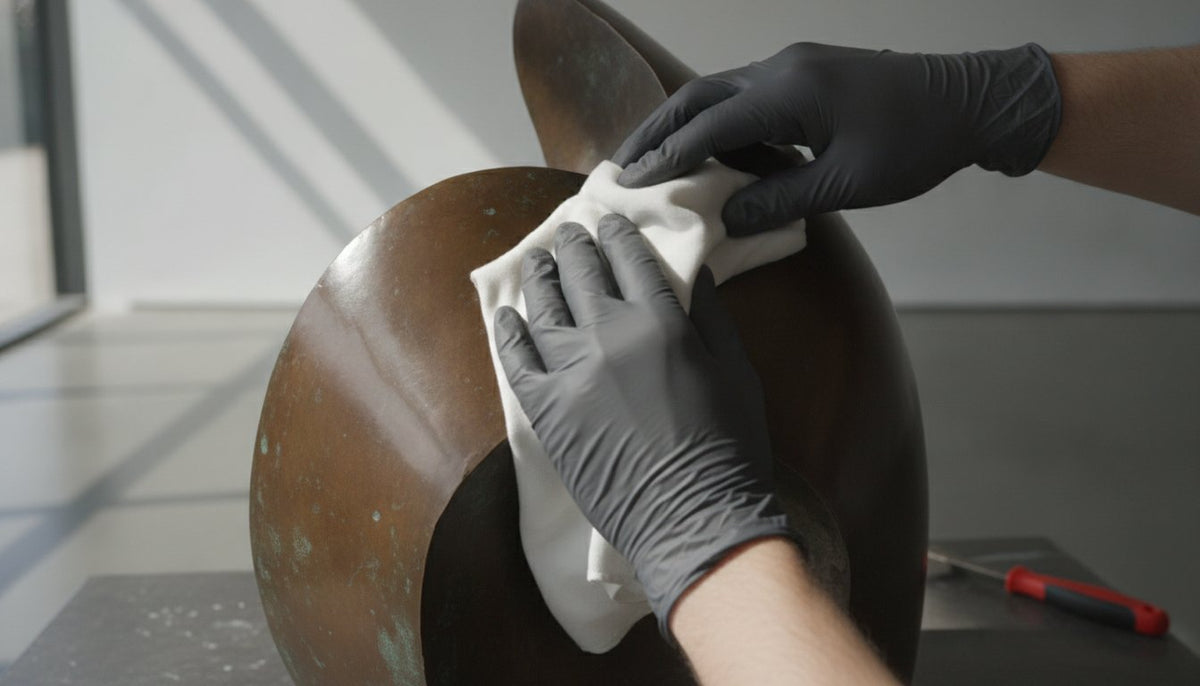
The Maintenance of Form: A Technical Protocol for Bronze Art Sculptures
Most collectors treat bronze as an immutable object. In reality, the metal is a slow-moving chemical event. You likely feel the weight of responsibility when it comes to maintaining the original pa...
Read more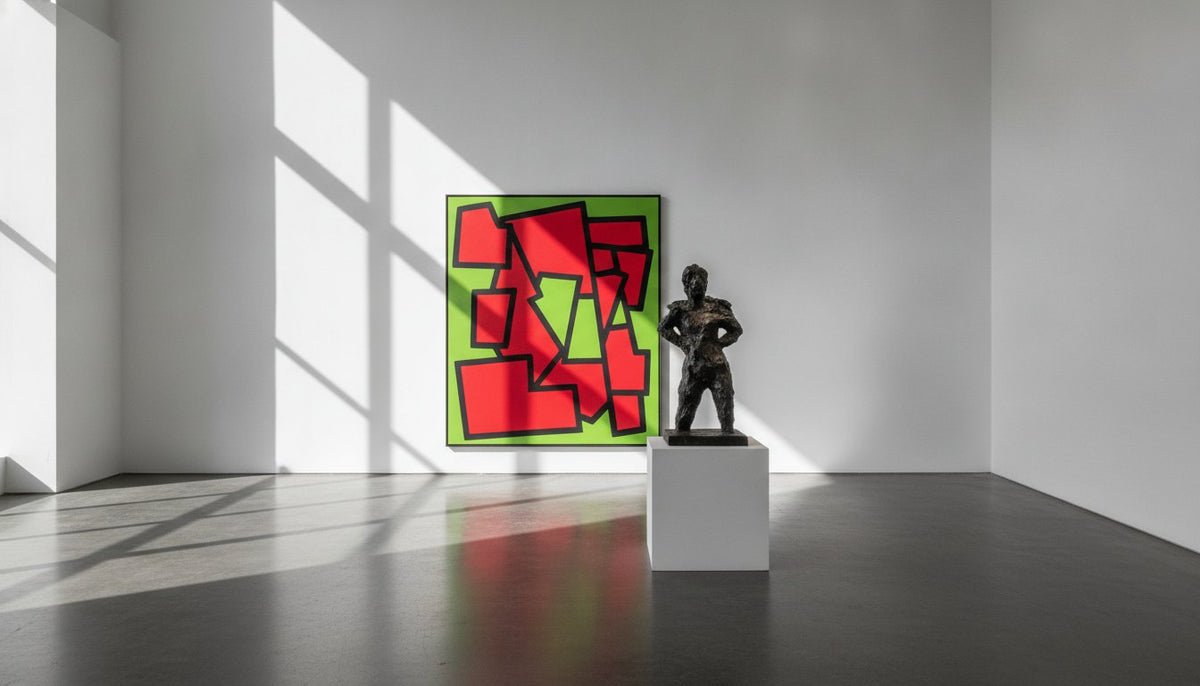
Building a Cohesive Contemporary Art Collection: The Specification of Intent
Not every acquisition contributes to a legacy. That's rather the point. You've likely felt the quiet frustration of a room filled with significant pieces that refuse to speak to one another. It's t...
Read more
Leave a comment
This site is protected by hCaptcha and the hCaptcha Privacy Policy and Terms of Service apply.