
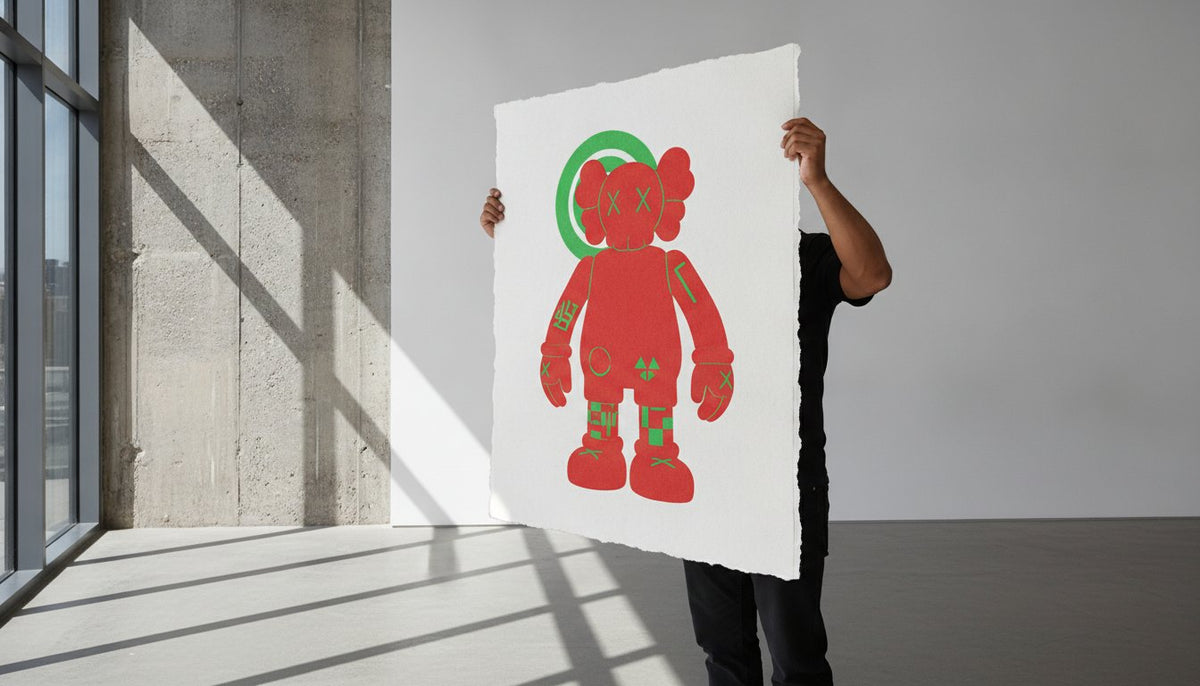
Understanding the Value of Limited Edition Prints
Not everyone understands the distinction between a reproduction and a fine art print. That is rather the point.
Most people see an image. The collector sees a physical record of intent. You already know that a mass-produced poster lacks the gravity of a signed edition. Understanding the value of limited edition prints requires moving beyond sentiment into the cold reality of material facts. For collectors seeking a high standard of archival quality in photography and fine art, Ilkaa's Fine Art Gallery & Atelier offers a curated environment where these material truths are front and center.
The global market for limited-edition prints reached 7.4 billion dollars in 2025. This growth is driven by the specific mechanics of scarcity. We will examine the technical specifications of paper weight and pigment-based inks. We will look at the logic of hand-signed numbering and the narrative weight of characters like Mylo or Nova. The value of a piece is a settled matter of its physical existence. It is a technical truth, not a marketing promise.
Key Takeaways
- A limited edition print is defined by a fixed quantity of impressions from a single master. Value is a result of the intentional restriction of the multiple.
- Technical indicators such as paper weight and ink chemistry determine the longevity of the physical object. Archival standards distinguish these pieces from standard commercial reproductions.
- Understanding the value of limited edition prints depends on the narrative weight of characters like Mylo and Nova. Provenance serves as the documented history of the work, starting at the artist's studio.
- Scarcity and material specifications are settled matters of fact rather than marketing claims. This technical knowledge provides the basis for a deliberate approach to collecting.
The Mechanics of Scarcity: Edition Size and Market Control
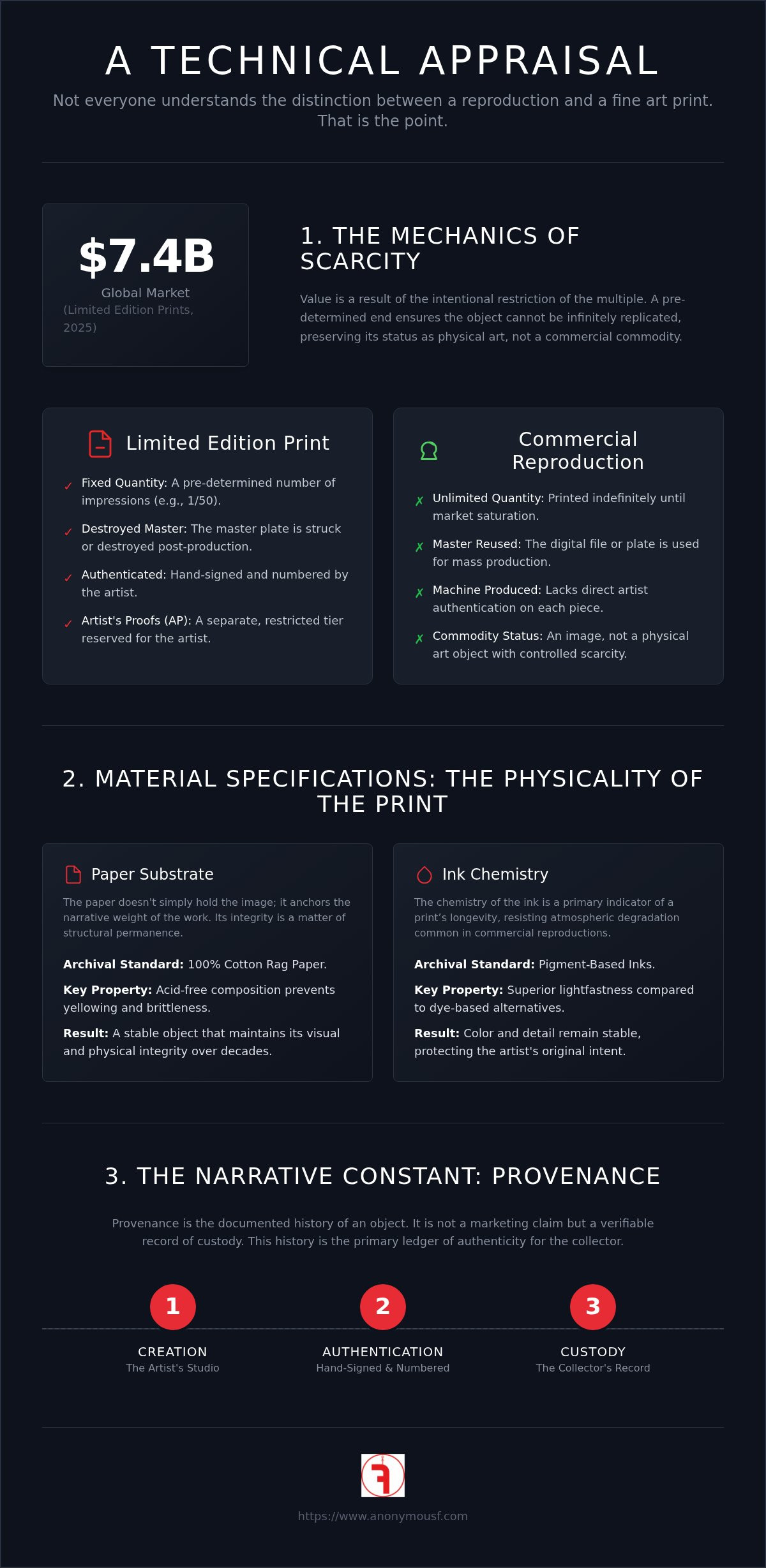
A limited edition print is a fixed quantity of impressions produced from a single master work. This is the foundation of understanding the value of limited edition prints. Unlike an open edition, which can be printed until the plate fails or the market saturates, a limited edition has a pre-determined end. The value is derived from this intentional restriction of the multiple. It ensures the object cannot be infinitely replicated, preserving its status as a physical art object rather than a commercial commodity.
Provenance is established through a verifiable hierarchy within a specific production run. In the technical context of an Edition (printmaking), the sequence is closed. Once the final number is assigned, the master is typically struck or destroyed. This act of destruction is as significant as the act of creation. It settles the market control by ensuring no further specimens can exist. This logic applies to characters like Mylo, where the edition size defines the character's physical presence in the world.
Defining the Numbered Multiple
This valuation based on scarcity isn't unique to fine art; it also drives the market for personalized collectibles. For example, Custom Sports Products applies these same principles of limited production and physical quality to items like custom trading cards and photo balls, creating unique memorabilia that serves as a tangible record of achievement.
Numbered prints, such as 1/50, denote the specific position of the piece within the total edition size. This numbering system is the primary mechanic for understanding the value of limited edition prints in a structured market. The artist’s signature is the final act of authentication, transforming the paper into a physical art object. It's a human mark on a mechanical process. An Artist’s Proof (AP) is a separate, restricted tier of the edition, traditionally reserved for the artist’s personal use or archival purposes. The object's value is a settled matter of its existence.
Material Specifications: The Physicality of the Print
The weight of the paper and the chemistry of the ink are the primary indicators of a print’s longevity. Archival standards ensure that the pigment remains stable, resisting the atmospheric degradation common in commercial reproductions. Understanding the value of limited edition prints requires a technical appraisal of these physical components. A high-end print utilizes acid-free, 100% cotton rag paper. This substrate prevents the yellowing and brittleness that occurs over decades. Pigment-based inks offer a level of lightfastness that dye-based alternatives cannot achieve. The result is a stable object that maintains its visual integrity.
Tactile quality is a priority for the serious collector. As noted in 5 Things Art Collectors Need to Know, the physical integrity of the edition is a settled matter of provenance. The intersection of medium and substrate defines the character of the finished piece. It is a matter of structural permanence. The paper doesn't simply hold the image; it anchors the narrative weight of the work. This stability allows the collector to focus on the intent behind the mark.
Ink, Paper, and the Artist’s Mark
Heavy-weight archival paper provides the foundation for narrative weight. Fringe hybrid art on paper serves as a specific example of medium convergence. These pieces combine traditional printing with manual layers of oil or mixed media. This process creates a surface tension where the mechanical meets the human. The hand of the artist is visible in the texture of the medium. It's a settled truth: the material defines the soul of the object. The hybrid works in the studio represent this intersection of stability and intervention.
The Narrative Constant: Why Provenance Defines Value
Provenance is the documented history of an object. It begins at the artist’s studio. For the collector, this history is the primary ledger of authenticity. Understanding the value of limited edition prints involves recognizing that provenance isn't a marketing claim. It's a record of custody. Each hand-signed and numbered edition carries this weight. The value is tethered to the narrative significance of the character portrayed. Characters like Mylo or Nova are not mere images. They represent specific archetypal states.
Collecting is an act of preserving a specific moment in an artist’s philosophical development. It is the physical capture of a concept. Markets are volatile. Narrative truth is not. This distinction creates a stable foundation for the work. The print serves as a witness to a specific internal state. It is a physical record of the human condition. The studio maintains the master records. These logs ensure that an edition of 50 remains exactly 50. The number on the paper is a fact. The narrative behind it is the truth.
Beyond the Market: The Weight of the Character
Characters like Mylo represent a study in human vulnerability and connection. The narrative weight of these figures provides a constant in a shifting market. You can read more about this in The Rarity of the Multiple: A Guide to Original Character Art Prints. The print is a vessel for this story. It's a settled matter of intent. The value remains because the struggle and connection depicted are universal. Authenticity is a material fact.
The Permanence of the Physical Record
The value of an art object is a technical truth. It is built upon 100% cotton rag paper and pigment-stable inks. It is secured by a fixed edition number and a human mark. These are not marketing suggestions. They are the mechanics of the object’s soul. Understanding the value of limited edition prints requires moving beyond the image to the structural reality of the piece. You are now equipped with the technical knowledge of material longevity and the logic of restricted existence.
Every piece in the Fringe collection of limited edition prints and hybrid works is shipped direct from the studio. These works are hand-signed and numbered by the artist using archival quality materials. This ensures the narrative weight of characters like Mylo remains stable over time. The record is clear. The object is constant. It is a reliable witness to a shared human experience.
Frequently Asked Questions
What is the difference between an open edition and a limited edition print?
A limited edition print exists in a pre-determined, finite quantity. Once the run is complete, the master is struck or destroyed. Open editions are produced indefinitely until the market is saturated or the plate fails. Understanding the value of limited edition prints requires acknowledging this intentional restriction. This scarcity creates a floor for the object's physical presence in the market.
How does the artist’s signature affect the value of a print?
The artist’s signature serves as the final act of authentication. It's the human record of intent on a mechanical multiple. A signed piece is recognized as a physical art object rather than a commercial reproduction. This mark establishes a direct link between the studio and the collector. It is a settled matter of provenance that confirms the authority of the work.
What does AP or PP mean on a limited edition print?
AP stands for Artist’s Proof, while PP denotes a Printer’s Proof. These are small subsets of the edition, traditionally restricted to 10% or less of the total run. These tiers are reserved for the artist’s archive or the collaborators involved in the production. Collectors often view these as more exclusive because they sit outside the primary numbered sequence of the edition.
Why are some prints more expensive than original paintings?
Market value follows narrative significance and historical weight rather than the medium itself. A limited edition print by an established artist can command higher prices than an original painting by a creator with less provenance. This occurs when the print represents a pivotal character or philosophical development. The value is a result of the work’s documented history and its position within a broader cultural narrative.

Article by
Fringe

Read more

Specification for the Display of Collectible Art Toys
Not everyone understands why a Mylo figure requires the same environmental precision as an oil on canvas. That's rather the point. Most treat character-based art as shelf fillers, yet the material ...
Read more
Maintenance Specifications for Pop Art Collectibles and Fine Art
Not everyone understands Mylo. That’s rather the point.The transition from the studio to a private collection is a shift in stewardship. You recognize that a bronze sculpture or an oil on canvas is...
Read more
Leave a comment
This site is protected by hCaptcha and the hCaptcha Privacy Policy and Terms of Service apply.