
Maintenance Specifications for Pop Art Collectibles and Fine Art
Not everyone understands Mylo. That’s rather the point.
The transition from the studio to a private collection is a shift in stewardship. You recognize that a bronze sculpture or an oil on canvas is a physical record of a specific intention. The fear of material oxidation or pigment fading is a rational response to the slow decay of matter. Understanding how to care for pop art collectibles requires a move away from sentiment toward technical protocol.
This guide provides the specifications for bronze, oil, and limited edition prints. We detail the requirements for light exposure, humidity levels, and archival framing. These protocols align with the International Standards Organization Technical Committee 349 goals for cultural heritage conservation. The narrative weight of the work remains intact when the physical medium is protected. Stability is the only goal.
Key Takeaways
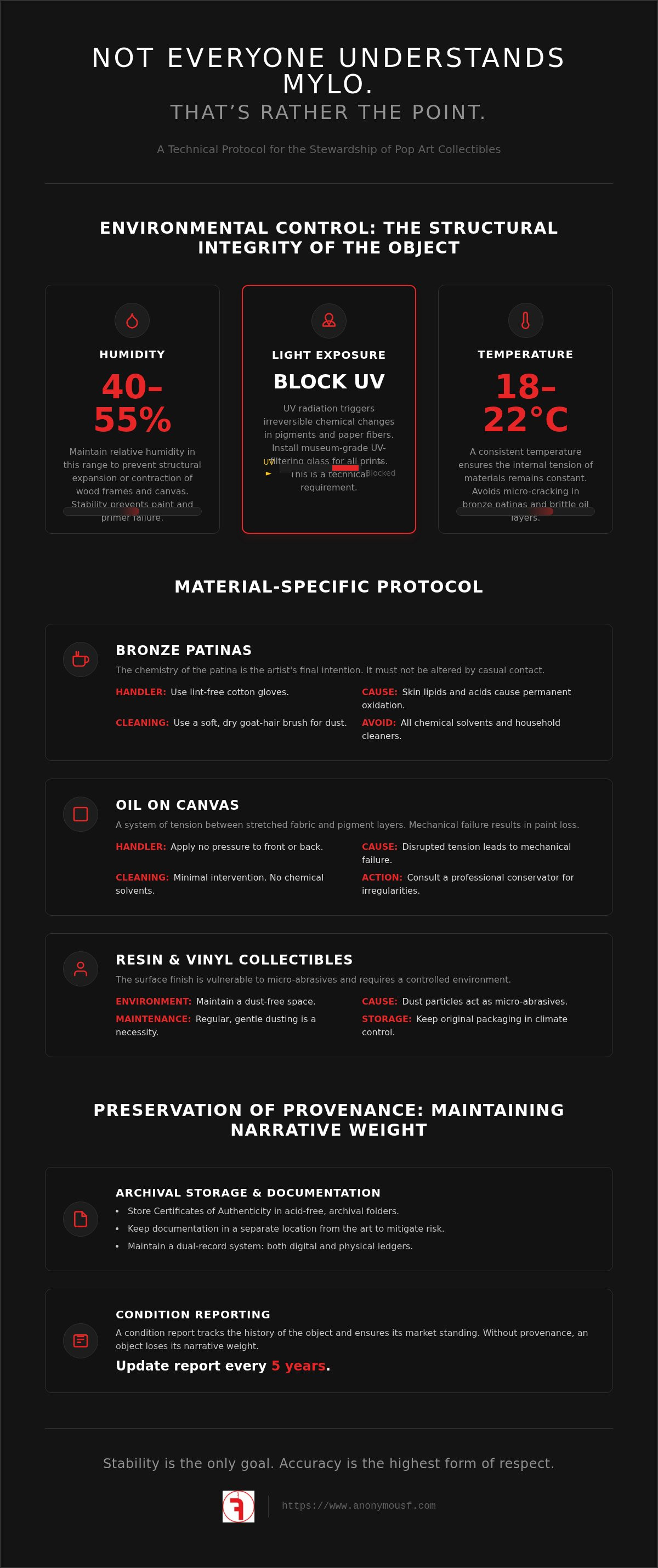
- Maintain relative humidity between 40% and 55% to prevent the structural expansion of wood frames and canvas.
- Shield pigments from UV radiation to stop the irreversible chemical changes that cause fading in oils and paper.
- Apply technical protocols for how to care for pop art collectibles, focusing on bronze patina sensitivity and canvas tension.
- Preserve the narrative weight of the object by managing documentation in acid-free archival storage.
Environmental Control: The Structural Integrity of the Object
A physical object is a collection of chemical bonds. These bonds are vulnerable. UV radiation triggers irreversible changes in oil pigments and paper fibers, breaking down the molecular structure of the work. This degradation is a central focus in the field of art conservation and restoration. To understand how to care for pop art collectibles, one must first accept that light is a corrosive force. It strips the vibrancy from the pigment and turns paper brittle.
Relative humidity acts directly on the organic components of a piece. Wood frames and canvas expand or contract based on moisture levels in the air. Maintaining a range between 40% and 55% prevents this mechanical stress. When levels fluctuate, the bond between the primer and the paint begins to fail. Thermal fluctuations are equally disruptive. Rapid temperature changes lead to micro-cracking in bronze patinas and brittle oil layers. Those who know how to care for pop art collectibles prioritize environmental consistency over aesthetic placement. Stability is the only defense against the entropy of the material.
Ultraviolet and Thermal Thresholds
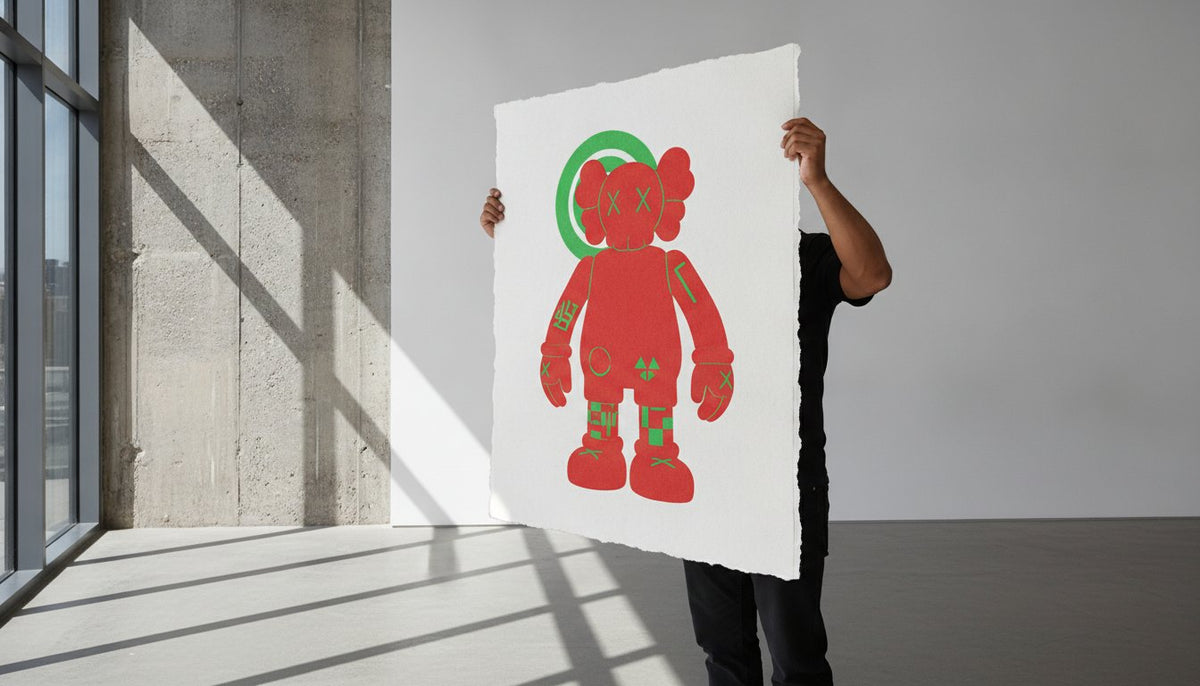
Protecting the surface requires specific barriers. Install museum-grade UV-filtering glass for all limited edition art prints to block high-energy wavelengths. This isn't a suggestion; it's a technical requirement for longevity. A consistent temperature between 18°C and 22°C ensures the internal tension of the materials remains constant. Position character-based sculptures away from radiators, vents, or cooling units. Direct heat sources accelerate the degradation of the object's narrative weight. We preserve the work because we respect the struggle of its creation. Stability is the final word.
Material-Specific Protocol: Oil, Bronze, and Character Collectibles
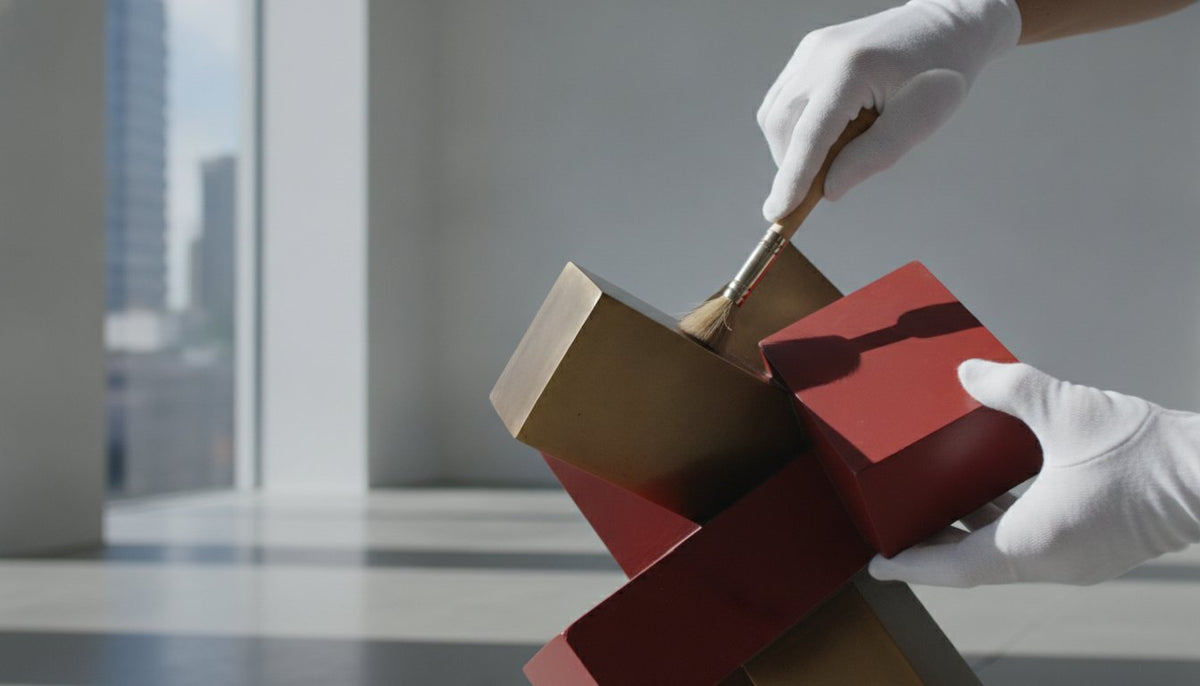
Bronze patinas are sensitive to the lipids and acids present on human skin. Handling these works with bare hands leaves permanent marks through localized oxidation. Use lint-free cotton gloves. This is a technical standard for anyone learning how to care for pop art collectibles. The chemistry of the patina is the artist's final intention. It shouldn't be altered by casual contact.
Oil on canvas is a system of tension. The fabric is stretched over a wooden frame, creating a semi-flexible support for the pigment layers. Applying pressure to the front or back of the canvas disrupts this tension. This leads to mechanical failure and paint loss. Character-based collectibles made of resin or vinyl require a dust-free environment. Dust particles act as micro-abrasives that scratch the surface finish. Static electricity attracts these particles, making regular, gentle maintenance a necessity.
Tactile Interaction and Cleaning Standards
The conservation code of ethics emphasizes minimal intervention. Use a soft, dry goat-hair brush to remove surface dust from Quiet Boy Bronze or other sculptures. Avoid all chemical solvents or household cleaners on oil on canvas surfaces. These substances react with the binder and cause irreversible color shifts. If you notice surface irregularities, consult a professional conservator. Home repairs often result in permanent loss of narrative weight. Those who understand the value of Fringe studio works treat maintenance as a technical duty. The physical truth of the object is preserved through restraint. Accuracy is the highest form of respect. This protocol is the baseline for how to care for pop art collectibles.
The Preservation of Provenance: Maintaining Narrative Weight
Not everyone understands why a piece of paper matters as much as the bronze. That is the point. The physical object and its documentation form a single unit of value. One cannot exist in its full capacity without the other. Learning how to care for pop art collectibles requires a commitment to the preservation of provenance. Certificates of authenticity must be stored in acid-free, archival folders. These folders should be kept in a separate location from the art piece to mitigate risk. Provenance records track the history of the object and ensure its place in the contemporary art market. Specialized firms like Memorabilia Brokers emphasize that maintaining such records is a standard practice for protecting the value of any high-end collectible. A condition report, which can cost at least $150, should be updated every five years. Without this history, the object loses its narrative weight. It becomes a silent thing.
Archival Storage and Documentation
Maintain a digital and physical ledger of all Fringe collectable toys and sculptures. This dual-record system protects against physical loss or digital corruption. Store original packaging for character pieces in a climate-controlled area. For many collectors, the box is an extension of the work's structural integrity. It preserves secondary market integrity and provides the context of the original release. Reference The Soul of the Object for the philosophical context behind these physical forms. Just as with designer toys, premium cultural apparel requires a deep appreciation for material quality and heritage; you can learn more about how these standards define high-end streetwear. We record these details because the physical object is a vessel for a human truth. Documentation serves as the object's memory. The transition of ownership does not end the artist's responsibility to the truth of the medium. A collection is a story that requires accurate proof. Accuracy is the only way to honor the work. The ledger is the definitive account of the object's life.
Stewardship is a technical duty. Preservation relies on environmental stability and material restraint. Maintaining a climate between 18°C and 22°C prevents the micro-cracking of pigments. Handling bronze with lint-free gloves stops skin acidity from altering the patina. These protocols define how to care for pop art collectibles with the precision the medium requires. Documentation is the secondary half of the object's value. Archival storage for provenance ensures the narrative weight persists.
The studio maintains these standards until the work reaches a private collection. The Fringe Studio Collection includes Original Oil on Canvas and character-based bronze sculptures. International shipping for collectors ensures the work arrives in its intended state. Each piece is a record of a human truth. You're now equipped to protect that record. Reliability is the foundation of a lasting collection.
Frequently Asked Questions
How do I clean a bronze pop art sculpture without damaging the patina?
Use a dry, soft goat-hair brush to lift surface dust without disturbing the chemical bond of the patina. Avoid all liquids, waxes, or household polishes, as these can trigger oxidation or strip the artist's intended finish. Handling must be done with lint-free cotton gloves to prevent skin oils from etching the surface. These technical steps are essential for how to care for pop art collectibles in bronze.
Can I display original oil paintings in a room with natural light?
Natural light is a corrosive element that triggers chemical changes in oil pigments. While a room with windows is acceptable, the work must never be in the path of direct sunlight. Install museum-grade UV-filtering glass to mitigate high-energy wavelengths. If the temperature in the room fluctuates beyond the 18°C to 22°C range due to sun exposure, the canvas tension will fail and lead to cracking.
What is the best way to store character-based collectibles when not on display?
Store character pieces in their original packaging within a climate-controlled environment to maintain secondary market integrity. Use acid-free archival containers to prevent the degradation of resin or vinyl materials. The storage area must mirror display conditions, keeping humidity between 40% and 55%. This level of detail is a prerequisite for how to care for pop art collectibles during long-term rotation or transit.
How does humidity affect limited edition art prints on paper?
Paper fibers are hygroscopic and respond to moisture by expanding or contracting. Humidity levels above 60% encourage mold growth and foxing, while levels below 35% make the fibers brittle. Maintain a consistent environment of 40% to 55% relative humidity to ensure the structural integrity of the print. Fluctuations lead to cockling or rippling, which permanently disrupts the visual plane and the narrative weight of the work.

Article by
Fringe

Read more
Understanding the Value of Limited Edition Prints
Not everyone understands the distinction between a reproduction and a fine art print. That is rather the point.Most people see an image. The collector sees a physical record of intent. You already ...
Read more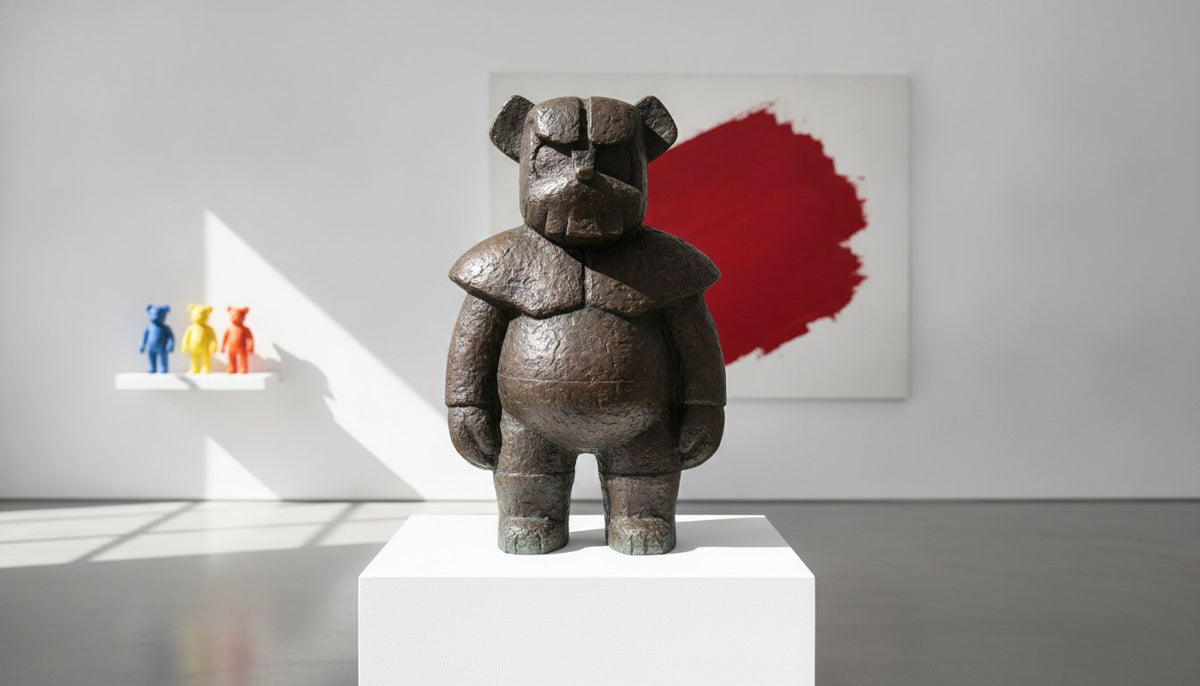
Pop Art Character Collectibles: The Specification of Original Form
Not everyone understands the necessity of physical weight in a digital age. That is rather the point. Most collectors settle for mass-produced, licensed vinyl figures where the narrative ends at th...
Read more
Leave a comment
This site is protected by hCaptcha and the hCaptcha Privacy Policy and Terms of Service apply.