
Specification for the Display of Collectible Art Toys
Not everyone understands why a Mylo figure requires the same environmental precision as an oil on canvas. That's rather the point. Most treat character-based art as shelf fillers, yet the material reality of vinyl and bronze demands a rigorous methodology. Learning how to display art toys is less about interior design and more about the preservation of a narrative pulse. You likely understand that a stray UV ray does more than obscure a detail; it erodes the intent of the work.
Dust on the intricate details of a Nova figurine or the fading of hand-painted finishes are the quiet enemies of the collector. This article provides the technical and narrative frameworks required for a museum-quality presentation and long-term material stability. The following specifications address the positioning of bronze anchors, light exposure for vinyl, and the integration of three-dimensional characters with limited edition prints.
Key Takeaways
- UV exposure causes irreversible pigment degradation in vinyl figurines, requiring specific environmental controls to maintain original color saturation.
- Structural choices like floating shelves prioritize the character's silhouette while museum-grade glass protects intricate details from atmospheric dust.
- Technical frameworks for how to display art toys involve positioning three-dimensional figures in the foreground of oil on canvas works to create narrative layers.
- Bronze sculptures function as permanent material anchors, providing the necessary weight to ground mixed-media collections containing paper-based works.
Environmental Specifications and Material Integrity
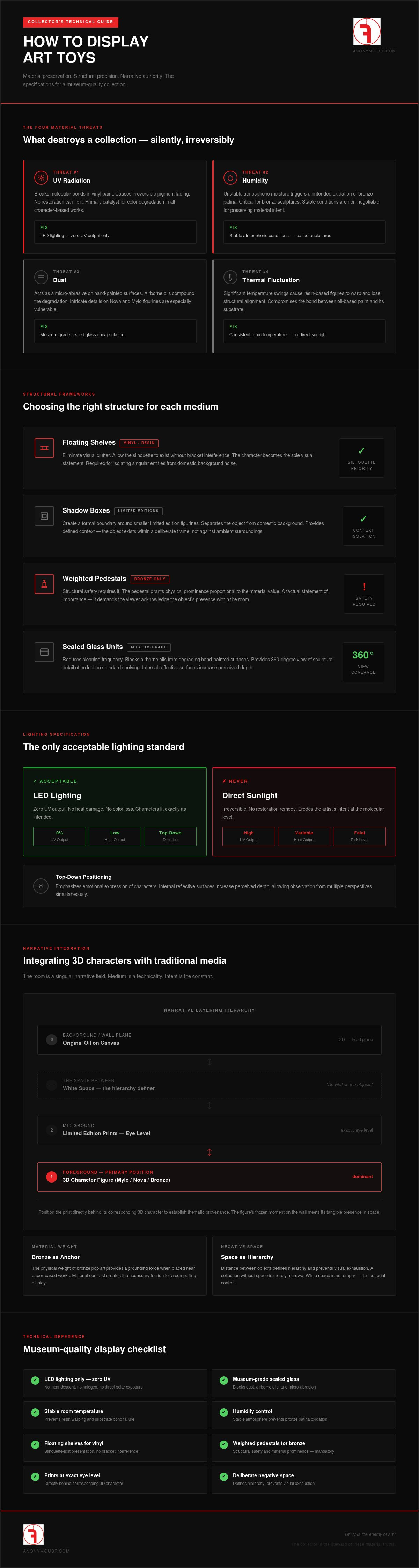
The material life of a character is defined by the environment it inhabits. Most collectors mistake visibility for presentation. In reality, the technical framework of how to display art toys begins with material preservation. Light exposure serves as the primary catalyst for pigment degradation in vinyl. UV radiation breaks the molecular bonds of the paint, leading to irreversible fading that no restoration can fix. This is a settled fact of polymer chemistry. Knowing how to display art toys properly prevents the slow erasure of the artist's intent.
Bronze sculptures offer a different set of requirements. While they provide permanent weight and material stability, they remain sensitive to humidity. Stable atmospheric conditions prevent unintended oxidation of the patina. Dust is equally problematic. It acts as a micro-abrasive on hand-painted surfaces, requiring sealed encapsulation for long-term integrity. Thermal stability is the final metric. Significant temperature fluctuations cause resin-based figures to warp or lose their structural alignment over time.
UV and Temperature Control Frameworks
Positioning high-end collectibles requires a precise understanding of solar paths. Characters should never sit in direct sunlight. A consistent room temperature protects the bond between oil-based paints and their underlying substrates. When choosing illumination, LED lighting with zero UV output is the only acceptable standard. This allows characters like Mylo to be lit without the risk of heat damage or color loss. A controlled environment ensures the object remains exactly as the artist intended. Authority over the space dictates the longevity of the collection. The collector is the steward of these material truths.
Structural Frameworks for Narrative Placement
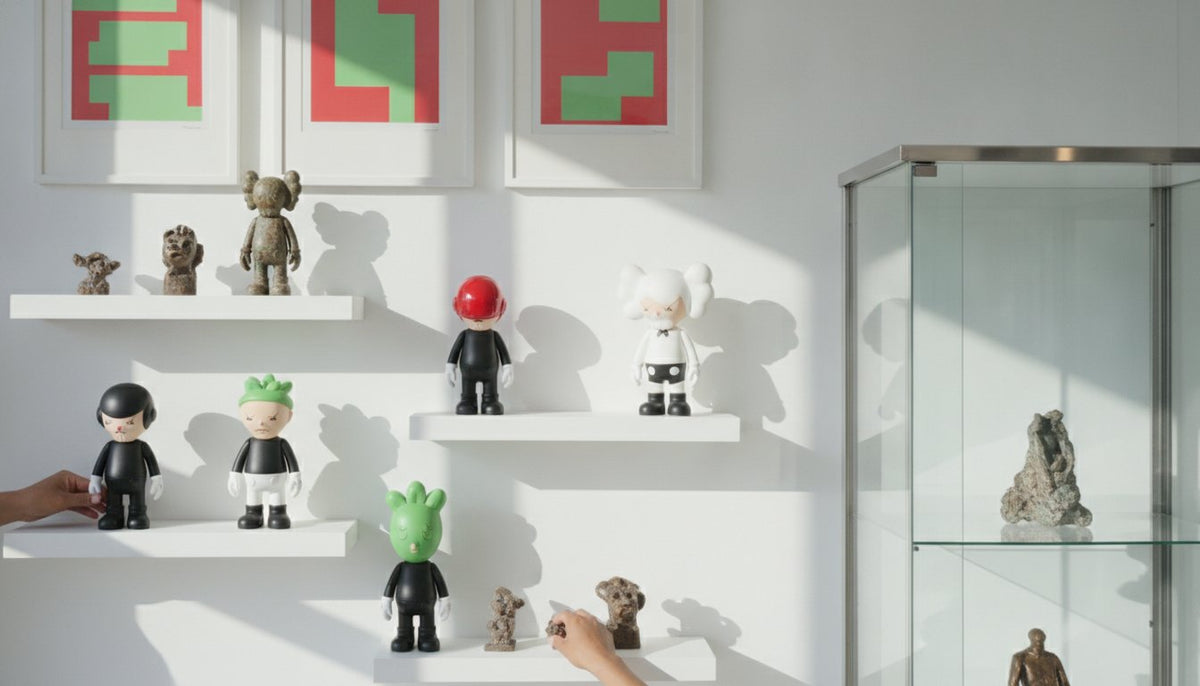
Utility is the enemy of art. While generic mass-market shelving units offer storage, they fail to provide narrative weight. Floating shelves eliminate visual clutter. They allow the silhouette of a character to exist without the interference of brackets or heavy frames. This is a technical requirement for those considering how to display art toys as singular entities rather than mere inventory. Shadow boxes, by contrast, create a formal boundary. They isolate smaller limited edition figurines, providing a defined context that separates the object from the domestic background. Many collectors enhance this isolation by using textured backdrops or scene-setting stickers from KreativeWall.com to ground the character in its own unique world.
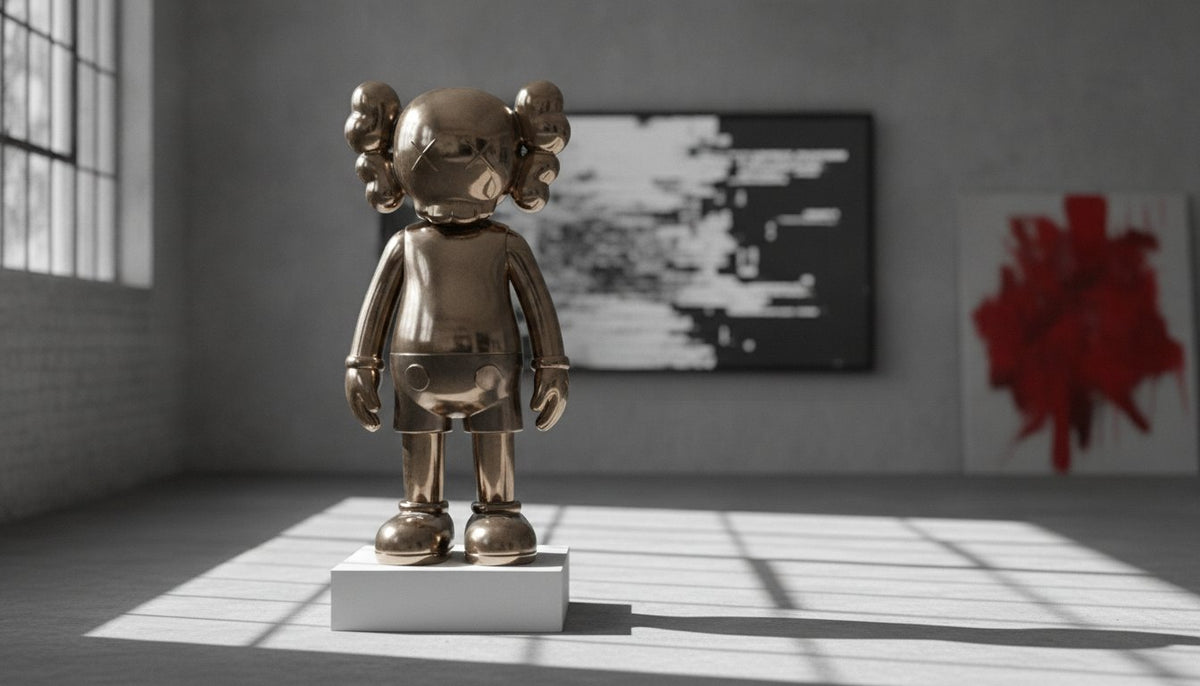
Bronze works require a specific structural logic. Material stability is achieved through weighted pedestals. These are necessary to ensure structural safety given the permanent weight of the medium. A pedestal grants the work a physical prominence that matches its material value. It is a factual statement of importance. It demands that the viewer acknowledge the object's presence within the room.
Glass Encapsulation and Lighting Dynamics
Sealed glass units are a functional necessity. They reduce cleaning frequency and prevent the accumulation of airborne oils that can degrade hand-painted surfaces. Museum-grade glass provides a 360-degree view of sculptural details that are often lost in standard shelving. Top-down lighting is used to emphasize the emotional expression of characters such as Nova. Internal reflective surfaces increase the perceived depth of a character-based sculpture, allowing the viewer to observe the work from multiple perspectives simultaneously. This approach ensures the narrative integrity of the piece remains intact. Many collectors find that Fringe bronze sculptures provide the necessary anchor for these structural frameworks. Mastering how to display art toys involves balancing these physical constraints with the internal soul of the work.
Contextual Integration with Traditional Media
The distinction between a sculpture and a painting is a technicality of medium, not a separation of intent. True integration requires the collector to view the room as a singular narrative field. Positioning character toys in the foreground of original oil on canvas art creates a multi-dimensional narrative that bridges the gap between the two-dimensional and the physical. This layering forces a dialogue between the character's frozen moment on the wall and its tangible presence in the space. It's a fundamental principle of how to display art toys within a serious collection.
Material contrast provides the necessary friction for a compelling display. The physical weight of bronze pop art offers a grounding force when placed near paper-based works. Limited edition prints should be hung exactly at eye level, positioned directly behind their corresponding three-dimensional characters to provide a backdrop of origin. The distance between these objects, the white space, is as vital as the objects themselves. It defines the hierarchy of the pieces and prevents visual exhaustion. A collection without space is merely a crowd.
Hybrid Media and Character Dynamics
Pairing a Gutinke figure with a hybrid on paper establishes a clear thematic provenance that transcends simple aesthetics. It's more effective to group characters by their shared narrative arc rather than by physical size. This preserves the soul of the work. For those requiring technical hanging specifications, the Guide to Displaying Contemporary Art outlines the precise measurements for mixed-media alignment. Mastering how to display art toys alongside traditional media is the final step in moving from a casual observer to a dedicated steward of the work. The narrative weight is the only metric that matters.
The Architecture of Narrative Preservation
The material integrity of a collection rests on technical execution. Mastering how to display art toys requires a transition from storage to specification. UV filtration protects the chemical bonds of vinyl, while weighted pedestals ensure the safety of bronze works. These are not suggestions; they're the physical requirements of the medium. A collection is a dialogue between character and space. To ensure your living room decor complements this dialogue, visit Artistry Deco Shop for functional art home accessories. Bronze sculptures are cast in limited editions to ensure rarity, while original character designs by Fringe provide a human pulse to the room. Each piece carries verified provenance, representing a settled value within the market.
The final framework is the narrative itself. By positioning three-dimensional figures against traditional media, the collector establishes a multi-dimensional history. Fringe Collectable Toys offer the material weight necessary to anchor such a vision. The steward of these works understands that the right environment doesn't just hold art; it respects it.
Frequently Asked Questions
How do I prevent my art toys from fading over time?
Pigment degradation is a material certainty under UV exposure. Use museum-grade glass with a 99% UV rating to block harmful rays. LED lighting is the only acceptable artificial source because it emits zero UV. Learning how to display art toys correctly involves treating light as a technical variable that must be managed to preserve the artist's original intent.
Should I keep the original packaging for display purposes?
Original packaging serves as a secondary layer of provenance and should be stored in a climate-controlled environment. While the box maintains the market value of limited editions, the object itself carries the narrative weight. Displaying the work outside its packaging allows for the 360-degree observation of character details. A collector understands that the box is for the market; the sculpture is for the space.
What is the best way to clean dust from a bronze pop art sculpture?
Natural light is only permissible if it's indirect or filtered through UV-resistant window films. Direct solar paths cause the vinyl to soften and the paint to bond poorly with the substrate. When considering how to display art toys, the orientation of the room's windows dictates the placement of the work. Ambient light is acceptable; direct sun is a technical error in preservation.

Article by
Fringe

Read more
Emerging Pop Artists to Watch in 2026: The Specification of the Physical Object
Not everyone understands the difference between a viral image and a permanent object. That's rather the point. Most people consume art through a backlit screen, mistaking a temporary glow for a las...
Read more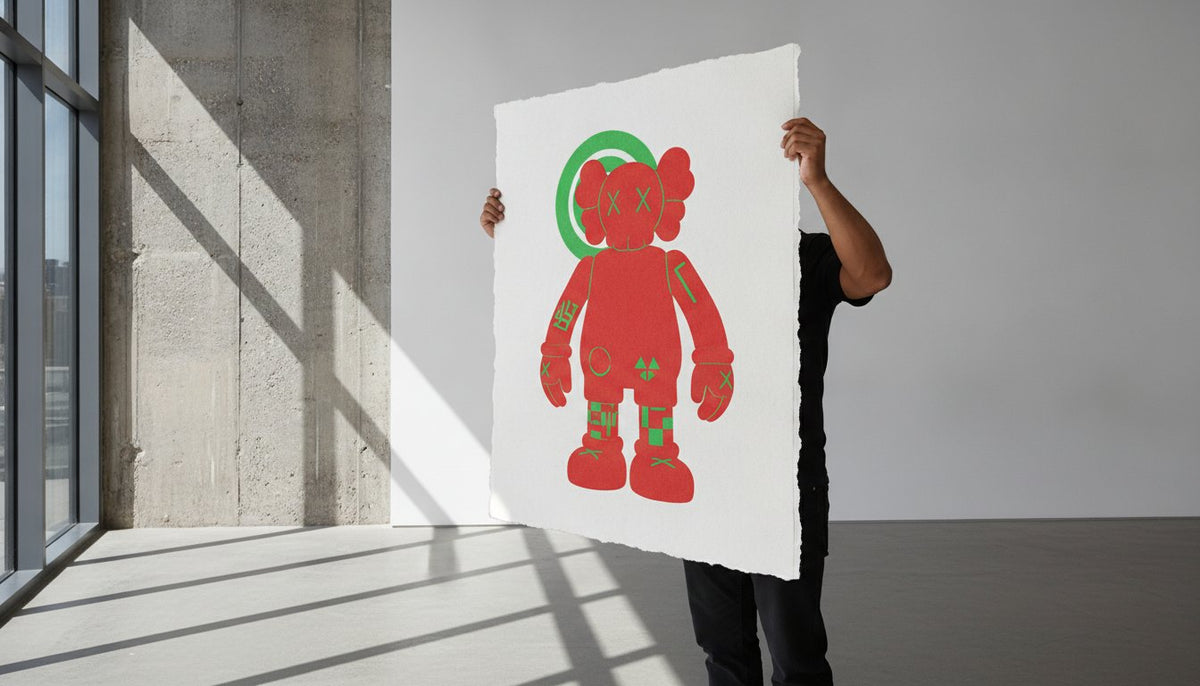
Understanding the Value of Limited Edition Prints
Not everyone understands the distinction between a reproduction and a fine art print. That is rather the point.Most people see an image. The collector sees a physical record of intent. You already ...
Read more
Leave a comment
This site is protected by hCaptcha and the hCaptcha Privacy Policy and Terms of Service apply.