
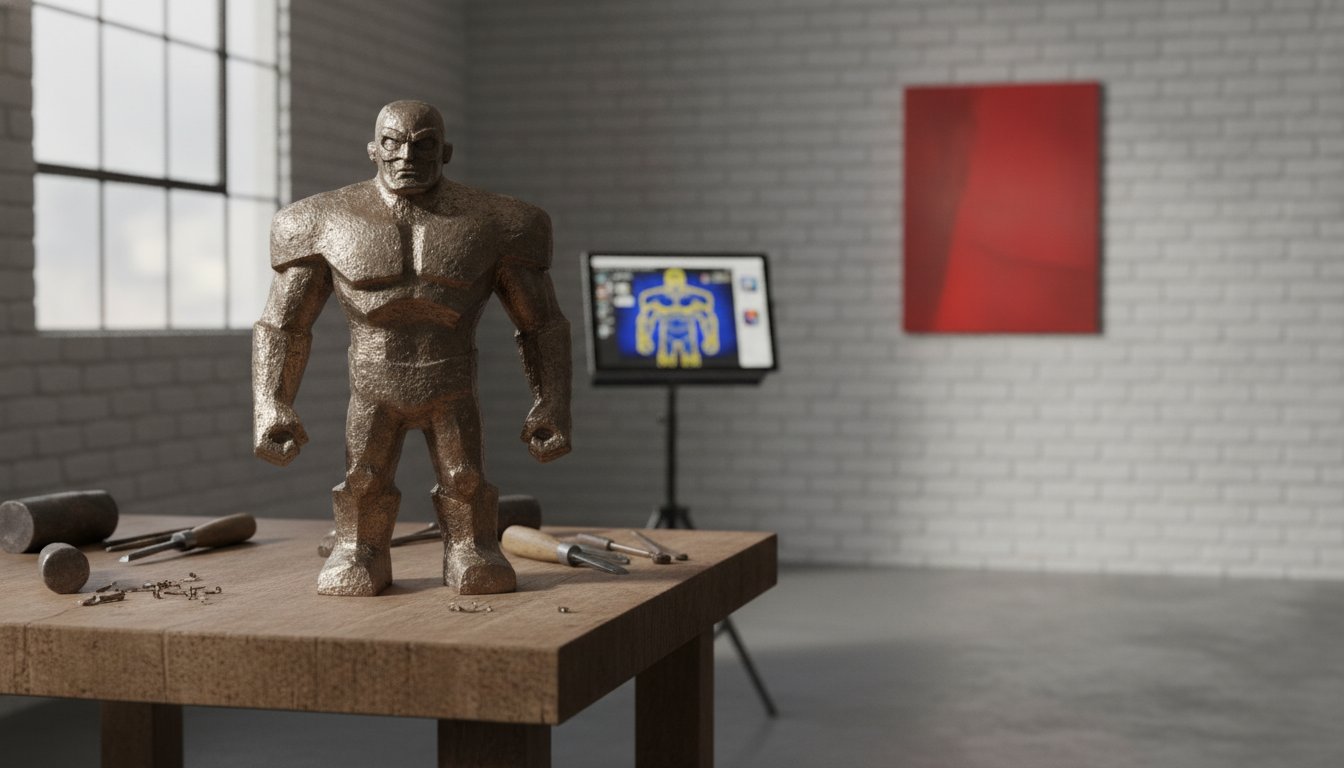
The Origin of Archetypes: Inspiration Behind Original Pop Art Characters
Not everyone understands Mylo. That’s rather the point. Most collectors are exhausted by the oversaturation of derivative fan-art and the lack of depth in mass-produced vinyl toys. You likely feel the confusion between fleeting digital art and the permanence of a physical collectible. This article provides a factual examination of the inspiration behind pop art characters that move from digital concepts into original physical archetypes. We will look at how characters like Nova and Gutinke evolve from internal human paradoxes into objects with narrative weight. You'll learn the transition from found imagery to original forms; we also detail the specifications of high-end materials like lost-wax bronze casting and oil on canvas. The value of a character is defined by its material truth. It's a shift from digital noise to something substantial.
Key Takeaways
- Trace the historical shift from 1960s consumer parodies to the modern creation of original physical archetypes.
- Examine the technical role of lost-wax bronze casting and oil on canvas in defining the inspiration behind pop art characters.
- Contrast the transient nature of mass-produced vinyl toys with the narrative weight of high-end bronze and canvas mediums.
- Identify the specific design specifications of Mylo and Nova to understand their evolution from digital concepts to physical objects.
From Consumer Icons to Original Archetypes
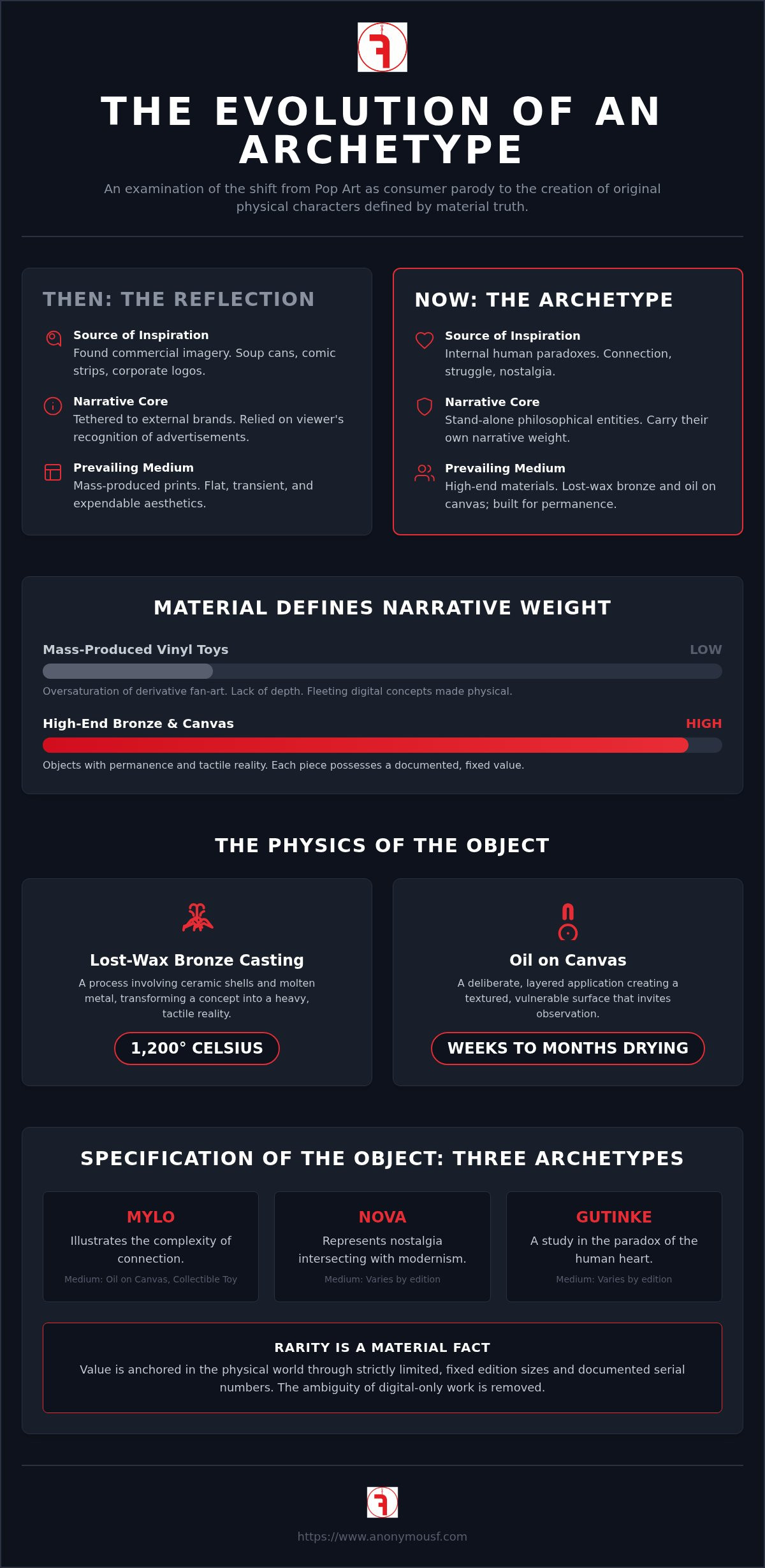
The history of Pop Art began as a deliberate revolt against traditional subject matter. In the 1960s, the movement prioritized the transient, the popular, and the expendable. It utilized found commercial imagery to mirror a society obsessed with mass production. Warhol and Lichtenstein didn't invent characters; they borrowed them from soup cans and comic strips. This established a precedent where the art was a reflection of external branding rather than internal narrative.
The focus has shifted. The inspiration behind pop art characters is no longer found on a grocery shelf. Modern collectors demand more than a clever parody of a corporate logo. They seek original archetypes that carry their own narrative weight. These characters, whether cast in lost-wax bronze or painted in oil on canvas, function as vessels for human paradoxes rather than mirrors of consumerism. They're physical manifestations of connection and struggle, existing as independent entities within the art world.
The Evolution of the Character Narrative
Early pop figures were tethered to their source material. They relied on the viewer's recognition of an advertisement or a newspaper clipping. Contemporary figures like Mylo and Nova operate differently. They're designed as stand-alone philosophical entities. They don't reference a brand; they reference a state of being. This transition represents a move from the "found" to the "created." It's a fundamental change in the inspiration behind pop art characters, as seen in The Soul of the Object: A Guide to Collectible Designer Toys in 2026. These characters possess a permanence that the 1960s "expendable" art lacked. They're built to endure as physical truths.
Materiality and the Physics of Character Inspiration
The medium is the message. While Pop Art and consumer culture historically leaned on flat, mass-produced aesthetics, the physical weight of a character changes its narrative impact. The inspiration behind pop art characters often begins as a concept, but it's finalized in the foundry. Bronze casting utilizes the lost-wax method, a process involving ceramic shells and molten metal at approximately 1,200 degrees Celsius. This adds a sense of permanence that digital art lacks. It transforms a fleeting character concept into a heavy, tactile reality.
Oil on canvas provides a different emotional register. It offers a textured, vulnerable surface that invites close observation. This depth contrasts sharply with the perceived flatness of commercial prints. The inspiration behind pop art characters is found in the friction between the artist's hand and the canvas surface. Layering oil requires patience; drying times are measured in weeks or months depending on the thickness of the application. Hybrids on paper bridge this gap by combining traditional sketches with modern character silhouettes, capturing the raw origin of the form.
Specifications of the Physical Object
A bronze sculpture possesses a specific density. It carries a structural weight that mass-produced vinyl cannot replicate. This physical presence is a core component of Pop Art Original Artwork: The Specification of the Physical Object. Oil paintings demand a deliberate, layered application. Each stroke adds narrative weight, creating a multifaceted personality that changes under different lighting. The choice of material is never arbitrary; it's the final truth of the work. You can observe these material distinctions in the oil on canvas collection.
The Specification of the Object: Mylo, Nova, and Gutinke
Not every character earns its place in a physical collection. Mylo, Nova, and Gutinke exist as original archetypes, moving beyond the traditional Pop Art's reflection of mass media to address internal human states. Mylo is designed to illustrate the complexity of connection. He appears in oil on canvas and as a collectable toy. Nova represents the intersection of past nostalgia and future modernism. Gutinke serves as a study in the paradox of the human heart. These figures are the primary inspiration behind pop art characters that prioritize narrative depth over commercial parody. They aren't mirrors; they're anchors.
Rarity is a material fact. These characters are released in strictly limited editions. This ensures provenance through documented edition sizes and material specifications. A bronze sculpture of Quiet Boy or a Mylo by Fringe figure carries a serial number. It anchors its value in the physical world. The edition size is fixed at the moment of creation. This removes the ambiguity often found in digital-only works. The physical object carries the drama.
Curating a Narrative Collection
Collecting original characters is an act of identifying with a specific narrative. It's a shift from consuming imagery to owning an archetype. Each piece, from oil on canvas to Quiet Boy Bronze, is defined by its physical specification. The inspiration behind pop art characters today is found in the weight of the bronze and the texture of the paint. Provenance is maintained through physical documentation. This includes material facts like the lost-wax casting process or the specific dimensions of the canvas. The object is the settled matter. It doesn't ask for permission to exist.
Defining the Next Era of Physical Archetypes
The transition from found commercial imagery to original character archetypes marks a significant evolution in the genre. The inspiration behind pop art characters now resides in internal human paradoxes rather than external branding. The choice of medium, specifically lost-wax bronze casting and oil on canvas, dictates the emotional register and narrative weight of the work. Characters like Mylo, Nova, and Gutinke provide a physical anchor in a landscape often cluttered with digital noise. They exist as documented facts with fixed edition sizes and proven studio provenance.
Collectors who prioritize material truth understand the value of these physical specifications. The independent artist studio ensures that every piece, whether a bronze sculpture or a hybrid on paper, maintains its structural integrity. You may view the current iterations of these archetypes within The Fringe Collection. Connection is a physical requirement, not a digital option. The object remains for those who value the truth of the material. It's a settled matter.
Frequently Asked Questions
What is the primary inspiration for modern pop art characters?
The inspiration behind pop art characters has moved from external branding to internal human archetypes. Modern figures like Nova or Gutinke represent philosophical states rather than consumer products. They don't rely on the recognition of a corporate logo. Instead, they serve as original vessels for narrative weight and emotional complexity.
How do original pop art characters differ from 1960s pop icons?
Original characters are created from scratch, whereas 1960s icons were borrowed from mass culture. Early pop art relied on found imagery like comic strips and advertisements. Contemporary archetypes exist as stand-alone entities designed within an independent studio. This transition shifts the focus from commercial parody to original narrative permanence.
Why is material choice significant in character-based art?
Material choice is the final truth of the work. The inspiration behind pop art characters is finalized in the foundry or on the canvas. Bronze casting provides a structural weight that vinyl cannot replicate. These physical specifications define the emotional register and ensure the character exists as a substantial collectible.
Are original pop art characters considered fine art?
Characters cast in bronze or painted in oil are fine art because of their material truth and documented provenance. Edition sizes are fixed at the moment of creation. They aren't mass-produced toys or digital-only assets. This physical documentation ensures the work remains a substantial collectible. The value is a settled matter of material and process.

Article by
Fringe

Read more
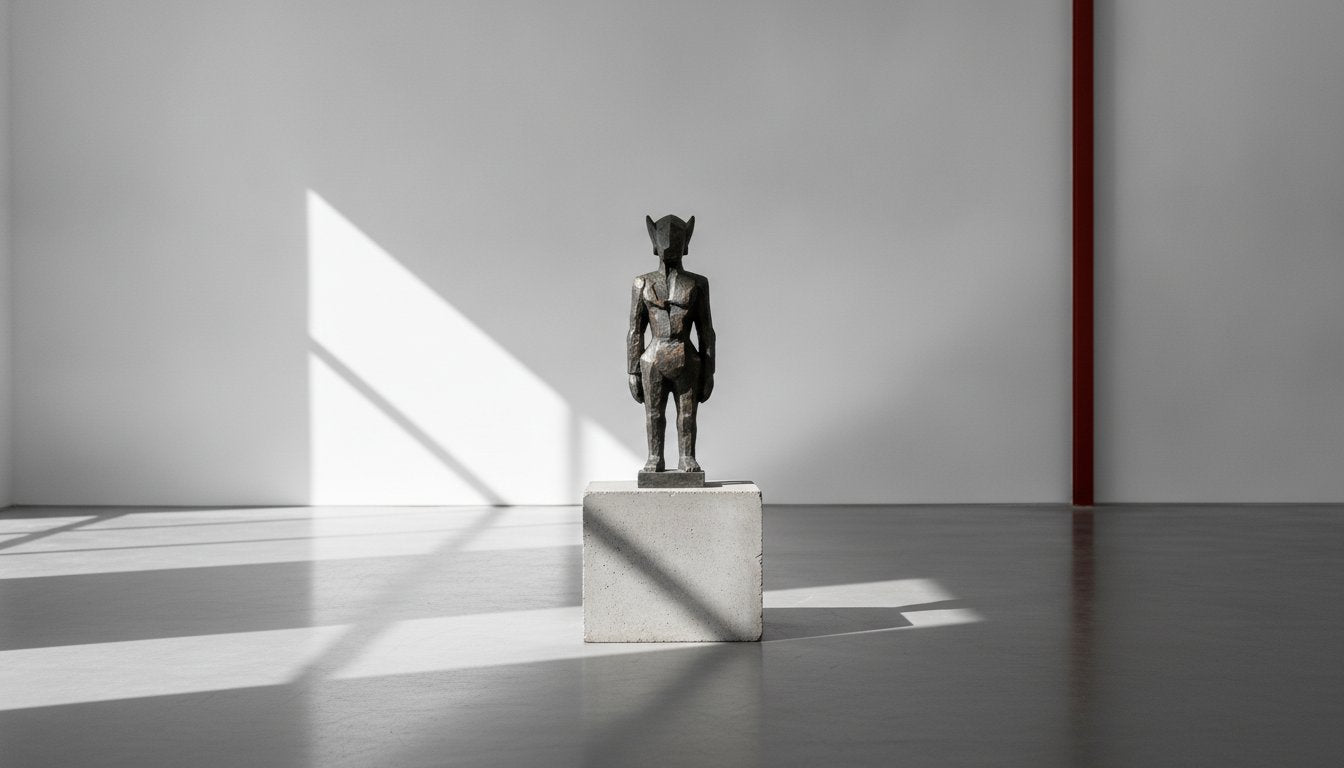
Investing in Collectible Art Toys: A Specification of Value
Investing in collectible art toys is a calculation of material permanence rather than a reaction to social trends. The mass-produced vinyl figure sitting on your shelf is likely losing its structur...
Read more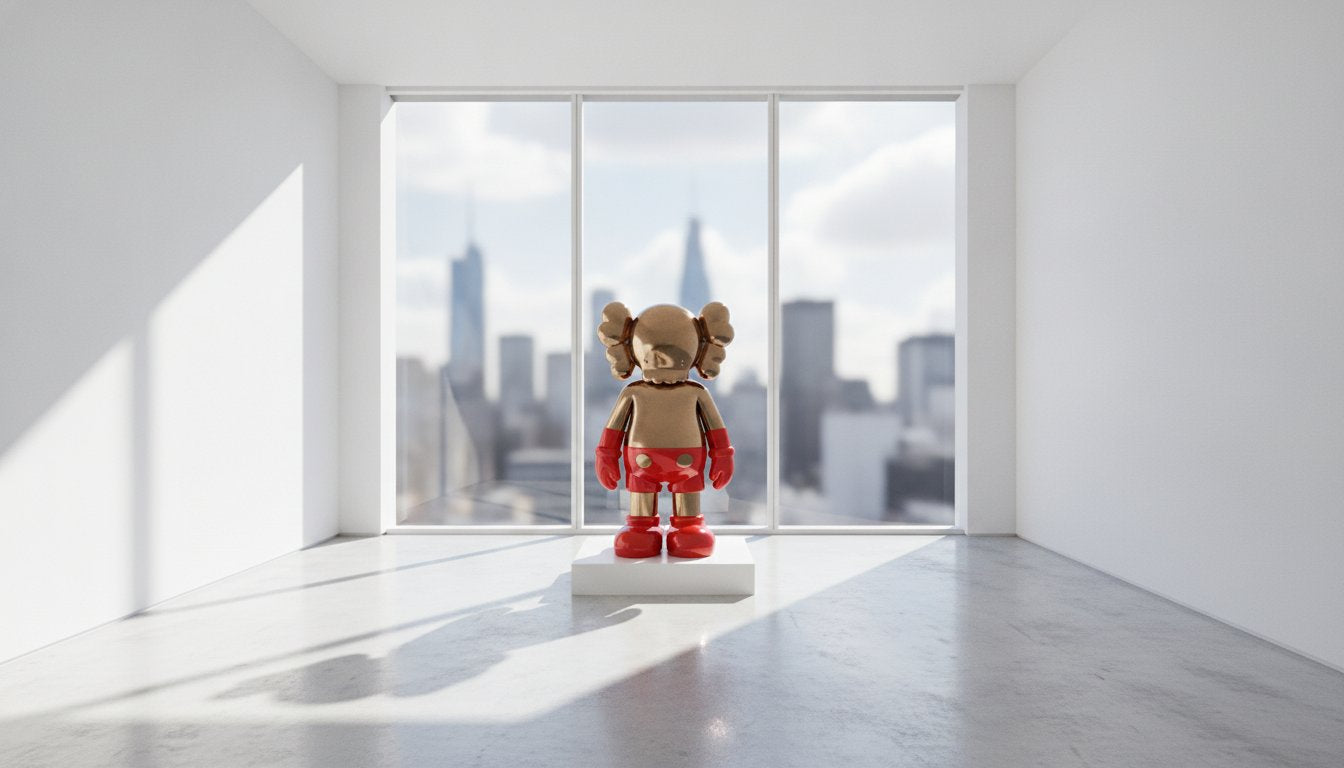
How to Display Pop Art Sculptures: A Curatorial Specification
Not everyone understands Mylo. That’s rather the point. A sculpture is not a decorative accessory; it is a physical truth that demands a specific spatial dialogue. Many collectors struggle with how...
Read more
Leave a comment
This site is protected by hCaptcha and the hCaptcha Privacy Policy and Terms of Service apply.