
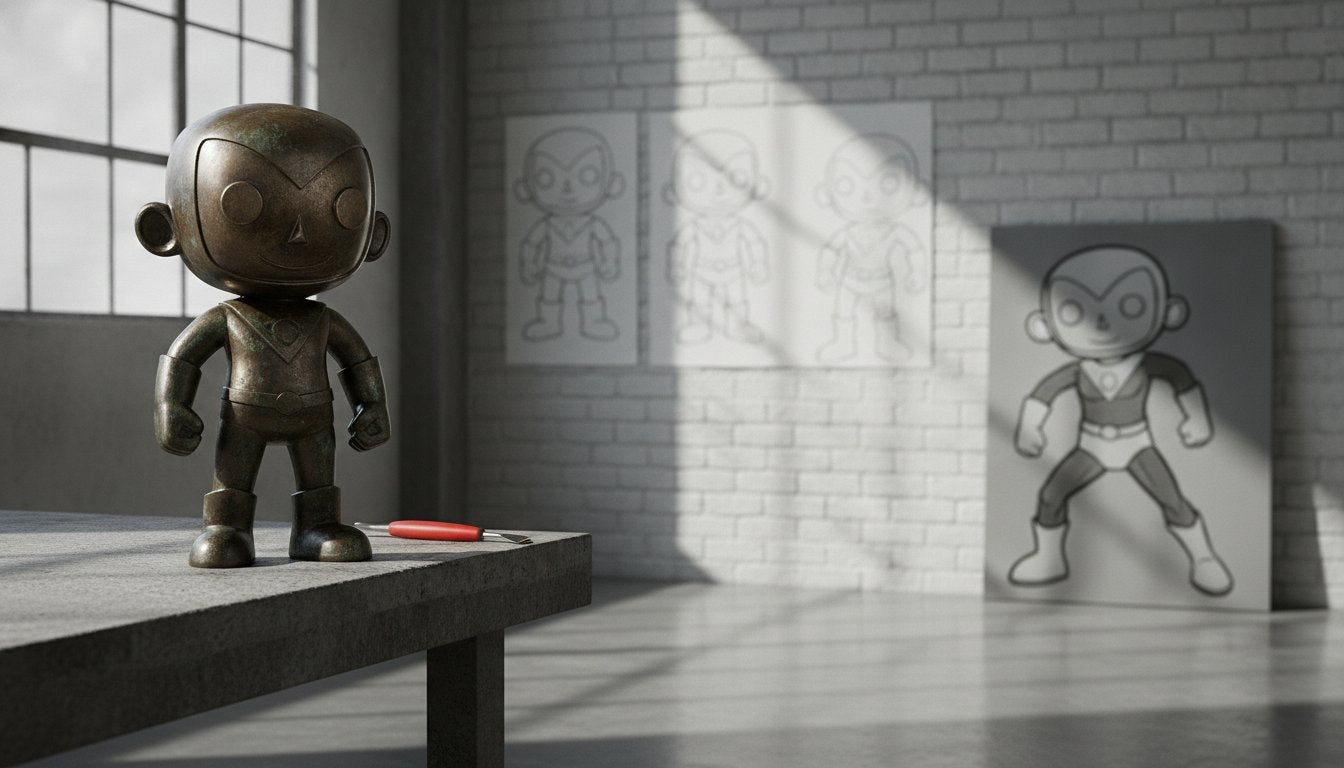
Rare Collectible Art Toys: The Specification of the Physical Object
A plastic figure manufactured in a run of five thousand is not rare. It's simply a delayed commodity. Most enthusiasts recognize the hollow feeling of acquiring a mass-market release that lacks a physical connection to the creator's broader body of work. You're likely searching for rare collectible art toys that offer more than a marketing label. The distinction lies in the specification of the object itself.
When a character like Mylo moves from a sketch to a bronze sculpture or an oil on canvas, rarity becomes a matter of material integrity rather than a production cap. This examination details how artist-direct collectibles maintain narrative weight through permanent mediums. You'll learn the technical transition points from concept to physical object and how documented provenance secures the value of a collection. We focus on the facts of the medium, the scale, and the intent of the artist.
Key Takeaways
- Rarity is defined by direct-from-studio provenance rather than the artificial production caps found in mass-market releases.
- Material integrity, specifically the use of bronze or oil-on-canvas, dictates the permanence and technical value of a collection.
- Acquiring rare collectible art toys requires identifying the technical transition from an initial sketch to a finished physical medium.
- Authentic value is secured through documented provenance and a cohesive narrative intent where characters function as studies of the human condition.
Defining Rarity in Contemporary Art Toy Collectibles
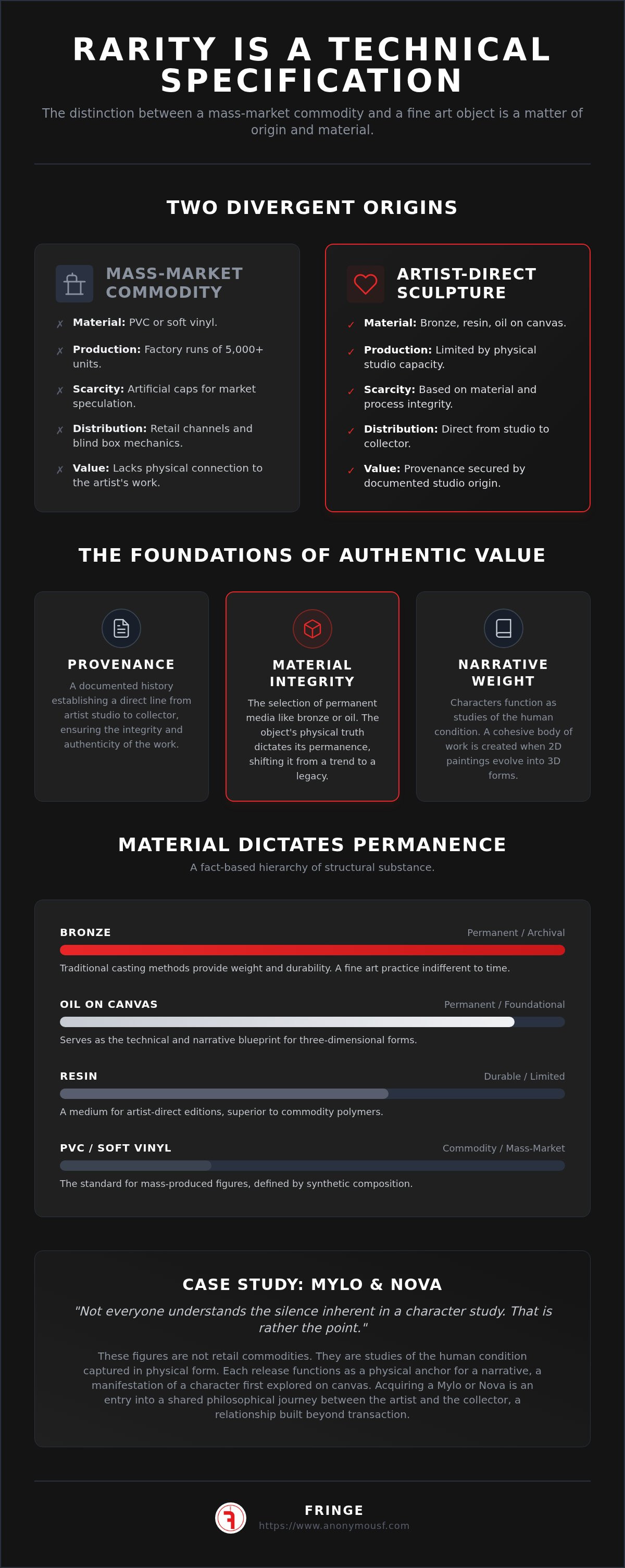
Rarity is frequently used as a marketing label. In the context of rare collectible art toys, it is a technical specification. The distinction between a mass-market vinyl release and an artist-direct edition is found in the provenance. A factory run of five thousand units relies on artificial scarcity. An artist-direct release relies on the physical limitations of the studio. It is a matter of origin.
Identifying rare collectible art toys requires an understanding of edition size and the artist's direct involvement in the production process. A signed edition carries technical weight that a retail product cannot replicate. Not everyone understands the value of a hand-finished surface or a documented studio origin. That is rather the point. The object is intended for those who recognize the difference between a toy and a sculpture. We define value through the material facts of the work.
The Distinction Between Retail Designer Toys and Fine Art Objects
Retail designer toys frequently use blind box mechanics to generate speculative interest. Rare art toys are presented as individual sculptures with clear specifications. The Pop Art Original Artwork serves as the technical blueprint for the physical collectible. It provides the narrative and structural foundation for the physical form.
Provenance is established when the object moves directly from the artist's studio to the collector. This direct line ensures the integrity of the work. It provides a documented history that retail distribution lacks.
- Materials include bronze, resin, and oil on canvas.
- Edition sizes are strictly limited to verified numbers.
- Each piece functions as a study of the human condition.
The quality of the object is a settled matter. It exists as a physical record of the artist's intent.
Evaluating Material Integrity and Narrative Weight
The material of the object dictates its permanence. While mass-market figures rely on PVC or soft vinyl, rare collectible art toys are defined by their structural substance. Choosing a medium like bronze or oil on canvas shifts the work from a temporary trend to a permanent fixture within a collection. This approach prioritizes the physical truth of the object over the volatility of market hype. It's a choice between a commodity and a legacy.
Bronze sculptures and oil-on-canvas hybrids represent the upper tier of the collectible market. These materials carry a narrative weight that synthetic polymers cannot replicate. A fact-based approach to collecting focuses on the technical specification of the medium rather than the noise of social media. It's an acknowledgment that the soul of the work is inseparable from its physical form. The value of the object is a settled matter once the material is cast.
Why Bronze and Oil Redefine Rare Collectible Art Toys
Bronze provides a weight and durability that vinyl cannot achieve. The Quiet Boy Bronze series demonstrates this technical shift. Every Fringe bronze is cast using traditional methods to ensure structural fidelity. These pieces are not manufactured; they're founded in a fine art practice that predates the toy industry. Each sculpture remains indifferent to the passage of time.
The transition from original character oil paintings to 3D forms adds narrative layers. This evolution from two dimensions to three creates a cohesive body of work. Collectors often look for this technical continuity. A collection built on material integrity remains resilient. The Fringe studio maintains this standard across all physical releases.
The Provenance of the Fringe Character: Mylo and Nova
Not everyone understands the silence inherent in a character study. It's rather the point. Mylo and Nova are not retail commodities; they are studies of the human condition captured in physical form. The Mylo collection represents a specific narrative arc within the Fringe studio, documenting a state of being rather than a market trend. Acquiring a Nova figure is an entry into a shared philosophical journey between the artist and the collector. This relationship is built on a mutual recognition of the complexities of the heart. It's a connection that exists beyond the transaction.
Limited Edition Physical Objects as Narrative Anchors
Every character release is restricted to a specific number to preserve the integrity of the work. These are rare collectible art toys that function as physical anchors for the narratives they represent. The Fringe Collectable Toys are physical manifestations of characters first explored on canvas. They exist as a bridge between the avant-garde and the everyday, translating abstract emotions into tangible mediums. Owning the object is an act of acknowledging the struggle and connection inherent in the work. It's a physical record of a human truth.
The technical transition from a sketch to a bronze or resin figure ensures the character's soul remains intact. Provenance is established through this direct-from-studio lineage, bypassing the detached systems of mass retail. Each piece carries the narrative weight of its origin, whether cast in bronze or finished in oil. Rare collectible art toys are defined by this lack of mass-market dilution. The object simply exists as a settled truth. It remains indifferent to whether the reader is convinced of its value or not.
Securing the Physical Legacy of Character Art
A collection is only as resilient as its materials. Rarity in the context of rare collectible art toys is not a marketing cap but a technical limitation of the studio. The transition from oil on canvas to bronze sculpture preserves the narrative weight of characters like Mylo, Nova, and Gutinke. These objects exist as physical studies of connection and struggle. They remain indifferent to the digital-only assets that dominate modern speculation. Provenance is established through direct studio lineage, ensuring each piece is a tangible record of the artist's intent. The value of the medium, whether resin or bronze, is a settled matter of structural substance. The Fringe studio releases are documented here. Authentic collections are built on these physical truths.
Frequently Asked Questions
What makes an art toy 'rare' in the 2026 market?
Rarity is a technical specification based on edition size and material integrity. In 2026, the artist-independent IP segment accounts for 56.3% of the global art toy market. True rarity is found in pieces with studio-direct provenance and an absence of mass-market retail channels. It's the technical distinction between a commodity and a sculpture. Most retail figures don't meet this criteria.
How do I verify the provenance of a collectible art toy?
Provenance is verified through documented studio records and direct purchase history. Physical authenticity is established when the object moves from the artist's studio to the collector without third-party intermediaries. Verified releases include technical documentation regarding the material, scale, and edition number. This record secures the narrative weight of the work within a contemporary collection. It's a settled matter of record.
What is the difference between vinyl and resin in high-end collectibles?
Vinyl is a soft polymer designed for large-scale manufacturing, while resin is a rigid medium used for small-batch artist editions. Resin allows for sharper technical detail and a heavier physical presence. Serious collectors prioritize resin or bronze for their structural permanence. These materials differentiate rare collectible art toys from common retail figures found in blind box series. The medium dictates the value.
Why should a collector prioritize artist-direct purchases?
Direct purchases eliminate the risk of counterfeit objects and secure the primary record of ownership. Buying from an independent studio ensures the collector participates in the original narrative intent of characters like Mylo or Nova. It provides a technical link to the artist's broader body of work, including oil paintings and bronze sculptures. This provenance is a technical requirement for serious collections.

Article by
Fringe

Read more
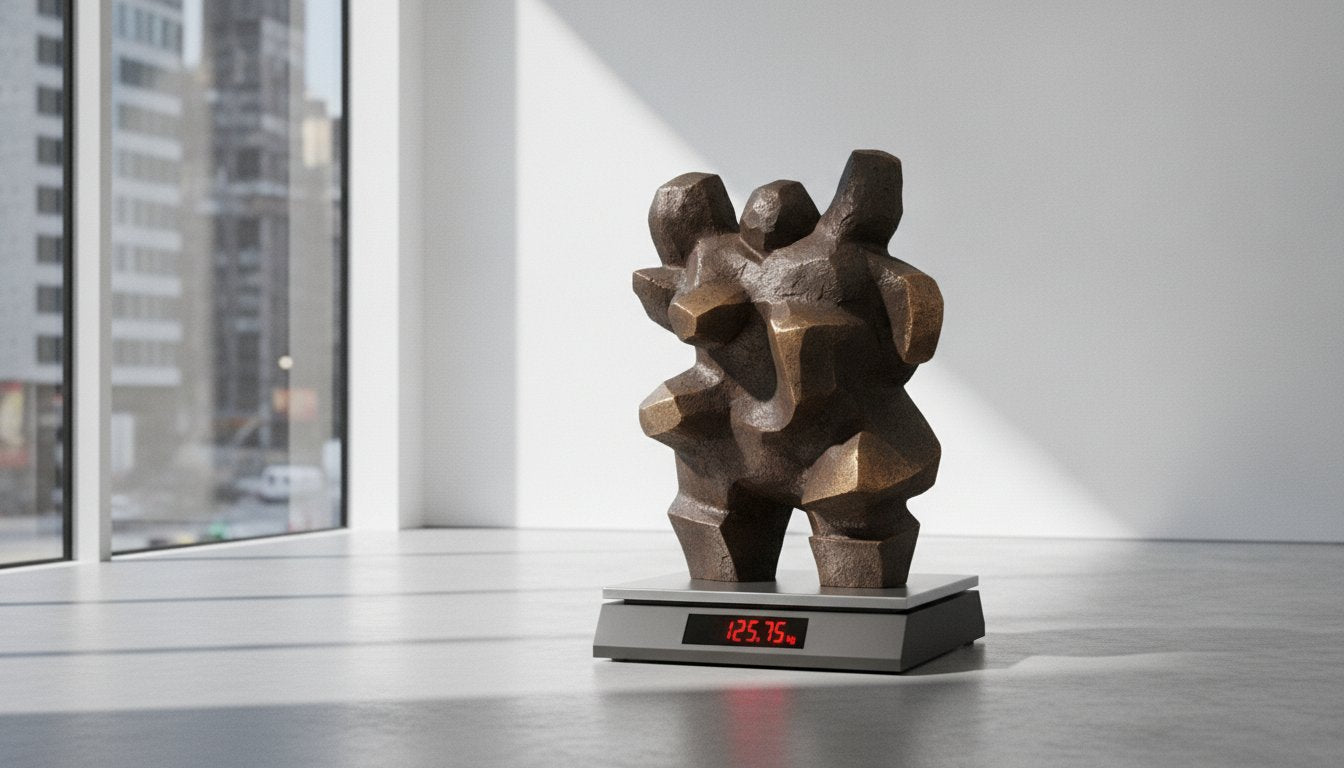
Investing in Contemporary Bronze Sculptures: The Specification of Weight
A digital file can vanish with a server error or a market shift, but fifteen kilograms of cast bronze is an immutable fact. Investing in contemporary bronze sculptures offers a physical anchor in a...
Read more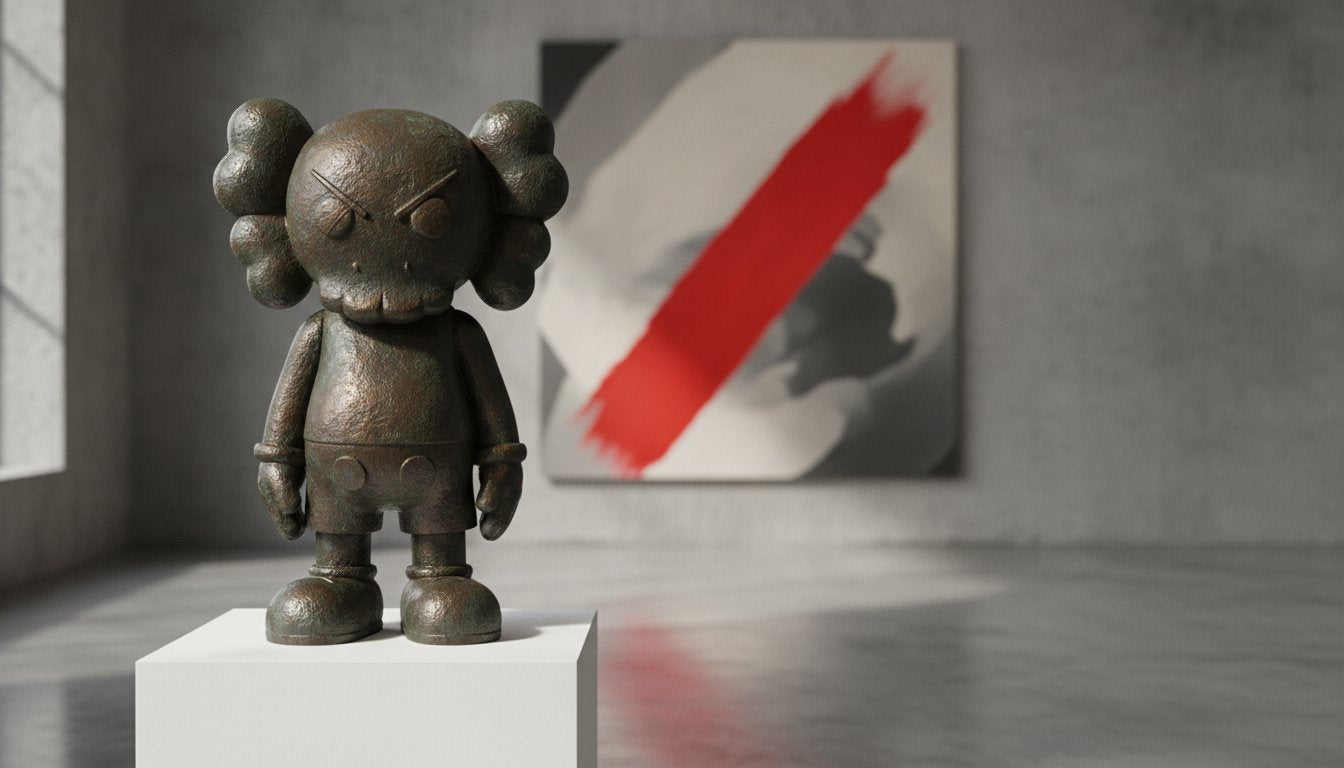
Exploring Materials in Contemporary Pop Art: The Specification of the Object
Not everyone understands why a character belongs in bronze. That is rather the point. You likely feel the exhaustion of the digital screen and the thinness of mass-produced prints. The market is cu...
Read more
Leave a comment
This site is protected by hCaptcha and the hCaptcha Privacy Policy and Terms of Service apply.