
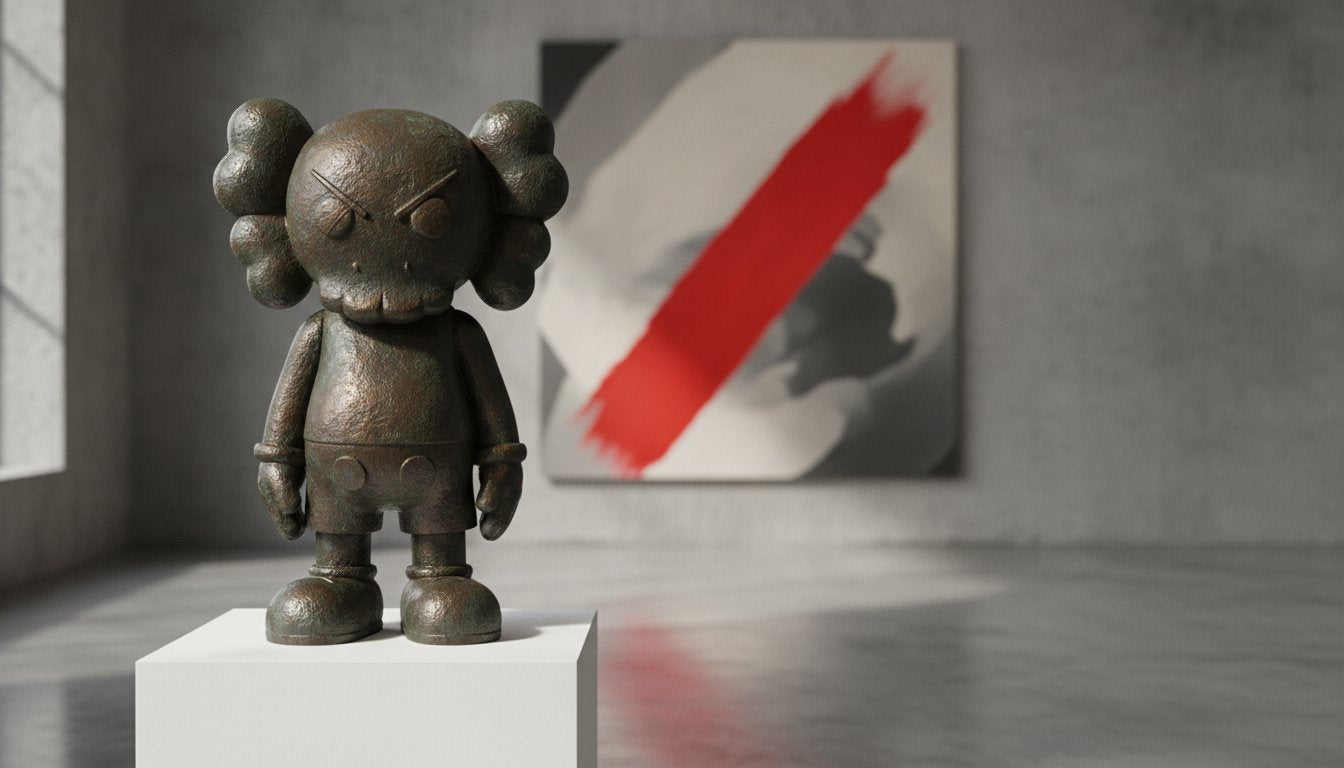
Exploring Materials in Contemporary Pop Art: The Specification of the Object
Not everyone understands why a character belongs in bronze. That is rather the point. You likely feel the exhaustion of the digital screen and the thinness of mass-produced prints. The market is currently oversaturated with transient media that lacks physical depth. This analysis provides a factual look at the shift toward permanent materials, exploring materials in contemporary pop art to understand how weight and texture define a modern collection.
You'll learn to distinguish between commercial products and high-end collectibles by examining the technical merits of oil on canvas and cast metal. We'll look at the specific role of bronze in giving a character narrative weight. This is a study of the specification of the object. It's about the transition from the disposable to the permanent. The value of the work rests in its physical reality.
Key Takeaways
- Distinguish the shift from 1950s transient consumerism to the permanence of contemporary bronze and oil mediums.
- Identify why the physical interaction of oil on canvas provides a depth of character texture absent in digital prints.
- Evaluate the technical merits of hybrid paper works while exploring materials in contemporary pop art that demand physical presence.
- Differentiate between mass-market toys and high-end collectibles through their material specification and limited edition status.
The Evolution of Substance: Materiality in Contemporary Pop Art
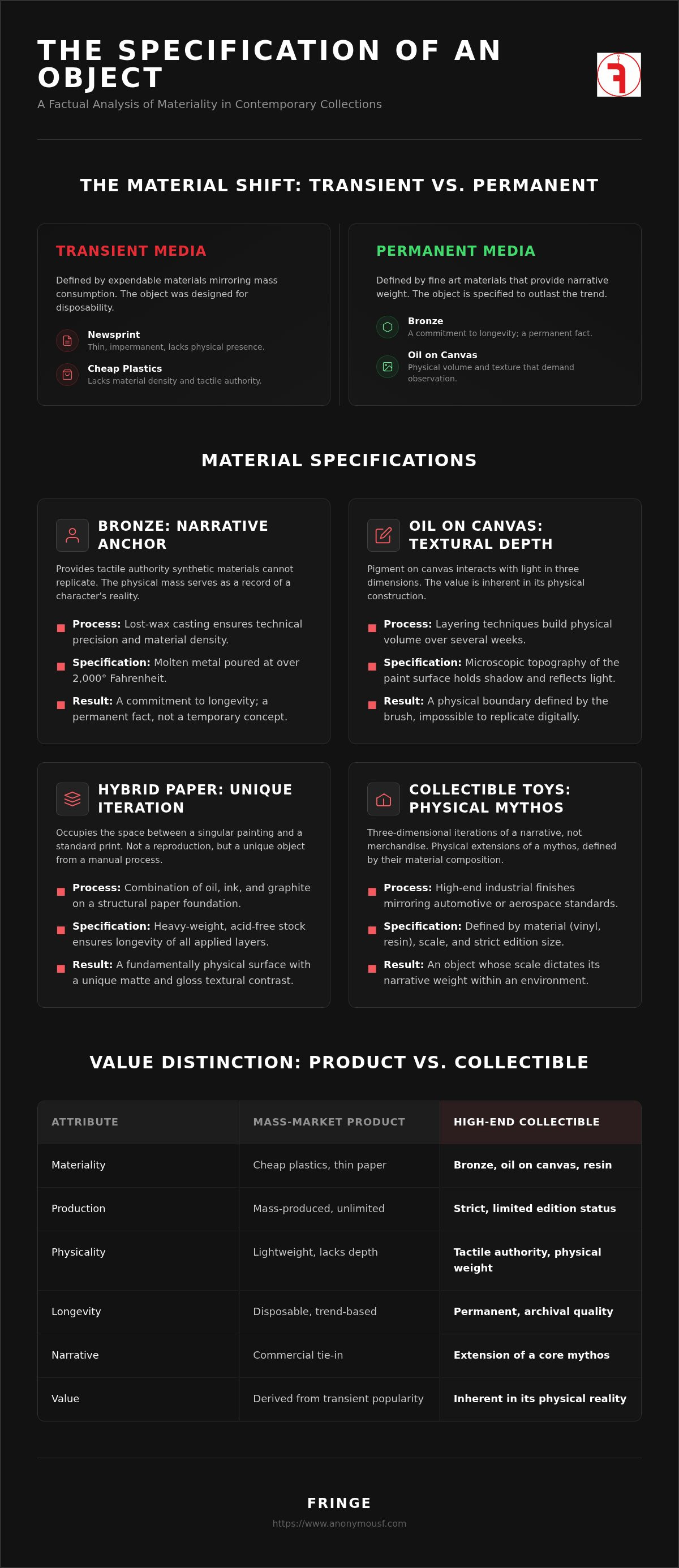
Pop art was once defined by the transient. In the 1950s, the movement utilized newsprint and cheap plastics to mirror the rapid consumption of the post-war era. This was a deliberate choice. The work was meant to be as expendable as the products it depicted. Today, the movement has inverted this logic. Serious collectors no longer seek the disposable. They prioritize the permanence of traditional fine art media. This shift is central to exploring materials in contemporary pop art. The choice of medium now determines the narrative weight of the object. Modern collections focus on physical presence. This separates a genuine collectible from a mass-produced commercial good. The object must possess a soul that outlasts the trend.
Bronze as a Narrative Anchor in Modern Sculpture
Bronze casting relies on the lost-wax process. This method involves a ceramic shell and molten metal poured at temperatures exceeding 2,000 degrees Fahrenheit. It ensures technical precision and material density. The resulting weight provides a tactile authority that synthetic materials cannot replicate. Pieces like the Quiet Boy bronze utilize this metal to ground abstract emotional states. The physical mass of the object serves as a record of the character’s reality. It gives the subject a gravity that persists beyond the digital screen. A bronze sculpture is a commitment to longevity. It represents a transition from a temporary concept to a permanent fact. The metal doesn't ask for attention; it simply exists with total confidence.
The Specification of Form: Exploring Materials in Contemporary Pop Art
Oil on canvas remains the primary medium for those interested in exploring materials in contemporary pop art with a focus on depth. Unlike digital prints or commercial screenprinting, pigment on canvas interacts with light in three dimensions. This is a factual requirement of the physical piece. The observer must account for the microscopic topography of the paint surface. Scale and provenance are not marketing terms; they are the technical specifications of the work. Every stroke represents a specific density of material that a flat screen cannot simulate. The object’s value is inherent in its physical construction. It doesn't require justification.
Oil on Canvas and the Texture of Character
Fringe oil on canvas works focus on the sharp silhouettes of characters like Mylo and Nova. The process involves layering techniques that build physical volume over several weeks. This surface demands physical observation. A print cannot replicate the way oil paint holds a shadow or reflects a single light source in a room. The work exists as a settled matter of quality. It remains independent of digital trends or transient media. The silhouette isn't just a shape; it's a physical boundary defined by the edge of the brush. It's a record of the artist's interaction with the medium.
Authentic character-based art relies on the truth of its medium. Each piece carries a specific weight and a verifiable provenance that defines its status as a high-end collectible. Exploring materials in contemporary pop art reveals that the presence of the hand is a technical reality. It's not a decorative element but a material necessity for character longevity. For those seeking to understand the intersection of narrative and material, reviewing the complete physical catalog provides a baseline for material quality. The value is found in the permanence of the pigment. The work stands as a completed fact.
Hybrid Mediums and the Physicality of the Art Toy
Not everyone understands why paper requires the weight of oil and graphite. It's a technical necessity for those who recognize the difference between a reproduction and a unique iteration. Hybrid art on paper occupies the precise space between a singular oil painting and a standard edition print. By combining oil, ink, and graphite, these works challenge the historical definition of a multiple. Each sheet carries the technical weight of a multi-stage manual process. This convergence of media is a critical component when exploring materials in contemporary pop art. The matte texture of graphite against the gloss of oil pigment creates a surface that's fundamentally physical. It's an intersection of industrial precision and manual application. These hybrids aren't reproductions. They're unique iterations that utilize the paper as a structural foundation. The choice of heavy-weight, acid-free stock ensures the longevity of the ink and oil layers.
The Physicality of Character-Based Collectibles
Fringe collectible toys serve as three-dimensional iterations of the Mylo and Nova narratives. They aren't mere merchandise. They're physical extensions of a mythos, defined by material composition and strict edition sizes. The scale of a collectible toy dictates its relationship to the environment. A 12-inch vinyl or resin figure carries a different narrative weight than a 4-inch mass-market item. These objects utilize high-end industrial finishes that mirror automotive or aerospace standards. The value's derived from narrative intent and physical execution. It's a matter of technical specification. These characters exist to be touched and observed in three dimensions. The object's the final fact of the story. It stands as a completed reality in a world of digital shadows. The material defines the character's presence in the physical world.
Securing the Physical Record
Pop art's no longer a study of the disposable. The movement's matured into a discipline defined by the technical weight of bronze and the tactile depth of oil on canvas. Exploring materials in contemporary pop art reveals a clear distinction between mass-produced goods and high-end collectibles. The piece's value is a settled matter of its physical construction. Original oil on canvas paintings and limited edition bronze sculptures provide a narrative anchor that digital media can't match. Character-based art toys serve as the final iteration of these stories in three dimensions. The object remains the only verifiable truth in an era of transient visuals. Authenticity's found in the density of the metal and the edge of the brush. The work stands as a completed fact.
The current state of the collection is available at Fringe. These objects exist for the few who prioritize substance.
Frequently Asked Questions
What materials are most common in contemporary pop art?
Specific materials like bronze, oil on canvas, and hybrids on paper define the modern collection. While early pop art used transient materials to mirror 1950s consumerism, contemporary artists have adopted the permanence of fine art media. Exploring materials in contemporary pop art reveals a focus on longevity. This shift ensures that character-based works possess a physical presence that mass-produced goods can't achieve.
How does bronze affect the value of a pop art sculpture?
The technical requirements of the lost-wax process dictate the value of a bronze sculpture. This metal is a permanent alloy that resists environmental degradation over centuries. The physical weight of a bronze sculpture provides an authority that synthetic materials don't possess. It represents a technical commitment to character reality. The value is a settled matter of material specification and historical weight.
What is the difference between a print and hybrid art on paper?
Prints are flat reproductions while hybrid art on paper involves manual applications of oil, ink, and graphite. These hybrids are unique iterations rather than identical multiples. Exploring materials in contemporary pop art involves identifying the convergence of industrial precision and manual layering. The interaction between graphite and oil creates a tactile surface. Each sheet carries a narrative weight absent in digital editions.
Why is oil on canvas preferred for original character art?
Oil on canvas is preferred because the medium allows for a depth of character texture that acrylics can't match. The slow drying process enables complex layering of silhouettes for characters like Mylo. This interaction between pigment and light provides a tactile experience. It ensures the work stands as a physical record. The choice of oil is a factual requirement for technical quality.

Article by
Fringe

Read more
Rare Collectible Art Toys: The Specification of the Physical Object
A plastic figure manufactured in a run of five thousand is not rare. It's simply a delayed commodity. Most enthusiasts recognize the hollow feeling of acquiring a mass-market release that lacks a p...
Read more
Investing in Collectible Art Toys: A Specification of Value
Investing in collectible art toys is a calculation of material permanence rather than a reaction to social trends. The mass-produced vinyl figure sitting on your shelf is likely losing its structur...
Read more
Leave a comment
This site is protected by hCaptcha and the hCaptcha Privacy Policy and Terms of Service apply.