
Pop Art Character Collectibles: The Specification of Original Form
Not everyone understands the necessity of physical weight in a digital age. That is rather the point. Most collectors settle for mass-produced, licensed vinyl figures where the narrative ends at the packaging. You likely feel the lack of depth in these objects, which often prioritize commercial ubiquity over the narrative weight of original pop art character collectibles.
This examination focuses on the specification of original form. We will analyze the material reality of characters like Mylo and Nova, specifically looking at the use of bronze, oil on canvas, and hybrids on paper. These mediums provide a permanence that mass-market items cannot achieve. There is a specific, grounding comfort in owning an object that exists independently of a screen or a global franchise. A physical object with clear provenance and documented material specifications carries a weight that plastic simply cannot replicate.
Key Takeaways
- Distinguish original character form from licensed merchandise through the metric of narrative independence from commercial franchises.
- Identify how material specifications like bronze and oil establish the physical gravity of pop art character collectibles compared to mass-market vinyl.
- Assess the structural logic of a collection using objective data points such as numbered edition sizes, scale, and documented provenance.
- Evaluate the narrative weight of characters like Mylo and Nova based on their material reality and autonomous artistic vision.
The Distinction Between Mass-Market Figures and Original Character Form
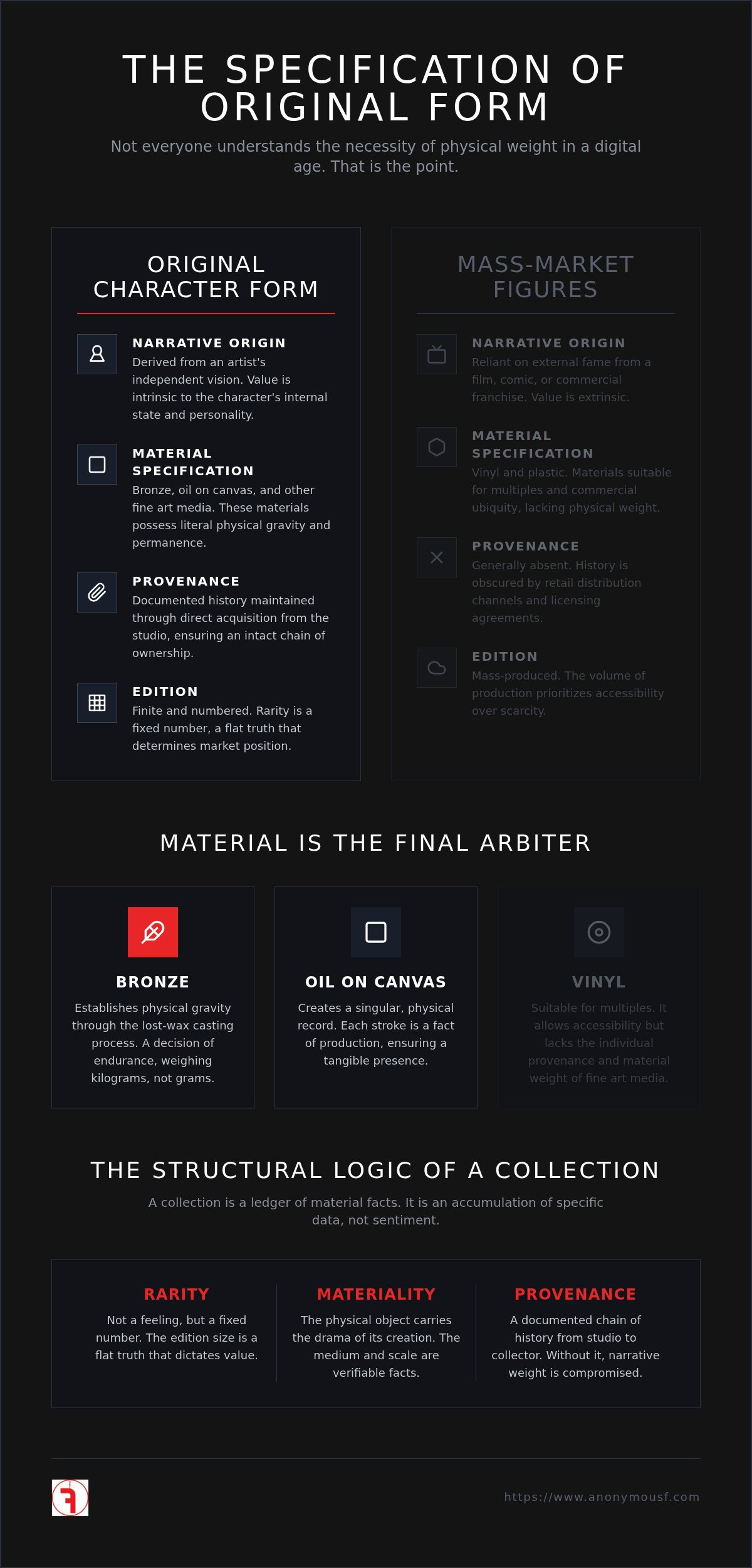
The market is saturated with plastic icons that signify nothing beyond their own licensing agreements. Not everyone understands that pop art character collectibles are a different category entirely. The distinction rests on the origin of the narrative. While mass-market figures rely on the external fame of a film or comic franchise, an original character exists as an independent entity. It derives its value from the artist's specific vision rather than a studio's marketing budget. Collectors of these pieces prioritize the internal state and personality of the figure over its recognition in popular culture.
This shift in perspective aligns with the history of the Pop Art movement, which challenged traditional fine art by incorporating imagery from popular culture. However, where mass-produced toys seek ubiquity, original pop art character collectibles seek depth. The focus remains on the internal reality of the creation. It's a study of the human condition through a physical object.
Character Origins: Mylo and Nova as Narrative Anchors
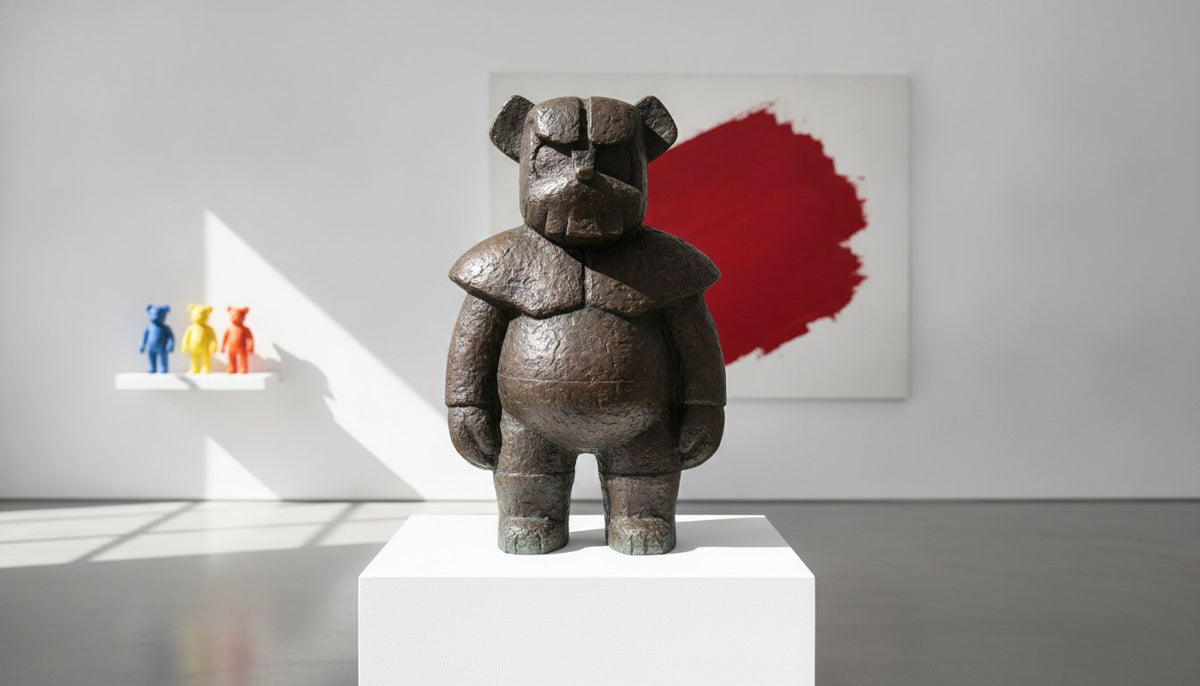
The characters Mylo and Nova serve as primary examples of this narrative independence. Mylo represents a specific, often quiet, emotional register. These pieces are frequently executed in high-end materials like bronze or oil on canvas to emphasize their permanence. The Mylo characters demonstrate how this material choice affects the physical weight of the story.
Nova acts as a counterpart. This character illustrates the complexities of human connection through varied physical forms. The Nova figures show how a character can evolve across different mediums while maintaining a singular narrative soul. These aren't just toys; they're character studies. The material specification is the truth of the work.
Material Specifications: The Weight of Bronze and Oil
Material choice dictates the lifespan of pop art character collectibles. It's the final arbiter of an object's authority. While vinyl serves the mass market, bronze and oil establish a character within the lineage of fine art. This shift is central to the rise of designer toys in the fine art market. Bronze sculptures possess a physical gravity that vinyl cannot replicate. The weight is literal. It anchors the character in a physical history that outlasts synthetic alternatives. The material reality of pop art character collectibles determines their market position.
Oil on canvas provides a different specification of reality. The texture of the paint creates a singular, physical record of the character's existence. Each stroke is a fact of production. This medium ensures the character is not just a digital asset but a tangible presence. It's a rejection of the flat, digital aesthetic in favor of material depth.
Comparison of Media: From Vinyl to Bronze and Oil
Vinyl is suitable for multiples. It allows for accessibility but lacks the individual provenance of higher-end materials. Conversely, oil on canvas paintings establish a one-of-one record that cannot be duplicated. Bronze requires the traditional lost-wax casting process, involving high-temperature kiln firing and metal pouring. This method ensures the character becomes a permanent fixture of a collection, weighing several kilograms rather than grams. It's a decision of endurance.
Hybrids on paper combine the mechanical precision of limited edition prints with the direct touch of the artist's hand. This layering provides a multifaceted personality to the work that a flat print lacks. The choice of medium is never accidental. It's the material reality of the narrative. Collectors seeking this level of specification often look to the original works by Fringe.
The Structural Logic of a Narrative Collection
A collection is a ledger of material facts. It is an accumulation of specific data regarding scale, medium, and edition size. For pop art character collectibles, this structural logic is what separates a formal archive from a random assortment of figures. Rarity is not a feeling; it is a fixed number. A limited edition is a flat truth that determines market position. The acquisition of pop art character collectibles requires an understanding of these finite boundaries, where the collector acts as a witness to the artist's output.
Provenance is maintained through direct acquisition from the studio. This ensures the object's history remains intact from the moment of casting or painting. Without this documented chain, the narrative weight of the piece is compromised. The physical object must carry the drama of its creation, from the initial sketch to the final bronze casting. Every stage of production is a verifiable event that contributes to the final specification of the work.
Managing Provenance and Edition Size in Character Art
Numbered editions provide a clear boundary for rarity. For example, Fringe collectible toys are produced in strictly controlled runs to ensure their status within the market. This numbering is a physical mark of exclusivity. It serves as a permanent record of the object's place within a limited series. A series of 50 or 100 pieces represents a finite reality that the mass market cannot replicate.
Collectors should refer to the pop art original artwork specifications for detailed provenance data. These records list the specific material, dimensions, and process used for each character. It is the technical specification that provides the object with its soul. The value of the work is determined by these verifiable truths. This data serves as the foundation for a collection that values substance over hype.
The Final Specification of the Physical Object
The value of pop art character collectibles is found in the material reality of the work. An original character exists because of its narrative independence and its physical gravity. Most figures are temporary; original bronze and oil on canvas character pieces are permanent. These works are produced in limited edition numbered series within an independent artist-owned studio. This ensures the structural logic of the collection remains intact. Provenance is a matter of record.
The choice of medium determines the lifespan of the story. It's the difference between a commercial product and a physical record of an internal state. Review the specifications of the Mylo and Nova collections to see these material facts in practice. The weight of the object ensures the narrative remains.
Frequently Asked Questions
What defines an original character collectible in pop art?
Not everyone understands that an original character collectible is defined by narrative independence. Unlike licensed merchandise tied to films, these pieces originate from the artist’s specific vision. Characters like Mylo and Nova exist as autonomous entities. They're not reliant on external media. Their value is rooted in this internal state, establishing them as distinct pop art character collectibles within the contemporary market.
How does material choice affect the value of art toys?
Material choice determines the physical gravity of the work. High-end mediums like bronze or oil on canvas shift the object from a temporary item to a permanent record. These materials provide a weight that signifies authority. The specification of the physical object establishes the value of pop art character collectibles. It's an intentional departure from the mass-market figurine.
Why are limited edition numbers significant for collectors?
Limited edition numbers provide a verifiable boundary for rarity. This numbering is a flat truth that dictates market position. It ensures clear provenance through direct acquisition from the studio. For collectors, these figures represent a controlled series where the total quantity is a matter of record. It's a structural logic that guarantees the character remains exclusive to those who understand the work's scarcity.
What is the difference between vinyl and bronze character art?
The difference lies in the material reality. Vinyl is used for multiples. Bronze requires a complex lost-wax casting process. This results in a physical object that weighs several kilograms. This metal provides a sense of permanence that synthetic materials cannot match. It's a decision of endurance. The character becomes a substantial sculpture with documented specifications rather than a light figurine.

Article by
Fringe

Read more
Maintenance Specifications for Pop Art Collectibles and Fine Art
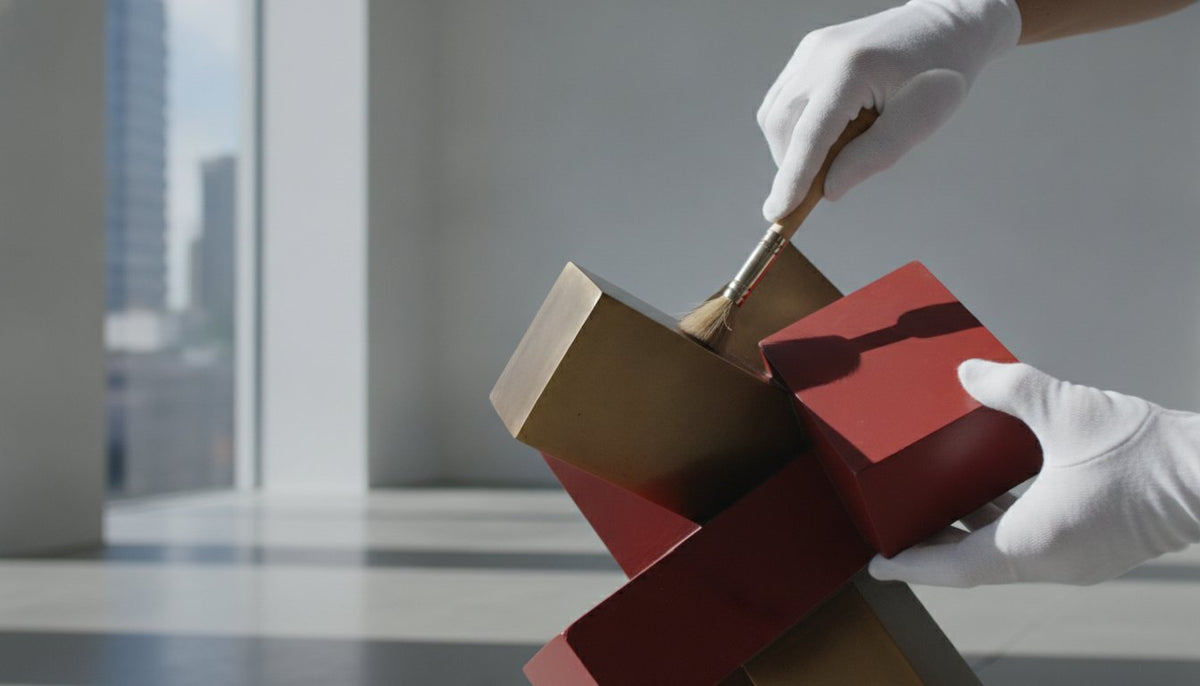
Not everyone understands Mylo. That’s rather the point.The transition from the studio to a private collection is a shift in stewardship. You recognize that a bronze sculpture or an oil on canvas is...
Read more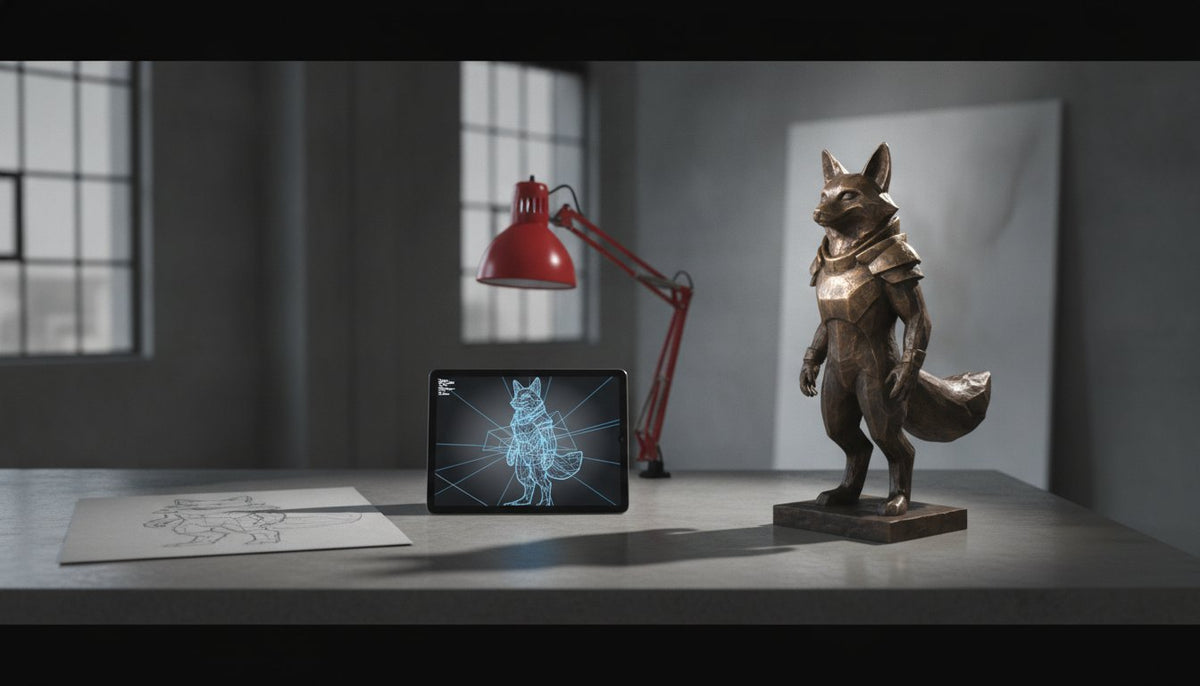
Commissioning Custom Character Toys: The Specification of Physical Narrative
Not everyone understands the narrative weight of a bronze sculpture. That's rather the point. Most collectors are content with the oversaturation of low-quality vinyl toys that fill shelves and the...
Read more
Leave a comment
This site is protected by hCaptcha and the hCaptcha Privacy Policy and Terms of Service apply.