
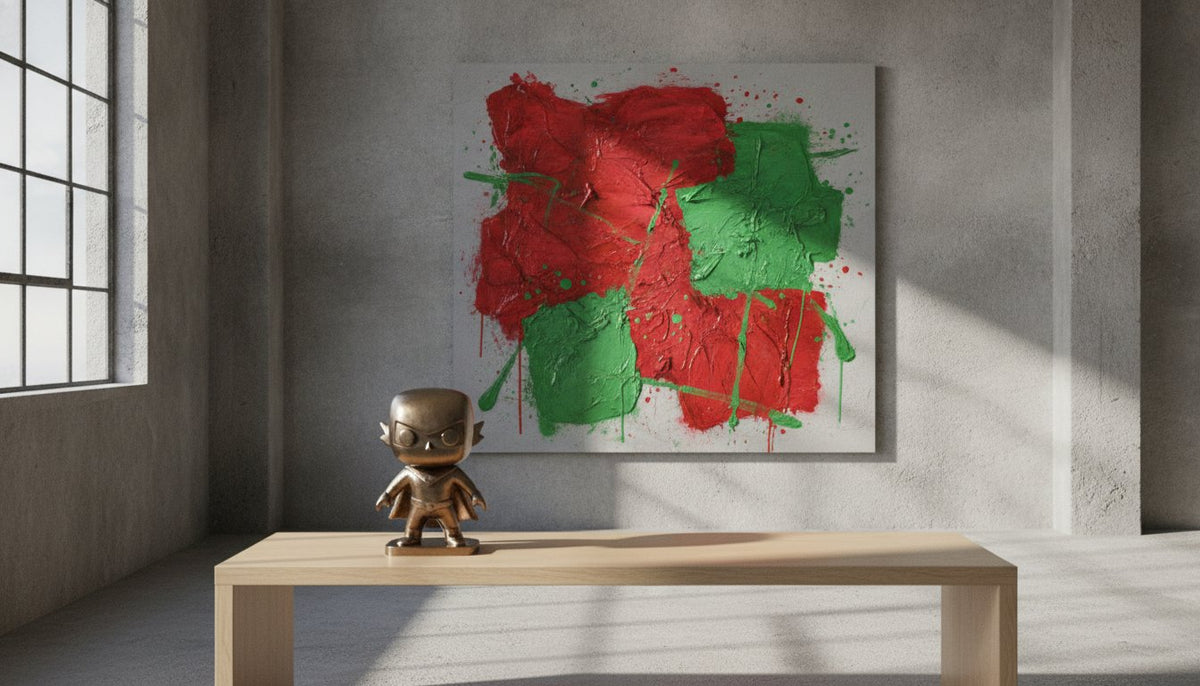
Original Pop Art for Home Decor: The Specification of the Physical Object
Most walls are occupied by ghosts of images, digital echoes printed on mass-produced paper. Not everyone understands the weight of a physical character object. That's rather the point. Acquiring original pop art for home decor isn't about filling a void with color. It's about the gravity of the material.
You've likely noticed the exhaustion of the digital print market. Transparency regarding process is often replaced by vague marketing. This analysis provides a technical specification of the physical object. It's a factual record of how character provenance and material integrity define a collection.
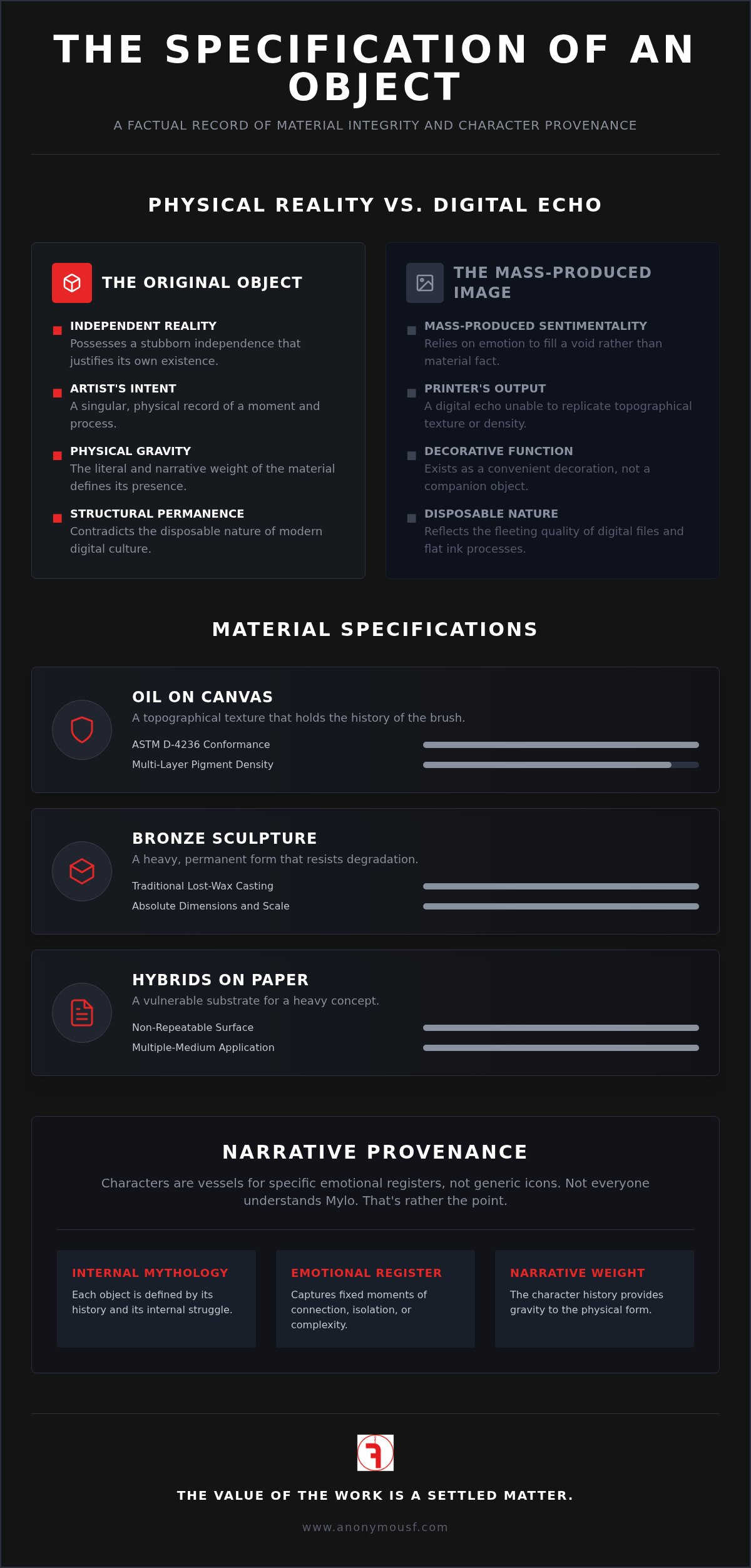
We'll examine the material facts of bronze and oil mediums. The narrative weight of Mylo and Nova exists within their physical dimensions. We'll look at the ASTM D-4236 standards of oil on canvas and the density of bronze sculptures. The value of the work is already a settled matter. These are the specifications.
Key Takeaways
- Distinguish the independent reality of the original object from the mass-produced sentimentality found in commercial decor.
- Evaluate the material specifications of oil on canvas and bronze casting based on pigment density and traditional structural integrity.
- Recognize characters like Mylo and Nova as vessels for specific emotional registers rather than generic decorative elements.
- Define the value of original pop art for home decor through the intersection of physical material facts and character narrative provenance.
The Distinction Between Commercial Decor and Original Pop Art
An original object possesses a stubborn independence. It doesn't require an observer to justify its existence. Commercial decor functions differently, relying on mass-produced sentimentality to fill a room. When selecting original pop art for home decor, the collector prioritizes the weight of the physical over the convenience of the digital. Authenticity lives in the specific truth of the medium. It's found in the artist's intent rather than a printer's output. While the broader Pop Art movement often explored mass production, the original object remains a singular record of a moment.
The Reality of the Physical Medium
Oil on canvas provides a topographical texture. A digital print cannot replicate the specific pigment density or the layering techniques required by the medium. All oil on canvas works from the studio conform to ASTM D-4236 standards for chronic health hazards. This ensures material safety alongside structural integrity. The surface is uneven, holding the history of the brush.
Bronze sculptures involve a permanence that contradicts the disposable nature of modern culture. The casting process is methodical and slow. It results in a character object with literal and narrative weight. Fringe works are strictly physical. They aren't digital files or NFTs. The collector owns a three-dimensional truth. This distinction matters because the physical object carries its own history. It exists in the room as a companion, not just a decoration.
Material Specifications: Oil on Canvas and Bronze Casting
A physical object's value is anchored in its technical specification. When acquiring original pop art for home decor, the collector must look past the image to the substrate. Oil on canvas works from the Fringe studio utilize specific pigment density. Multiple layers are applied over several weeks to build a surface that interacts with natural light. This physical depth is a fixed truth of the medium. It's a quality that cannot be simulated through digital reproduction or flat ink processes.
Structural integrity is the primary concern for bronze sculptures. These pieces are cast using traditional lost-wax methods. This process ensures a heavy, permanent form that resists the degradation common in mass-produced plastics. Dimensions and scale are absolute. They dictate how the character object occupies space in a room. Provenance is established through the direct, documented output of the studio. Every piece is a physical record of the artist's hand. The weight of the metal provides a grounding presence that digital media simply lacks.
The Hybrid Process on Paper
Hybrids on paper offer a different material register. These works combine multiple mediums to create a singular, non-repeatable surface. The paper substrate acts as a vulnerable contrast to the bold narrative of the characters. It's a fragile foundation for a heavy concept. You can see this interplay in the Oil on Paper collection. These works represent a mid-point between the permanence of bronze and the immediacy of oil. The result is a character object that feels both contemporary and grounded. You can view the current canvas specifications to compare these physical realities. The choice of medium ultimately defines the emotional weight of the work.
Narrative Provenance: Mylo, Nova, and the Character Object
Not everyone understands Mylo. That's rather the point. Acquiring original pop art for home decor involves more than aesthetic matching; it requires a recognition of narrative provenance. Characters like Nova and Gutinke aren't generic icons or commercial mascots. They're vessels for specific emotional registers, capturing moments of connection, isolation, or the complexities of the human heart. The collectable toy serves as a bridge, bringing the avant-garde into a tangible, three-dimensional form. This character object demands an understanding of its internal mythology and struggle. Without that narrative weight, the object is merely a shape. It's the history of the character that gives the physical form its gravity.
Collecting with Intentional Indifference
The value of the work is a settled matter within the studio. It doesn't fluctuate based on external validation or the temporary noise of the market. Collectors of Mylo by Fringe prioritize the soul of the object over passing trends. They're looking for a physical resonance that digital media cannot provide. For those seeking technical context, the Pop Art Original Artwork pillar provides the necessary material specifications. The decision to collect is a private recognition of a shared truth. It's an acknowledgment of the character's internal struggle and its place in a physical space. The studio remains indifferent to the broader market, focusing instead on the integrity of the character object. Narrative provenance is the final, most critical specification for any serious collection.
Securing the Physical Narrative
The acquisition of original pop art for home decor is a technical decision as much as an emotional one. Material specifications of oil on canvas and traditional bronze casting provide a structural integrity that mass production cannot simulate. A character like Mylo, Nova, or Gutinke is defined by an internal struggle. This narrative weight is what separates a physical character object from a decorative ghost. Every piece exists as a singular record of the artist's hand and the medium's density. The studio maintains its focus on the fixed truths of the physical medium. These character objects are available through The Fringe Studio. Those who recognize the integrity of physicality understand why these objects remain. The value is a settled matter. The character is ready to occupy your space.
Frequently Asked Questions
What is the specific difference between a hybrid on paper and a limited edition print?
A hybrid on paper is a singular, non-repeatable physical object. It utilizes multiple mediums to create a specific surface texture that a limited edition print cannot replicate. Prints are reproductions of a pre-existing image. Hybrids are original creations where the paper substrate acts as a vulnerable contrast to the character's narrative weight. Each hybrid is unique.
How is the provenance of a Fringe original oil painting verified?
Provenance is established through direct studio documentation. Every oil painting is a physical record of the artist's specific process and intent. These works conform to ASTM D-4236 standards for art material safety. This ensures the material facts of the object are verified. The history of the work is a settled matter from the moment it leaves the studio.
Why does the Fringe studio utilize bronze for pop art characters like Mylo?
Bronze provides a permanence that contradicts the disposable nature of modern culture. The studio uses traditional lost-wax casting to ensure the structural integrity of original pop art for home decor. This material gives characters like Mylo a literal and narrative weight. The density of the metal allows the character object to occupy space with a quiet, grounding authority.
Are the characters Mylo and Nova available as digital collectibles?
Mylo and Nova exist only as physical objects. The studio doesn't produce digital NFTs or virtual collectibles. Authenticity is found in the material reality of bronze, oil, and paper. This focus on the tangible ensures that the work remains independent of digital market trends. The value of original pop art for home decor is anchored in its physical specification.

Article by
Fringe

Read more
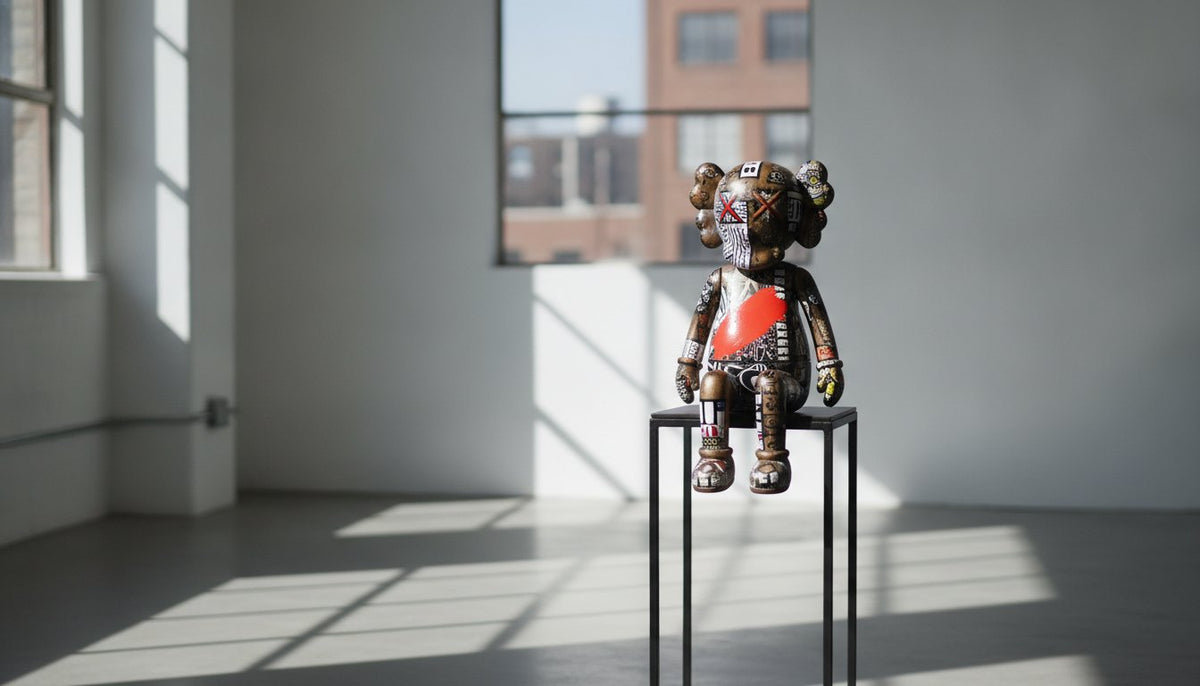
How to Start a Designer Toy Collection: A Framework for Curation
Not everyone understands the weight of a character sculpture. That's rather the point. Understanding how to start a designer toy collection requires a shift from buying products to acquiring object...
Read more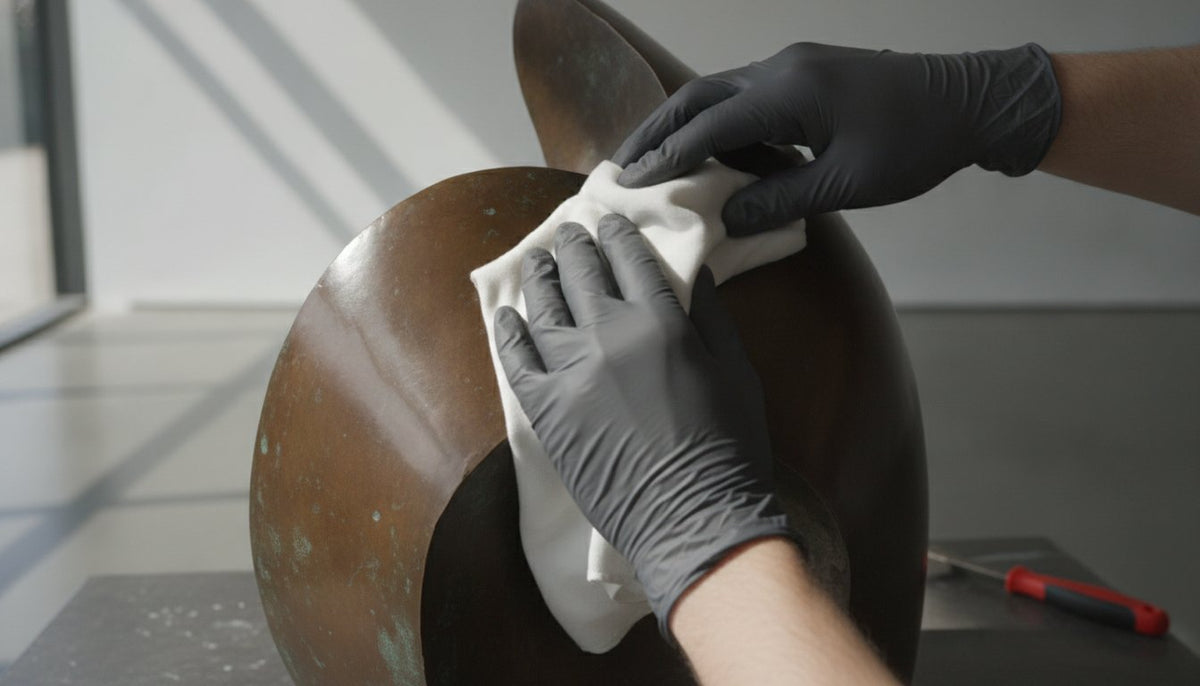
The Maintenance of Form: A Technical Protocol for Bronze Art Sculptures
Most collectors treat bronze as an immutable object. In reality, the metal is a slow-moving chemical event. You likely feel the weight of responsibility when it comes to maintaining the original pa...
Read more
Leave a comment
This site is protected by hCaptcha and the hCaptcha Privacy Policy and Terms of Service apply.