
The Maintenance of Form: A Technical Protocol for Bronze Art Sculptures
Most collectors treat bronze as an immutable object. In reality, the metal is a slow-moving chemical event. You likely feel the weight of responsibility when it comes to maintaining the original patina. It's a valid concern because the surface chemistry is what defines the work's narrative weight. Learning how to care for bronze art sculptures is not about restoration, but about preventing the atmosphere from reclaiming the form.
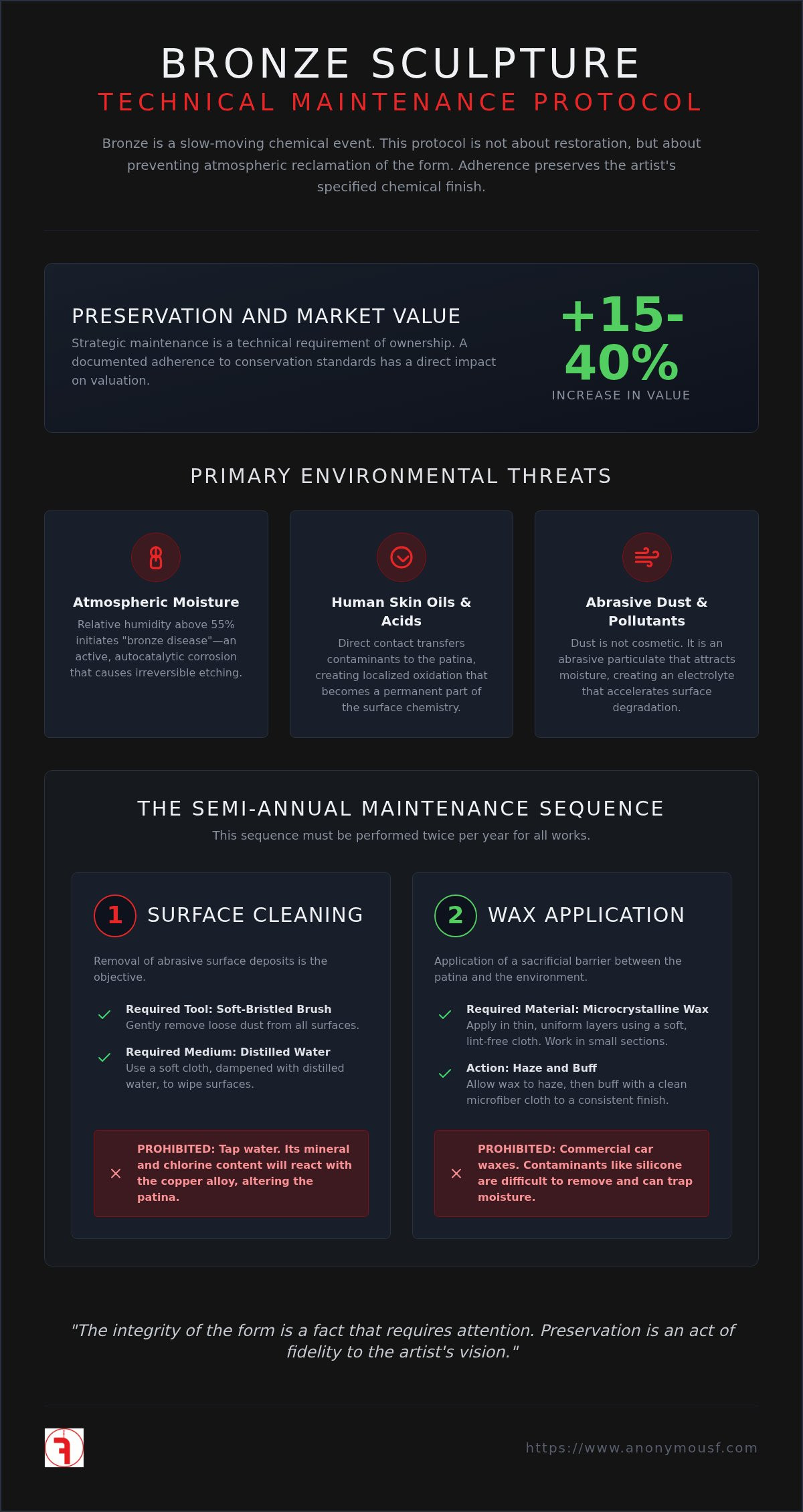
Bronze is an alloy of copper and tin. Professional conservation standards now favor microcrystalline wax over discontinued commercial pastes to shield these materials from corrosion. This guide outlines a technical protocol for cleaning and waxing that mirrors museum practices. Strategic maintenance can increase an artwork's value by 15-40 percent. Preserving the object is the only way to honor the human truth it represents. The integrity of the form is a fact that requires attention twice a year.
Key Takeaways
- The artist's patina is a deliberate chemical finish that serves as the sculpture's final skin and narrative weight.
- A technical protocol for how to care for bronze art sculptures prioritizes distilled water cleaning and microcrystalline wax protection.
- Exposure to human skin oils and relative humidity levels above 55 percent will cause irreversible etching and active corrosion.
- Adhering to a semi-annual maintenance schedule preserves the structural integrity and may increase the object's market value by 40 percent.
The Chemical Nature of Bronze and the Artist's Patina
Bronze is a non-ferrous alloy consisting primarily of copper and tin. This material choice is deliberate. It possesses a specific density and a capacity for detail that few other mediums can match. The surface color, known as the patina, is not a topical coating like paint. It is a controlled chemical reaction induced by the artist during the final stages of production. This layer acts as a sacrificial barrier. It protects the underlying metal from deep oxidation while providing the sculpture with its narrative weight. Knowing how to care for bronze art sculptures begins with a technical understanding of this material chemistry.
Atmospheric pollutants and moisture serve as the primary catalysts for unwanted corrosion. When these elements interact with the copper in the alloy, they can trigger active decay. Understanding the Conservation of outdoor bronze is essential for anyone holding these pieces in a private collection. The environment is a persistent force. It constantly attempts to reclaim the form through oxidation. Without a stable surface, the metal returns to a raw, unrefined state.
Understanding Patina as an Artist's Specification
The patina on a Fringe bronze sculpture is a finished surface. It represents the artist's final decision regarding the work's personality. If you are learning how to care for bronze art sculptures, you must respect this boundary. Aggressive cleaning or the use of abrasive chemicals does more than remove dirt. It strips away the chemical history of the piece. Altering the patina through incorrect maintenance changes the fundamental intent of the work. It turns an original expression into a generic object. Preservation is an act of fidelity to the artist's vision. The object demands a specific protocol to remain as it was conceived.
Physical Maintenance: The Cleaning and Waxing Sequence
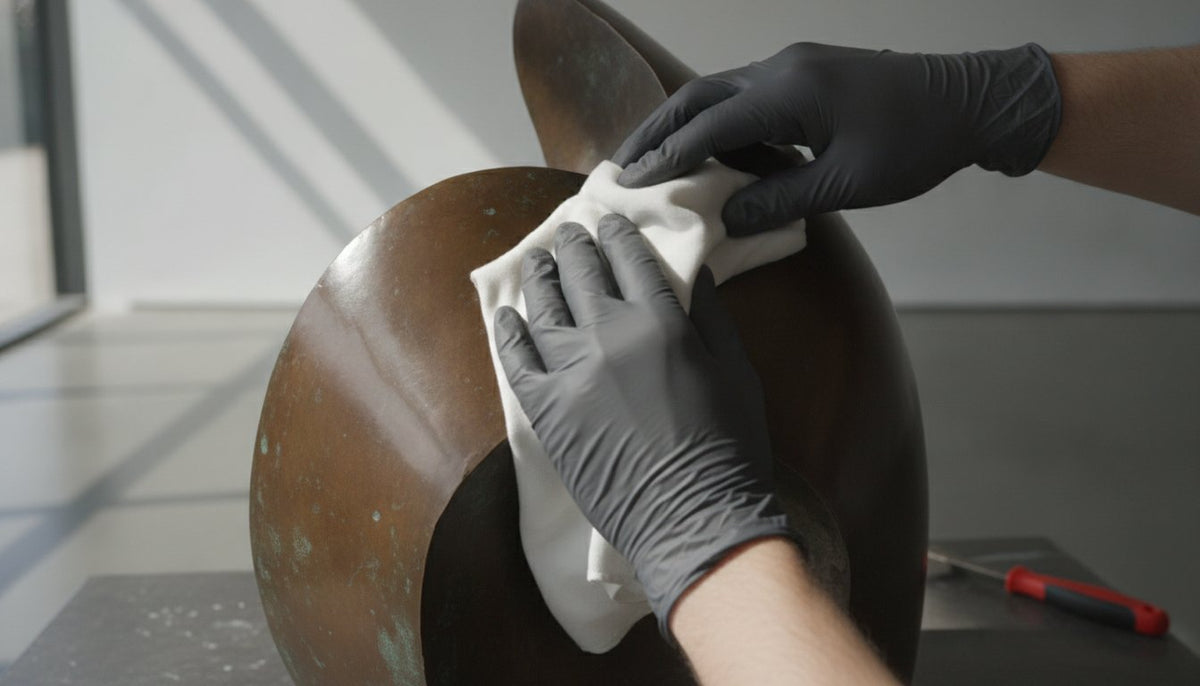
Dust is not merely a cosmetic issue. It is an abrasive particulate that attracts atmospheric moisture to the metal surface. This moisture acts as an electrolyte, accelerating the electrochemical reactions that lead to surface degradation. To maintain the structural integrity of the work, you must remove these deposits regularly. A soft-bristled brush and distilled water are the only tools required for this stage. Distilled water is a technical necessity. Tap water contains minerals and chlorine that can react unpredictably with the copper alloy. This methodical approach is the foundation of how to care for bronze art sculptures.
Waxing creates a sacrificial barrier between the patina and the environment. It's the primary defense against the Chemical review of bronze disease, a condition where chlorides attack the metal and cause active, powdery corrosion. You must avoid standard commercial car waxes. These products frequently contain silicones or cleaning agents that are difficult to remove and may trap moisture against the metal. A professional protocol relies on microcrystalline waxes because they are chemically inert and remain reversible for future conservation.
The Annual Waxing Protocol
Apply a microcrystalline wax, such as Renaissance Wax, in thin, circular layers using a soft cloth. Work in small sections to ensure the coating is uniform across the entire surface. Once the wax has hazed, buff the area with a clean, lint-free microfibre cloth. This process should be performed annually for sculptures kept in stable, climate-controlled environments. Collectors who maintain contemporary bronze works understand that this ritual is about more than aesthetics. It's a commitment to the object's longevity. The wax will eventually wear thin, and its replacement is a fundamental truth of bronze ownership.
Environmental Stability and the Prevention of Degradation
The environment is a silent participant in the life of a sculpture. Human skin contains natural acids and oils that etch the bronze surface over time. Every contact transfers these contaminants directly to the patina. Once deposited, they initiate localized oxidation that can become permanent. Relative humidity is a critical metric for the collector. Levels above 55 percent accelerate the development of "bronze disease." This is a form of active corrosion that creates powdery green spots on the metal. It's an autocatalytic process that continues until the metal is treated or consumed. Maintaining a stable atmosphere is the most effective tool in your protocol for how to care for bronze art sculptures.
Placement dictates longevity. Position sculptures away from heating vents and direct sunlight. These heat sources cause thermal expansion in the metal that the protective wax layer cannot always accommodate. Rapid temperature shifts lead to the premature breakdown of the barrier. Consistency is the goal. A stable environment prevents the physical stress that leads to microscopic surface fractures. The Quiet Boy Bronze collection serves as a benchmark for material quality that demands this level of environmental rigor.
Managing the Interior Atmosphere
Handle sculptures with white cotton gloves. This simple barrier prevents the transfer of skin oils to the patina. It preserves the artist's original finish without the need for corrective chemical cleaning. You should also maintain a stable ambient temperature to prevent the "breathing" of porous cast metal. This phenomenon occurs when air and moisture are pulled into small casting voids during temperature fluctuations. Refer to The Paradox of Permanence for further context on bronze longevity. Learning how to care for bronze art sculptures requires discipline. The object's value is a reflection of its environment. The form stays intact only if the collector remains vigilant.
Preservation as a Continued Narrative
A bronze sculpture is a physical pop art collectible that exists in a state of slow chemical change. The protocol for how to care for bronze art sculptures requires technical discipline rather than artistic flair. You must maintain the microcrystalline wax barrier and regulate the interior atmosphere to prevent corrosion. Every piece within the Fringe Bronze Collections is a physical object with documented provenance from an independent artist-owned studio. Characters like Mylo and Nova represent a fusion of contemporary pop art and traditional casting methods. It's a shared responsibility between the creator and the collector to maintain the form. Integrity is preserved through annual waxing and environmental consistency. You hold the authority to protect this legacy. A well-maintained patina ensures the work retains its narrative weight. The collection remains available through the Fringe studio.
Frequently Asked Questions
Can I use household chemical cleaners on my bronze sculpture?
Household chemical cleaners are an invasive force that will permanently damage the metal. These substances often contain ammonia or acids that strip the artist's intended patina in seconds. You should only use pH-neutral soap and distilled water for maintenance. Preservation is about restraint. The chemistry of the sculpture is a settled matter that doesn't require industrial intervention.
How can I tell the difference between a stable patina and harmful corrosion?
A stable patina is an integrated chemical layer that feels hard and smooth to the touch. Harmful corrosion, often called bronze disease, appears as bright green, powdery spots that are easily disturbed. This active decay is autocatalytic and requires professional intervention. Learning how to care for bronze art sculptures involves recognizing these physical shifts before they compromise the structural integrity of the piece.
Is it necessary to wax a bronze sculpture that is kept indoors?
Waxing remains a technical necessity for indoor sculptures because the interior atmosphere is never truly inert. Humidity levels often fluctuate above the 55 percent threshold, and human skin oils transfer acids during handling. A thin layer of microcrystalline wax provides the only reliable barrier against these environmental variables. It ensures the narrative weight of the object remains unchanged by the passing of time.
What type of cloth is safest for dusting high-end pop art bronzes?
A lint-free microfibre cloth or a soft-bristled natural brush is the only acceptable tool for dusting. Paper towels and generic rags are abrasive and leave microscopic scratches on the wax barrier. When researching how to care for bronze art sculptures, the quality of the applicator is as vital as the wax itself. Consistent, gentle dusting prevents the accumulation of moisture-attracting particulates.

Article by
Fringe

Read more
Original Pop Art for Home Decor: The Specification of the Physical Object
Most walls are occupied by ghosts of images, digital echoes printed on mass-produced paper. Not everyone understands the weight of a physical character object. That's rather the point. Acquiring or...
Read more
The Acquisition of Bronze: A Technical and Narrative Specification
Not everyone understands Mylo. That’s rather the point. Acquiring contemporary bronze requires a recognition of the distinction between mass-produced resin and molten metal. You likely understand t...
Read more
Leave a comment
This site is protected by hCaptcha and the hCaptcha Privacy Policy and Terms of Service apply.