
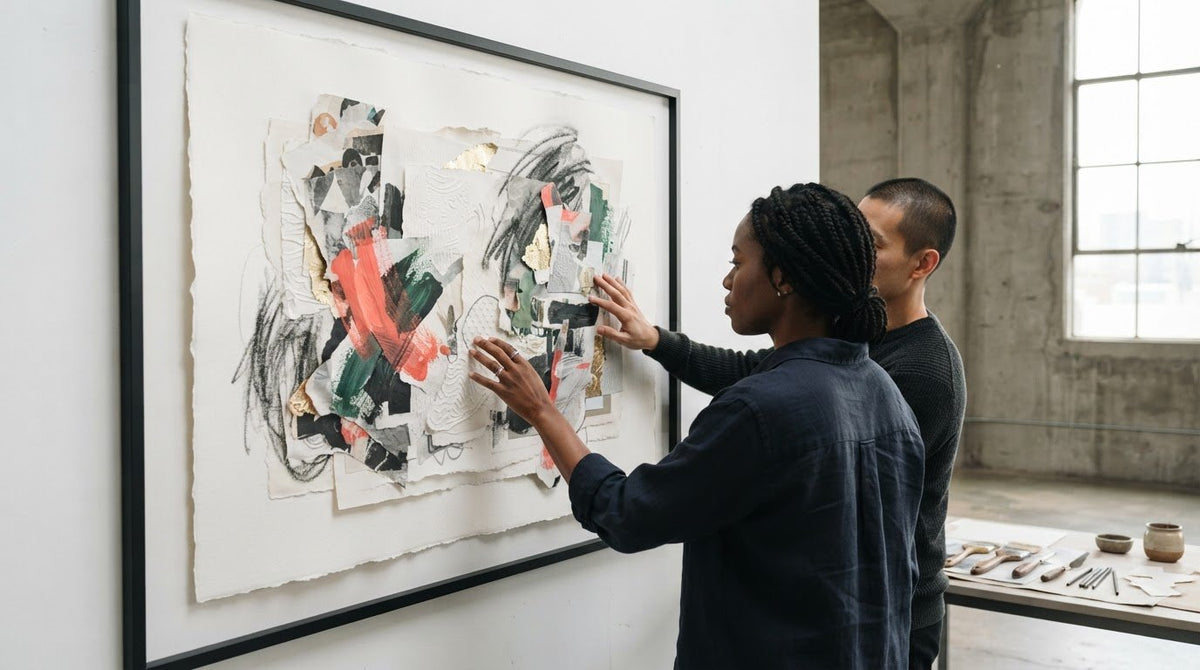
Hybrid Art on Paper: How Materials Shape the Work
A title can’t establish whether a work is an original hybrid artwork or a print. Hybrid art on paper is understood through the relationship between its materials, techniques, and paper support. The work’s description supplies details the title cannot.
The term covers works that bring together approaches associated with drawing, painting, collage, or other forms. The useful question is how those elements function together in the physical work. Fringe presents hybrids on paper and limited edition prints as distinct categories.
For collectors, compare what is visible with what is documented. Note how materials meet the paper, then read the stated medium, process, and edition information. These details help distinguish the work’s physical character from its catalogue description.
Key Takeaways
- Hybrid art on paper describes a relationship between elements and support, not a fixed materials formula.
- Visible marks, layers, and material boundaries are evidence to observe, not proof of an undocumented process.
- Use the work’s description to assess medium and edition details. A title alone does not distinguish an original from a print.
- Consider the work’s physical presence and material relationships when deciding how it fits your collection and display.
What Does Hybrid Art on Paper Mean?
Hybrid art on paper names a category, not a fixed recipe of materials. “Hybrid” indicates that elements or artistic forms meet within a work, but it doesn’t specify how many elements there are or what they must be. The term is broader than a medium label. Hybrid art has an interdisciplinary history; on paper, the support is part of the category’s meaning.
The word describes a relationship, not a checklist. Two works may both be called hybrid while differing in how their elements relate to the paper. The description of each work provides its specific medium and process. The category alone does not.
How does “hybrid” relate to the paper support?
Paper establishes the ground of the work. Its visible areas, edges, and relationship to the image affect how the work is read; it is not simply an interchangeable backdrop. The paper’s role depends on the individual artwork, so the category does not imply a particular surface, weight, or treatment.
The category of oil-on-paper works names both a medium and a support. That wording identifies a relationship at the category level, but it does not establish the details of an individual piece. For hybrid art on paper, consider how the work’s stated elements relate to its support.
How to Read Material Choices in Hybrid Art on Paper
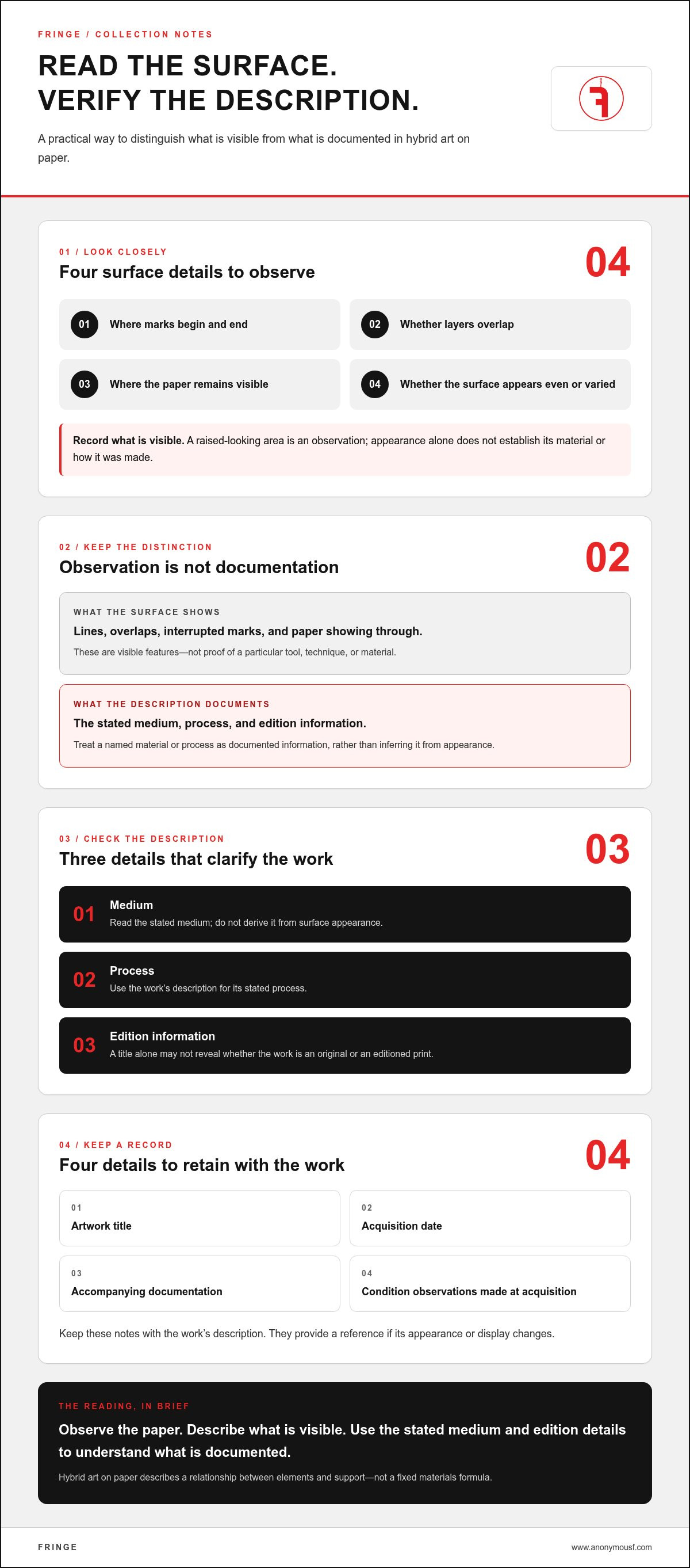
Read the surface before naming its materials. Note where marks begin and end, whether layers overlap, where the paper remains visible, and whether the surface appears even or varied. These are observations, not conclusions about the tools or techniques used. A photograph or title can offer context, but neither replaces the physical work’s description.
Hybrid art on paper is defined by how its elements relate, not by a checklist of materials. Start with the relationship you can see, then compare it with the work’s description.
What can a collector infer from the visible surface?
A close look can establish visible features: a line changes direction, one area sits over another, an edge interrupts a mark, or the paper shows through. Describe those features plainly. A raised-looking area is worth noting, but appearance alone does not establish its material or how it was made. Keep observation separate from interpretation.
An original work is a particular physical object with its own surface. An editioned print belongs to a reproducible edition, though the title alone may not reveal that status. Surface appearance can inform close looking, but it does not reliably establish whether a work is an original or a print. Use the artwork’s medium and edition information to understand what is being described.
A useful reading can stay precise without becoming technical. Record what is directly visible, then compare those observations with the description. If the description names a material or process, treat that as documented information rather than inferring it from appearance. The surface tells you what is present on the paper; the stated medium identifies how the work is described.
Collecting Hybrid Art on Paper: Context, Display, and Care
A collector’s record can preserve details that are easy to lose over time: the artwork’s title, acquisition date, accompanying documentation, and condition observations made at acquisition. Keep these notes with the work’s description. They give you a reference point if its appearance or display changes.
Display choices should account for the individual work’s construction and its surroundings. Avoid assuming one approach suits every work on paper. Follow any care guidance supplied with the work, and handle it in a way that limits unnecessary contact with the surface.
How does hybrid art on paper sit within a collection?
A work on paper adds a distinct physical format to a collection that may include paintings, sculptures, or prints. Consider its scale, visual presence, and relationship to nearby works. A collection does not need every object to conform to one theme; differences can remain visible.
For records that place prints alongside other works, reference material such as a guide to original character art prints can provide context. Keep the record specific to each object. The work and its documented history belong together.
Let the Collection Keep Its Distinctions
A collection takes shape through decisions about what belongs beside what. A work on paper can change how paintings or objects already in the room are read by introducing another physical format. That relationship can become part of the collection’s record.
When considering hybrid art on paper, note what draws your attention and what information supports that response. A concise record of the work’s description and your observations preserves the distinction between documented facts and personal interpretation. Over time, those notes show which qualities continue to matter.
There is no single formula for placing a work in a collection. The decision rests on the object, its documented identity, and the company it keeps. A considered collection makes room for those distinctions.
Frequently Asked Questions
Is hybrid art on paper the same as mixed media art?
Yes, the terms can overlap, and art writing does not use them with one universally fixed boundary. A catalogue may use one term for a broad category and another in its medium description. For hybrid art on paper, preserve the artist’s wording and the stated medium as separate details in your records. That keeps a broad label from becoming a technical claim.
Can hybrid art on paper be an original artwork rather than a print?
Yes. At acquisition, retain the invoice or receipt, any provenance information, and correspondence describing the specific work. Keep certificates or edition documents with those records if supplied. Together, these materials create a record tied to the object, which is more useful for later cataloguing or resale than relying on memory or an abbreviated title.
How should collectors assess the condition of art on paper?
Make a dated baseline record before display. Photograph the front, back, and margins under consistent, indirect light, and note the viewing conditions. Compare later observations with those images rather than relying on memory. Record visible changes without guessing at their cause. This helps distinguish a new change from a feature present at acquisition.
Can artwork on paper be displayed without a frame?
Yes. An unframed display leaves the paper’s edges and margins visible, making the sheet part of the presentation. Compare that effect with framed works nearby, and consider whether the composition depends on a boundary around it. The choice is visual as well as practical; the individual work’s construction determines what support it needs.

Article by
Fringe

Read more
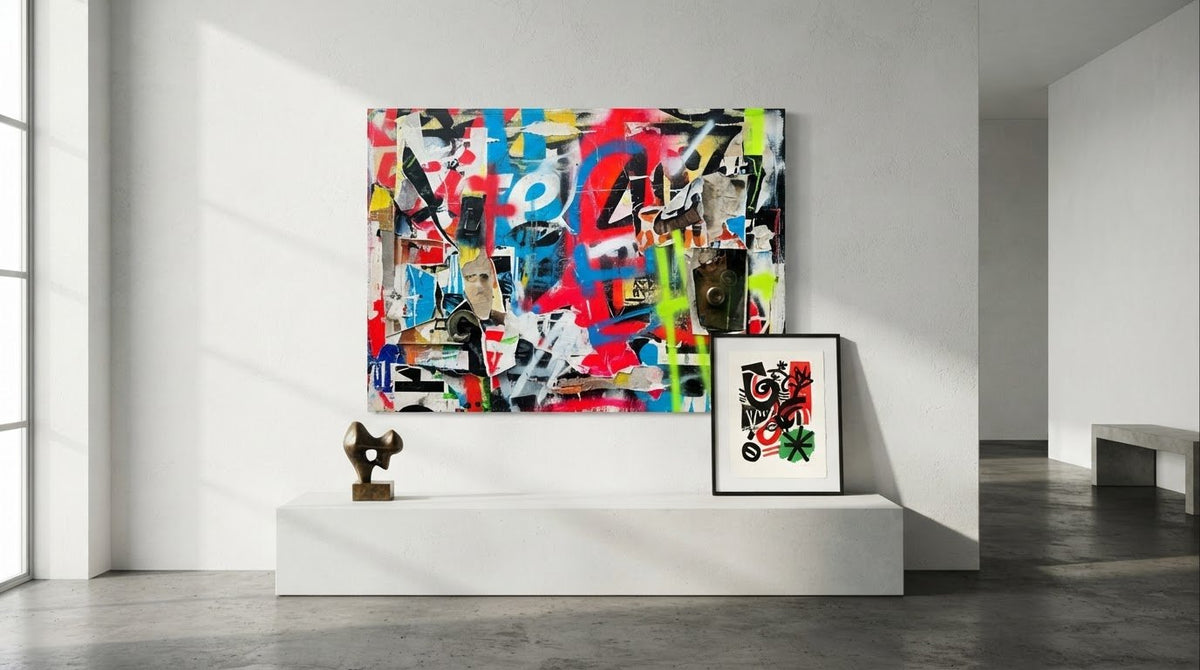
Original Pop Art Mixed Media: How to Read the Physical Work
“Original” and “mixed media” answer different questions. A pop art mixed media original is not defined by the label alone: originality describes the work’s status, while medium identifies its physi...
Read more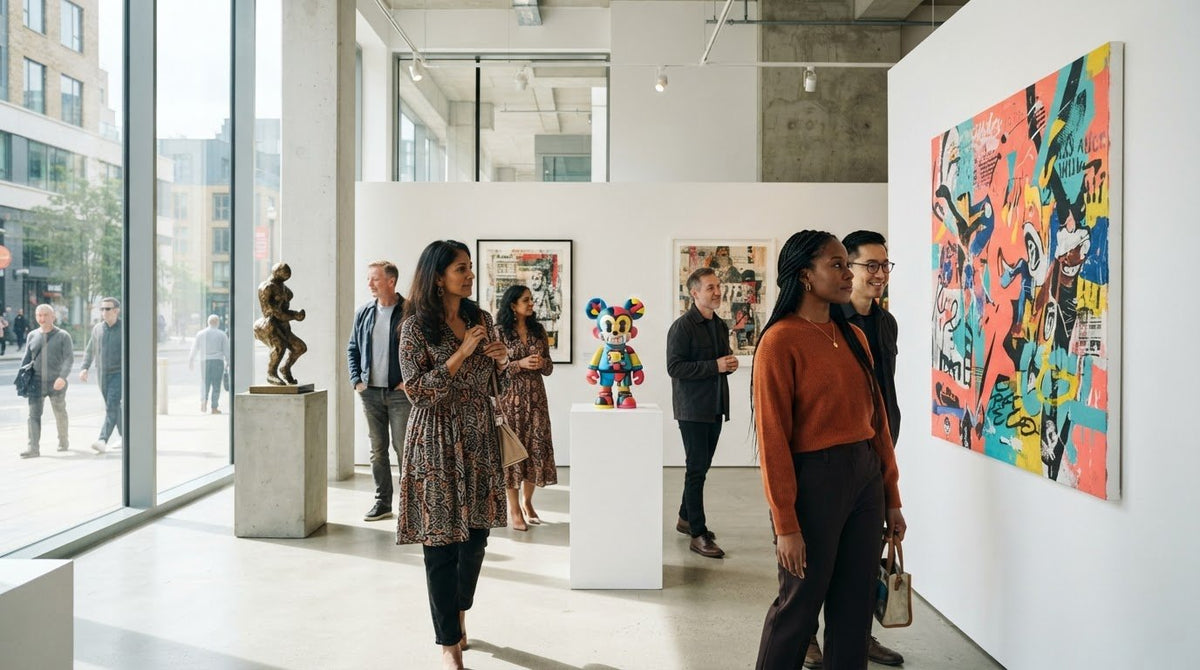
Art That Makes You Happy: Finding Meaning in the Work You Live With
Art that makes you happy is not a fixed category. Fringe creates physical pop art as oil on canvas, bronze sculptures, hybrids on paper, limited edition prints and collectible toys. Each form gives...
Read more
Leave a comment
This site is protected by hCaptcha and the hCaptcha Privacy Policy and Terms of Service apply.