
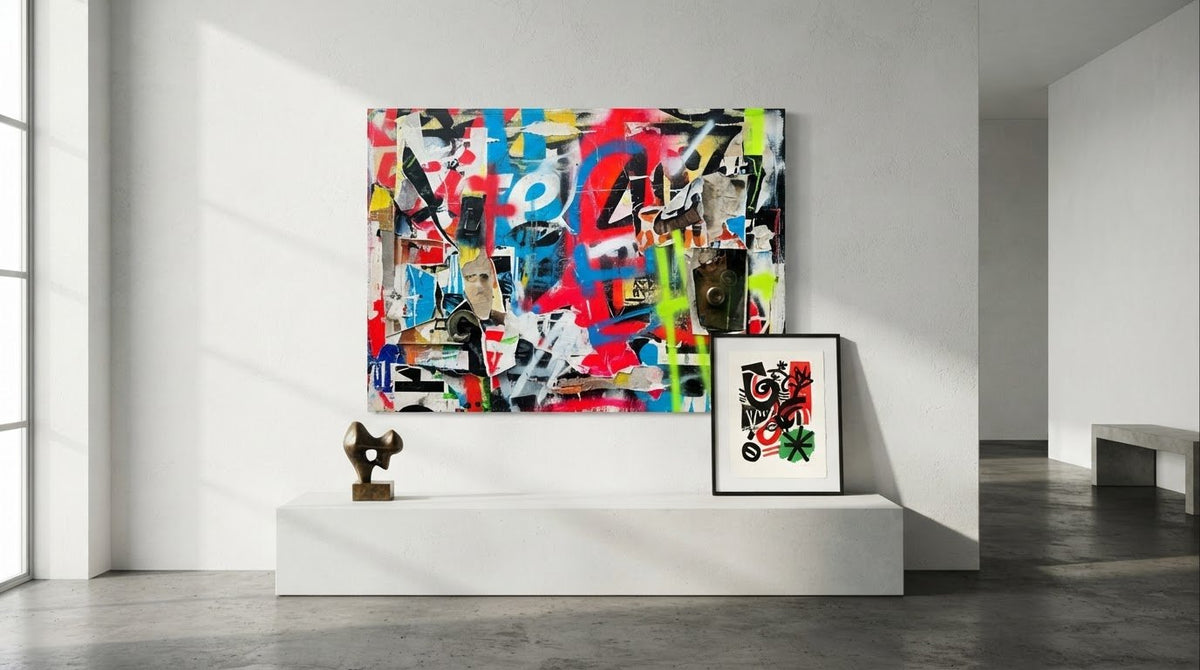
Original Pop Art Mixed Media: How to Read the Physical Work
“Original” and “mixed media” answer different questions. A pop art mixed media original is not defined by the label alone: originality describes the work’s status, while medium identifies its physical form and materials. A material description does not, by itself, establish how the work was made.
A surface can carry more information than an image. To read an object accurately, separate what it is made of from what “original” says about it, then distinguish both from a reproduction. Fringe creates physical works including oil on canvas paintings, bronze sculptures, and hybrids on paper. Limited edition prints and character-based collectible toys are distinct formats within the broader practice. The distinctions begin with the object itself.
Key Takeaways
- Read “mixed media” as a description of a work combining more than one artistic medium, not as proof of a particular process.
- Assess medium, original or reproduction status, and edition status as separate facts in a work description.
- Use “pop art mixed media original” to describe distinct qualities: the pop art context, the medium, and the work’s originality.
- Keep oil on canvas, bronze sculpture, and hybrids on paper as separate physical formats. A limited edition print is a distinct format description.
What “Original Pop Art Mixed Media” Means as a Physical Work
Medium describes the materials in a work. Originality describes its status as an artwork rather than a reproduction. These terms answer different questions.
Mixed media means a work combines more than one artistic medium. The term identifies a relationship among media, not a particular combination or method of making. “Pop art” places the work in an artistic context associated with popular culture and challenges to traditional ideas of fine art. It does not specify what the object is made from. The Pop Art Movement Overview provides historical context for that distinction.
Why “mixed media” does not identify the materials by itself
A description that says “mixed media” establishes that multiple media are present. It does not name them, explain how they were combined, or establish the sequence of work. Those details require information about the individual object. The label alone is not a process record.
Read a description only as specifically as its wording allows. “Hybrid on paper,” for example, identifies a physical format, but does not specify the materials or process used in that work. Fringe creates hybrids on paper alongside original oil on canvas paintings and bronze sculptures. These formats are not interchangeable, and one does not prove an unreported technique in another.
For a pop art mixed media original, keep three descriptions separate: medium names the materials, subject names what the work depicts, and originality identifies whether the object is an original artwork or a reproduction. A popular-culture subject does not establish medium. A mixed-media label does not establish originality. Each claim needs its own basis in the object description.
When recording a work, copy the stated medium and format as written, then note any details the description leaves open. This prevents an inference, such as assuming a specific material from an image, from becoming part of the object record.
How to Read Medium, Originality, and Edition Status Separately
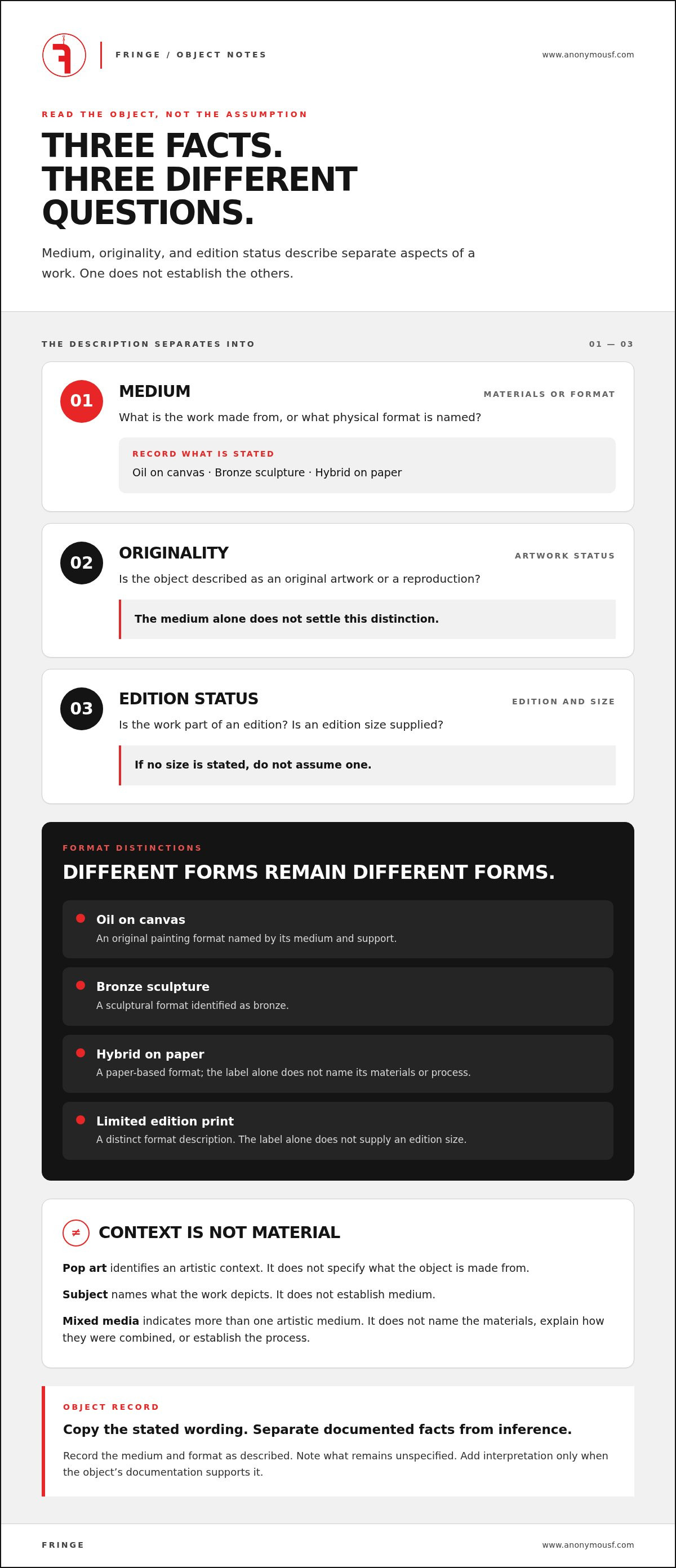
A useful description separates three facts: what the work is made from, whether it is an original artwork or a reproduction, and whether it belongs to an edition. These details answer different questions. Medium alone does not establish whether a work is original.
- Medium: Record the materials or format explicitly named in the description. Do not infer a process or add materials that are not stated.
- Originality: Identify whether the object is described as an original artwork or a reproduction. The medium itself does not settle that distinction.
- Edition status: Note whether the work is described as part of an edition and whether an edition size is supplied. If no size is stated, do not assume one.
An original artwork and a limited edition print are different format descriptions. Fringe offers original oil on canvas paintings and limited edition prints as distinct formats. Neither label, by itself, establishes details that are not stated about an individual work. Pop art refers to an artistic context, not a material or edition category. Britannica’s account of the Characteristics of Pop Art discusses its connection to popular and commercial culture.
What an artwork description can establish, and what it cannot
A description can establish the facts it names, such as “oil on canvas” or “limited edition print.” It cannot establish an unstated technique, process, edition size, or claim of uniqueness. Precise wording keeps the record clear: “hybrid on paper” names a format, but does not specify the materials used. Apply the same discipline to any pop art mixed media original. For a related account of physical specifications, see Pop Art Original Artwork: The Specification of the Physical Object.
Separate stated facts from inference. Record the exact wording first. Add interpretation only when the object’s documentation supports it.
Where Original Mixed-Media Pop Art Sits Among Physical Art Forms
A body of pop art can move across formats without making those formats equivalent. Oil on canvas, bronze sculpture, and hybrids on paper each name a different physical form. Read each work through the particular object, not by transferring assumptions from one format to another.
Fringe creates original oil on canvas paintings, bronze sculptures, and hybrids on paper. The first names a support and medium; the second identifies sculpture in bronze; the third identifies a paper-based format without specifying the hybrid’s materials or process. The distinction matters. A format label is useful, but it is not a substitute for a work-specific description.
Reading a body of work without collapsing its formats
One artist’s practice can include different physical forms while retaining a shared pop art context or authorship. The formats still have separate material identities. Read a bronze sculpture as sculpture, an oil on canvas painting as a painting, and a hybrid on paper according to the details stated for that object. None supplies facts about the others.
Fringe’s artist profile places these formats within the artist’s practice, while each work remains a specific physical object. That context can clarify the relationship among works without making them one medium or implying a shared production method.
A concise description keeps the categories intact: Fringe creates original oil on canvas paintings, bronze sculptures, and hybrids on paper. The wording names the formats without assigning unstated materials to the hybrids.
For a pop art mixed media original, format is part of how the object is read, not a shortcut to claims about its composition. Different forms can belong to one practice and remain different forms.
Keep the Object at the Center
A useful object record identifies the work by title and artist, then records the date, dimensions, and material description when those details are documented. Keep photographs and related paperwork with the same record. Separate what you can observe from information supplied by the artist or seller.
For photographs, use consistent lighting and include the front, back, edges, and any visible marks. Describe condition in neutral terms rather than guessing at a mark’s cause or age. Keep the original files with the written record so later observations can be compared.
For a pop art mixed media original, make only claims supported by the individual object’s record. A precise record leaves fewer assumptions between the physical work and the person who encounters it. Accuracy is the standard.
Frequently Asked Questions
What does provenance mean when collecting an original artwork?
Provenance is the documented history of an artwork’s ownership and custody. Records may include a bill of sale, transfer documents, exhibition records, or correspondence identifying the work. Keep these materials with the artwork’s file, noting dates and source details. Provenance records support a clear account of the work’s history. They are not a substitute for a separate condition record or authentication assessment.
How can a collector document an artwork’s condition without altering it?
Make a dated written record and take clear photographs without touching, cleaning, or changing the work. Photograph the front, back, edges, and any visible marks from a consistent distance and under even lighting. Describe observations neutrally, such as “small tear at lower edge,” rather than guessing at cause or age. Keep the original files and notes together so later records can be compared.
Can the same artwork be described using more than one medium term?
Yes, if each term accurately describes a different aspect of the object and the wording is supported by its documentation. A description might name a support and a medium separately, but it should not add materials based on appearance alone. For a pop art mixed media original, use only the medium terms established for that specific work. “Hybrid” alone does not identify its components.

Article by
Fringe

Read more

Collectible Art Toys in Limited Editions: Read the Object, Not the Hype
An edition number records a declared quantity. It does not establish authorship, material, or provenance. Listings for collectible art toys limited edition may emphasize release language while omit...
Read more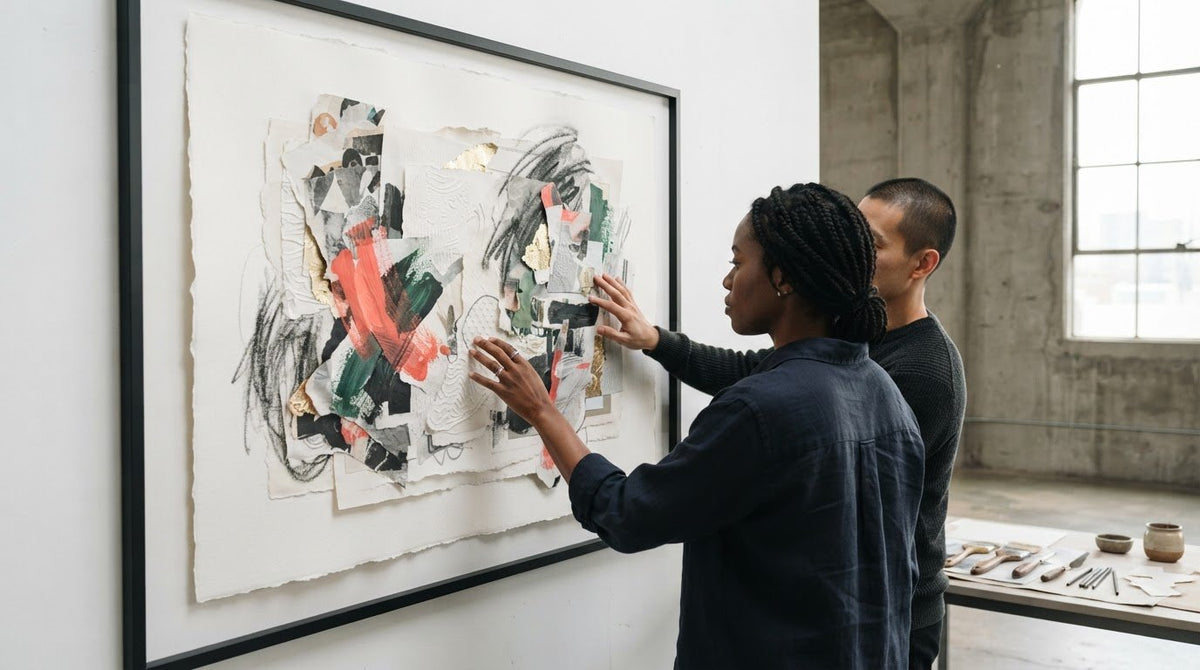
Hybrid Art on Paper: How Materials Shape the Work
A title can’t establish whether a work is an original hybrid artwork or a print. Hybrid art on paper is understood through the relationship between its materials, techniques, and paper support. The...
Read more
Leave a comment
This site is protected by hCaptcha and the hCaptcha Privacy Policy and Terms of Service apply.