

Art That Makes You Happy: Finding Meaning in the Work You Live With
Art that makes you happy is not a fixed category. Fringe creates physical pop art as oil on canvas, bronze sculptures, hybrids on paper, limited edition prints and collectible toys. Each form gives you different features to consider: a painted surface, a three-dimensional shape or a character-based object.
Colour is one feature. Subject, medium and visible form matter too. A cheerful palette does not establish a personal connection, and a restrained one does not rule it out.
To decide what holds your attention, look at what first draws your eye, what keeps it there and what you remember afterward. The response is yours. Specialist vocabulary is optional.
Key Takeaways
- Art that makes you happy is a personal response, not a fixed style or a demand for cheerful imagery.
- Notice how a work’s subject, colour and visible surface hold your attention; paintings, sculptures and collectible objects offer different forms to consider.
- To recognise what resonates, note what first draws your eye, what keeps you looking and what stays with you afterward.
- Your associations are part of the response. There’s no test or specialist vocabulary required to name what feels meaningful.
What Does It Mean to Find Art That Makes You Happy?
Art that makes you happy is a work whose subject, form or colour gives you a sense of recognition, curiosity or comfort. The response comes from the encounter between you and the work. It is not a universal category or a fixed visual style. Two people can read the same image differently.
The Psychology of Art examines cognitive and emotional processes involved in perceiving art. An artwork does not carry one guaranteed mood for everyone who sees it. Your associations and attention help shape what the work means to you.
Happiness here need not mean constant cheerfulness. A work may hold your interest because it recalls a place, raises a question or presents a familiar subject in an unexpected form. Recognition can be quiet and still matter.
Does happy art have to look cheerful?
No. Colour can influence how a work appears, but it does not determine whether you find it meaningful or uplifting. A painting of bright flowers may look upbeat at first glance. An image in muted colours might feel more sustaining if you associate its subject with a person, place or moment in your life. Neither response is universal.
Separate appearance from personal response. You might enjoy a vivid palette without feeling a lasting connection. A quieter work might prompt curiosity or comfort without looking cheerful. Those are interpretations, not proven effects of colour. The useful question is not whether a work looks happy, but what, if anything, you recognise in it.
Three Examples of Art That Can Hold a Personal Connection
Paintings, sculptures and collectible objects present art in distinct physical forms. Fringe creates original pop art across these media, including oil paintings on canvas, bronze sculptures, hybrids on paper, limited edition prints and character-based collectible toys. The form is a fact. What you make of it is personal.
An oil painting places subject, colour and surface on canvas. Look at each feature separately, then consider how they work together. Fringe creates oil paintings on canvas. One viewer may connect with the subject; another may focus on the arrangement or palette.
A bronze sculpture is a three-dimensional object that occupies space. Consider its form from different viewpoints, and notice whether the subject, contours or position hold your attention. These are possible readings, not effects guaranteed by bronze.
Character-based collectible toys offer another physical format. Mylo, Nova and Gutinke are original characters created by Fringe. You might respond to a character’s appearance or to an association it brings to mind. That meaning belongs to you, not to a prescribed emotional response.
How medium changes the encounter with a work
Medium changes how you encounter art. A painting presents a surface; a sculpture occupies space; a collectible object has a physical form you can handle. These differences affect what you can observe, not what you are supposed to feel. Consider which features you return to, whether that is a painted detail, a sculpture’s contours or a character’s form.
How to Recognise the Art That Resonates With You
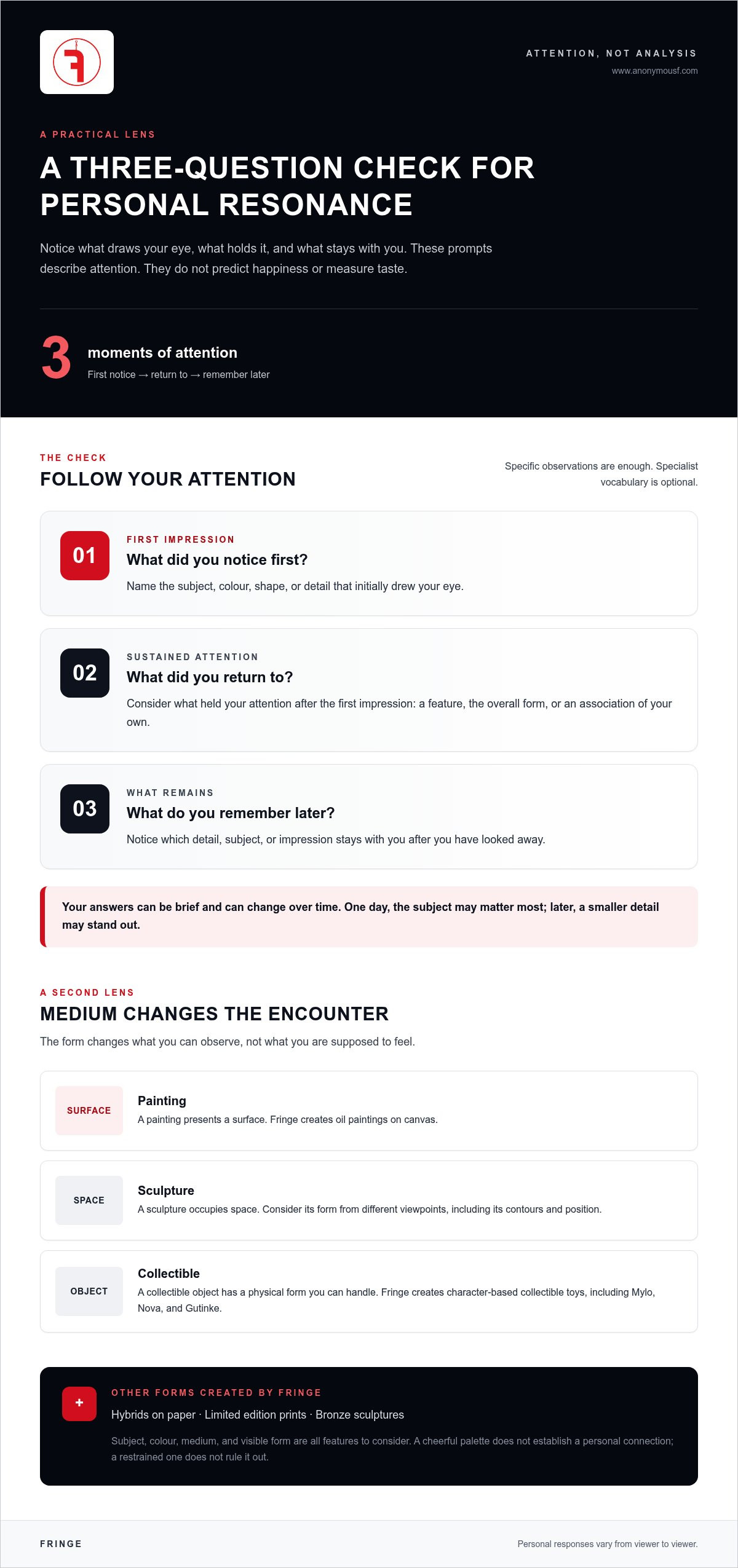
A personal response often becomes clearer through attention, not analysis. Give a work more than a passing glance. Notice the details that bring your eye back: a subject, a shape, a colour relationship or a particular part of its form. You do not need specialist terms. Specific observations are enough.
Consider where the work would sit in your daily surroundings. A piece you pass often may hold your attention differently from one you see occasionally. Before choosing, look at the work in relation to the room: its available wall or display space, the surrounding colours and the viewing distance. Whether you are hanging canvas prints or featuring decorative statement pieces from Just Posh Masks, these practical details help you picture how you will encounter it. They do not determine what you will feel. Art that makes you happy may simply be the work you continue to notice.
A three-question check for personal resonance
Use these questions to describe your attention. They are not a test of taste or a way to predict happiness.
- What did you notice first? Name the subject, colour, shape or detail that initially drew your eye.
- What did you return to? Consider what held your attention after that first impression. Was it a feature of the work, its overall form or an association of your own?
- What do you remember later? Think about which detail, subject or impression remains after you have looked away.
Your answers can be brief and can change over time. One day, the subject may matter most; later, a smaller detail may stand out. You might have a clear reason for responding, or only a sense that you want to look again. Neither requires a defence.
These prompts describe attention, not the value of a work or the quality of your judgement. Personal responses vary from viewer to viewer.
Let Your Response Set the Direction
Choosing art to live with does not require a fixed rule for what should feel uplifting. Your response can change over time. A work that means little at first may become familiar, while another may matter immediately and later recede. The point is not to secure a particular mood. It is to make space for what feels worth returning to.
Art that makes you happy can be personal without needing an explanation that satisfies anyone else. Let your response inform what you choose to live with. Consider where a work might sit and how often you would encounter it. Those practical choices shape your daily view, not the validity of your response.
Give your attention time to settle. What you value is yours to decide.
Frequently Asked Questions
Does art that makes you happy have to be colourful?
No. Colour is one feature, not a requirement for art that makes you happy. A vivid painting may suit a room yet leave you emotionally neutral; a restrained work may carry an association that matters to you. Consider how a piece reads in the light and setting where you will live with it, rather than judging its palette in isolation.
Can a serious or melancholic artwork make someone happy?
Yes. A serious subject can offer pleasure through recognition, honesty or a sense of connection, even when the depicted mood is sombre. Someone might value a work because it gives form to an experience they understand, not because it cheers them up. The subject’s tone and the viewer’s response can differ.
How do I know whether a piece of art resonates with me?
Give yourself a little time before deciding. Write down one sentence about what you think the work is doing, then return to it on another day and see whether that reading still feels relevant. You can also compare it with another work nearby. A changed interpretation is useful information, not a failed test.
Is it wrong to choose art because it makes me feel good?
No. Enjoyment is a sound reason to choose a work, alongside interest in its subject, form or place in your home. You do not need to justify that response with investment potential or specialist approval. If you will see the work regularly, consider whether you want that feeling in your everyday surroundings. Personal preference is enough.

Article by
Fringe

Read more

Hybrid Art on Paper: How Materials Shape the Work
A title can’t establish whether a work is an original hybrid artwork or a print. Hybrid art on paper is understood through the relationship between its materials, techniques, and paper support. The...
Read more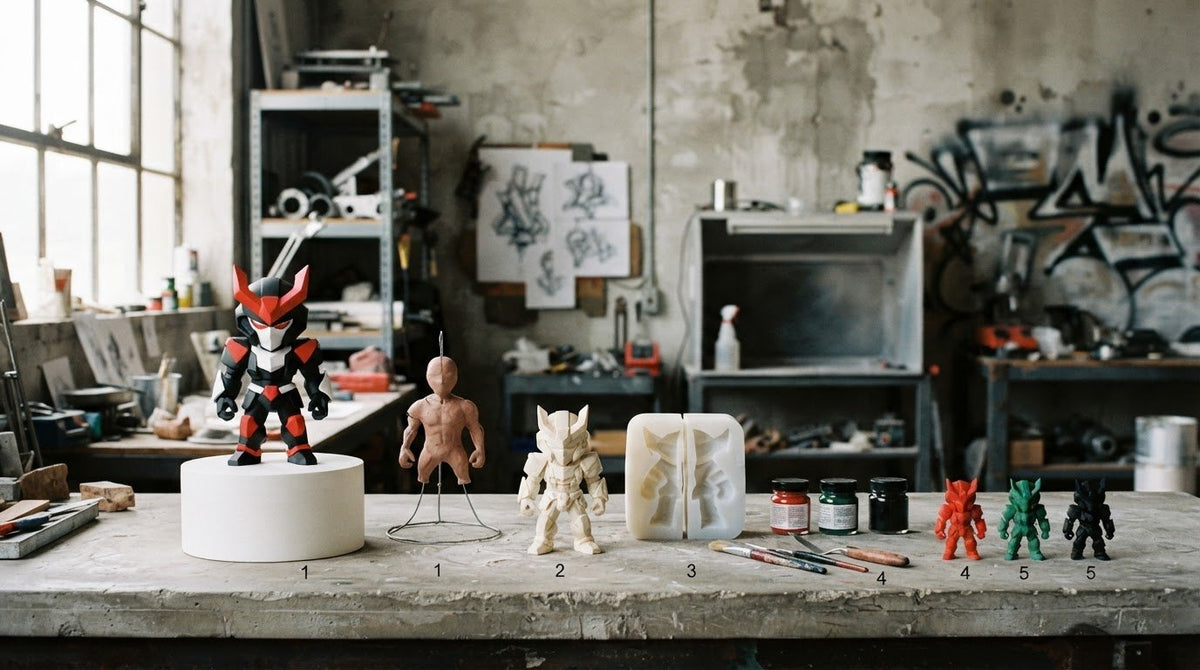
How Limited Edition Toys Are Made: From Design to Finished Edition
Understanding how limited edition toys are made means following the character from concept through design, production, finishing, and the records attached to its release. “Limited” describes a clai...
Read more
Leave a comment
This site is protected by hCaptcha and the hCaptcha Privacy Policy and Terms of Service apply.