
How to Mix Art Mediums in a Collection: The Logic of Material Contrast
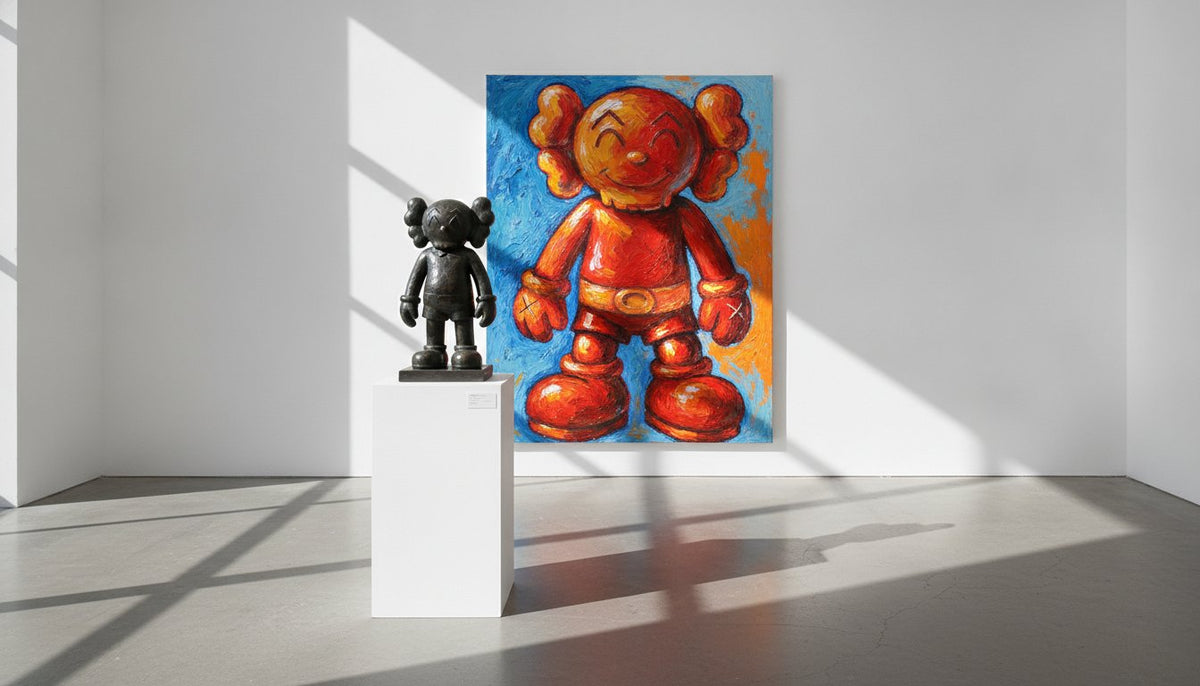
Not everyone understands why a heavy bronze Mylo sits beside a paper hybrid. That’s rather the point.
A collection consisting solely of one medium lacks the narrative weight provided by physical variety.
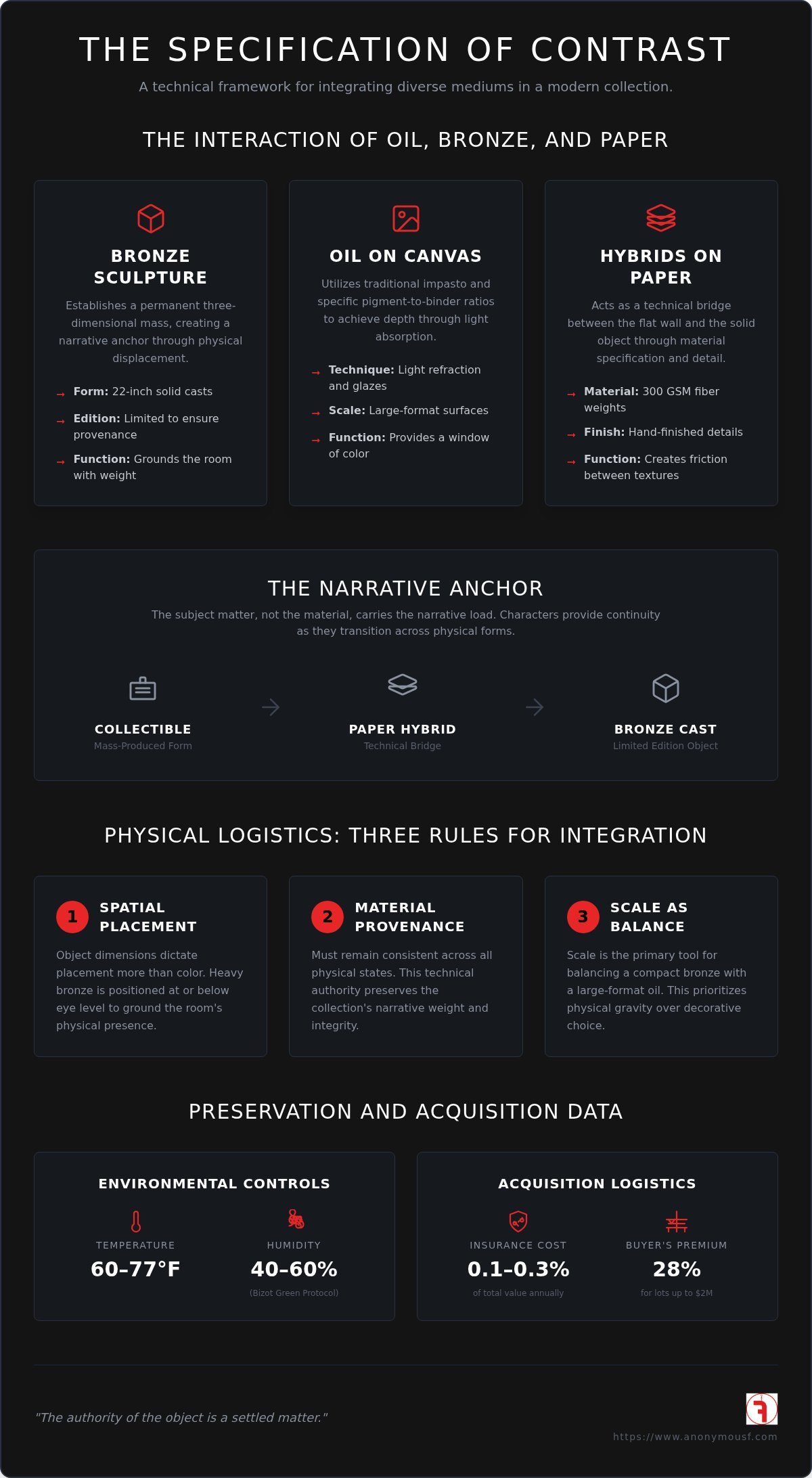
Bronze sculptures are cast in limited editions to establish a permanent three-dimensional mass within a room.
Oil on canvas works utilize traditional impasto techniques to create depth through light absorption.
Hybrids on paper act as a technical bridge between flat surfaces and solid metal objects.
This framework defines how to mix art mediums in a collection using 22-inch bronze casts and large-format oils.
The soul of the work resides in the tension between these different physical states.
The authority of the object is a settled matter.
Key Takeaways
- A technical framework for how to mix art mediums in a collection prevents visual stagnation through the tension of material contrast.
- Integrating three-dimensional bronze with oil on canvas requires specific management of shadow, mass, and material provenance.
- Characters like Mylo and Nova provide narrative continuity when transitioning between traditional canvas and paper hybrids.
- The authority of a collection rests on the ability of the subject matter to carry the narrative load regardless of the physical material.
The Specification of Contrast: Why Mixed Mediums Define Modern Collections
Bronze sculptures and traditional oil glazes provide the specific physical tension required for a modern collection.
Understanding how to mix art mediums in a collection involves balancing the 22-inch mass of a bronze with the surface area of a canvas.
The oil on canvas process utilizes specific pigment-to-binder ratios to achieve depth through light refraction.
The Mixed media art tradition within high-end environments relies on the dialectic between these physical materials.
Medium diversity is a deliberate strategy to prevent visual stagnation through the contrast of material density.
Bronze sculptures are cast in limited editions to ensure the provenance and narrative weight of the object remains intact.
Liquid oil and solid metal represent distinct physical states that challenge the viewer’s perception of the room.
A collection that ignores these physical states lacks the authority of a technical narrative.
The Interaction of Oil, Bronze, and Paper
Hybrids on paper involve specific 300 GSM fiber weights and hand-finished details that bridge the flat wall and the solid object.
The transition from liquid pigment to solid cast metal provides the necessary friction between textures in a space.
Traditional glazes on canvas absorb light at different rates than the polished surfaces of a limited edition bronze.
The soul of the object is defined by the specific density of the bronze and the viscosity of the oil layering.
The relationship between these states is a matter of technical specification rather than decorative choice.
The weight of the bronze displacement creates a permanent narrative anchor within the collection.
Physical Logistics: Three Rules for Integrating Diverse Mediums
The physical dimensions of an object dictate its spatial placement more than the surrounding color palette.
A pop art bronze sculpture requires specific plinth clearance to account for the displacement of mass and shadow.
Material provenance must remain consistent across all physical states to preserve the collection’s technical authority.
Scale functions as the primary tool for balancing a compact bronze with a large-format oil painting.
The definition of mixed media involves the integration of diverse materials within a single environment.
This framework defines how to mix art mediums in a collection by prioritizing physical gravity over decorative choice.
The displacement of a solid metal object creates a permanent narrative anchor.
Acquisition logistics involve a 28% buyer’s premium for auction lots up to $2 million as of February 2026.
A collection that ignores these physical logistics fails to challenge the room.
Balancing Weight and Texture in a Space
Heavy bronze pieces are positioned at eye level or below to ground the room’s physical presence.
original oil on canvas art provides a window of color that contrasts with the monochrome nature of cast metal.
Technical lighting specifications for these displays are detailed in the guide on how to display a contemporary art collection.
A temperature range of 60 to 77 degrees Fahrenheit is the standard for maintaining the integrity of mixed medium displays.
The Bizot Green Protocol requires a relative humidity range of 40% to 60% for the long-term preservation of oil and metal.
Specialist fine art insurance policies cost between 0.1% and 0.3% of the collection's total value annually.
The soul of the object is maintained through these specific environmental and logistical controls.
The object remains indifferent to the observer.
The Narrative Anchor: Using Character to Unify Diverse Forms
Not everyone understands the transition from paper to sculpture. That's why most collections remain shallow. A collection remains cohesive when the subject matter, not the material, carries the narrative load. Characters like Mylo and Nova serve as the constant across different mediums. The shift from a collectible toy to a bronze cast represents the evolution of the character's soul. It's the progression from a mass-produced form to a hand-finished, limited edition object. The material changes, but the identity remains fixed.
Understanding how to mix art mediums in a collection requires looking past the physical surface. The Smithsonian Institution provides technical guidelines for conserving mixed media artworks, emphasizing the chemical and physical stability of combined materials. However, the conceptual stability comes from character. When a collector sees the same face in oil as they do in bronze, the medium becomes secondary to the story. The narrative weight of the character is the only fact that matters. It's the anchor that prevents a diverse collection from feeling like a random assortment of objects.
Integrating Mylo and Nova Across the Collection
Position a Mylo bronze in the same line of sight as a Nova oil painting. This creates a silent dialogue between the two forms. Paper hybrids provide a raw, process-heavy look. They contrast with the finished nature of a collectible toy. The character's presence provides the logic for the room when deciding how to mix art mediums in a collection. The materials are simply different physical states of the same truth. This continuity ensures the collection feels authoritative rather than accidental. Character is the thread that binds the bronze to the canvas. The collection is a single argument told through multiple physical voices. For those who apply the same discerning eye to their personal wellness as they do their art, you can check out Artemis Curated for specialized supplements that support women's health.
A collection isn't a static display. It's a living dialogue between mass and surface. The tension between an oil glaze and a cold-cast bronze provides the dialectic needed for a sophisticated space. Understanding how to mix art mediums in a collection transforms a grouping of objects into a singular narrative argument. Continuity is maintained through characters like Mylo and Nova; their stories remain constant even as the material shifts from pressed paper to solid metal. These are physical truths. Every piece is a limited edition bronze cast or an original oil work. There are no digital NFTs here. The authority of the collection rests on the physical soul of the object itself. The Fringe collection is available for those who understand the weight of the object. Your strategy for material contrast is now a settled matter.
Frequently Asked Questions
Can you display bronze sculptures next to oil paintings?
Displaying bronze sculptures alongside oil paintings is a deliberate method to introduce material tension. The weight of the metal anchors the room while the oil canvas provides a window of texture and depth. This combination is a core element of how to mix art mediums in a collection, and it is often further grounded by placing these pieces alongside rare antique furniture from Nwtiques to establish a sophisticated spatial narrative. It creates a dialectic between two-dimensional surfaces and three-dimensional mass.
There's no fixed limit, but a high-end collection typically integrates three distinct physical states: oil on canvas, bronze, and paper hybrids. This variety ensures the collection has narrative weight. A single-medium collection often lacks the spatial complexity found in mixed environments. The goal is to establish a cohesive dialogue through material contrast rather than sheer volume.
Do collectible toys belong in a fine art collection?
Character-based collectible toys belong in a fine art collection when they carry narrative continuity. When a character like Mylo exists in both bronze and vinyl, it represents an evolution of the object's soul. These pieces act as the bridge between contemporary pop culture and traditional sculptural forms. They provide a modern context that challenges the perceived boundaries of a high-end display.
What is the best way to light a mixed medium art display?
Lighting a mixed medium display requires accounting for the specific physical properties of each material. Bronze sculptures demand directional lighting to define their mass and shadow. Oil paintings require diffused light to prevent glare on the impasto or varnish. Balancing these needs is essential when considering how to mix art mediums in a collection. Proper illumination ensures the material contrast remains the focus.

Article by
Fringe

Read more
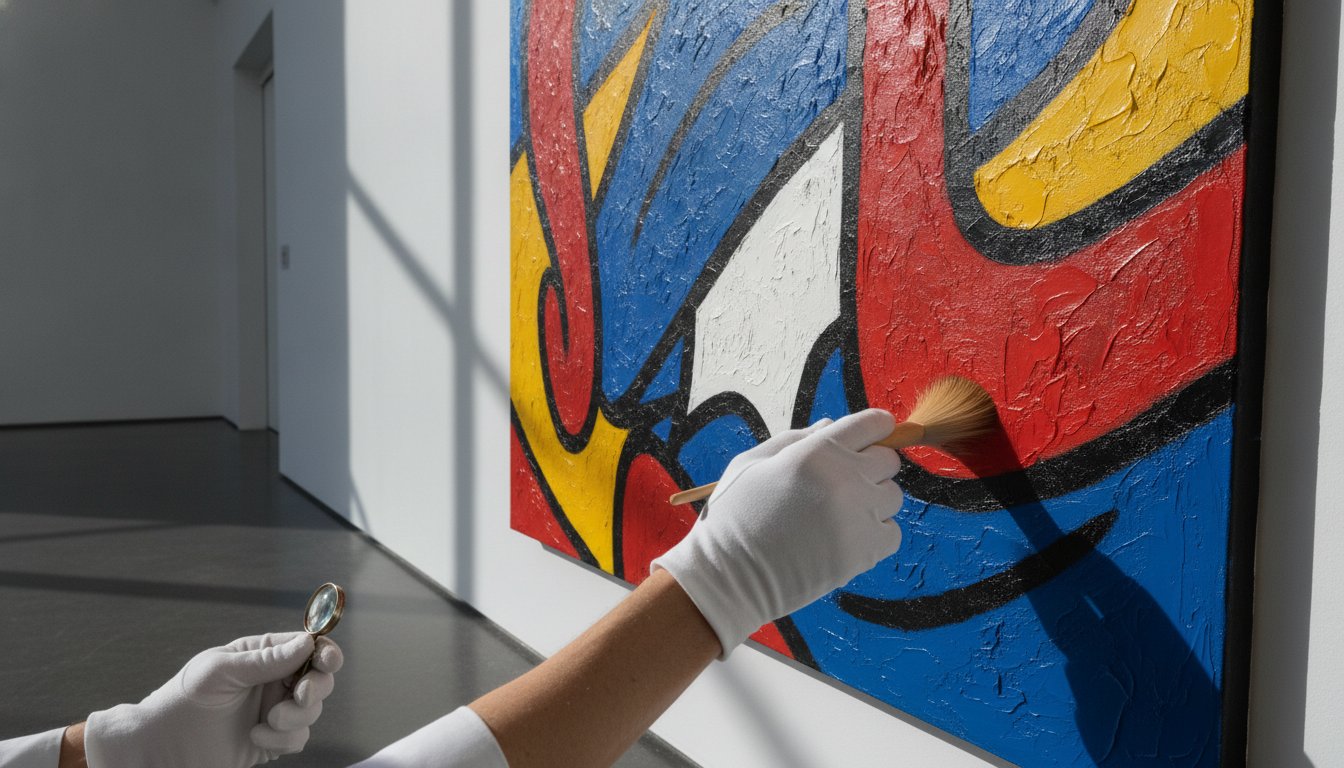
Maintenance Protocols for Original Pop Art Oil Paintings
Not everyone understands Mylo. That's rather the point. Owning an oil on canvas is not a passive act of decoration. It's a commitment to the stewardship of a physical narrative. You already recogni...
Read more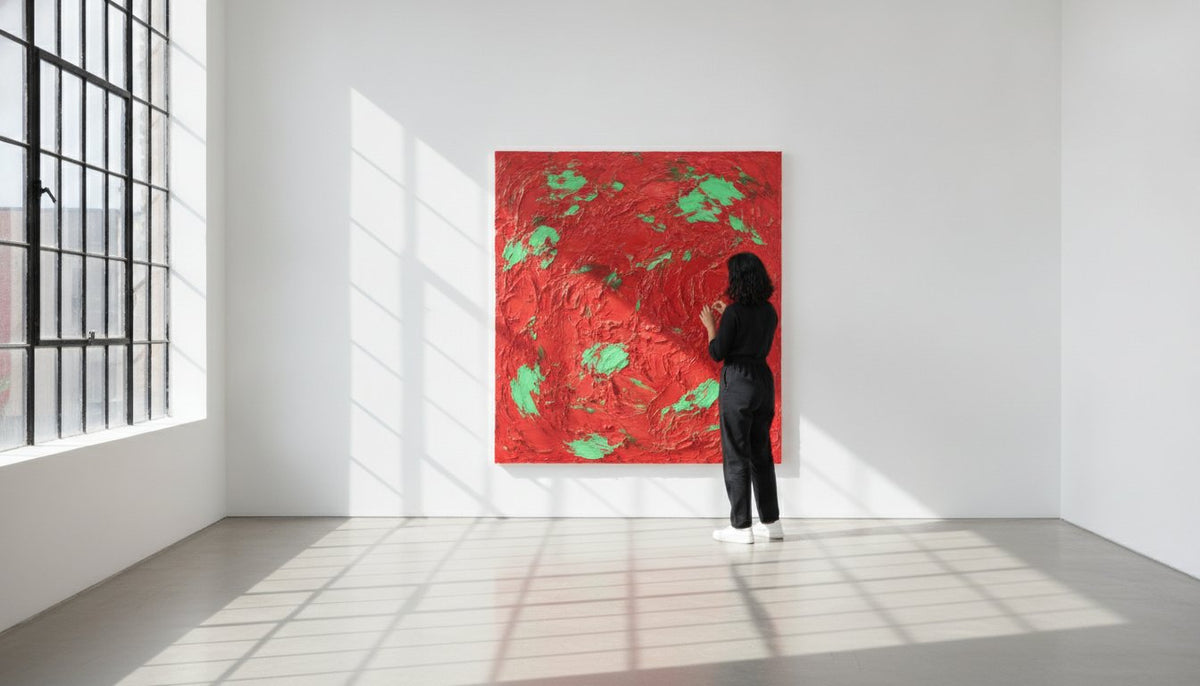
The Acquisition of Form: A Guide to Buying Your First Original Art Piece
Not everyone understands why a physical object carries more weight than a digital image. That's rather the point. Most people settle for decor that fills a void without holding a history. You likel...
Read more
Leave a comment
This site is protected by hCaptcha and the hCaptcha Privacy Policy and Terms of Service apply.