
Maintenance Protocols for Original Pop Art Oil Paintings
Not everyone understands Mylo. That's rather the point. Owning an oil on canvas is not a passive act of decoration. It's a commitment to the stewardship of a physical narrative. You already recognize that the weight of the work lies in its material reality as much as its subject. Caring for original pop art oil paintings requires a shift from simple observation to the disciplined logic of material physics.
We agree that generic advice often ignores the specific vulnerabilities of modern oil mediums. This guide provides the technical protocols required to preserve the physical integrity of your collection. We'll outline the necessary environmental standards, including the 16 to 25 degree Celsius temperature range and the 40 to 60 percent humidity threshold. You'll find a clear maintenance schedule and a list of prohibited agents to ensure the canvas tension remains constant. These facts serve the longevity of the object, ensuring the narrative remains as intended for the next generation of collectors.
Key Takeaways
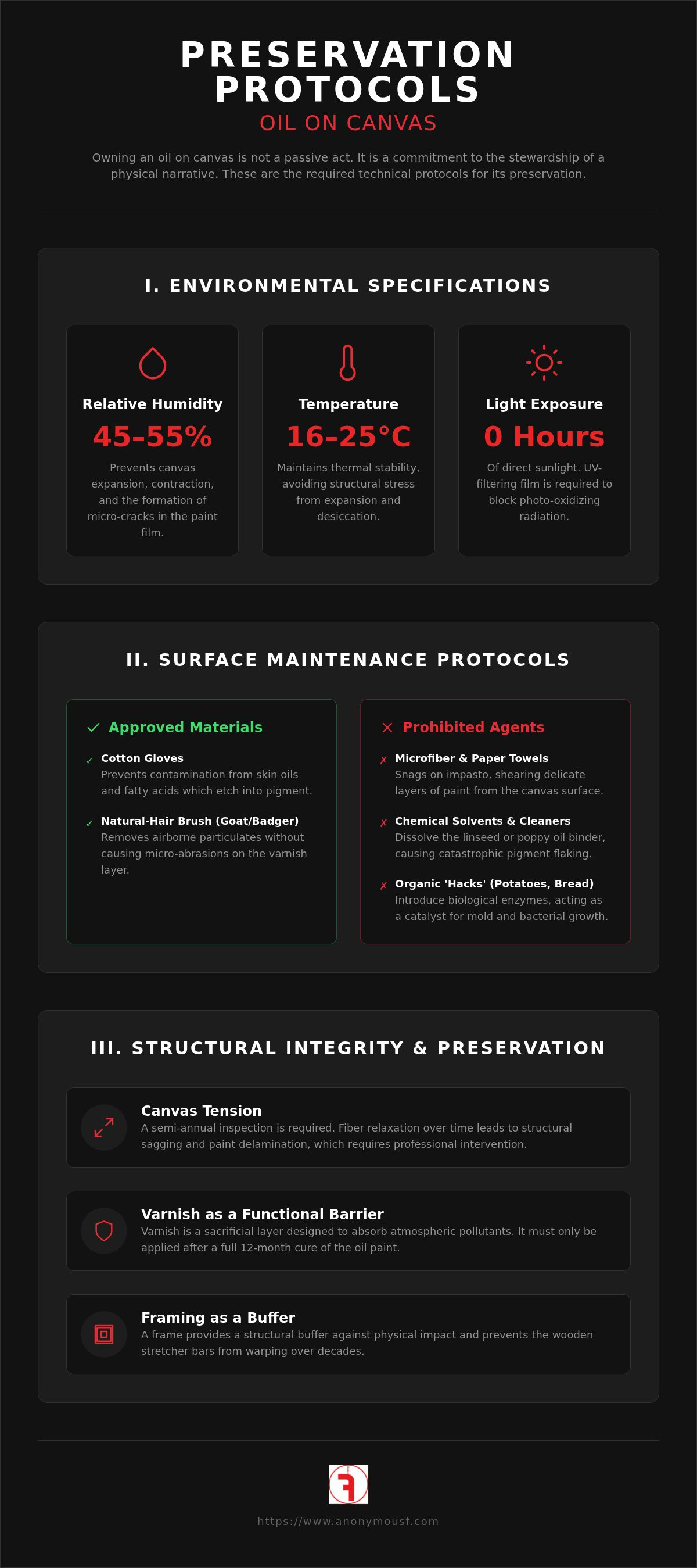
- Stabilizing relative humidity between 45% and 55% is the primary method for preventing the physical stress of canvas expansion.
- Proper surface maintenance requires specific tools, including natural-hair brushes, to avoid micro-abrasions on the oil binder.
- Regular assessment of canvas tension is necessary when caring for original pop art oil paintings to identify structural sagging before it becomes permanent.
- Varnish functions as a sacrificial layer, absorbing the impact of atmospheric pollutants that would otherwise degrade the underlying pigments.
Environmental Specifications for Oil on Canvas
Most observers look at a Fringe original and see Mylo; they don't see the chemical vulnerability of the binder. That's the difference between a spectator and a collector. Caring for original pop art oil paintings is a discipline of environmental control. The work exists as a physical record of intent, requiring specific conditions to survive its own materials.
UV radiation causes irreversible molecular changes. It initiates photo-oxidation, which degrades both the pigment and the oil medium. Relative humidity must remain between 45% and 55% to prevent the canvas from expanding. Because canvas is hygroscopic, it reacts to moisture by moving. The paint film is rigid. This disparity leads to the micro-cracking often discussed in painting conservation and restoration. Maintaining a steady temperature between 16 and 25 degrees Celsius prevents these structural stresses.
Thermal Stability and Light Intensity
Direct sunlight exposure must be limited to zero hours per day. Even indirect light carries energy that breaks chemical bonds. Install clear UV-filtering film on windows to block 99% of damaging rays. Hanging an oil on canvas above an active fireplace causes rapid desiccation. This heat draws moisture from the natural fibers, leading to brittle paint. Stability is a silent acknowledgement of the work's internal struggle for permanence. The environment must be a constant guardian of the physical integrity.
Handling and Surface Maintenance Protocols
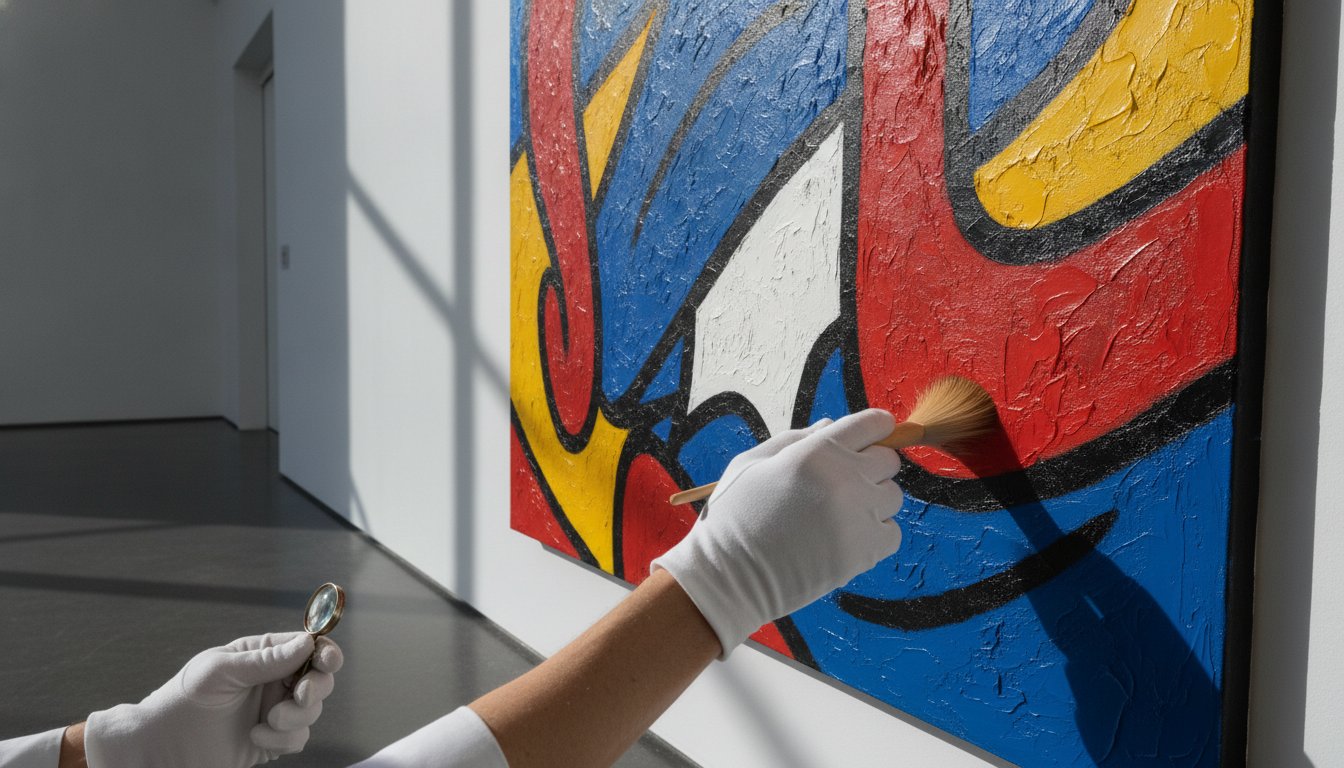
A human fingerprint is a chemical assault on the surface of a painting. Skin oils contain fatty acids that etch into the pigment over time, creating permanent distortions in the finish. Cotton gloves are a requirement for any physical movement of the work. When the handling and preservation of paintings is treated as optional, the narrative weight of the piece is compromised. Caring for original pop art oil paintings involves a methodical approach to dusting that respects the drying process. Oil paint requires 6 to 24 months for a full cure. The physical texture of original character oil paintings creates a topography that naturally traps airborne particulates. Use only a soft, natural-hair brush, such as goat or badger hair, to remove debris. Synthetics are too rigid and often leave micro-scratches on the varnish layer.
Prohibited Cleaning Agents and Materials
Microfiber cloths and paper towels are unsuitable for high-texture works. These materials snag on the impasto peaks of oil on canvas works, often shearing off delicate layers of paint. Solvents like Windex or vinegar are catastrophic. They dissolve the linseed or poppy oil binder, causing the pigment to flake. Domestic "hacks" using potatoes or bread introduce biological enzymes into the natural fibers. These organic residues act as a catalyst for mold and bacterial growth. The preservation of the work relies on the rejection of these methods. Proper maintenance when caring for original pop art oil paintings ensures the longevity of the physical medium. You can observe the specific impasto techniques used in the Mylo collection to understand the scale of this vulnerability.
Structural Integrity and Long-Term Preservation
A painting is a mechanical system under constant stress. The cotton support is tensioned over wooden stretcher bars, creating a membrane that reacts to its environment. Over time, fluctuations in moisture cause the fibers to relax, leading to visible sagging or "draws" in the corners. Caring for original pop art oil paintings requires a semi-annual inspection of this tension. Sagging is a structural failure that eventually leads to paint delamination. Professional restretching is the only remedy for a compromised support. Original characters like Mylo carry a narrative weight that depends entirely on this physical stability.
Varnish functions as a sacrificial barrier against atmospheric pollutants, dust, and smoke. It is designed to be soiled so the paint remains pristine. The Smithsonian painting care guide emphasizes that surface protection is secondary only to environmental control. The protocols for caring for original pop art oil paintings ensure the work remains a settled matter of quality.
Varnish as a Functional Barrier
Final varnish must only be applied once the oil paint has achieved a full cure, which requires 12 months of oxidation. Applying it prematurely traps moisture and interrupts the chemical hardening of the binder. Removable synthetic varnishes are the standard because they allow a conservator to strip away accumulated grime without affecting the underlying pigment. Sourcing high-quality supplies from specialized retailers like Art Parts Fine Arts ensures that any materials used for maintenance meet these professional standards. Framing provides a structural buffer against physical impact and prevents the wooden stretcher bars from warping over decades. These protocols are not suggestions. They are the requirements for maintaining the material truth of the collection. The object's survival is a result of disciplined stewardship.
Stewardship of the Narrative Record
The stewardship of an oil on canvas is an extension of its provenance. A Fringe original represents a specific intersection of professional-grade oil mediums and independent studio provenance. By stabilizing the thermal environment and adhering to strict handling protocols, you preserve the material truth of the work. Caring for original pop art oil paintings is a deliberate commitment to the physical integrity of the character narratives. This discipline ensures that the tension of the support and the clarity of the pigment remain unchanged. The collector's role is to maintain the strength of the object. Those who appreciate the weight of these works understand that maintenance isn't a chore but a preservation of value. You can view the current Fringe Oil on Canvas Collection to see the standards of our studio. The narrative of the work is now in your hands.
Frequently Asked Questions
How often should I dust my pop art oil painting?
Dusting should occur every four to six months to prevent particulate buildup. Use a soft, natural-hair brush to avoid micro-abrasions on the varnish. This frequency keeps the surface clear without over-handling the work. Caring for original pop art oil paintings is a matter of consistent, low-impact maintenance. Much like the slow, deliberate craft celebrated by Bambi Nonno Coffee, this process ensures the character's narrative clarity isn't obscured by environmental debris over time.
Can I hang an oil painting in a bathroom or kitchen?
Hanging an oil painting in a bathroom or kitchen is not recommended. These spaces subject the work to extreme humidity and airborne grease. Bathrooms cause the canvas to expand and contract rapidly, leading to paint loss. Kitchens introduce heat and fatty acids that can permanently stain the oil binder. A stable gallery environment is necessary to preserve the physical integrity of the piece.
What is the difference between dry to the touch and fully cured?
Dry to the touch indicates the solvents have evaporated, while curing is a long-term chemical oxidation. Curing typically takes 6 to 24 months for oil on canvas. The paint film remains soft and reactive during this period. You shouldn't apply a final varnish or wrap the work in plastic until the oxidation process is complete. This distinction is fundamental to the material's long-term survival.
Should I use a damp cloth to clean a dirty canvas?
You should never use a damp cloth to clean a canvas. Water introduces moisture that can penetrate the paint layer and cause the natural fibers to swell. This leads to cracking or mold growth within the support. Caring for original pop art oil paintings requires dry methods, such as a goat-hair brush. If the surface is truly soiled, consult a professional rather than risking permanent damage.

Article by
Fringe

Read more
Bronze Sculpture Investment Value: The Specification of Permanent Assets (2026)
Not everyone understands Mylo. That's rather the point. The contemporary art market is often saturated with mass-produced objects, making it difficult to find clarity in edition sizes or true rarit...
Read more
How to Mix Art Mediums in a Collection: The Logic of Material Contrast
Not everyone understands why a heavy bronze Mylo sits beside a paper hybrid. That’s rather the point.A collection consisting solely of one medium lacks the narrative weight provided by physical var...
Read more
Leave a comment
This site is protected by hCaptcha and the hCaptcha Privacy Policy and Terms of Service apply.