
How to Buy Art With Confidence and Choose What You Love
Original art is made by an artist, while a reproduction copies an existing work. A limited-edition print should be identified by its edition details, not simply by the word “print.” To learn how to buy art with confidence, check the medium, dimensions, edition status, and any documentation supplied with the work.
That distinction matters, but so does your response to the piece. A sound decision brings the facts and your own taste into focus. This article explains what original art can mean, how to assess an online listing, and what to consider when caring for and building a collection. It also offers a practical way to recognize the work you want to live with, without treating art as a test you have to pass.
Key Takeaways
- Compare how auctions, art fairs, online marketplaces, and galleries present a work before deciding where to buy.
- Assess an online listing through its medium, dimensions, edition details, and any documentation of the work.
- Protect a collection by considering light, handling, framing, and the materials used in prints.
- Notice which subjects, colors, and forms hold your attention; personal taste is a practical guide to choosing work you want to live with.
1. Is buying art online safe?
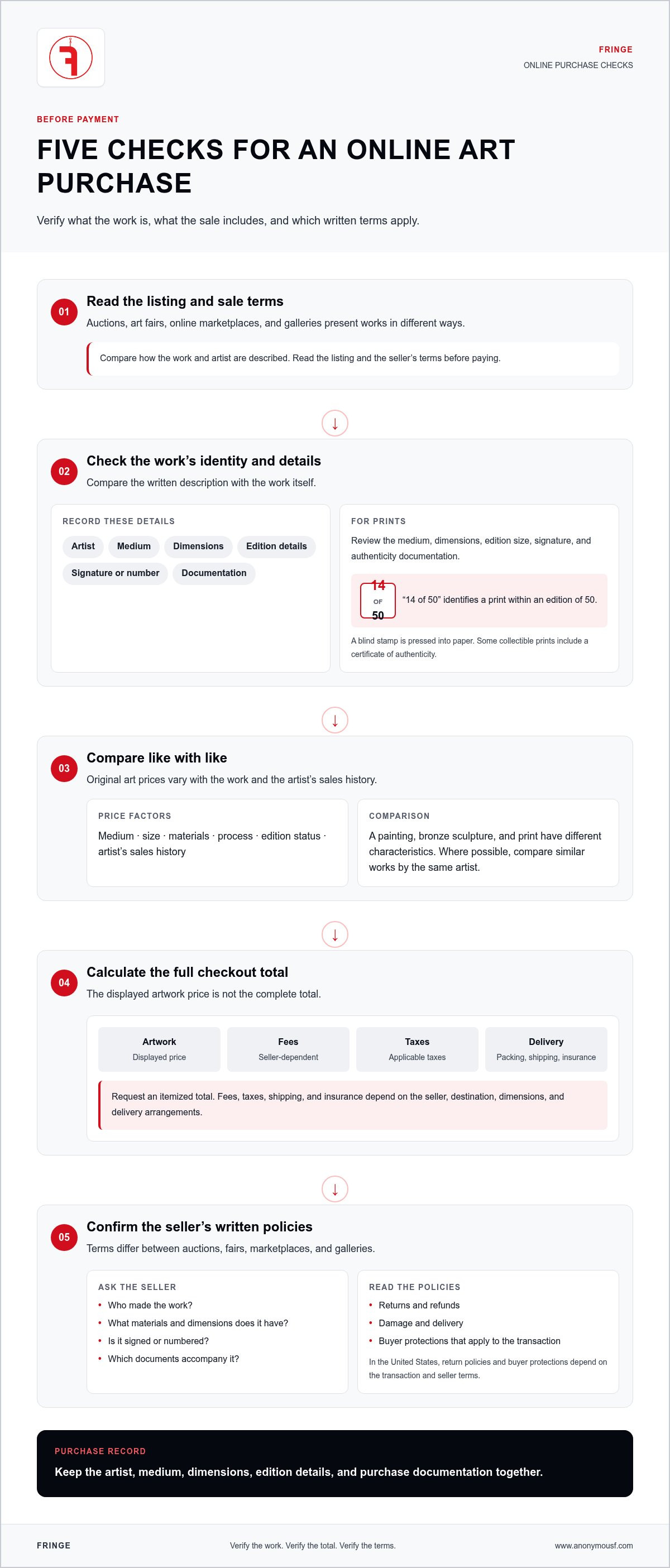
Assess an online art purchase by checking what the work is, who made it, and what the sale includes. Auction listings, art fairs, online marketplaces, and galleries present artists and works in different ways, so read the description and sale terms before paying. Start with the written details and compare them with the work itself.
For prints, review the medium, dimensions, edition size, signature, and authenticity documentation. A print marked 14 of 50 belongs to an edition of 50. Some collectible prints include a certificate of authenticity; a blind stamp is pressed into paper. These details help distinguish an edition from a listing that provides too little information.
Original art prices vary with the medium, size, materials, process, edition status, and the artist’s sales history. A painting, bronze sculpture, and print each have different characteristics, so compare similar works by the same artist where possible. Learning how to buy art with confidence means weighing these specifics rather than expecting one standard price for each medium.
Fees, taxes, shipping, and insurance depend on the seller, destination, dimensions, and delivery arrangements. Before paying, request an itemized total that includes packing, shipping, applicable taxes, and transit insurance. Consider the full checkout total, not just the displayed artwork price.
Ask the seller who made the work, what materials and dimensions it has, whether it is signed or numbered, and what documents accompany it. In the United States, return policies and buyer protections depend on the transaction and seller terms. Read the written policies for returns, refunds, damage, and delivery before buying, as terms can differ between auctions, fairs, marketplaces, and galleries.
2. Caring for and building an art collection
Start with the conditions around each artwork. Hang a painting away from direct sunlight and sources of moisture, and avoid places where temperature changes sharply. Archival inks and fine art paper are designed to help collectible prints last for decades without fading or degrading. Handle paper works with clean, dry hands, and keep their documentation together.
Framing affects both presentation and protection. Before choosing a frame, measure the piece and the wall, then consider whether glazing or a mount suits the work. Above furniture, artwork should generally span roughly two-thirds of its width. A three-seat sofa suits a work around 120 cm wide, or a grouping with the same span.
Build gradually. Choose an original painting or limited-edition work that holds your attention. Record its artist, medium, dimensions, edition size, and purchase documentation, then let what you learn from living with it guide your next decision. A collection doesn’t need a theme from the start.
Making art can also strengthen your confidence. Set up a modest drawing or painting practice, keep your work, and compare it over time. Repeated observation makes choices of color, subject, and composition easier to recognize. Consistent practice helps develop skill and confidence, whether the result is an original piece or simply a record of changing taste. Your practice and collection can grow side by side.
3. Discovering personal taste
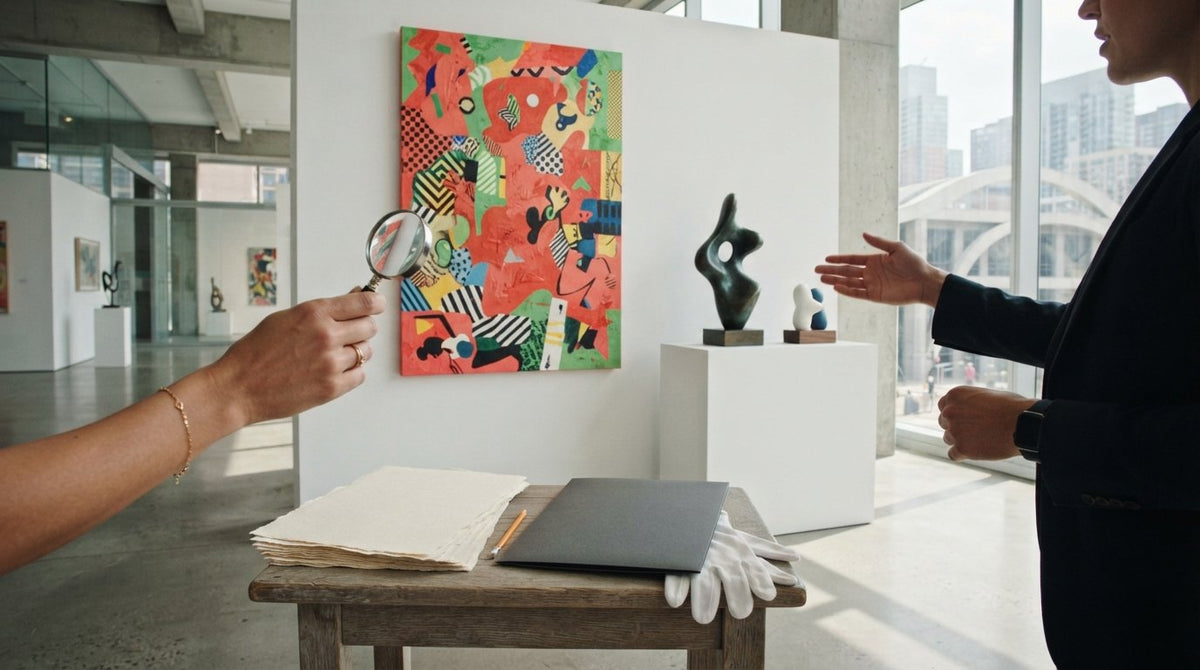
At an exhibition, look at several works before deciding which one draws you back. Note each piece’s artist, subject, color, scale, and medium. A painting’s visible brushwork has a different surface from a bronze figure or a print. Write down specific details, such as a repeated shape or restrained palette, rather than relying only on labels like “modern” or “traditional.”
Compare how different artists treat the same subject. One portrait may use color to emphasize expression; another may reduce the face to shape and line. Read the exhibition context, then record what you noticed before adopting the wall text’s interpretation. When considering how to buy art with confidence, your own response is useful evidence alongside the work’s physical and documentary details.
When assessing an artist and artwork, examine the medium, dimensions, condition, and recurring choices across the artist’s work. Consider whether the materials and execution support what the image is doing. Read the documentation for edition details, provenance, and any certificate. These checks help you distinguish a direct connection to the work from assumptions about reputation or market value.
After an exhibition, write down the specific work you remember and what held your attention: a figure’s placement, a shift in color, or a visible mark on the surface. Compare that note with your responses to other artists and mediums. If the same visual choices keep drawing your attention, use them as a guide when assessing another piece. Repeated observation helps clarify your preferences.
Fringe: Collectable Toys
Fringe creates collectable toys featuring original characters, including Mylo, Nova, and Gutinke. These character-based artworks offer an alternative to paintings and prints, placing the figure itself at the center.
Fringe’s work includes collectable toys, bronze sculptures, oil on canvas, and limited-edition prints. Each medium gives the work a different physical form, from a character-led object to a painting or print.
For collectors drawn to original characters, Fringe’s collectable toys bring that interest into a physical art piece, with the character at its center.
Let your next choice be your own
A collection takes shape through individual decisions, not a prescribed order. Let a work earn its place through the attention it holds, the questions it raises, or the way its medium speaks to you. That’s a grounded way to approach how to buy art with confidence: weigh your judgment alongside the facts, and allow your interests to change as you see more.
Fringe’s work includes collectable toys, bronze sculptures, and oil on canvas. Each offers a distinct way to engage with an artist’s ideas. You don’t need to settle on one medium or define a collection before it begins. Start with the work that feels relevant to you now.
Contact Fringe to discuss art. A considered choice is reason enough to begin.
Frequently Asked Questions
First Things First: What is Original Art?
Original art is created by an artist as an artwork, rather than reproduced from an existing image. It can take the form of a painting, sculpture, or work on paper. An artist-made print is also an original work of printmaking, though it belongs to an edition rather than being a unique, one-off object. The medium and edition details clarify what you’re considering.
How much should I spend on my first art purchase?
Set a spending limit that feels comfortable for your finances, then stick to it. Consider the whole purchase, including framing, delivery, and care needs, rather than focusing only on the artwork’s price. You don’t need a large collection or an expensive first piece to make a considered choice. A work’s personal meaning matters independently of its cost.
Is buying art online safe?
Online buying is easier to assess when a listing provides clear information and checkout takes place on the seller’s official site. Before paying, save the description, images, order details, and written terms. When the artwork arrives, compare it with the listing and note any difference in medium, dimensions, or condition. Keep payment and shipping records with the artwork’s documentation.
Should I buy art as an investment?
Buy art primarily because you value the work, not because you expect a financial return. Resale depends on factors such as demand for the artist, the work’s condition, its documentation, and the circumstances of a future sale. These factors can change, so treat potential resale value as uncertain. Choose a piece you would still want to own if its market value did not rise.
Step 4: Understand the Essentials: Is it an Original Artwork?
Read the wording carefully: “original,” “unique,” and “limited edition” describe different things. Check whether the listing identifies a one-off work, an artist-made edition, or a reproduction. A signature alone doesn’t establish which category applies. Match the description to the stated medium and edition details, and keep the seller’s written description with your records.

Article by
Fringe

Read more

How Much to Allocate When Diversifying Investments With Fine Art
There is no universal allocation for diversifying investments with fine art; the appropriate share depends on your goals, risk tolerance, time horizon, and ability to hold an asset that can be diff...
Read more
Emotional Value of Owning Original Art and What It Adds to Life
Buying original art can feel worthwhile when its subject and form hold personal meaning. An artwork can also serve as a historical record, offering insight into an artist’s life, society, and ideas...
Read more
Leave a comment
This site is protected by hCaptcha and the hCaptcha Privacy Policy and Terms of Service apply.