
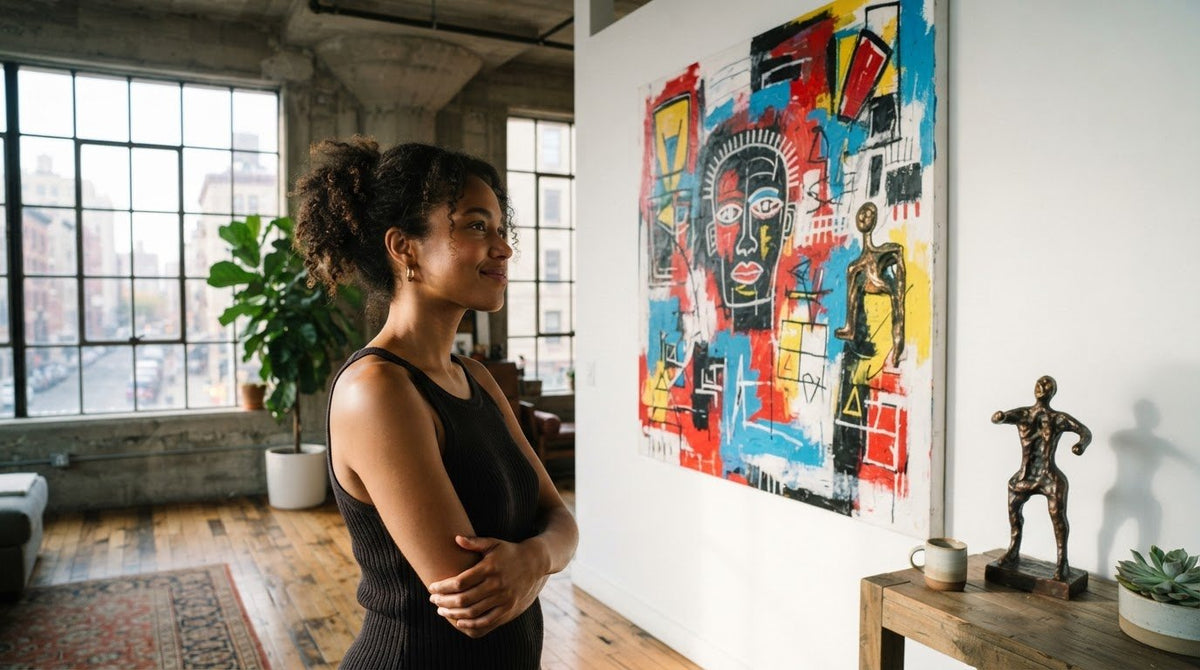
Emotional Value of Owning Original Art and What It Adds to Life
Buying original art can feel worthwhile when its subject and form hold personal meaning. An artwork can also serve as a historical record, offering insight into an artist’s life, society, and ideas.
Resale potential is only one way to assess a purchase. A more immediate question is whether the work’s specific features will matter to you once it is in your home. Personal taste, family history, and the experience of seeing a work regularly can all shape its emotional value, helping you decide what would make an original piece worthwhile.
Key Takeaways
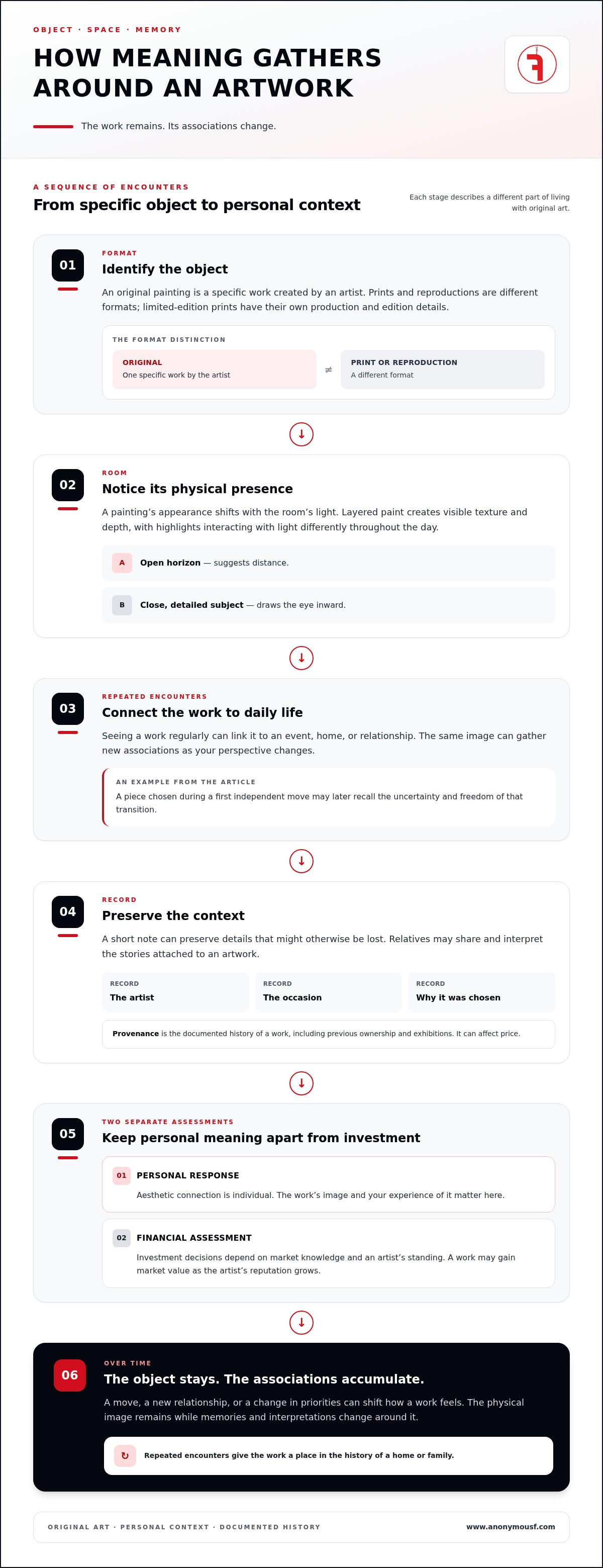
- An artwork’s provenance is its documented history, including previous ownership and exhibitions, and can affect its price.
- Original artworks can record an artist’s life, society, and philosophy, giving collectors historical context alongside visual appeal.
- Artistic expression can take physical form through layered paint, bronze sculpture, or mixed media on paper.
- Art investment decisions involve market knowledge and an artist’s reputation, while personal attachment depends on the work itself.
So, Is Buying Original Art Worth It?
The emotional value of owning original art can come from its physical connection to an artist’s work. What it means to you depends on what you respond to and what you want to live with.
Connecting With the Artist and Creative Process
Meeting an artist can offer direct context about a particular artwork and how it was made. Asking about its subject, materials, or the decisions behind the finished work can help you understand its place in the artist’s practice. Those answers add context, but they do not dictate how you should interpret it.
Original artworks can also serve as historical records, offering insight into an artist’s life, society, and ideas. Collecting works by artists from different countries may bring distinct perspectives into one collection. The work itself remains the evidence: its imagery, materials, and documented history.
Original Art Compared With Reproductions
An original painting is a specific work created by an artist; prints and reproductions are different formats. That distinction matters to collectors who value the individual object. Limited-edition prints are a separate category, with their own production and edition details. Understanding the format helps you choose what you value: the original work, a print, or another kind of art.
Buying original art also gives artists financial support to continue creating and pursue new projects. That support is separate from your personal response to the work or its possible future market value. Consider which form suits your purpose: a painting, a print, or another original work.
Personal tastes and emotional connection to original art
The emotional value of owning original art can shift as your life and surroundings change. A work that speaks to you at one stage may feel different after a move, a new relationship, or a change in priorities.
Collections as Family Legacy
An artwork can become part of a family legacy when relatives share and interpret the stories attached to it. A painting inherited by a child, for example, may prompt questions about the room where it once hung or the person who chose it. A short note recording the artist, the occasion, and the owner’s reason for choosing the work can preserve those details. The object then carries both its visual appeal and a family story.
Enjoyment and Financial Investment
Personal enjoyment and financial investment are separate reasons to collect. A work may gain market value as an artist’s reputation grows, but that possibility does not explain why its image matters to you. Investment decisions depend on market knowledge and an artist’s standing; aesthetic connection is individual. Keeping these considerations separate clarifies what you want from a purchase. The emotional value of owning original art comes from the experience of the work, not a projected return.
Art, Memories, and Changing Meaning
An artwork can become linked to a particular event, home, or relationship. A piece chosen during a first independent move, for instance, may later recall the uncertainty and freedom of that transition. As your perspective changes, the same image can gather new associations without changing physically. This is one way the emotional value of owning original art develops: the work remains, while memories accumulate around it.
Emotional benefits of living with original art
A painting’s appearance shifts with the room’s light. Layered paint creates visible texture and depth, and highlights interact with light differently throughout the day. The same work may appear more pronounced in the morning and quieter later. This physical variation gives the artwork a distinctive presence in its surroundings, beyond the image alone.
During the COVID-19 lockdown, displaying art helped one writer feel less isolated and made a new living space feel like home. That example shows how an artwork can affect the experience of a room without changing its dimensions or purpose. Its meaning comes partly from seeing it regularly, in the space where daily life unfolds.
A landscape can make a room feel larger, like an added window. The effect depends on the image: an open horizon suggests distance, while a close, detailed subject draws the eye inward. Consider how the painting relates to the room’s light and sightlines. Its emotional effect depends on the particular work and the space where it hangs.
An original artwork can enrich daily life through repeated encounters with its subject, surface, and changing appearance. That experience is separate from investment value, which depends partly on an artist’s reputation and market interest. When considering a particular work, ask whether you want its physical presence in your space, not only what it might represent financially. Living with art gives its meaning room to develop.
Fringe: Collectable Toys
Fringe creates collectable toys featuring original characters such as Mylo, Nova, and Gutinke. For collectors drawn to character and narrative, a toy offers a different kind of object from a painting on a wall. Its appeal comes from the character and the meaning its owner finds in it.
Fringe also offers bronze sculptures, oil on canvas, and limited edition prints. Each format gives the work a different presence: as a sculpture, painting, print, or character-based collectible. Choose according to what you want to live with and what holds your attention.
To explore Fringe’s collectable toys and other work, visit www.anonymousf.com.
Choose What You Want to Live With
The emotional value of owning original art is personal and can change as your surroundings and memories change. Give a particular work time and attention before deciding what place it should have in your life. The useful question is not whether it impresses everyone, but whether you want to keep encountering it.
Fringe offers collectable toys, bronze sculptures, and oil on canvas. Each gives an artist’s work a different physical presence, from a character-based object to a painted surface or sculpture. Let your own response guide your choice, keeping financial expectations separate from personal meaning.
Contact Fringe to discuss original art and consider which work belongs in your space. A considered choice is enough to begin.
Frequently Asked Questions
What emotional benefits do people get from owning original art?
People may value an artwork for the attention, reflection, or conversation it brings into daily life. A painting with an unresolved figure, for example, can invite different interpretations from people in the same household. The benefit is personal, not automatic: the subject, visual choices, and viewer’s response shape what the work means emotionally.
How does living with original art affect mood and well-being?
Art can shape a room’s atmosphere through its subject, color, and placement. A quiet interior scene in a workspace, for example, can give the eye a point of focus during a pause between tasks. This describes an individual response, not a guaranteed change in mood or a clinical health effect.
Why do people feel a personal connection to an artwork they own?
A connection can begin with a choice that feels specific to you: a familiar place, a recurring symbol, or a composition that suits your taste. Ownership also means choosing where the work belongs and seeing it in that setting. Those choices can make the artwork feel personally significant rather than interchangeable with another object.
How can original art reflect personal identity, memories, or values?
A work can reflect identity through the subjects and visual ideas its owner chooses to keep close. Someone drawn to images of migration, for example, may connect them with family history or cultural belonging. The artwork does not need to explain that meaning to visitors; its place in the home can mark what matters to its owner.
Do studies show that owning or viewing art improves mental health?
An emotional response to art is not, by itself, evidence of improved mental health. Establishing a health effect would require measuring relevant outcomes and distinguishing engagement with art from other influences. Feeling moved by a painting may matter personally, but it should not be treated as evidence that art prevents or treats a mental-health condition.

Article by
Fringe

Read more
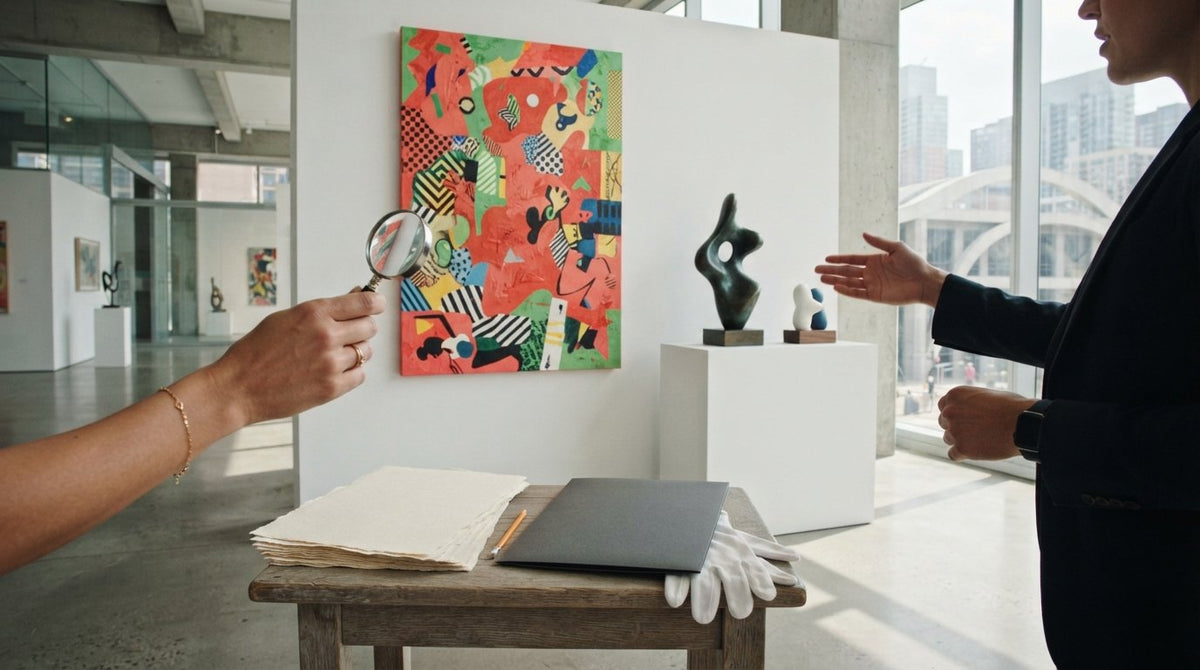
How to Buy Art With Confidence and Choose What You Love
Original art is made by an artist, while a reproduction copies an existing work. A limited-edition print should be identified by its edition details, not simply by the word “print.” To learn how to...
Read more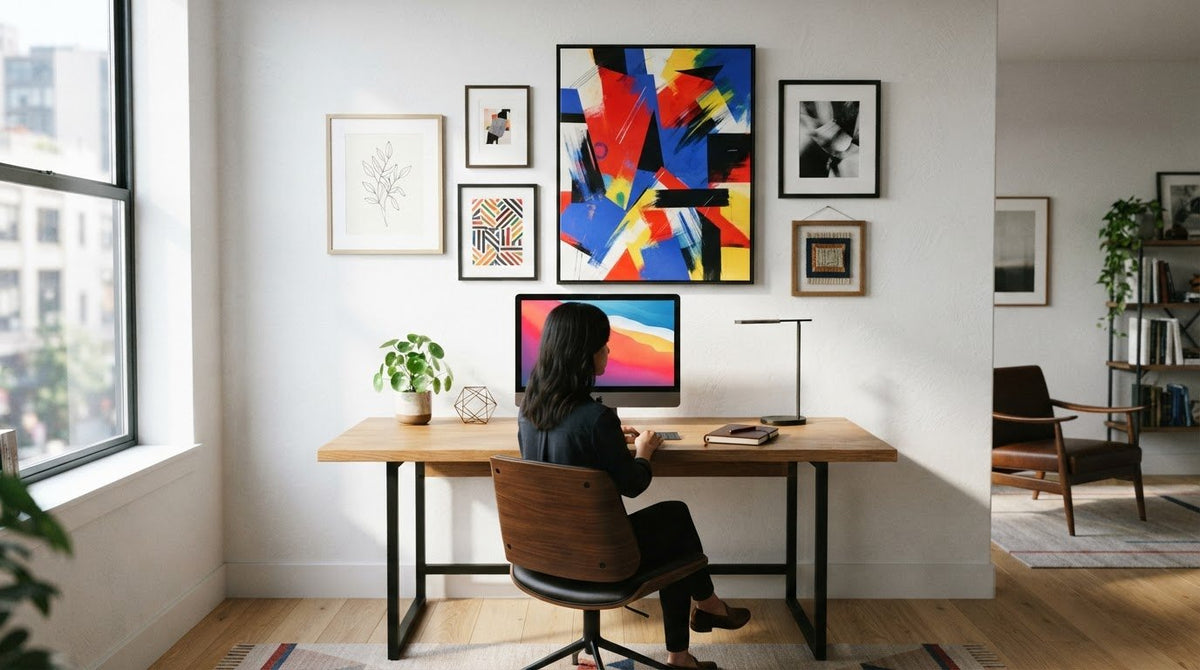
Choosing Art for Your Home Office: Wall or Gallery
Artwork for a home office should suit the available wall space and the atmosphere you want to create. Choosing art for your home office means deciding whether a statement piece or a gallery wall wo...
Read more
Leave a comment
This site is protected by hCaptcha and the hCaptcha Privacy Policy and Terms of Service apply.