
Choosing Art for Your Home Office: Wall or Gallery
Artwork for a home office should suit the available wall space and the atmosphere you want to create. Choosing art for your home office means deciding whether a statement piece or a gallery wall works better in the room. Abstract art can add visual energy, while nature-inspired work can bring a calmer feel.
Your office supports your work, so choose art that feels right for the time you spend at your desk. This guide compares gallery walls and statement pieces, explains how to arrange different formats, and considers how color, subject, and visual complexity shape a room’s mood. Aim for art that fits the space and feels comfortable to look at throughout the workday.
Key Takeaways
- Measure the wall and note the desk position before settling on a format; the available space should guide the scale and layout.
- One 16 x 24 inch print or a pair of 12 x 16 inch prints works above most desks.
- For a gallery wall, leave about 2-3 inches between frames and place the arrangement’s centre around 57 inches from the floor.
- Before hanging, check for glare from windows or desk lamps and consider how the artwork will appear in video calls.
1. Gallery Wall vs Statement Piece: Which Is Right for Your Office?
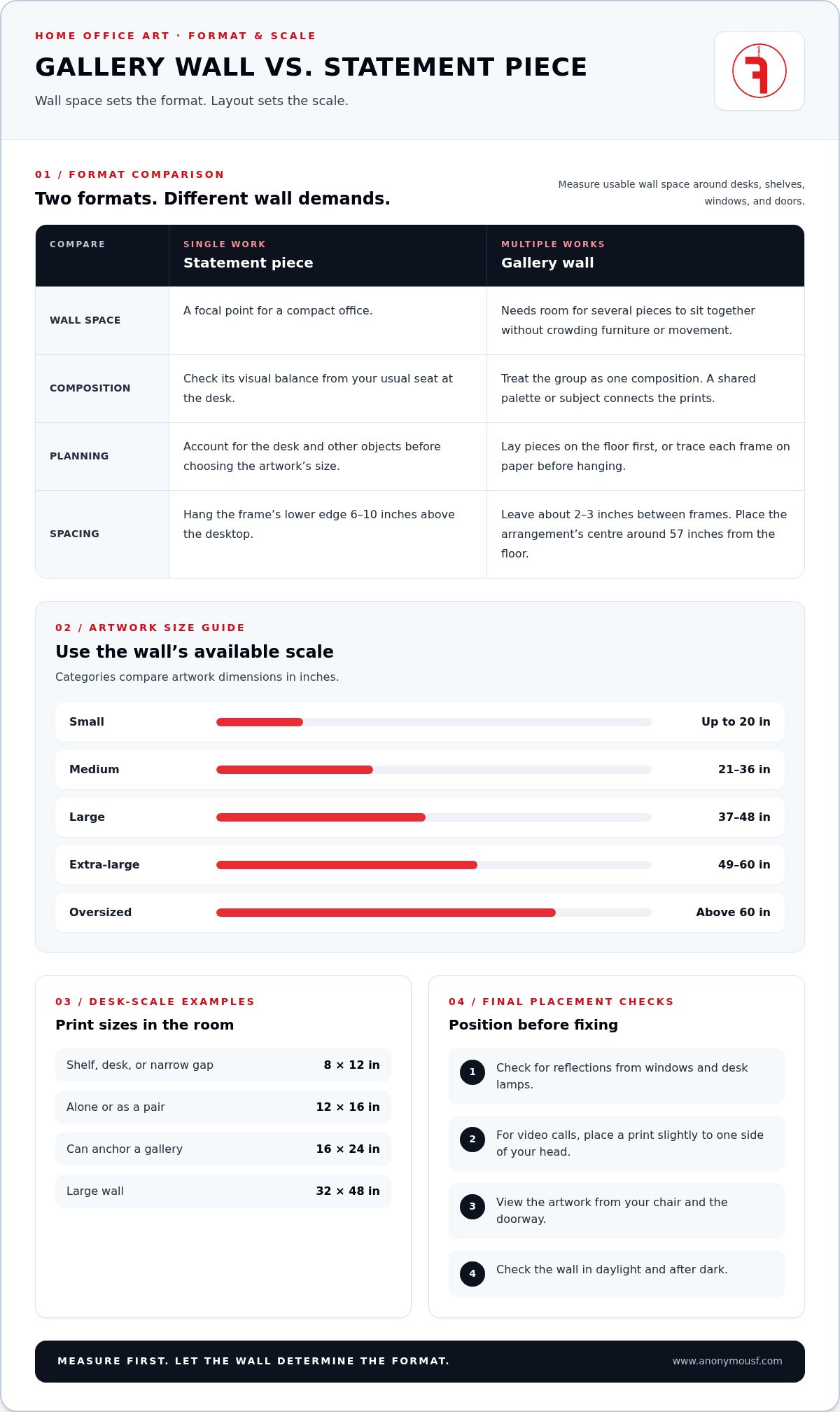
Choosing art for your home office starts with measuring the usable wall space. Account for the desk, shelves, windows, and doors before choosing a format. A statement piece gives a compact office one focal point. A gallery wall works where several pieces can share a palette, subject, or personal connection. Planning around the measurements helps prevent art from crowding furniture or obstructing movement.
A second part of choosing art for your home office is matching artwork size to the layout. Office art is categorized as small up to 20 inches, medium at 21-36 inches, large at 37-48 inches, extra-large at 49-60 inches, and oversized above 60 inches. These categories help compare scale. A large work may overwhelm a narrow nook, while smaller prints can suit a bedroom corner or alcove.
Nature-inspired choices include botanical prints, floral art, and abstract landscapes. Greens, blues, or earth tones can relate to the office’s existing palette. A regional landscape can connect the room with its surroundings. Motivational typography offers a specific reminder; framed team photographs can suit a shared workspace. Art intended for a living room may need different placement above an office desk.
When choosing art for your home office, avoid pieces that repeatedly distract you from tasks or conflict with the room’s purpose. Graphic imagery, dense text, and crowded arrangements can compete with a screen. For video calls, consider what appears behind you. Personal imagery may suit a private office but feel out of place in some professional settings. Let the subject and scale support the atmosphere you want during the workday.
2. Arranging statement pieces, gallery walls, and small prints
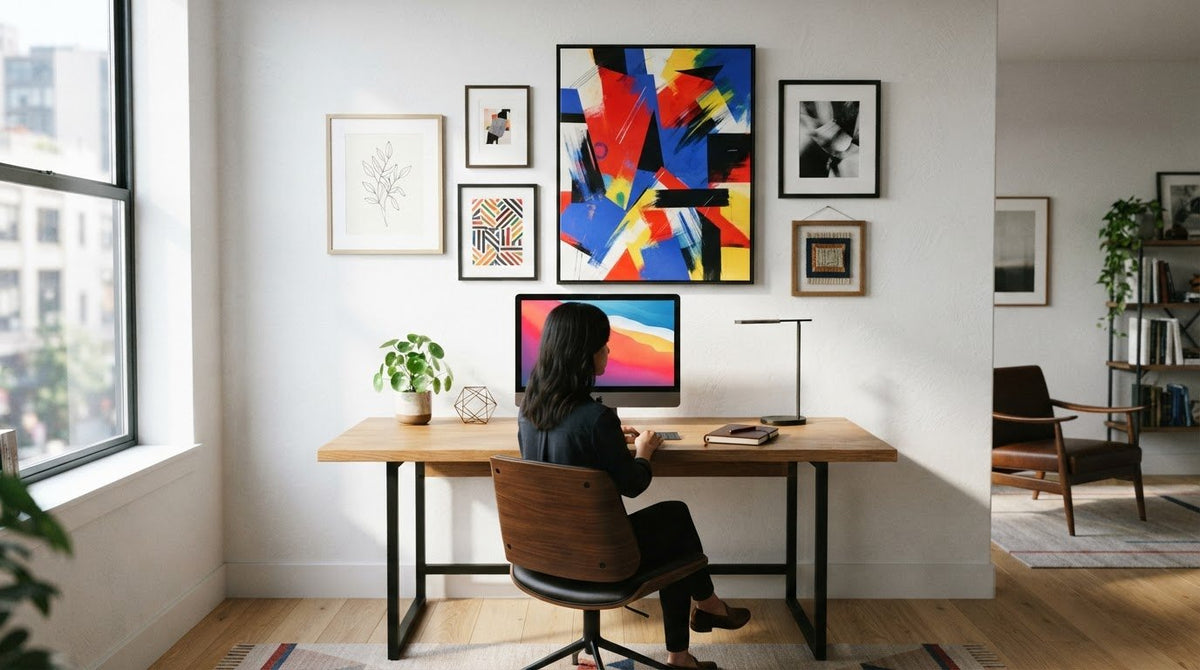
Hang artwork 6 to 10 inches above the desk, measured from the desktop to the frame’s lower edge. Before fixing a statement piece, sit at the desk and check its visual balance from your usual position. Look for reflection from windows or desk lamps; glare can obscure the image during work. For video calls, position a print slightly to one side of your head, rather than directly behind it.
For a gallery, lay the pieces on the floor first or trace each frame on paper. Keep about 2-3 inches between frames, then treat the group as one composition. The arrangement’s centre should sit around 57 inches from the floor. On a wall without a desk, place the print’s centre about 57 to 59 inches high. A shared palette or subject helps different prints feel connected without making every frame identical.
Small spaces need a clear visual structure. An 8 x 12 inch print suits a shelf, desk, or narrow gap; a 12 x 16 inch print works well alone or as a pair. A 16 x 24 inch print can anchor a gallery, while a 32 x 48 inch print suits a large wall. In a compact office, a pair of smaller works can create balance without taking over the wall.
Renters can use removable picture-hanging strips or hooks rated for the frame’s weight, following the product’s instructions for the surface and removal. Leaning framed prints on a sturdy shelf avoids wall fixings. For a calmer arrangement, group a few nature prints with even spacing and leave open wall around them.
3. Choosing art to suit the desired mood of a home office
First decide whether you want the workspace to feel quiet, focused, or energetic. Low-detail compositions can leave more visual space for concentration, while layered shapes and strong contrasts create a livelier effect. Soft blues and greens can make a palette feel calm; reds and oranges bring more energy. Choosing art for your home office means considering how those colors look beside the desk and across the room.
Use the existing decor as a reference, not a strict template. Compare the artwork with the wall color, desk finish, and other visible materials. Earth tones can sit comfortably in a bright room, while neutral artwork may suit softer or indirect lighting. View the piece in its intended spot from both your chair and the doorway.
Home-office art prices depend on the format, dimensions, medium, and framing. A small unframed work and a large framed piece involve different materials and production. For lower-cost options in the US, compare work at local art fairs, student exhibitions, community art events, and secondhand shops. Examine the condition and framing, then compare pieces of similar size before deciding.
Light changes how colors appear. Look at the wall beside the window in daylight and after dark, when desk lamps can change the room’s appearance. If a frame catches glare, adjust its position or move it away from direct reflections. For a final check, spend time working in the room and see whether the artwork creates the atmosphere you intended.
Fringe: Collectable Toys
Fringe creates original collectable toys, alongside oil on canvas works and limited edition prints. A collectable toy offers a three-dimensional option for an office shelf, while a wall-based work occupies a different visual plane. Bronze sculptures provide another sculptural format.
Let the room’s layout guide where each form can sit without competing for desk space. A collectable toy brings character to a shelf; a print draws the eye to the wall. Each format serves a different role.
Give the Room a Point of View
Let your office reflect the kind of attention you want to bring to your work. The image you choose becomes part of the room’s daily rhythm, not just its backdrop. Choosing art for your home office is ultimately a decision about what deserves your attention and what you want to keep close during the workday.
Fringe’s work includes collectable toys, bronze sculptures, and oil on canvas. Each format brings a different presence to a room, from an object for a shelf to artwork for a wall. Choose based on the space available and the presence you want the work to have.
Contact Fringe about your office art when you’re ready to consider a piece for your workspace. A considered choice can make the room feel more distinctly yours.
Frequently Asked Questions
What type of art is best for a home office?
The best choice is art that suits the atmosphere and level of visual activity you want in the room. A quiet landscape can offer a pause from screen-heavy work, while abstract art leaves room for interpretation. Consider how the piece looks from your chair, not only from the doorway. In a shared office, choose imagery that feels appropriate to everyone using the space.
Can three-dimensional objects like pottery work in an office?
Yes. A ceramic vessel or small sculpture can add depth without using wall space. Place it on a stable shelf away from the keyboard, monitor, and frequently handled papers. Keep the desk surface clear enough for daily tasks, and consider the object’s shape from the doorway and your seated position. Three-dimensional art works best when it has a defined place.
Gallery Wall vs Statement Piece: Which Is Right for Your Office?
Choose a statement piece if you want one visual anchor and prefer fewer objects on the wall. A gallery wall suits a group of related images, such as photographs from different years or works connected by subject. Consider whether you want to add or rearrange art often: one central work is simpler to keep consistent, while a gallery can evolve over time.
How do I decorate my office walls?
Start with the wall you see most during the workday, then consider adjacent walls as secondary spaces. Keep shelves, switches, and storage accessible, and avoid placing artwork where an open door will hide it. Before hanging, use paper outlines to compare the arrangement with the room’s furniture. This helps you judge the balance without moving heavy frames.
Is motivational art a good idea for an office?
Motivational art works best when its message remains useful after repeated viewing. Choose a short phrase tied to a specific goal, such as completing a project, rather than a slogan that adds visual noise. Typography has a strong graphic presence, so consider its size and contrast against the wall. A personal reminder often feels more relevant than generic advice.

Article by
Fringe

Read more
Emotional Value of Owning Original Art and What It Adds to Life
Buying original art can feel worthwhile when its subject and form hold personal meaning. An artwork can also serve as a historical record, offering insight into an artist’s life, society, and ideas...
Read more
How to Choose Art That Complements Your Decor and Style
Exact color matching isn't necessary. To choose art that complements your decor, relate its colors to the room’s dominant, secondary, and accent colors, then decide whether the piece should harmoni...
Read more
Leave a comment
This site is protected by hCaptcha and the hCaptcha Privacy Policy and Terms of Service apply.