

Convincing Your Partner on an Art Investment: Start with Shared Criteria
An art purchase uses shared money and may serve a personal purpose. Partners can assess those considerations differently.
One partner may prioritize owning and living with the work; the other may focus on its possible resale. A projected sale price is an estimate, not a promised outcome.
Convincing your partner on an art investment starts with stating what the purchase is meant to do and what evidence supports the financial case. Personal preference and expected resale are separate considerations.
Use the questions below to compare the work with your shared financial priorities, agree on a spending boundary, and decide together whether to proceed, wait, or decline.
Key Takeaways
- Begin with the disagreement: clarify whether you’re weighing the artwork’s personal meaning, its financial role, or both.
- For convincing your partner on an art investment, compare intended purpose, budget, ownership, documentation, and risk tolerance.
- Set a spending limit together and identify which other financial goals must remain protected.
- Use shared criteria to assess fit, evidence, affordability, and unanswered questions before reaching a joint decision.
Convincing Your Partner on an Art Investment Starts with the Real Question
One partner may see an artwork as something to own and live with. The other may see shared capital committed to an asset with uncertain resale. Those are different priorities. Neither establishes future financial performance.
Personal meaning explains why someone wants a work; it doesn’t show that its value will rise. A financial argument needs evidence. Even information about an artwork’s history or market cannot guarantee a future sale price. Art finance includes investment advice and art loans, as outlined in this overview of art finance.
What does each partner mean by an art investment?
Buying art to live with differs from buying primarily for possible resale. A single purchase can serve both purposes, but decide which one takes priority. Name the intended role before weighing the financial case: enjoyment, ownership, collection-building, or financial exposure.
- Would you want to own the work if its resale value didn’t rise?
- Is the primary aim to live with it or sell it later?
- What level of financial uncertainty are you prepared to accept?
The answers show whether the disagreement concerns the artwork’s role or its financial justification. If your priorities conflict, waiting or declining the purchase remains a valid decision. Persuasion cannot resolve a difference in financial risk tolerance.
Build a Shared Art-Investment Case with Facts, Limits, and Risks
Separate the purchase cost from what you hope the work may be worth later. Art may appreciate, but no artwork comes with a guaranteed return. A resale projection is not a sale price.
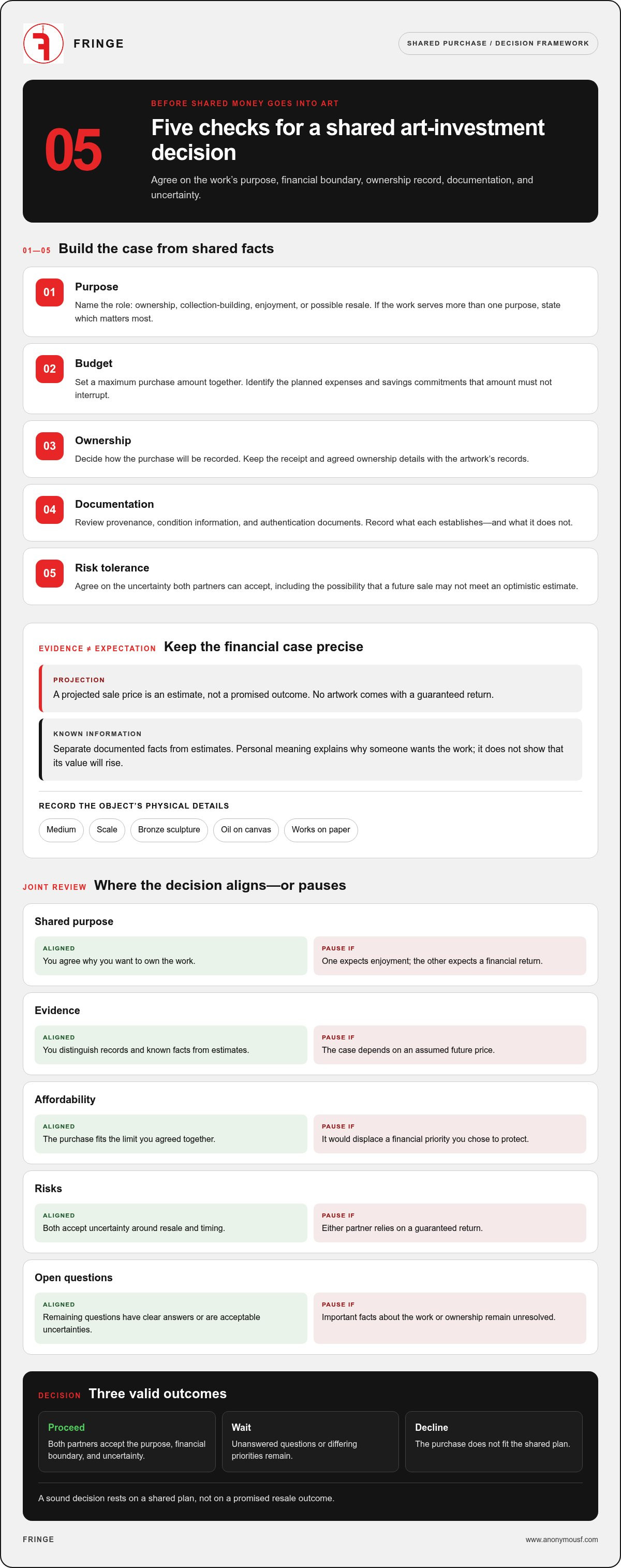
- Purpose: Write down whether the purchase is for ownership, collection-building, enjoyment, or possible resale. If it serves more than one purpose, state which matters most.
- Budget: Set a maximum purchase amount together. List the financial goals that amount must not interrupt, such as planned expenses or savings commitments.
- Ownership: Decide how the purchase will be recorded. Keep the receipt and agreed ownership details with the artwork’s records.
- Documentation: Review the available provenance, condition information, and authentication documents. Note what each document establishes and what it does not.
- Risk tolerance: Agree on the financial uncertainty you can accept. Include the possibility that a future sale may not meet an optimistic estimate.
The limit should reflect your finances, not a predicted return. A spending boundary protects other shared priorities from an uncertain outcome. Write it down so it remains clear during the decision.
Which questions should both partners answer before deciding?
Ask what evidence supports the proposed valuation. Separate documented facts from projections. What does the provenance establish? What is known about the work’s condition? What authentication documents accompany it? How will both partners’ ownership be recorded? Compare the physical object by medium and scale: bronze sculpture, oil on canvas, and works on paper are distinct forms. The specifications of original pop art provide a reference for considering those physical details.
Write down unanswered questions before deciding. This makes clear which parts of the case are supported by evidence and which remain uncertain.
Decide Together Whether the Artwork Fits Your Shared Plan
A decision is ready when both partners can describe the purchase in the same terms. Use this comparison to identify agreement and gaps before committing money.
When is a shared purchase ready to move forward?
Proceed only when both partners accept the purpose, financial boundary, and uncertainty. If the financial case remains unconvincing, separate the wish to own art from the claim that it will appreciate. That distinction keeps personal preference clear and investment reasoning proportionate.
Authorship and context also matter when assessing a work. Fringe presents original pop art across bronze sculpture, oil on canvas, hybrids on paper, limited-edition prints, and collectable toys. Fringe’s artist practice provides context for the work, not evidence of future financial performance. Fringe’s artworks are one of a kind, hand-signed, and framed. Each is accompanied by a Certificate of Authenticity (COA) issued by Anonymous F ©.
Convincing your partner on an art investment isn’t the measure of a sound decision. If both partners can explain why the work fits their shared plan, proceed on that basis. If not, waiting or declining is a complete decision.
Let a Shared Decision Set the Pace
The next step can be a pause. Give each partner room to consider the decision without turning the conversation into a deadline or a test of trust. If new information changes the picture, return to the same criteria rather than raising the pressure. Waiting can protect both the relationship and the financial plan.
Convincing your partner on an art investment isn’t the goal; reaching a decision you can both stand behind is. The artwork’s appeal can remain real even if its financial case doesn’t meet your shared standard. Fringe artworks are hand-signed and accompanied by a Certificate of Authenticity (COA) issued by Anonymous F ©. Documentation helps identify a work, but it doesn’t promise a resale outcome.
Make the decision together, at a pace that leaves room for an honest yes, a clear no, or a later review. Any of those can be a sound next step.
Frequently Asked Questions
Can art be a reliable investment?
Art can appreciate, but it isn’t a source of assured returns. Demand and valuations can change, and a future buyer may not appear when you want to sell. Commissions, insurance, damage, theft, and questions about authenticity can affect the economics. Treat the work as a purchase that must fit your shared goals and tolerance for risk, not as a dependable route to profit.
How do I talk to my partner about buying art without pressuring them?
Start by asking what concern your partner wants answered, then listen without rebutting it. For convincing your partner on an art investment, separate your personal reason for wanting the work from claims about future value. Share verifiable details, your proposed spending cap, and what remains uncertain. Ask whether they’d prefer more time or no purchase. Disagreement isn’t a failure to appreciate the artwork.
Is an artwork's Certificate of Authenticity enough to establish its value?
No. A Certificate of Authenticity addresses documentation of authenticity; it doesn’t establish a future market price or guarantee buyer demand. Consider it alongside provenance, condition, and the artwork’s medium. If someone proposes a valuation, ask what evidence supports it and whether it reflects comparable works or an estimate. Documentation can inform your decision, but it can’t promise appreciation or a particular resale outcome.
Should we buy art if we disagree about its investment potential?
Pause if you disagree about the financial case. First decide whether you both want to own the work without expecting appreciation. Then consider whether the purchase fits your agreed budget and priorities. If one partner would feel financially exposed or pressured, waiting is reasonable. So is choosing not to buy. A shared purchase requires consent, not one partner’s confidence substituting for the other’s.
Review Fringe’s original pop art, bronze sculptures, works on paper, limited-edition prints, and collectable toys, then assess any work against the same shared criteria.

Article by
Fringe

Read more
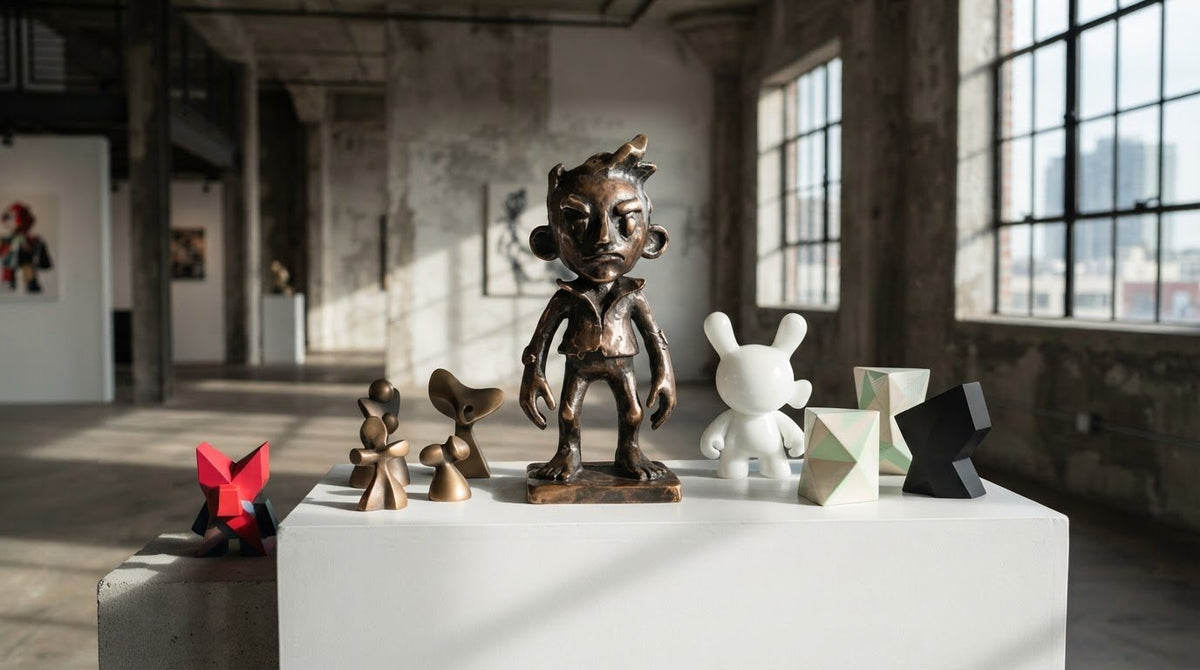
Contemporary Sculpture Collectibles: Material, Character and Authorship
A contemporary sculpture collectible is a physical object whose medium, scale, finish and authorship can be recorded separately. The category label is only a starting point. The object’s stated det...
Read more
Emerging Pop Artists to Watch in 2026: Music and Visual Art
The 2026 coverage names three music acts as emerging pop artists to watch: Sung Holly, Sarah Kinsley, and Cardinals. Each profile rests on a different kind of evidence, from a debut single to a gro...
Read more
Leave a comment
This site is protected by hCaptcha and the hCaptcha Privacy Policy and Terms of Service apply.