
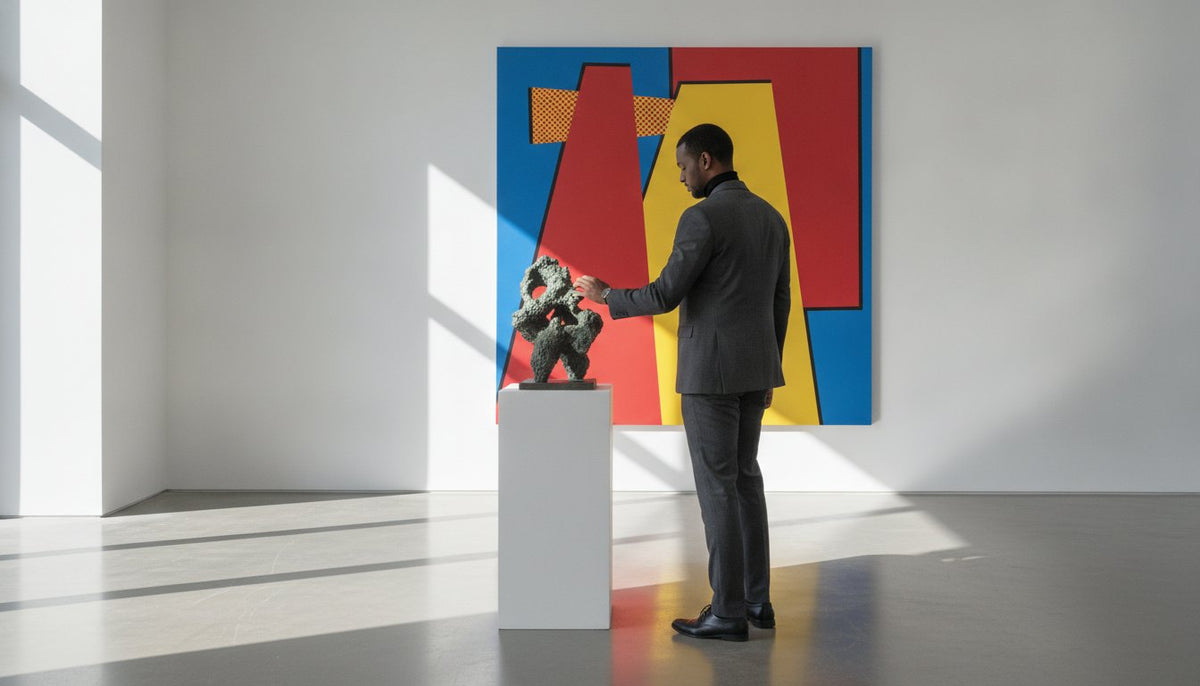
Building a Contemporary Art Portfolio: The Specification of Form
Most collectors mistake a digital gallery for a portfolio. They aren't the same thing. You've likely felt the frustration of building a contemporary art portfolio only to have it feel like a generic catalog. It lacks the weight of the bronze or the texture of the oil on canvas. The soul of the object is often lost in the screen.
A portfolio is not an exercise in decoration. It's a deliberate archive of material truth and narrative weight. This process demands a shift from simple documentation to the construction of a record that carries the authority of the physical object. The value of the work is a settled matter, and the archive must reflect that reality.
This article provides a framework for selecting works based on narrative intent. It details how to use material facts, such as medium, scale, and edition size, to create an archive that functions as a provenance record. The goal is a collection that speaks with the quiet confidence of a physical truth.
Key Takeaways
- The portfolio functions as a formal record of provenance documenting the physical manifestation of an artist's narrative arc.
- Building a contemporary art portfolio requires prioritizing materials like bronze and oil on canvas for their physical permanence.
- Organizing the archive by character series rather than chronological order preserves the internal logic and soul of the work.
- A dedicated section for process documentation and hybrids on paper establishes a complete record of material intent for the collector.
The Contemporary Art Portfolio: A Specification of Narrative
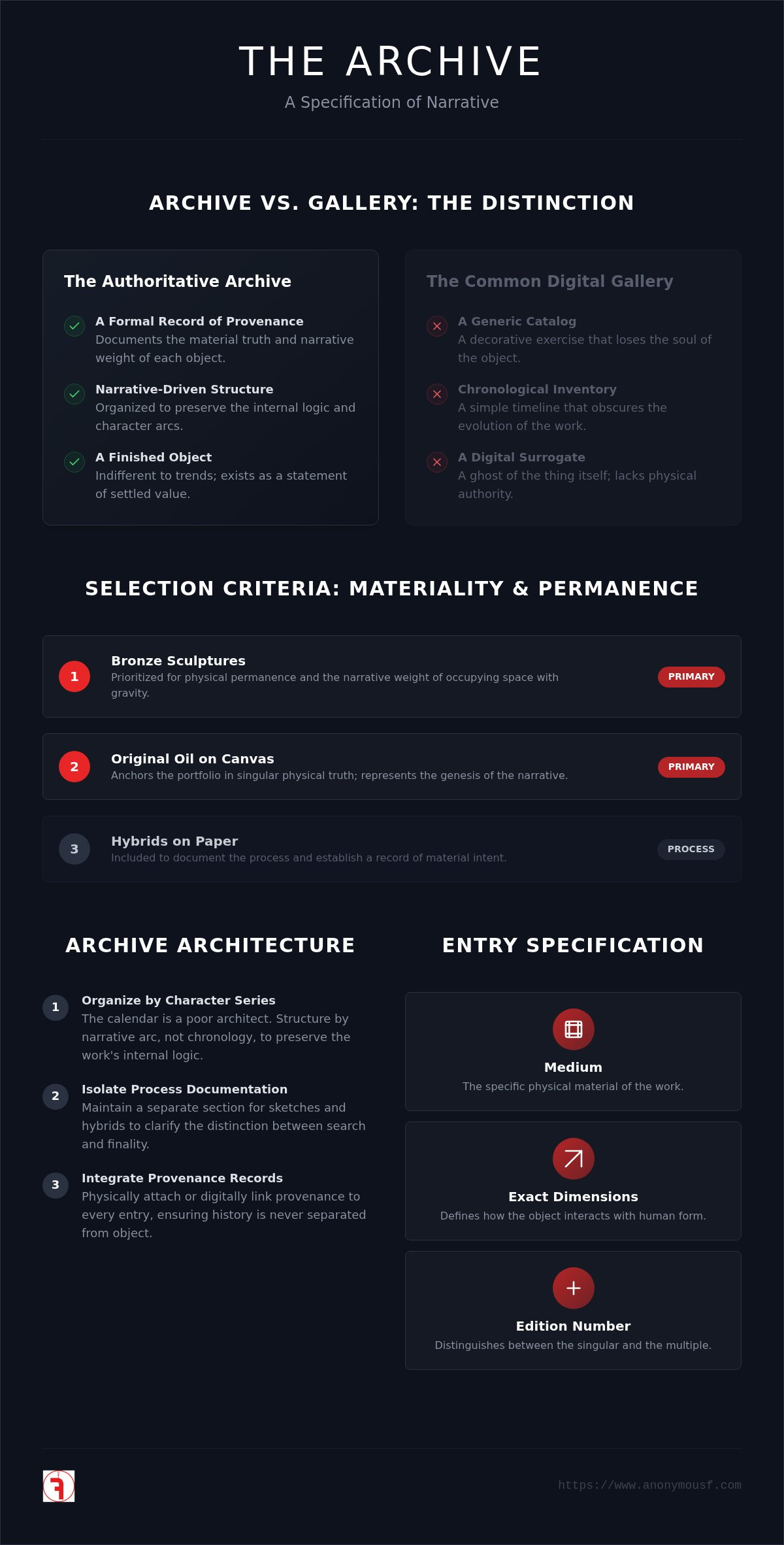
Not everyone understands the necessity of a physical record. That's rather the point. Building a contemporary art portfolio is the act of formalizing a narrative arc. It's not a marketing tool. It's the primary record of provenance and material intent. While others use spreadsheets to track inventory, the serious collector uses the archive to ground the work in reality. Digital documentation is a surrogate. It's a ghost of the thing itself. Authority is established through the exclusion of the irrelevant. If a piece doesn't contribute to the core narrative of the collection, it doesn't belong in the record. This archive is where the character’s history is written in stone and pigment. The choice to include a work is a choice to let it speak for the collection as a whole.
The Distinction Between Documentation and Presence
A professional archive requires specific material data to function as a record of truth. Documentation records that a piece exists; the portfolio communicates its soul. Every entry must include medium, exact dimensions, and edition number. For instance, a bronze sculpture carries a different narrative weight than oil on canvas or hybrids on paper. These facts provide the grounding that digital-only art lacks. The presence of a work in a formal archive validates its narrative weight. It transforms a character like Mylo from a visual concept into a historical fact. We document because we care about the weight of the heart in the machine. The archive stays when the screen goes dark.
Criteria for Selection: Materiality and Scale
Selection is an act of preservation. Building a contemporary art portfolio requires choosing works based on the durability of the medium and the depth of the character. We prioritize oil on canvas and bronze for their historical and physical permanence. A collection is only as strong as its most fragile entry. While digital trends fade, the weight of a physical object remains. Scale must be recorded with absolute precision to convey the physical reality of the work. Dimensions are not just metadata; they describe how the object interacts with the human form. A bronze sculpture occupies space with a gravity that a screen cannot simulate. The specific thickness of the canvas or the patina of the bronze provides the necessary context for the work's future history.
Defining the Edition and the Original
An archive must distinguish between the singular and the multiple to maintain a record of provenance. Include original oil on canvas to anchor the portfolio in singular physical truth. These pieces represent the genesis of the narrative. Incorporate character-based bronze sculptures, such as Mylo, to illustrate narrative consistency across different dimensions. Hybrids on paper represent the intersection of traditional medium and modern pop art, offering a glimpse into the process of creation. Limited edition prints provide a record of the multiple within a focused collection. They prove that a narrative can be shared through editions without losing its inherent weight. Every entry in the record should reflect the artist's studio model, where the soul of the work is preserved in its material specification. You might consider how these physical objects define the boundaries of your own collection.
The Architecture of the Physical Archive
The calendar is a poor architect for an archive. Building a contemporary art portfolio requires a structure based on character arcs and series logic rather than a simple timeline. Chronological order often obscures the internal evolution of the work. We organize by characters because the narrative weight resides in the series. Provenance records must be physically attached or digitally linked to every entry. This ensures the history of the object is never separated from its material presence. The archive is a finished object. It remains indifferent to the browser's opinion or the shifting tides of digital trends.
Maintain a separate section for process documentation. This includes sketches and hybrids on paper that reveal the internal reflection behind the work. These artifacts aren't secondary. They are the evidence of material intent. By isolating the process, building a contemporary art portfolio clarifies the distinction between the search and the finality of the object. It provides the collector with the full scope of the character's development. This separation preserves the authority of the finished piece while honoring the labor of its creation.
The Independent Studio as Provenance
Direct acquisition from an independent studio ensures the integrity of the record. Provenance begins at the moment of creation within the studio walls. It doesn't start at the gallery door. A professional archive reflects the specification of the physical object with total transparency. This direct line from artist to collector removes the ambiguity often found in secondary markets. The facts are settled. The weight of the work is documented. The archive stands as a testament to the material truth of the collection. It is a record of what is real.
The Permanence of the Material Record
Not everyone understands the difference between a catalog and an archive. That's rather the point. Building a contemporary art portfolio requires a shift from digital observation to material specification. This archive serves as the final evidence of a character's narrative arc. It prioritizes the physical weight of oil on canvas and the permanence of bronze over the transient nature of pixels. Provenance is secured through direct studio context.
The history of characters like Mylo and Nova is written through their physical dimensions and edition numbers. Original bronze sculptures, such as Quiet Boy, anchor the collection in a reality that doesn't require digital validation. The collection of original oil on canvas and bronze sculptures is available for review. The archive remains a steady witness to the artist's intent. It is a record built to endure.
Frequently Asked Questions
How do I determine which pieces define a contemporary portfolio?
Selection is an act of exclusion. You determine defining pieces by their contribution to a character's narrative arc. Building a contemporary art portfolio means choosing works that document a specific evolution, such as the development of Mylo or Nova. Each entry must carry the material weight of its medium. A collection of loose styles lacks the authority of a focused, character-driven archive.
What role does medium play in portfolio longevity?
Medium establishes the physical permanence of the collection. Bronze sculptures and oil on canvas are selected for their historical durability and resistance to digital transience. These materials ensure that the record remains a valid provenance document. The longevity of the portfolio depends on the physical truth of the objects it records. Materials like bronze carry a narrative weight that digital files cannot replicate.
How should limited edition prints be categorized within a portfolio?
Categorize limited edition prints as the multiple within a series. They document the reach of a character's narrative beyond singular originals. Each entry must state the specific edition number and material specifications. This categorization preserves the studio provenance of the work. It distinguishes the physical multiple from a digital surrogate. Prints function as a vital layer in the architecture of the archive.
Is digital documentation sufficient for a contemporary art portfolio?
Digital documentation is a surrogate, not a replacement. Building a contemporary art portfolio requires a formal archive that captures the material specification and narrative weight of the object. While screens provide a visual record, the soul of the work resides in its physical reality. A professional portfolio functions as a provenance record that persists when the digital file is no longer accessible.

Article by
Fringe

Read more
Maintenance of Bronze Sculpture: The Specification of Preservation
Not every collector possesses the discipline to steward a living surface. This is the primary reality of what to know before buying a bronze sculpture. Bronze is an alloy of copper and tin that rea...
Read more
The Contract of Intent: What to Know Before Commissioning a Painting
Not everyone understands the weight of a commission. That’s rather the point. A commission is not a collaboration; it’s a formal alignment of collector intent with the artist’s established technica...
Read more
Leave a comment
This site is protected by hCaptcha and the hCaptcha Privacy Policy and Terms of Service apply.