
Maintenance of Bronze Sculpture: The Specification of Preservation
Not every collector possesses the discipline to steward a living surface. This is the primary reality of what to know before buying a bronze sculpture. Bronze is an alloy of copper and tin that reacts to its environment from the moment it leaves the foundry. It does not exist in stasis. It breathes.
You likely recognize the narrative weight of a piece like Mylo or Nova, yet the fear of accidental damage through improper cleaning often creates a paralysis of care. This guide provides a technical specification for the preservation of high-end bronze pop art. It clarifies the distinction between a hand-applied chemical patina and active environmental corrosion.
We detail the application of microcrystalline wax and the specific environmental variables that dictate a maintenance schedule. You will gain the technical knowledge required to manage material interactions with confidence. The object is a constant. The atmosphere is the only variable.
Key Takeaways
- Understanding the predictable reaction of copper and tin to moisture is fundamental to what to know before buying a bronze sculpture.
- A monthly protocol of particulate removal with a soft-bristled brush maintains the integrity of character-defining details.
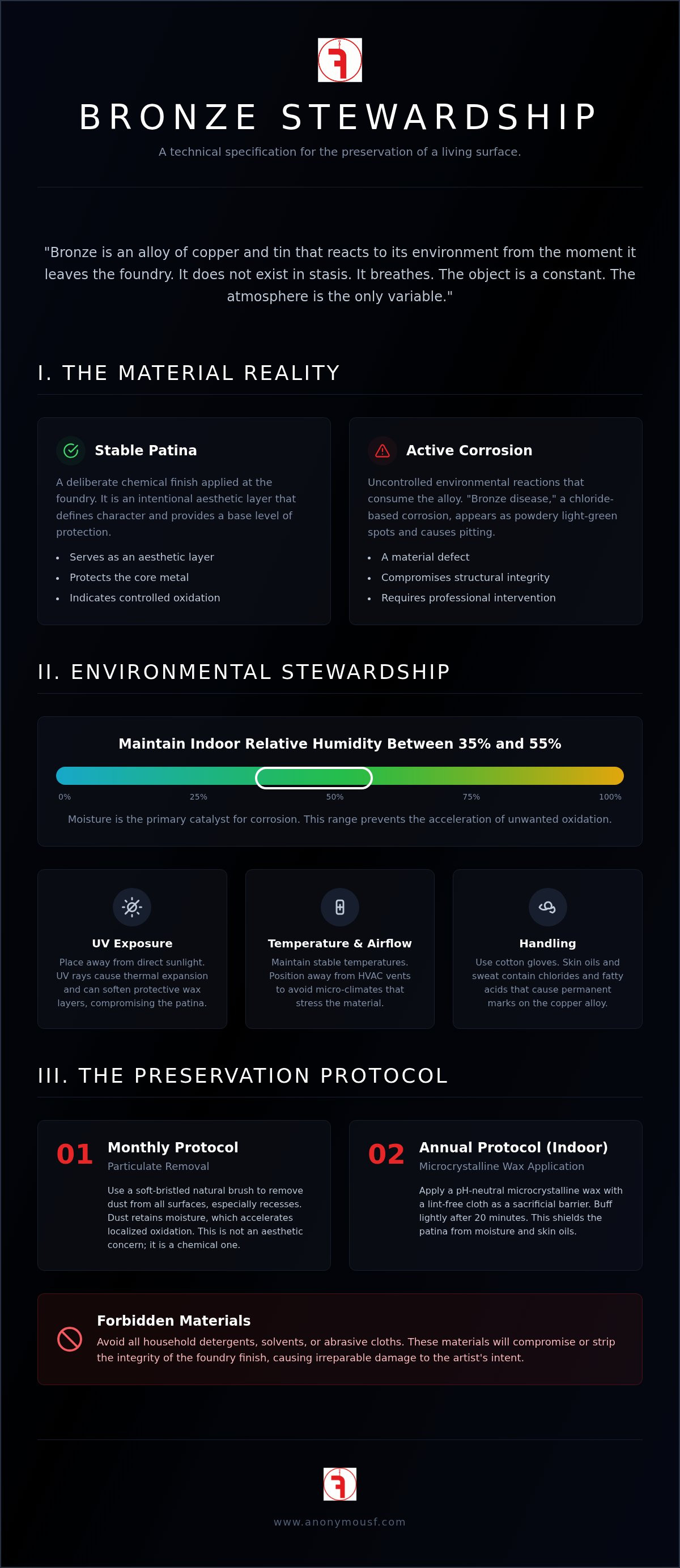
- Maintaining indoor relative humidity between 35% and 55% prevents the acceleration of unwanted oxidation.
- Proper placement away from direct UV exposure mitigates thermal expansion and protects the stability of the foundry-applied patina.
The Chemical Composition of Bronze and Patina Stability
Few collectors respect the chemical volatility of an alloy. A bronze sculpture is a living record of its environment. It consists primarily of copper and tin. This specific alloy is chosen for its structural permanence, yet it remains chemically active. It reacts predictably to oxygen and moisture. Stability is not an inherent state; it is the result of a maintained surface barrier against atmospheric pollutants.
The foundry uses heat and chemicals to force this reaction into a specific aesthetic state. The patina is a deliberate chemical finish applied at the foundry to achieve specific color and depth, serving as an intentional aesthetic layer rather than a material defect. Understanding this distinction is essential for what to know before buying a bronze sculpture. Pieces like Mylo are cast in limited editions where the patina defines character depth. Without a protective barrier, the metal seeks a state of equilibrium with the air around it.
The Progression of Surface Oxidation
Oxidation is a natural process where copper reacts with atmospheric elements. The resulting layers typically consist of:
- Copper carbonates (green)
- Copper sulfides (black or brown)
These layers often stabilize the metal. However, "bronze disease" is a destructive chloride-based corrosion that requires intervention. It appears as powdery light-green spots that pit the surface. Professional conservation and restoration of outdoor bronze focuses on identifying these active chlorides before they compromise the structural integrity. A stable patina protects the core; active corrosion consumes it. We are merely witnesses to the metal's slow negotiation with time. The collector acts as the final line of defense for the material's physical narrative.
The Protocol for Surface Cleaning and Protection
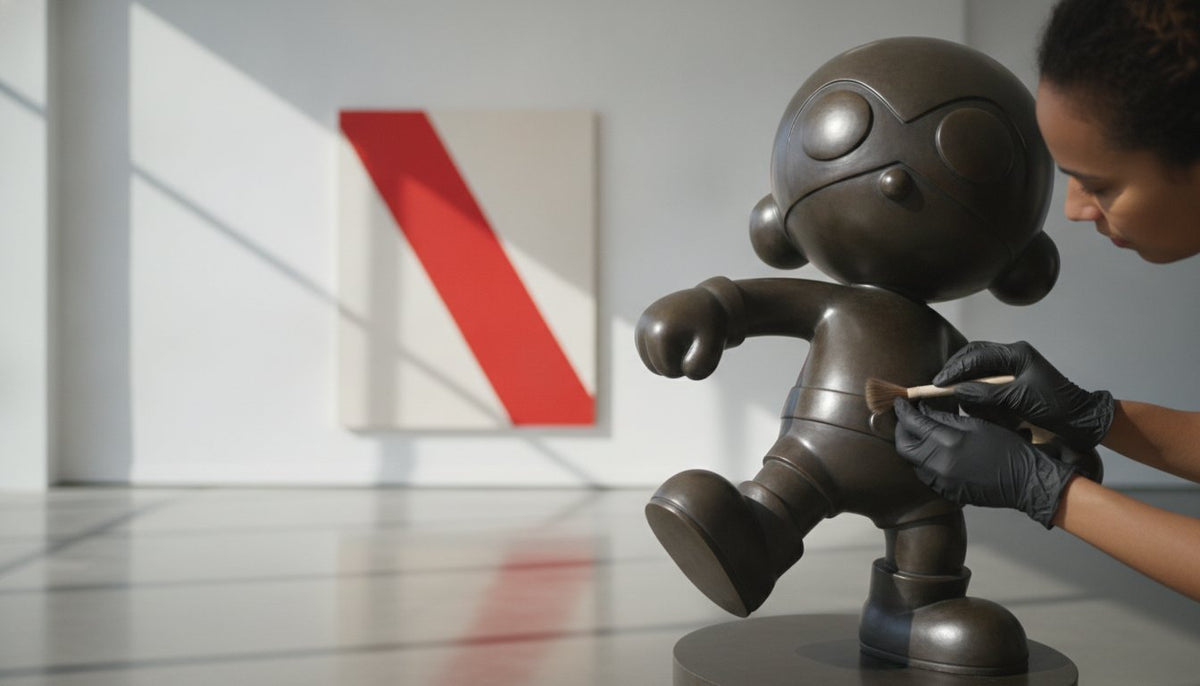
A monthly inspection for dust accumulation and surface changes is the baseline for stewardship. This is a fundamental element of what to know before buying a bronze sculpture. Use a soft-bristled natural brush to remove particulate matter from character details. Focus on the recesses of Mylo’s features. Dust is not merely an aesthetic concern. It acts as a site for moisture retention, which accelerates localized oxidation. Avoid all household detergents, solvents, or abrasive cloths. These materials compromise the integrity of the foundry finish.
The objective is to preserve the artist's intent. Understanding the maintenance cycle is essential for what to know before buying a bronze sculpture. Following a guide to caring for bronze sculpture allows the collector to manage the surface without resorting to aggressive chemicals. Cleaning simply means removing foreign matter. It doesn't mean stripping the metal to its raw state. Consistent care prevents the need for professional restoration later. Many collectors mistakenly believe that "clean" means "shiny," but the goal is surface stability.
Application of Microcrystalline Wax Barriers
Microcrystalline wax provides a pH-neutral barrier against moisture and acidity from skin oils. It is a sacrificial layer that shields the patina. Apply the wax with a lint-free cloth in circular motions. Ensure the surface is entirely dry before application. Buff lightly after 20 minutes to achieve a soft sheen. Repeating this process annually for indoor pieces maintains the narrative clarity of the work. The physical specifications of the bronze sculptures remain intact through this disciplined routine. The metal stays protected. The story remains clear.
Environmental Stewardship and Structural Placement
Placement is a commitment to the material's future. This is a core reality of what to know before buying a bronze sculpture. The environment acts upon the metal every hour. Maintain relative humidity levels between 35% and 55% to prevent accelerated oxidation. Moisture is the primary catalyst for corrosion. Direct sunlight exposure can cause thermal expansion. This physical stress leads to uneven fading of the chemical patina. Heat from UV rays can also soften the protective wax layer, allowing pollutants to reach the bronze surface.
Handle sculptures with cotton gloves to prevent the transfer of skin oils. Human sweat contains chlorides and fatty acids. These substances react with copper to create permanent marks on the surface. It's a simple precaution that maintains edition value and surface integrity.
Atmospheric Management for Character Sculptures
Position pieces away from HVAC vents and high-traffic areas where physical impact is likely. Rapid airflow from vents creates localized micro-climates. Stable temperatures are vital for preserving the bond between the wax barrier and the patina. Sudden cooling or heating causes the metal to contract and expand at different rates than its coating. This can lead to microscopic fissures in the protective seal.
The structural integrity of the display is equally important. A standard pedestal or shelf must be verified for the specific weight of the cast. The weight of a Fringe bronze requires a stable, level surface capable of supporting high-density metal. Bronze provides a sense of permanence that demands a solid foundation. It is a shared responsibility between the creator and the custodian. The metal remains indifferent to its surroundings, but its longevity is not.
The Custodian’s Commitment
Stewardship is a silent dialogue between the collector and the metal. It requires a disciplined protocol of monthly inspections and the annual application of microcrystalline wax. These actions preserve the hand-applied chemical patinas that define the depth of each character. Controlling relative humidity and limiting UV exposure prevents the alloy from negotiating with atmospheric pollutants. These technical specifications represent the essential reality of what to know before buying a bronze sculpture.
Every piece is cast in high-density bronze according to strict limited edition specifications. The Fringe bronze collection represents a permanent record of character narrative. The material offers a sense of permanence that few other mediums can match. It's a weight that grounds a room. You aren't merely buying an object; you're accepting the role of a custodian for a story that outlasts its environment. The bronze remains steady. The narrative is yours to protect.
Frequently Asked Questions
How often should I apply wax to my bronze sculpture?
Apply a microcrystalline wax barrier once every twelve months for indoor sculptures. This schedule ensures the chemical patina remains sealed against moisture and oxygen. High-traffic environments or areas with higher humidity might require more frequent applications. Consistency is the primary factor in what to know before buying a bronze sculpture. A thin, buffed layer is sufficient to maintain the material's narrative weight and surface stability.
Can I use water to clean a bronze character sculpture?
Distilled water is acceptable for removing stubborn particulate matter, but it must be used sparingly. Tap water contains minerals and chlorine that react with the copper alloy. Always dry the surface immediately with a lint-free cloth to prevent spotting. Most routine maintenance should rely on a soft-bristled brush to remove dust from character details. Water shouldn't remain in the recesses of the casting.
What is the difference between a natural patina and bronze disease?
A stable patina is an intentional oxidation layer that seals the metal. It's often dark brown or deep green and remains chemically inert. Bronze disease is a chloride-based corrosion that appears as bright, powdery green spots. Unlike a stable patina, this reaction is progressive and pits the bronze surface. It requires a professional conservator to treat the chlorides and prevent the total loss of the sculpture's detail.
Is it safe to touch bronze sculptures with bare hands?
Bare skin transfers oils, salts, and acids that permanently mark the chemical patina. These reactions happen at a molecular level and become visible over time as dark fingerprints. Use white cotton gloves when handling or moving a Fringe bronze. This simple precaution is a vital part of what to know before buying a bronze sculpture. It preserves the integrity of the finish without the need for intervention.

Article by
Fringe

Read more
Commissioning a Sculpture: The Technical and Narrative Transfer
Not everyone possesses the temperament for the foundry.That is rather the point.A bronze sculpture is not a purchase.It is a technical transfer of narrative weight.Commissioning a sculpture from an...
Read more
Building a Contemporary Art Portfolio: The Specification of Form
Most collectors mistake a digital gallery for a portfolio. They aren't the same thing. You've likely felt the frustration of building a contemporary art portfolio only to have it feel like a generi...
Read more
Leave a comment
This site is protected by hCaptcha and the hCaptcha Privacy Policy and Terms of Service apply.