

The Contract of Intent: What to Know Before Commissioning a Painting
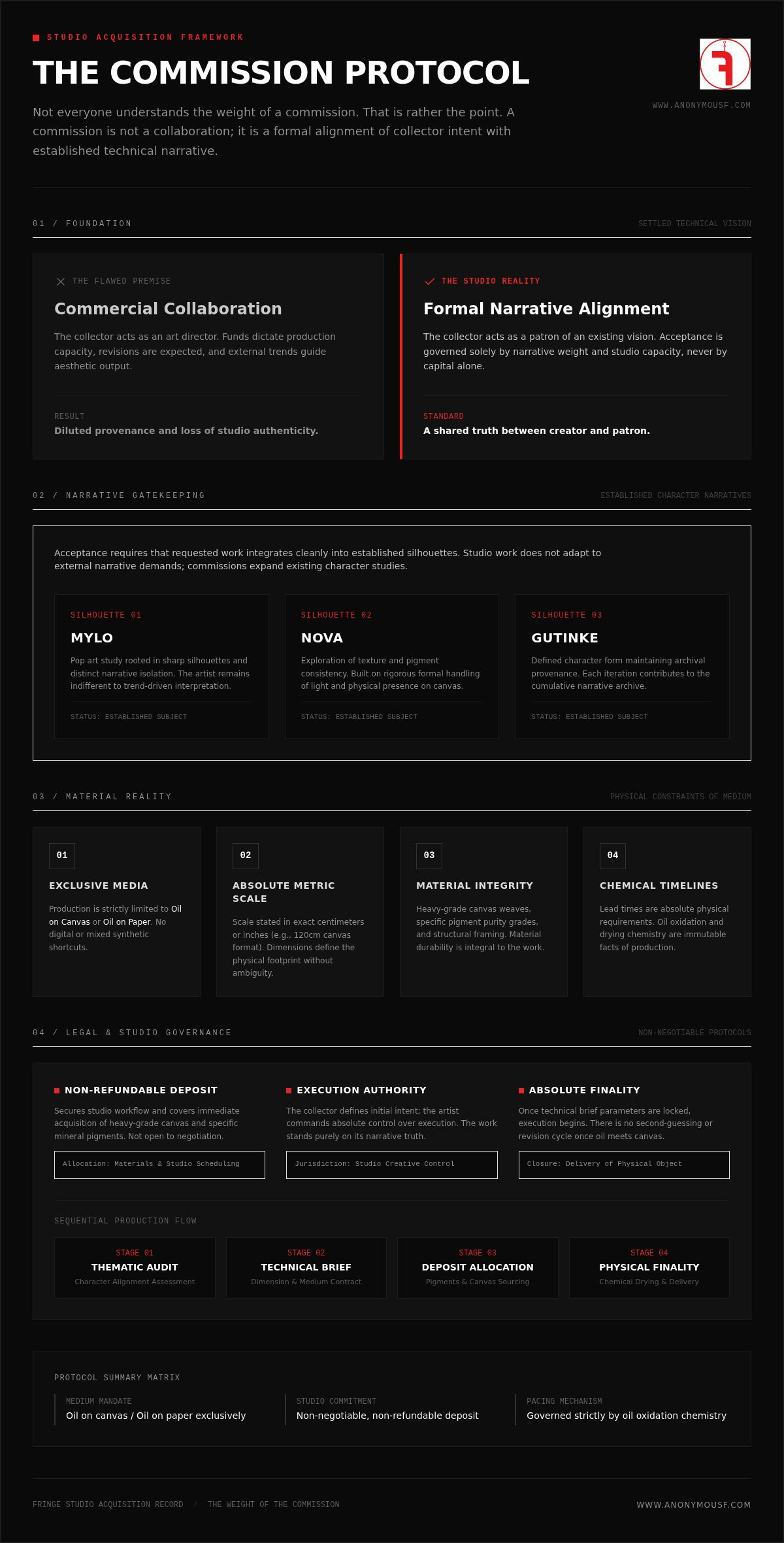
Not everyone understands the weight of a commission. That’s rather the point. A commission is not a collaboration; it’s a formal alignment of collector intent with the artist’s established technical narrative. You likely feel the tension between an internal vision and the final physical object. Understanding what to know before commissioning a painting is the difference between a successful acquisition and a misunderstanding of intent.
Collectors often face uncertainty regarding deposit structures and the alignment of creative vision. It’s a common friction point in the acquisition of high-end art. This article provides a factual framework for the serious collector seeking original oil on canvas works. We outline the technical specifications for characters like Mylo and Nova, the financial structures required for independent studio work, and the legalities of the final delivery. This is the protocol for the few who seek a meaningful resonance with the physical object.
Key Takeaways
- Alignment requires the collector's intent to match the established narratives of characters like Mylo or Nova.
- Defining absolute dimensions and the oil on canvas medium is essential for what to know before commissioning a painting.
- Financial obligations are secured through a non-refundable deposit to maintain studio workflow and narrative integrity.
- Lead times are objective facts dictated by the physical drying requirements and technical constraints of the medium.
The Barrier to Entry: Aligning Narrative with Technical Execution
Not every request results in a physical object. An art commission is a formal request for a bespoke physical object. The process begins with a cold assessment of the artist’s existing body of work. This is the first thing to understand when considering what to know before commissioning a painting. The collector acts as a patron of a specific vision rather than a director of a service. If the collector’s intent doesn't align with the established narrative of characters like Mylo, the project remains a concept rather than a creation.
Studio capacity and thematic fit dictate the selection of commissions. Acceptance isn't guaranteed by the availability of funds. It's a matter of whether the requested piece adds narrative weight to the artist's history. This creates a barrier to entry that preserves the integrity of the work. The artist remains indifferent to external trends, focusing instead on the internal logic of their own character studies. A successful commission is a shared truth between the creator and the collector.
Assessing the Artist’s Technical Consistency
Technical execution provides the foundation for the narrative. Review previous oil on canvas works to understand the specific handling of texture, pigment, and light. Consistency in character form, seen in the silhouettes of Nova or Gutinke, ensures the commissioned piece maintains its provenance. The artist’s style is a settled matter. The commission serves to apply that established language to a new canvas. You're seeking a specific technical truth that the artist has already mastered. The final object is a physical manifestation of a settled technical vision.
The Technical Brief: Medium, Scale, and Physicality
A brief is a contract of physical reality. It defines the medium with absolute precision. For this studio, the work is limited to oil on canvas or oil on paper. Dimensions must be stated in absolute terms, using centimeters or inches, to define the physical footprint of the work. This is a critical part of what to know before commissioning a painting. The narrative weight of the object is derived from its physical presence. A painting is not a digital image; it is a physical entity with mass, texture, and light-reflective properties.
Material truth is found in the specific grade of the oil pigment and the weave of the canvas. Framing requirements are established during the briefing phase to ensure structural integrity. These details are not decorative. They are the work itself. The collector understands that the value of the piece is tied to its physical permanence. Each layer of pigment adds to the narrative density of the final object.
Defining the Material Scope of the Object
Scale is determined by the intended environment. A 120cm canvas demands different spatial considerations than a small character study. Oil on canvas requires specific drying times that are dictated by the chemistry of the medium. These durations are facts of production. They can't be bypassed. The brief ensures the dimensions match the collector’s space without ambiguity. This technical alignment is essential for what to know before commissioning a painting. Reference to existing character narratives helps define the appropriate scale for a new acquisition. The physical object is the finality of the process.
The Structural Agreement: Deposits, Timelines, and Finality
A formal agreement defines the financial obligations. It's a structure for mutual understanding. The signed agreement protects the integrity of the work and the studio. One must understand that a non-refundable deposit is a requirement. It's not a negotiation; it's a commitment to the process. This is a primary factor in what to know before commissioning a painting. The timeline isn't an estimate. It's a statement of fact based on studio workflow and the physical drying requirements of oil. The medium dictates the pace. The artist doesn't rush the physics of the pigment.
Not everyone is prepared for the finality of a commission. It's the end point of the brief. Once technical specifications are settled, the artist retains creative control over the execution. The collector provides the intent; the artist provides the truth of the object. This ensures the work remains a genuine part of the artist's history. The artist is indifferent to external approval once the brief is active. The work must stand on its own narrative merits. There's no room for second-guessing once the oil meets the canvas.
Understanding the Non-Refundable Deposit and Terms
The deposit secures studio time and covers the initial material costs for the pop art original artwork. These funds are allocated immediately to the acquisition of specific pigments and heavy-grade canvas. Logistics are handled as established protocols:
- Deposit: A non-refundable commitment that initiates the production schedule.
- Logistics: Delivery and insurance are handled as logistical facts to ensure the physical safety of the object.
- Acquisition: Once the work is completed, the transfer of ownership is final.
Understanding these terms is essential for what to know before commissioning a painting. The object exists. The transaction is complete. The collector now holds the physical weight of the narrative.
The Finality of the Physical Object
The acquisition of an original work is a transition from intent to permanence. It requires a baseline understanding of technical alignment and the structural necessity of non-refundable deposits. These protocols protect the studio workflow and the provenance of the final object. This framework defines what to know before commissioning a painting. Fringe is an independent artist-owned studio where character narratives like Mylo and Nova are realized in oil on canvas. These works are currently held in global collections, reflecting a settled narrative value that doesn't follow trends. The physical object carries the weight of the character's history. A commission is a shared recognition of artistic truth between the collector and the creator. The Fringe Studio: Oil on Canvas Collection provides the foundation for this alignment. The path to ownership is a methodical progression toward a lasting physical resonance.
Frequently Asked Questions
How does the deposit structure work for an art commission?
A non-refundable deposit is required to secure studio time and material procurement. This payment confirms the collector's intent and initiates the technical brief. The deposit covers the specific pigments and canvas required for the work. It's a foundational part of what to know before commissioning a painting. The remaining balance is due upon completion of the physical object before delivery.
Can I request specific changes during the oil painting process?
Creative control remains with the artist once the technical brief is settled. The commissioning process is an alignment of vision, not a collaborative direction of the artist's hand. Minor adjustments are discussed during the briefing phase, but the execution of narrative characters like Mylo or Nova is a settled matter of studio practice. The finality of the work preserves its provenance and narrative weight.
What determines the lead time for an oil on canvas commission?
Lead times are determined by the physical drying requirements of oil paint and the studio workflow. A single layer of oil pigment can take several weeks to stabilize before the next application. Dimensions and complexity dictate the schedule. These are objective facts of the medium. The studio provides a specific timeline based on these technical constraints rather than arbitrary commercial deadlines.
Is a formal contract necessary for a private art commission?
A formal agreement is essential to define the physical specifications and financial obligations of the project. It outlines the medium, dimensions, and delivery logistics for the oil on canvas work. This document serves as a record of intent for both the studio and the collector. Understanding the necessity of this structure is key for what to know before commissioning a painting. It ensures the integrity of the character narrative is maintained.

Article by
Fringe

Read more
Building a Contemporary Art Portfolio: The Specification of Form
Most collectors mistake a digital gallery for a portfolio. They aren't the same thing. You've likely felt the frustration of building a contemporary art portfolio only to have it feel like a generi...
Read more
Determining Your Art Style: A Framework for the Serious Collector
Collecting is not for the indecisive. Most individuals acquire objects based on a fleeting impulse. That is decoration, not a collection. If your walls feel disjointed, it's because you've prioriti...
Read more
Leave a comment
This site is protected by hCaptcha and the hCaptcha Privacy Policy and Terms of Service apply.