
The Creative Process of an Oil Painter: Decisions, Revisions, and Material
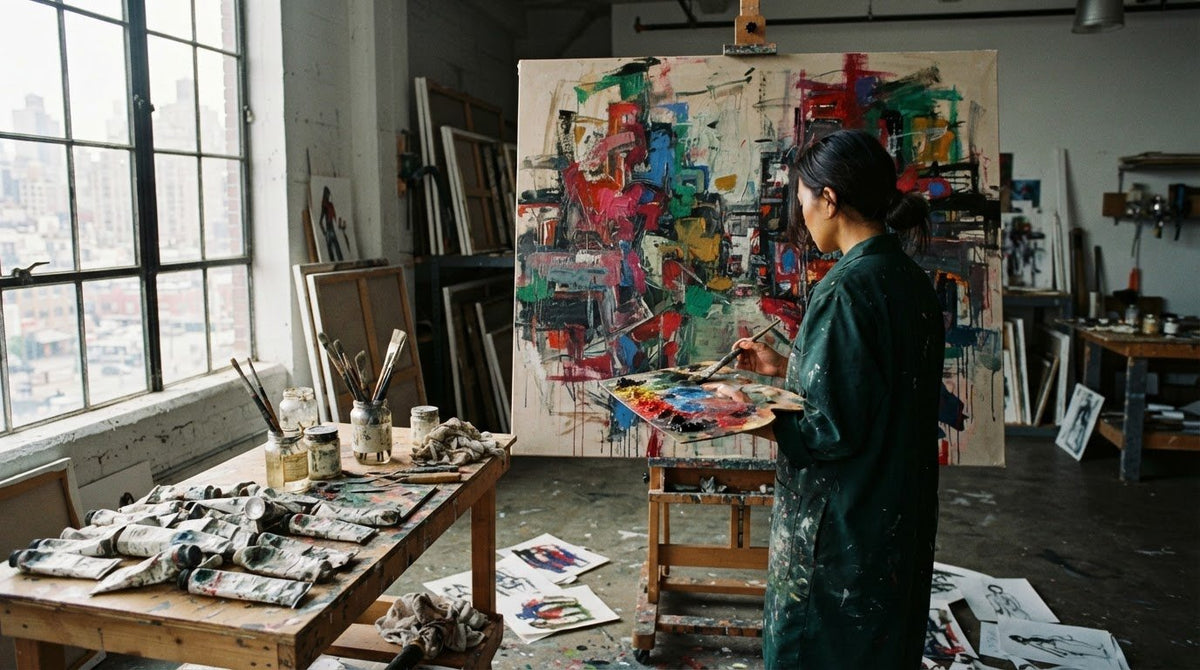
An oil painting records decisions, not a fixed sequence. The creative process of an oil painter may begin with a reference, a memory, or a compositional problem, then change as forms, colors, and emphasis take shape on the canvas.
A neat sequence of stages can obscure how often a painter reconsiders a choice. A reference may prompt a change in arrangement. A color adjustment can shift the emphasis. A revision may cover an earlier mark or leave it visible. Oil paint can remain workable as the painting develops, so each passage affects the conditions for the next decision.
This article follows common points in that development without treating them as a formula. It looks at how references and composition guide a painting, how oil paint affects decisions, and what revision leaves visible. Fringe creates original oil-on-canvas works as physical objects, with surfaces that hold visible evidence of artistic choices.
Key Takeaways
- Read a painting’s development as connected decisions, not a fixed sequence of stages.
- Look at how references and compositional choices shape the subject and its arrangement.
- Use the creative process of an oil painter to notice how review and adjustment affect a work as it develops.
- Separate visible evidence, such as composition and surface, from assumptions about the artist’s intent.
The Creative Process of an Oil Painter Begins with a Question, Not a Formula
A painting develops through linked decisions, not a universal recipe. An artist may begin with a subject, an image, or a question, but that starting point does not dictate the final composition. The placement of forms, the areas that attract attention, and the relationships between colors can all change as the painting develops.
Oil paint is pigment bound in oil. Its handling and drying behavior affect how a painter can work on the surface and when a passage can be adjusted. Layering and underpainting are established oil-painting techniques, not compulsory stages. The creative process of an oil painter is the evolving set of choices that turns an initial idea into a finished painting. Oil painting’s materials and techniques provide context, but they do not prescribe one studio routine.
What Can and Cannot Be Inferred from a Painting’s Process
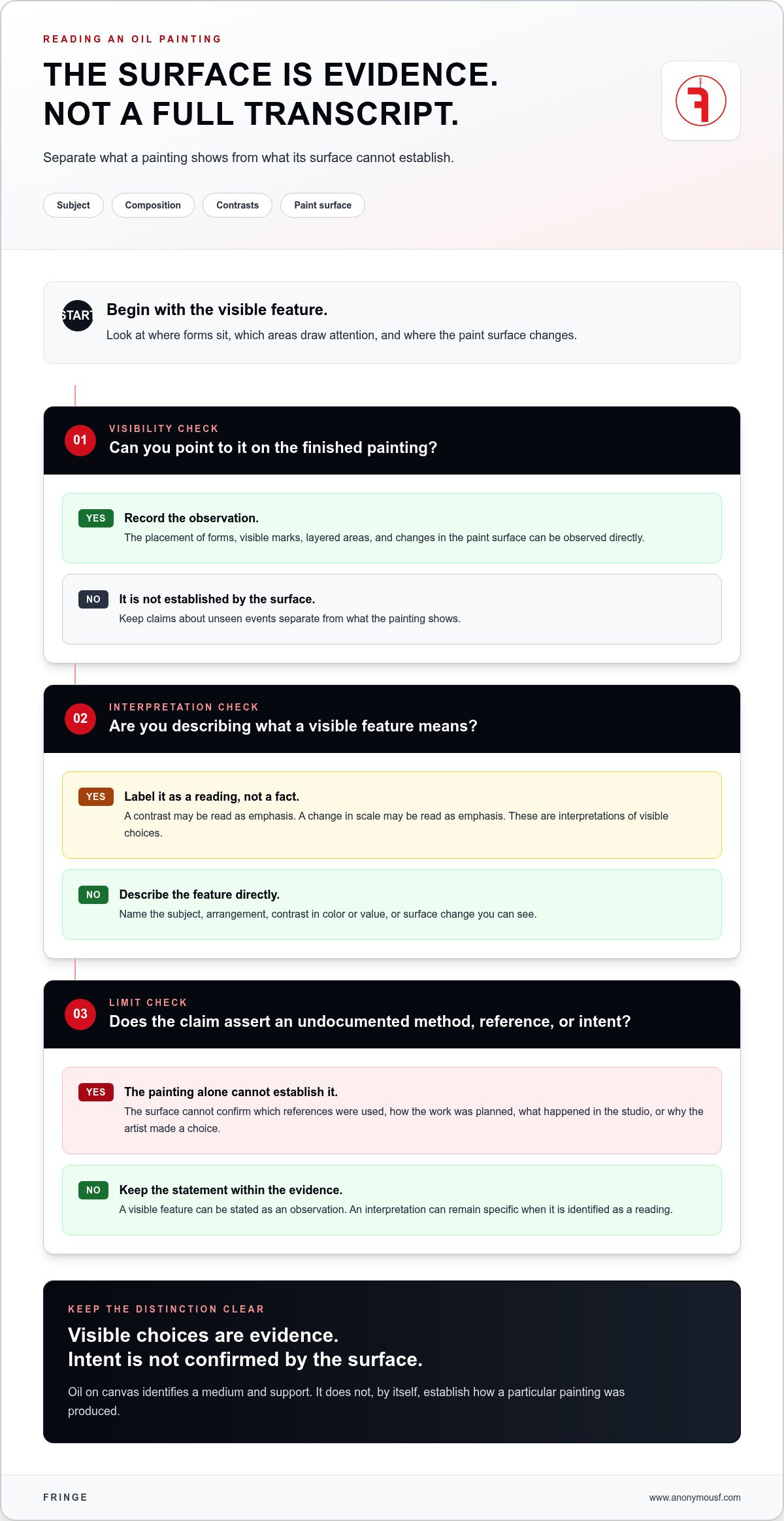
A viewer can observe the composition, visible marks, layered areas, and changes in the paint surface. Start with those features: note where forms sit, which areas draw attention, and where the surface changes. These observations support close looking. They do not establish which references the painter used, how the work was planned, or what happened in the studio.
Planning and intuition can coexist. A painter may make deliberate compositional choices, then respond to an unexpected color or mark. Neither approach cancels the other. The finished surface holds evidence of decisions, but it is not a complete account of the artist’s method or intent.
Fringe creates original oil-on-canvas works as part of its physical pop art. Consider the oil-on-canvas works through what is visible in each painting, without assuming undocumented methods. The surface is evidence, not a full transcript.
From Reference to Revision: How an Oil Painting Takes Shape
A painting may involve a subject, reference, composition, paint, review, and adjustment. These are points a painter may return to, not compulsory steps. A painter might begin with a person, object, or visual question, then use photographs, sketches, or direct observation to compare possible arrangements. A reference supplies information; it does not decide what belongs in the final image.
Composition turns those observations into relationships on the canvas. The painter considers where forms sit, what draws attention, and how one area relates to another. When looking at a painting, compare the placement of its largest forms, the areas of strongest contrast, and the way colors meet. As oil paint is applied, its body and surface affect how marks meet and colors read beside one another. These material qualities shape decisions, but they do not establish one method or schedule for every painting.
Why Revision Is Part of the Process, Not a Mistake
Review may show that a form carries too much weight, a color competes with the focal area, or the composition feels unbalanced. A painter can adjust a passage, change a relationship, or leave the work as it is. Revision is not proof that the first decision failed. It is a response to what the painting presents at that point.
The creative process of an oil painter can move between looking and making. An observation prompts a change, and that change affects the next choice. Painters differ in how often they revise and how visibly they do so. An essay on artistic choice and identity describes a finished work as a record of artistic choices. That framing helps explain how decisions accumulate without claiming certainty about intent.
For a related discussion of character and painted surface, see The Texture of Thought: Why Original Character Oil Paintings Define Modern Collections. The painting develops through attention to what is on the canvas, not adherence to a fixed recipe.
Reading the Finished Oil Painting as a Record of Artistic Choices
A finished painting shows observable features, but not a complete account of how it was made. Note the subject, placement of forms, paint surface, and contrasts in color or value. Those are visible facts. Reading a contrast as emphasis is an interpretation, not proof of the artist’s intention.
A finished painting preserves visible choices, but those features alone cannot establish why the artist made them. In the creative process of an oil painter, the surface can show marks and relationships. It cannot confirm which references were used or what the artist intended.
How Material Facts and Human Meaning Meet on the Canvas
Oil on canvas identifies a medium and support. It does not, by itself, establish how a particular painting was produced. Fringe creates original oil-on-canvas works. Consider each work’s subject, composition, and visible surface without attributing undocumented methods to the artist. The Fringe: The Artist page provides published context.
Interpretations can be specific while remaining distinct from facts. A viewer might read a change in scale as emphasis or a contrast as tension. Those are readings of visible choices, not confirmed statements of intent. The material facts remain observable even when viewers reach different interpretations.
The Oil on Canvas collection presents Fringe’s work in that medium. For a related account of artwork as a physical object, see Pop Art Original Artwork: The Specification of the Physical Object. A painting shows its subject, composition, contrasts, and surface. Those features alone do not establish the artist’s intention.
Keep Looking at the Choices the Surface Holds
The creative process of an oil painter is not a fixed sequence. References, composition, paint, and review can bring new decisions into view as a subject develops. Revision is part of that development, not evidence of a mistake.
In a finished painting, the subject, arrangement, contrasts, and surface are visible facts. Their meaning remains open to interpretation. The work records choices, but it cannot provide a complete account of the artist’s method or intent.
Fringe creates original oil-on-canvas works within a wider body of physical art that includes bronze sculptures and hybrids on paper. Each medium gives artistic choices a different physical form. Close looking means attending to what the work shows while allowing for what it cannot tell us.
In an oil-on-canvas work, viewers can observe the subject, placement of forms, contrasts, and visible paint surface.
Frequently Asked Questions
What are the main stages in an oil painter’s creative process?
The creative process of an oil painter may involve choosing a subject, gathering references, considering composition, applying paint, reviewing the image, and making adjustments. These are points of orientation, not a required checklist. A painter may revisit the composition while painting, work without formal reference gathering, or leave a decision unchanged after review.
How does an oil painter decide what to paint?
An oil painter may begin with an observed subject, a memory, a reference image, or a visual question. The starting point can shape what the artist examines through composition, color, and form. It does not fix the final arrangement: the subject’s placement and emphasis can change as the painting develops.
Does every oil painter follow the same process?
No. Painters differ in how they plan, use references, arrange a composition, and revise the image. Some decisions may be deliberate from the outset; others respond to what appears on the canvas. Oil paint’s physical handling qualities affect choices, but they do not create one universal order or pace for making a painting.
What can the finished oil painting reveal about its creative process?
A finished oil painting reveals observable facts: its subject, composition, contrasts, and visible paint surface. These features can suggest where emphasis falls or how forms relate, but they cannot prove the artist’s intention, references, or specific studio methods. Fringe’s original oil-on-canvas works can be considered through those visible features, while interpretation remains a reading rather than a documented account.

Article by
Fringe

Read more
Independent Character Toy Artists: How to Read the Work
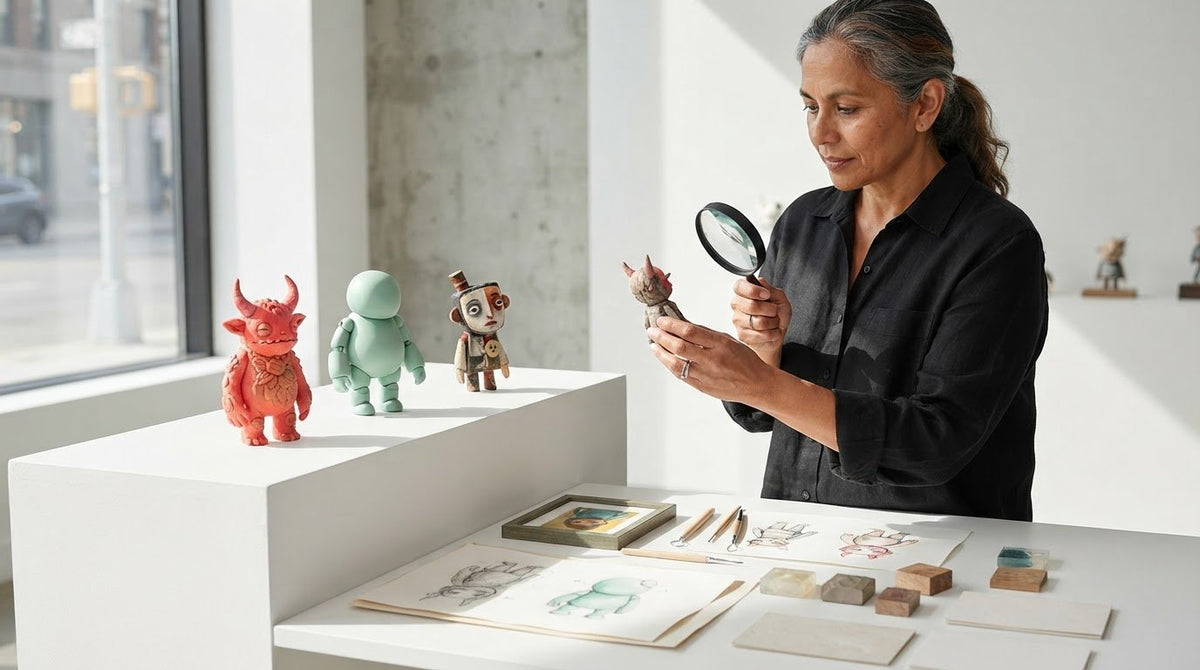
When discovering independent character toy artists, start with authorship, not the toy’s format. A recurring character is evidence of a practice, but it does not by itself establish who created the...
Read more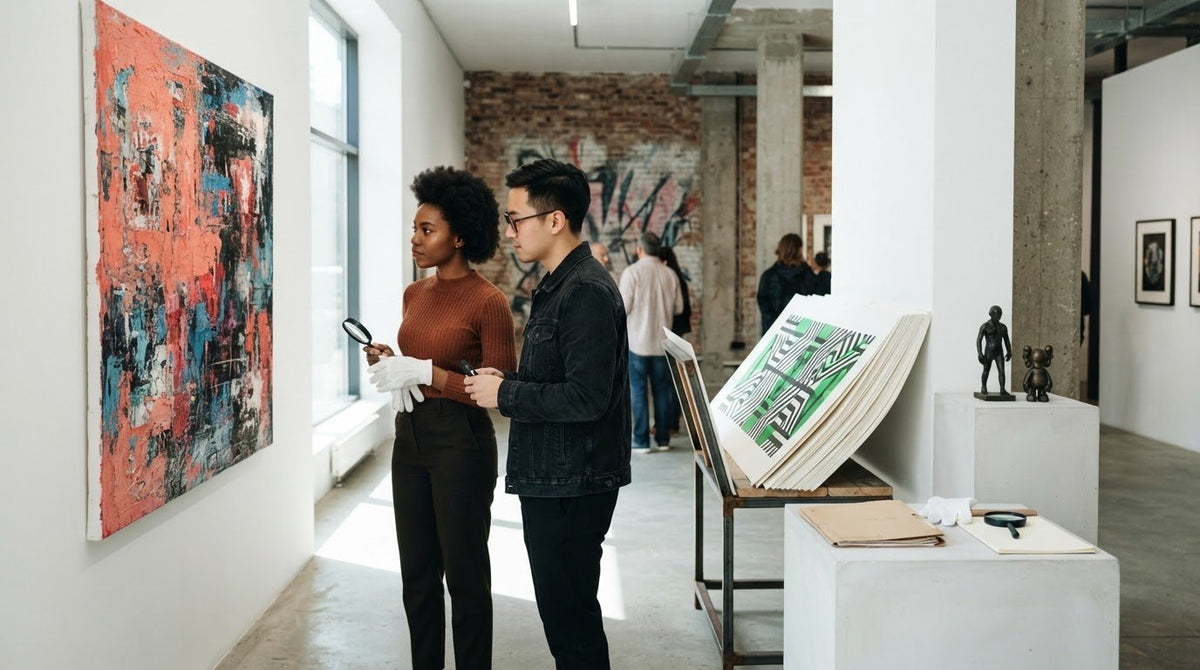
Original Art vs Print Investment Value: What Collectors Should Compare
An original isn’t automatically the stronger investment. The question of original art vs print investment value comes down to evidence about the specific work: an original is a distinct physical ob...
Read more
Leave a comment
This site is protected by hCaptcha and the hCaptcha Privacy Policy and Terms of Service apply.