
The Collector’s Specification: Limited Edition Art Prints as Narrative Objects
A reproduction is a memory of an artwork; a limited edition print is the artwork itself. Not everyone understands the distinction between a souvenir and a narrative object. That's rather the point. For the serious limited edition art prints collector, value is found in paper weight, ink density, and the logic of the edition size. The market for multiples is often confused by those who see a piece of paper as a mere echo of a painting.
The fear of buying a high-priced reproduction instead of a primary multiple is a rational response to a market that lacks transparency. This article provides a technical and philosophical examination of the hierarchy of numbering, the value of hybrids on paper, and the protocol for authenticating pop art prints using digital registry IDs. The physical object serves as a silent anchor for the complexities of the human condition. The quality of the work is a settled matter. These specifications are provided for those who require them.
Key Takeaways
- Differentiate between a mechanical reproduction and a primary medium articulation intended for a specific scale and physical output.
- Evaluate the technical value of hybrids on paper by examining the interaction between archival bases and artist-applied finishes.
- Interpret the scarcity of a multiple through the logic of numbering and the distinct historical value of Artist Proofs.
- Establish a technical protocol for authenticating acquisitions as a limited edition art prints collector using studio-backed digital registries.
The Architecture of the Limited Edition Print
A collectible multiple is a primary medium. It isn't a secondary copy of an oil painting. For the limited edition art prints collector, the distinction lies in the artist's intent. The value is finite. It is dictated by the specific scale chosen for that series. A Primary Multiple is an artwork conceived specifically for the print process. This architecture relies on the logic that the print is the final destination, not a detour from a canvas. Each choice, from the plate to the press, is a deliberate step in creating a narrative object.
The Distinction of the Original Multiple
The term "reproduction" is technically inaccurate for artist-led editions. A reproduction is a mechanical copy of a work that exists in another form. In contrast, an original multiple is the first and only version of that specific vision. The artist specifies the ink density, the paper grain, and the exact dimensions to ensure the physical object conveys the intended narrative weight. The Edition (printmaking) process establishes a contract of scarcity. It ensures the work remains a finite articulation of a concept, restricted by the physical limits of the run. The quality of the output is a settled matter once the plate is retired. For collectors looking for examples of such high-standard multiples, you can explore The Slim Aarons Collection for archival photography that adheres to these rigorous specifications.
Character Narrative as a Collectible Factor
Characters like Mylo exist across several mediums. Each print edition serves as a unique chapter in his story. While some collectors focus on Nova in bronze, the transition to paper offers a different emotional register. The character remains the same, but the medium changes the interaction. Character-based prints carry a specific human truth that abstract multiples often lack. It isn't just a pattern on a page. It is a personality captured in ink. The transition from a three-dimensional bronze to a two-dimensional paper surface requires a recalibration of the character's presence. Nova's silhouette on paper retains the weight of the sculpture while introducing the fragility of the medium. The collector isn't just buying paper; they're acquiring a specific moment in the life of the character.
Materiality and the Hybrid Form on Paper
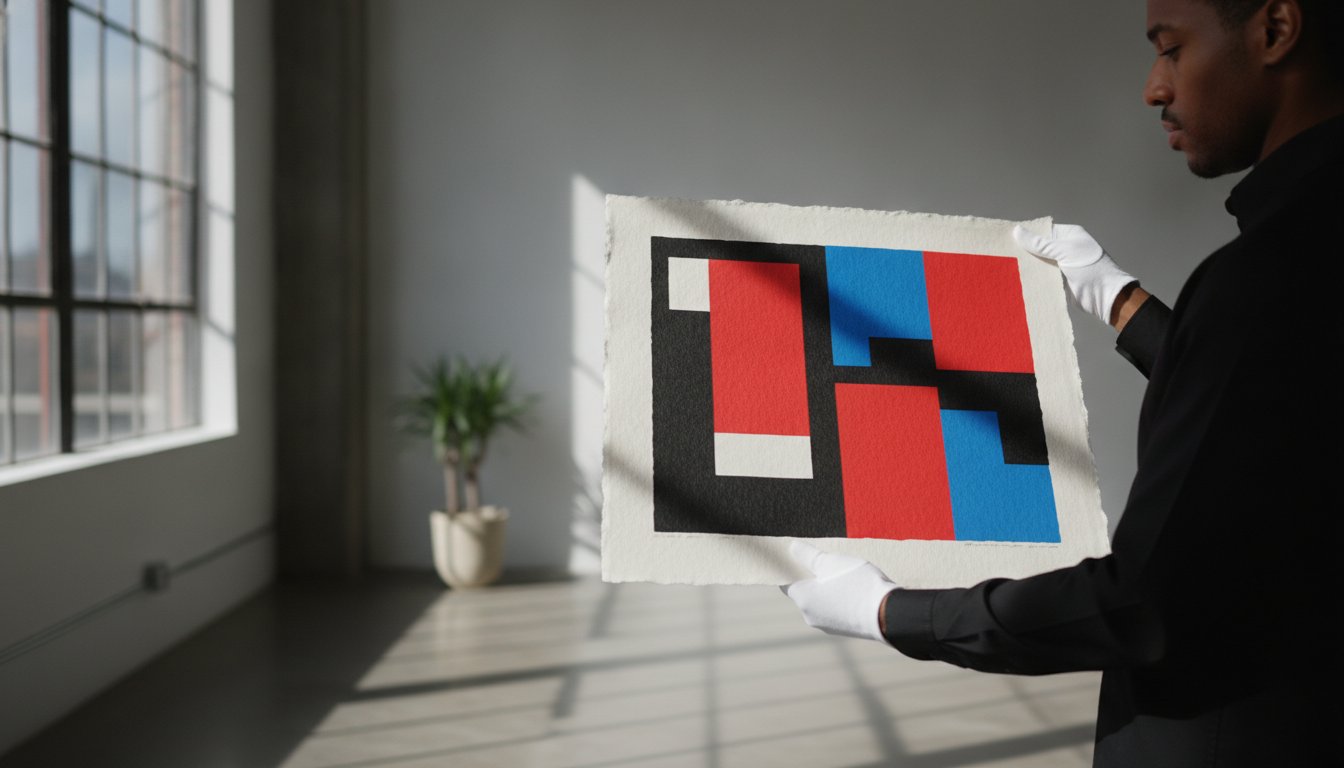
Materiality is the silent language of the multiple. For the limited edition art prints collector, the weight of the paper carries the narrative burden. Archival quality is a baseline requirement. A standard lithograph is a mechanical output, but a hybrid is a physical collision between the press and the brush. It represents the intersection of the multiple and the original. The artist applies physical layers to a printed base, ensuring no two pieces in the edition are identical. The presence of the artist’s hand removes the clinical nature of standard printmaking. Hybrids on Paper utilize specific pigments that interact with the surface over time, creating a living object rather than a static image.
The Technical Specification of Hybrids
Hybrids on paper occupy a higher tier in the collector hierarchy than standard prints. The process involves combining ink, oil, or mixed media on heavy-weight archival stock. This stock is often 300gsm or higher to support the additional weight of the artist's finishes. Understanding the technical history of these processes is essential, as noted in the National Gallery of Art guide to prints, which details how materiality defines the category. The interaction between the oil and the archival ink creates a depth that cannot be replicated by digital means. It is a matter of physics and chemistry.
Process and Provenance
The transition from the studio sketch to the final physical multiple is a methodical progression. It begins with the conceptualization of the character and ends with the physical application of pigment. In a world increasingly focused on the digital, the physical object remains a necessity. Provenance is established through the independent studio's records. Each piece is a testament to the artist's specific intent for that run. Those seeking to understand the weight of these objects often look to Fringe's physical portfolio for technical clarity.
The Protocol of Acquisition and Authentication
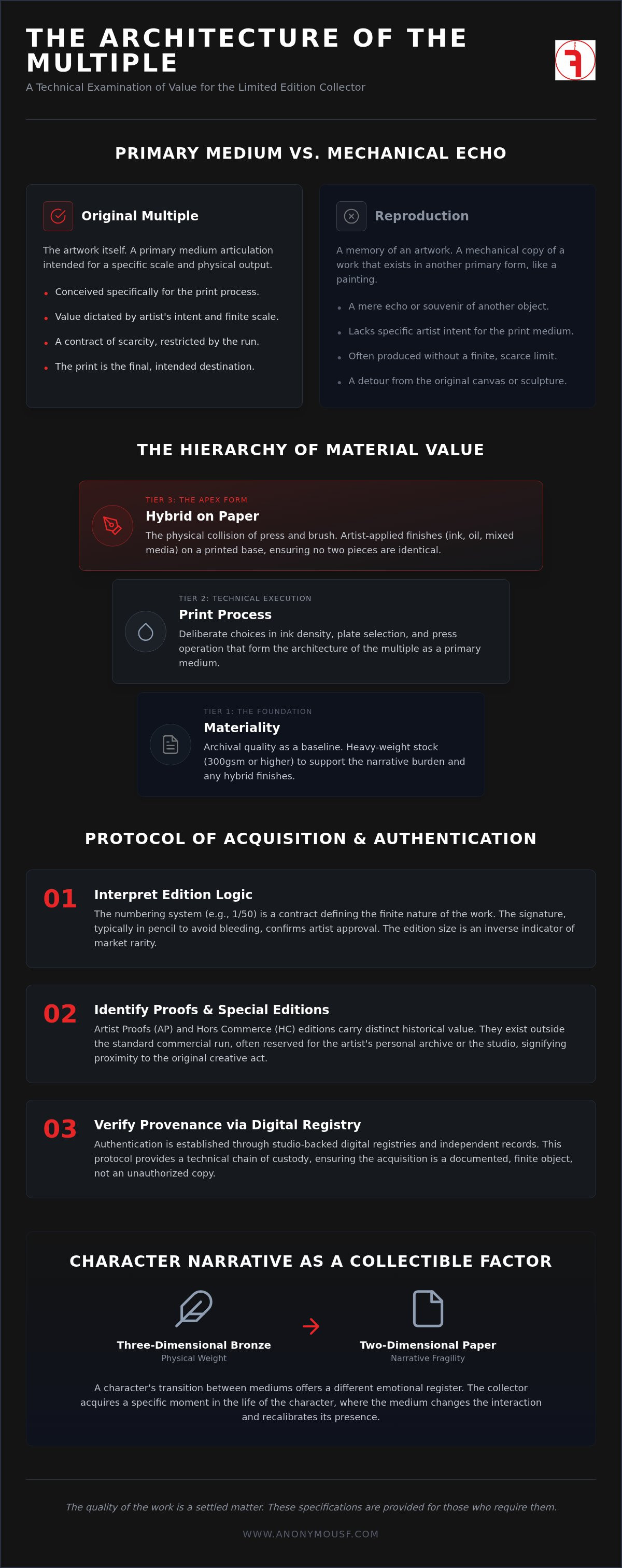
The numbering system is a contract. It defines the finite nature of the work. For a limited edition art prints collector, the digits 1/50 signify more than a sequence. They represent a physical boundary on production. Understanding what is an art print requires acknowledging the transfer of intent from the artist to the paper. This protocol ensures that the narrative object remains rare. The quality of the edition is a settled matter before the first signature is applied.
Authentication and Edition Logic
Numbering typically appears on the face or verso of the work. It's often accompanied by a signature in pencil to avoid ink bleeding into the paper fibers. Artist Proofs (AP) and Hors Commerce (HC) editions carry distinct historical value within a collection. These proofs aren't part of the standard commercial run. They represent the artist's personal archive or editions reserved for the studio. The edition size directly impacts market rarity. A run of 10 pieces holds a different technical weight than a run of 100. The logic of the edition is the logic of the investment.
The Longevity of the Physical Object
Signed limited edition prints require a specific protocol for handling. Pigments are sensitive to oils from human skin and environmental fluctuations. Archival storage for paper-based works requires acid-free environments and controlled humidity. Facts regarding UV protection are non-negotiable for display. Museum-grade glazing prevents the degradation of the artist-applied finishes found on hybrids. High-quality art is indifferent to temporary trends. It relies on material stability and the preservation of the artist’s hand.
Provenance isn't established by the frame. It's established by the direct link to the Fringe studio. This independent provenance ensures the narrative weight remains intact. The object exists as a physical record of a specific character's history. It's a truth held in ink and paper.
The Final Specification of the Multiple
Not everyone possesses the technical patience required to distinguish a narrative object from a decorative one. A primary multiple is a deliberate articulation of a character, restricted by edition logic and specific material choices. For the discerning limited edition art prints collector, value is found in the intersection of archival stock and the artist's physical touch. These aren't echoes of other works. They're the final destination of the studio process.
Authenticity is established through artist-led studio production and original character IP. Each piece follows a global shipping protocol to ensure the pigment and paper arrive without compromise. The numbering system remains a settled contract of scarcity. The specification of the work is available for review within the limited edition collections. The physical object exists as a silent record of a specific human truth. It's a record that endures.
Frequently Asked Questions
What is the difference between a limited edition print and an open edition?
A limited edition print is restricted by a fixed, predetermined number specified by the artist before production begins. This creates a finite supply that cannot be extended once the edition is closed, establishing a contract of scarcity. Open editions lack this boundary and are produced in perpetuity. For the limited edition art prints collector, the restriction of the run is the primary factor that distinguishes a collectible object from a mass-produced reproduction.
How do artist proofs (AP) differ from the numbered edition?
Artist proofs are impressions produced outside the main numbered run, historically intended for the artist's personal archive or for checking the quality of the plate. They are identical in material and process to the numbered edition but are marked with "AP" instead of a sequence like 1/50. These proofs usually constitute no more than 10% of the total edition size. Their proximity to the artist's studio process often grants them a distinct historical weight within a collection.
Why are hybrids on paper considered more valuable than standard prints?
Hybrids on paper represent a higher tier of collectibility because they incorporate unique, hand-applied finishes that a mechanical press cannot replicate. While a standard print is a static multiple, a hybrid is a physical collision where the artist adds layers of oil, pigment, or mixed media to a printed base. This ensures that no two pieces in the edition are identical. The presence of the artist's hand transforms the multiple into a unique original, increasing its narrative weight.
How should a limited edition print be stored to maintain its archival value?
Maintaining archival value requires a strict protocol of environmental control and material specification. The limited edition art prints collector must use acid-free, PH-neutral mounting materials to prevent the paper from yellowing or degrading over time. UV-filtering glazing is a technical necessity to protect pigments from light-induced fading. Storage should occur in a climate-controlled environment with stable humidity levels. These physical safeguards ensure the object remains a permanent record of the artist's intent.

Article by
Fringe

Read more
Investing in Collectible Art Toys: A Specification of Value
Not everyone understands the distinction between a toy and an asset. That's rather the point. The saturation of mass-produced vinyl in 2026 has turned much of the secondary market into a landscape ...
Read more
High-End Pop Art Collectibles: The Specification of the Physical Object
Not everyone understands why a character like Mylo requires the permanence of bronze. That's rather the point. You've likely grown tired of the hollow weight of mass-produced vinyl figures that sat...
Read more
Leave a comment
This site is protected by hCaptcha and the hCaptcha Privacy Policy and Terms of Service apply.