
Pop Art Gallery Pieces for Sale: Originals, Prints and Sculptures
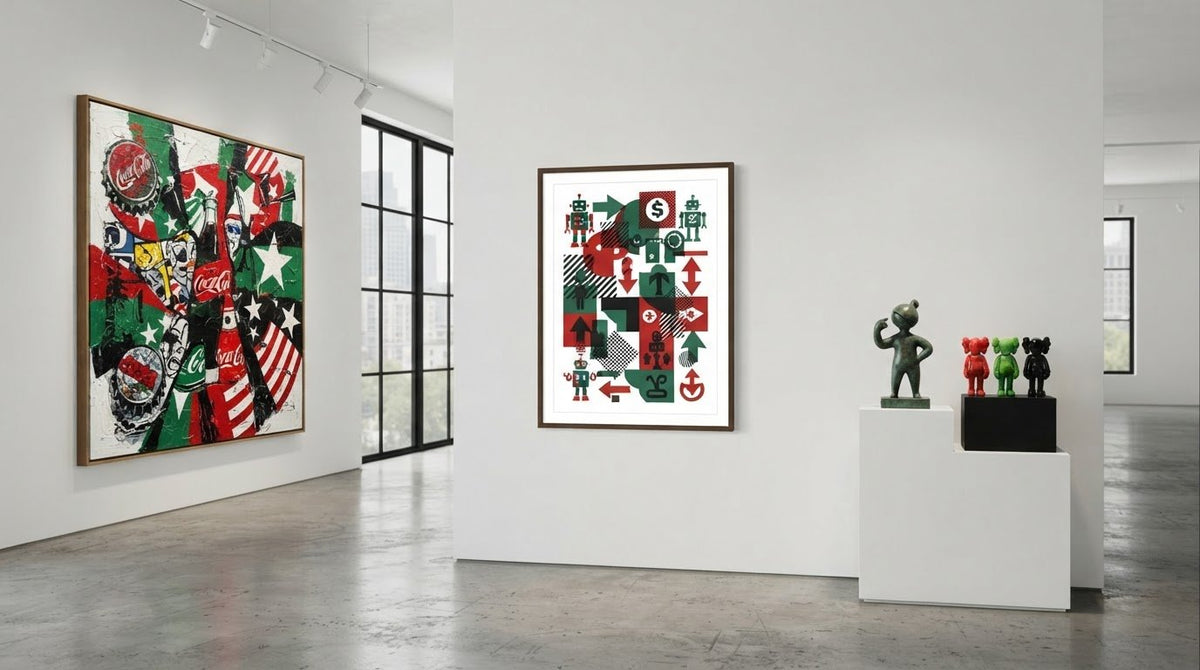
Pop art gallery pieces for sale take different physical forms: oil on canvas, limited edition prints, bronze sculptures, hybrids on paper and character-based collectible toys. The Pop Art label describes a visual approach, not a material or format.
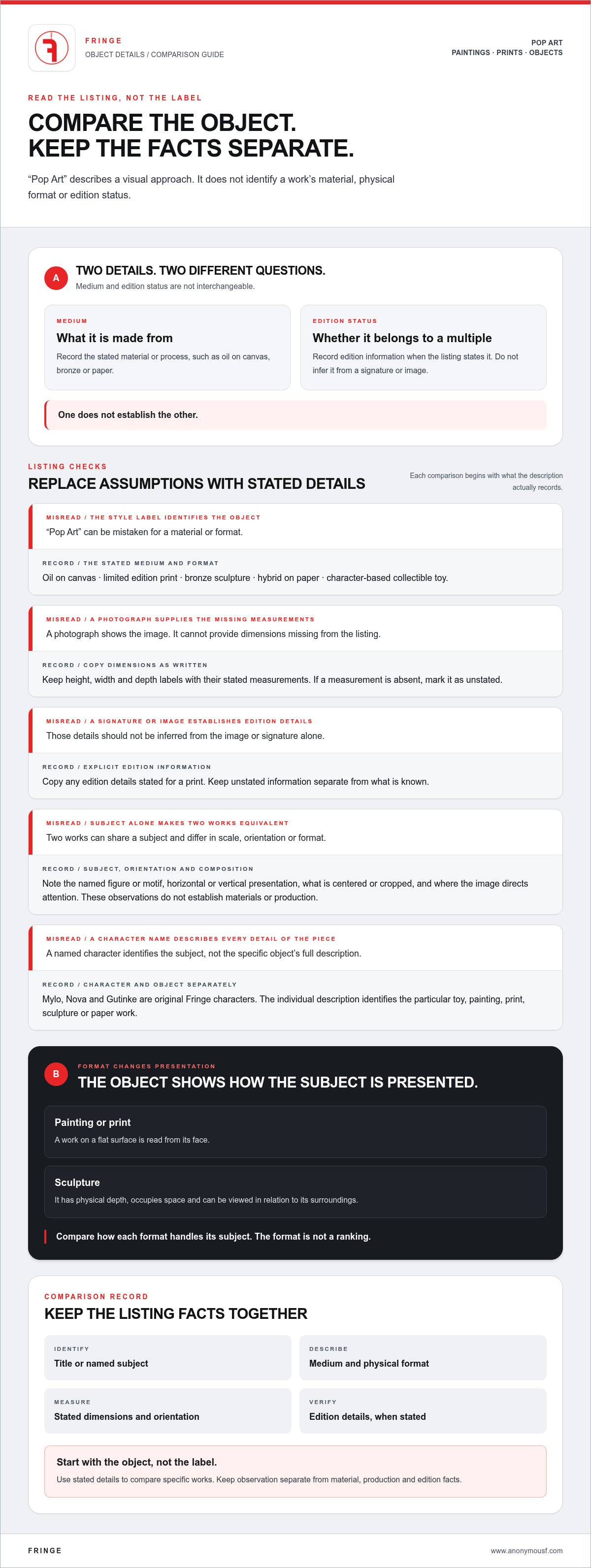
That distinction matters when comparing an original with a print. Medium describes what a work is made from. Edition status describes whether it belongs to a multiple. Neither tells you the other.
Fringe creates pop art in these forms, including works featuring the original characters Mylo, Nova and Gutinke. Compare the stated medium, format, dimensions, edition details and subject. A painting, print and sculpture present an image differently. Start with the object, not the label.
Key Takeaways
- “Original,” “limited edition print” and “collectible object” describe different aspects of a work’s status and form.
- Compare pop art gallery pieces for sale by material, physical format and subject, rather than by the Pop Art label alone.
- Use stated details to compare specific works. Do not assume two pieces share a format or medium.
- Fringe’s original characters Mylo, Nova and Gutinke appear in collectible toys, a different form from paintings, prints and sculptures.
Pop Art Gallery Pieces for Sale: Tell Originals, Prints and Objects Apart
Pop Art drew on consumer culture and mass media. When you look at a work, consider which familiar image or visual language it uses and how the artist has handled it. The subject alone does not tell the whole story. Composition, scale and the relationship between image and support all affect how a reference reads.
Look at the composition before relying on a broad style label. Note what occupies the center, what has been cropped and where the image directs your attention. Treat these as observations, not evidence of a work’s materials or production. Use the individual description for those facts.
What changes when pop art moves from canvas to sculpture?
A work on a flat surface is read from its face. A sculpture has physical depth and occupies space, so its form can be viewed in relation to its surroundings. Compare how the subject is presented in each format rather than assuming the same image has the same effect. The Pop Art movement provides historical context; the object shows how the reference is presented.
For pop art gallery pieces for sale, the useful comparison is how each work handles its subject, not which format ranks higher. Composition and presentation can make a familiar reference feel direct or ambiguous. Those are visible choices you can compare without asking a style label to do the looking.
How to Assess Pop Art Gallery Pieces Before Choosing One
A listing is useful when it identifies the object clearly. For pop art gallery pieces for sale, note the subject, medium, format and any stated dimensions or edition details. Then compare those facts with the space and works you already have. Keep what the description states separate from what you infer from an image.
Which listing details help you compare two pop art works?
Start with details that distinguish one work from another. Record the title or named subject when provided. Copy dimensions as written, including which measurement is height, width or depth. If a listing leaves out a detail, mark it as unstated rather than estimating it from a photograph.
- Subject: Record the figure, object or motif named in the listing.
- Medium and format: Note whether the work is described as a painting, print, sculpture, paper work or collectible toy.
- Dimensions: Use the stated measurements to compare the work with its intended space.
- Orientation: Note whether the description or image indicates a horizontal or vertical presentation.
- Edition details: Record any edition information stated for a print. Do not infer it from a signature or image.
This record makes comparisons more exact. Two works can share a subject and differ in scale, orientation or format. Those differences affect how they relate to a wall or display. A photograph can show the image, but it cannot supply measurements missing from the listing.
Specific object details are more useful than broad style labels. They let you compare a particular work with your space and collection. The subject may catch your attention first; the stated details establish what you can assess with confidence.
Fringe Pop Art Pieces: Paintings, Bronze, Paper and Collectible Toys
Fringe makes oil on canvas paintings, bronze sculptures, hybrids on paper, limited edition prints and character-based collectible toys. These are distinct physical formats, not interchangeable versions of one object. Mylo, Nova and Gutinke are original characters created by Fringe.
A named character gives a collector a subject to follow across works. A shared character can connect pieces; a change in subject or format can create contrast. The specific description identifies the object. Avoid assigning a character traits or a backstory unless those details are stated.
How Fringe’s physical formats differ
Fringe’s collectible toys feature characters including Mylo, Nova and Gutinke. Consider each toy as a character-based object in its own right, distinct from a painting, print, sculpture or paper work. The character’s name identifies the subject; the object description provides details about the specific piece.
A collection can cohere through a recurring character, a repeated visual approach or a shared subject. These connections do not require every work to match. A character can provide a thread through pieces that differ in form.
For pop art gallery pieces for sale, a character’s name helps identify the subject, but it does not replace the details of an individual work. The object and its description remain the record.
Set a Clear Direction for Your Collection
A collection takes shape through decisions about what belongs beside what. Before selecting among pop art gallery pieces for sale, decide whether the next work should continue a subject already present or introduce a deliberate contrast. That gives the comparison a clear purpose.
Consider the work’s intended place in the collection. It might serve as a focal point, sit among pieces with related subjects or mark a change in direction. These roles call for different comparisons. The work’s medium, dimensions and subject help establish how it may relate to the surrounding pieces.
A collection can be coherent without being uniform. Repetition creates one kind of connection; contrast creates another. Let the subject and physical form determine what belongs together.
Frequently Asked Questions
Are pop art pieces always paintings?
No. Pop art can take forms beyond paintings, including sculpture, prints, paper works and collectible objects. The category describes an artistic approach, not a specific object. A sculpture occupies three-dimensional space; a painting presents an image on a surface. Read the description for the work’s form and material.
What is the difference between an original pop art work and a limited edition print?
An original is the work itself; a limited edition print is one impression within an edition. For a specific listing, look for an explicit description of the work’s status and any stated edition details. A signature alone does not identify the medium or establish edition information. Treat each as a separate fact.
Can a pop art sculpture be part of a collection alongside paintings?
Yes. A sculpture and a painting can belong to the same collection, although one occupies three-dimensional space and the other presents an image on a surface. A shared artist, subject or visual language can connect them. Compare scale and placement rather than expecting matching formats.
How do I care for a pop art piece made from different materials?
Care depends on the materials and construction, so one cleaning method does not suit every work. Keep the object’s care information with its description and follow any instructions supplied for that piece. Do not assume that a treatment suitable for canvas also suits bronze, paper or a collectible toy. Use guidance specific to the object for handling or cleaning.
View Fringe’s pop art works by form: collectible toys, bronze sculptures, oil on canvas, limited edition prints and hybrids on paper.

Article by
Fringe

Read more
How Limited Edition Toys Are Made: From Design to Finished Edition
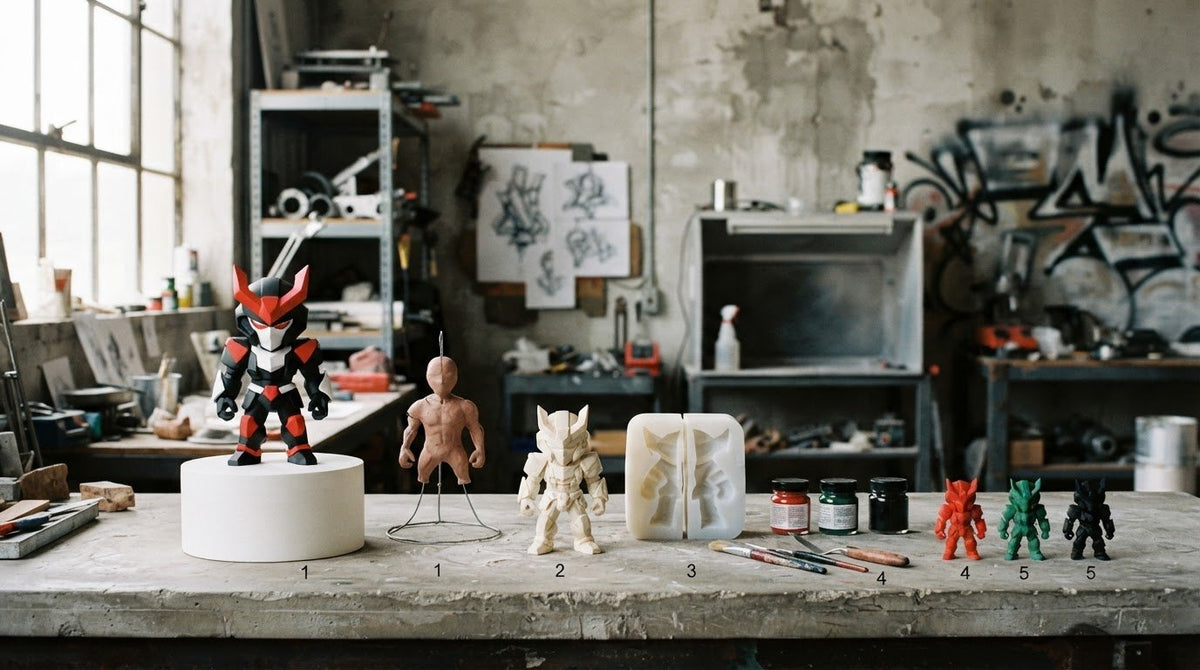
Understanding how limited edition toys are made means following the character from concept through design, production, finishing, and the records attached to its release. “Limited” describes a clai...
Read more
Modern Art for Tech Offices: A Considered Buying Guide
A technology office doesn’t need a picture of a circuit board to prove what it does. Modern art for tech company offices works best when the subject, scale, and medium suit the people who use the s...
Read more
Leave a comment
This site is protected by hCaptcha and the hCaptcha Privacy Policy and Terms of Service apply.