
Modern Art for Tech Offices: A Considered Buying Guide
A technology office doesn’t need a picture of a circuit board to prove what it does. Modern art for tech company offices works best when the subject, scale, and medium suit the people who use the space.
A literal tech motif can feel dated, while a work chosen for one team may feel misplaced in a lobby or quiet room. Start with the room’s purpose, then assess where people will see the work and how it relates to the surrounding interior. The decision is not simply whether to choose an original or a print.
This guide compares oil on canvas, bronze sculpture, hybrids on paper, limited-edition prints, and collectible toys by their physical presence and setting. It also offers a process for defining a shared art direction. Character-led work is one option for expressing company personality, not a default for every workplace.
Key Takeaways
- Define the company’s culture and the room’s purpose before choosing a subject.
- Assess scale and placement against the existing interior and the room’s daily use.
- Compare paintings, bronze sculptures, hybrids on paper, limited-edition prints, and collectible toys by their visual presence and setting.
- Modern art for tech company offices can express the people behind the work without relying on technology-themed décor.
Modern Art for Tech Company Offices: Choose Meaning Over Tech Clichés
Workplace art can refer to people, ideas, and relationships, not only devices. Modern art for tech company offices may speak to the work a company does or to the questions and relationships that shape how it does that work.
Circuit boards, code, and computer history are valid subjects, but they are not required visual shorthand. A technical motif may suit a room where that history matters. In another setting, themes such as invention, collaboration, or uncertainty may be more relevant. Choose the subject for the company’s identity, not for an industry stereotype.
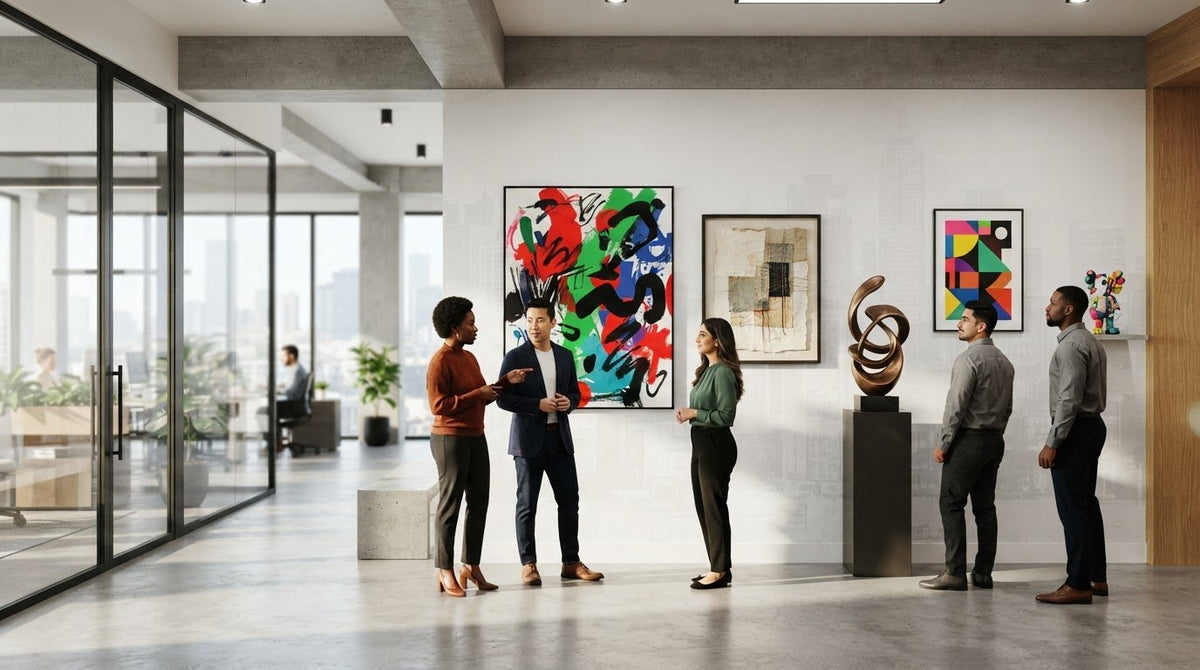
Room function narrows the decision. A reception area is seen by visitors as well as employees. A shared work area is part of the everyday environment. The same image may feel direct in one room and distracting in another. Consider who uses the space, where they encounter the work, and what kind of attention it invites.
What should office art communicate about a technology company?
Begin with the room’s intended use. Is it for exchange, focused work, or a first meeting with visitors? That purpose can guide whether the subject feels open, reflective, precise, or playful. It does not dictate one visual style.
Modern art encompasses different histories and movements, so the term does not prescribe a single look. The overview of Modern Art provides historical context. The workplace decision still depends on the people and setting. A company’s culture cannot be reduced to its software or hardware.
Character-led work is another option. Fringe creates original characters including Mylo, Nova, and Gutinke. Their work can express a company’s personality when the subject suits the room and its audience. The fit depends on the intended setting, not on the company’s industry alone.
Compare Modern Office Art by Medium, Scale, and Setting
Medium changes how a work occupies a room. Wall-based art uses wall area and is viewed from a distance. Sculpture occupies shared space and can be seen from more than one angle. Neither has a fixed office role. Circulation, room use, and available wall or surface space determine what feels considered rather than crowded.
Compare each work in its intended setting, not in isolation. A piece can read differently in a quiet work area, a reception space, or a room used for conversation. Check the view from the places where people will encounter it, then assess how it sits beside furniture and other works.
Which art medium fits each office space?
Use these distinctions as a comparison, not a ranking. An oil-on-canvas work depends on the wall around it. A sculptural object also affects how people move through the space.
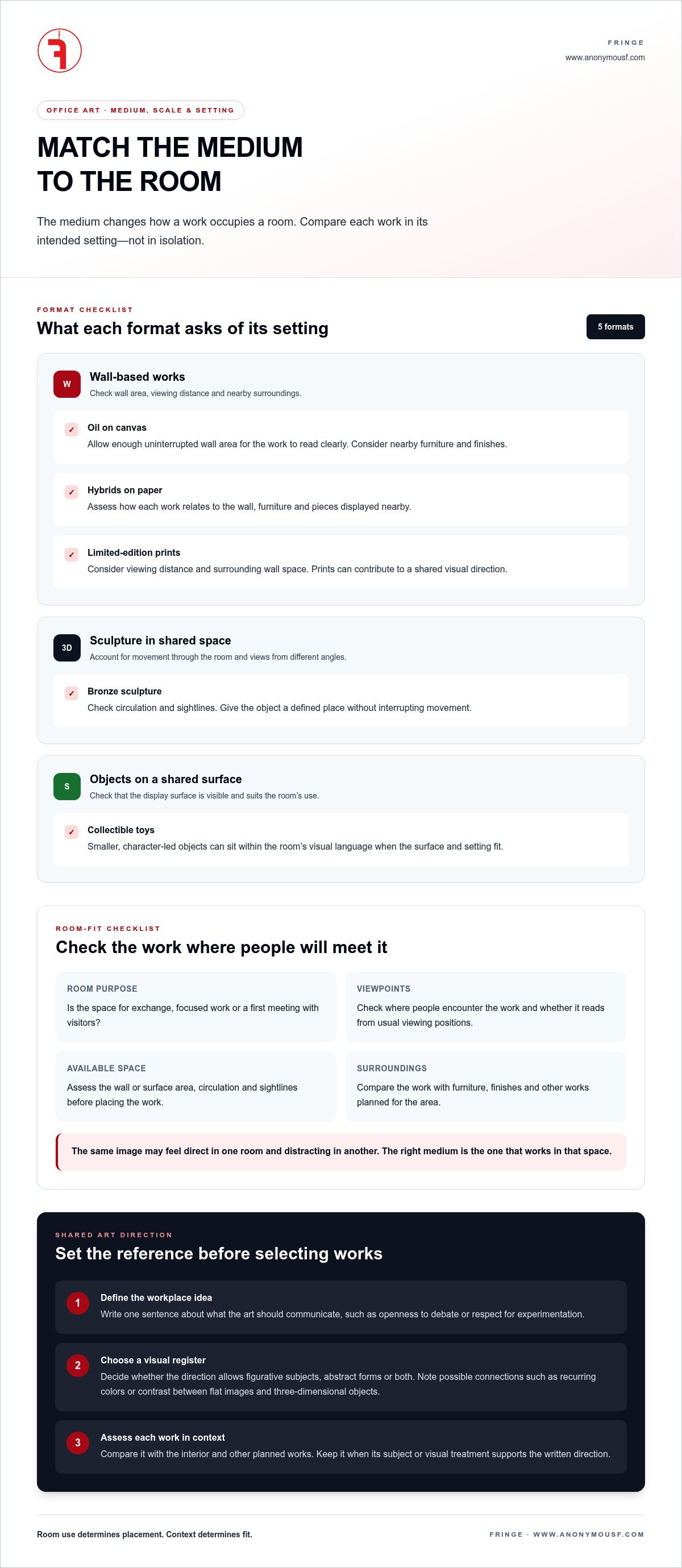
- Oil on canvas: Wall-based presence. Look for enough uninterrupted wall area for the work to read clearly, and consider its relationship to nearby furniture and finishes.
- Bronze sculpture: Three-dimensional presence. Check circulation and sightlines so the object has a defined place without interrupting movement.
- Hybrids on paper: Wall-based works on paper. Assess how each work relates to the wall, furniture, and any pieces displayed nearby.
- Limited-edition prints: Wall-based works that can contribute to a shared visual direction. Consider viewing distance and the amount of surrounding wall space.
- Collectible toys: Smaller, character-led objects. A shared surface can place them within the room’s visual language; check that the surface is visible and suits the room’s use.
Scale is relative to the setting. Consider how much wall or surface a work occupies, whether it can be read from the usual viewing positions, and whether its placement fits the room’s use. The right medium is the one that works in that space.
Build a Coherent Tech Office Art Direction with Original Work
An art direction gives separate choices a shared reference point. Set it before selecting individual works.
- Define the workplace idea. Write one sentence about what the art should communicate, such as openness to debate or respect for experimentation. Use that sentence to assess each candidate.
- Choose a visual register. Decide whether the direction allows figurative subjects, abstract forms, or both. Note features that can connect works, such as recurring colors or a contrast between flat images and three-dimensional objects.
- Assess each work in context. Compare the candidate with the interior and the other works planned for the area. Keep it if its subject or visual treatment supports the written direction.
How can original art give an office a distinct visual voice?
Use a repeated element to connect works, then let their subjects or forms differ. A shared color relationship can link separate images. Placing a character-led work near a less literal subject can introduce contrast without requiring a matching set. The connection should be visible in the works themselves, not dependent on a label.
Mylo, Nova, and Gutinke are original characters created by Fringe. The Fringe artist profile gives context for the artist’s practice and character-based work. Compare those subjects with the company’s stated direction and the room where they would be placed. A written principle makes that comparison consistent.
Let the Workplace Set the Direction
An art direction can give a workplace continuity without requiring everyone to read a work in the same way. For modern art for tech company offices, decide what should remain consistent as teams and uses of the space change.
Write the principle plainly. It might be a preference for open-ended subjects, a recurring visual contrast, or a decision not to treat company identity as a logo on a wall. Use it as a reference for future choices, not as a formula that makes every work identical.
Workplace art is part of a shared environment. A clear direction leaves room for individual responses while keeping each choice intentional.
FAQs
Is technology-themed art the best choice for a tech company office?
A circuit-board image can be appropriate when its reference matters to the company. Decide whether viewers should recognize a specific technical subject or encounter it as pattern and form. Review the work without explanation, then consider it with its context. The difference shows how much its meaning depends on accompanying information.
What type of modern art works well in an office?
Place candidate images beside samples of the interior finishes and existing company graphics. Check whether the colors repeat, counterpoint, or compete with those elements. This keeps selection deliberate without requiring every work to use corporate colors. The aim is a considered visual relationship, not automatic brand matching.
Can original art and prints be used together in a workplace?
Yes. Treat original works and prints as separate entries in one proposed arrangement. Make a placement sheet showing each work and its intended position. Review the full arrangement together, then remove pieces that duplicate a role or interrupt the sequence. This makes the relationship between works easier to assess before selecting individual pieces.
How should a company choose artwork for shared office spaces?
Start with a shortlist and ask people who use the space to review it independently. Collect reasons, not only votes. One person may respond to subject, another to tone or reference. The notes can show whether disagreement concerns the artwork or different assumptions about the room. Resolve those assumptions before choosing.
View Fringe’s original art, limited-edition prints, and character-based collectible toys in the Fringe artist profile.

Article by
Fringe

Read more
Pop Art Gallery Pieces for Sale: Originals, Prints and Sculptures
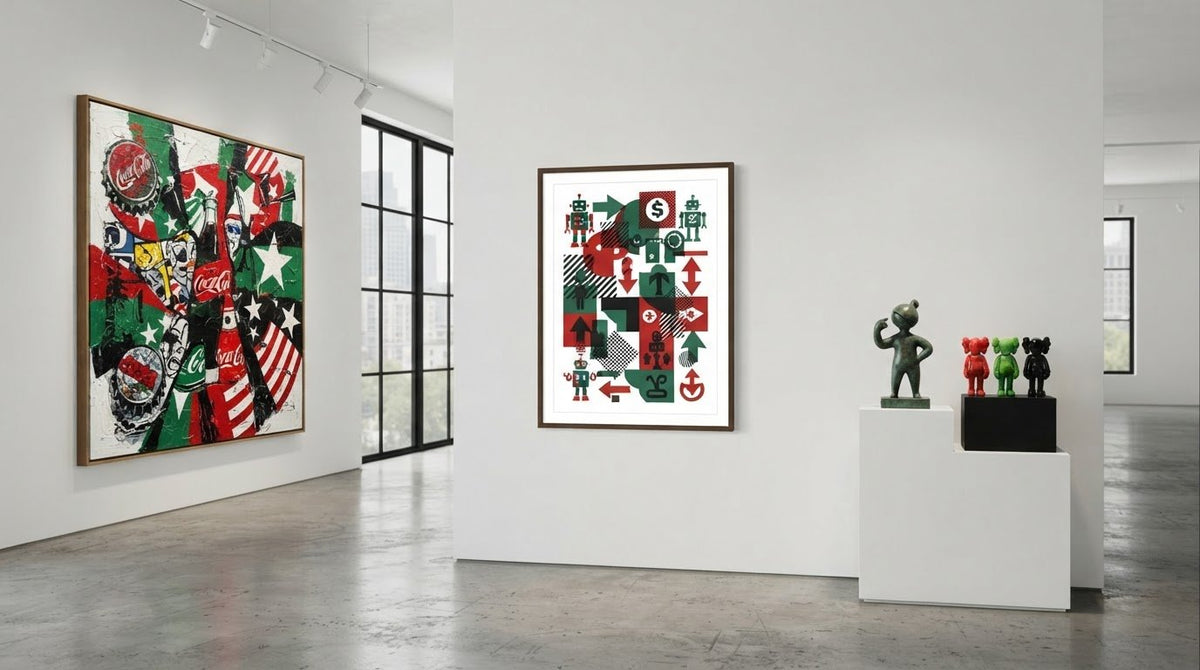
Pop art gallery pieces for sale take different physical forms: oil on canvas, limited edition prints, bronze sculptures, hybrids on paper and character-based collectible toys. The Pop Art label des...
Read more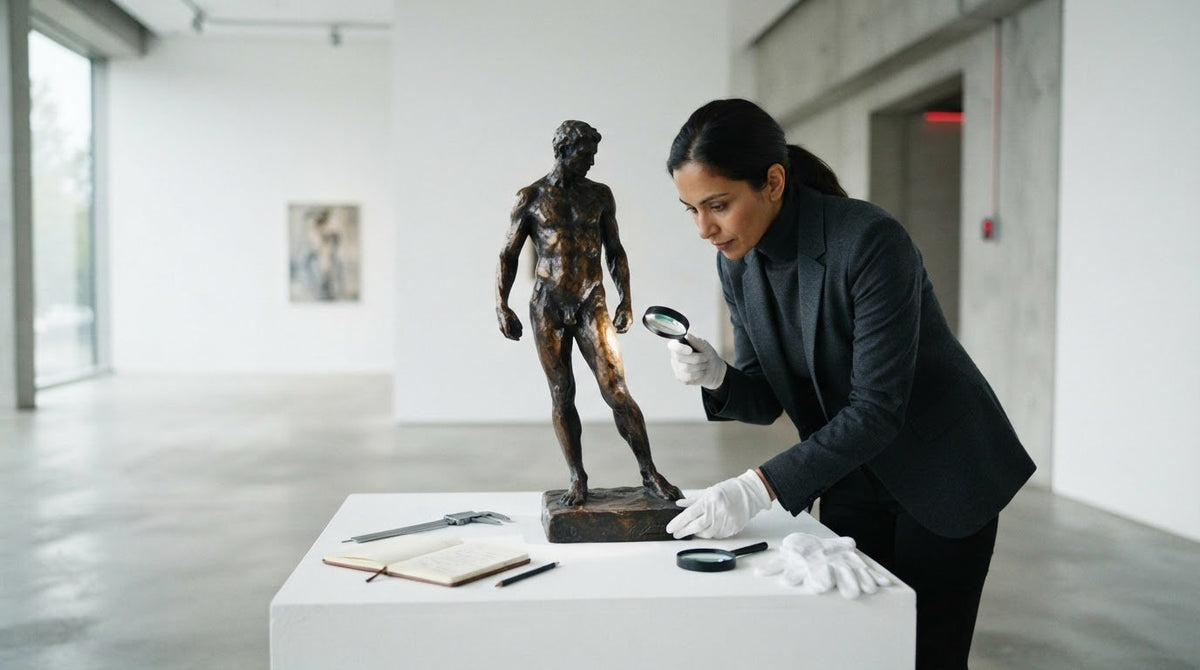
Limited Edition Bronze Art: What Collectors Should Examine
An edition number can establish scarcity, but it cannot establish why a bronze matters. Limited edition bronze art is assessed through more than the fraction stamped beside a signature. The record ...
Read more
Leave a comment
This site is protected by hCaptcha and the hCaptcha Privacy Policy and Terms of Service apply.