
Pop Art Collectible Toys: The Specification of the Physical Character
Not everyone understands Mylo. That’s rather the point. Most shelves are currently crowded with identical, hollow plastic licensed characters that exist only as echoes of cinema. You've likely felt the fatigue of generic branding that lacks an artistic soul. The oversaturation of pop art collectible toys often leaves the serious collector with many objects but very little actual art. It’s a common reality for those who prioritize material permanence over digital trends.
This examination details the distinction between mass-market figurines and high-end original character art. We'll look at the physical specifications that define a sculpture, from the weight of bronze to the narrative depth of characters like Nova. By focusing on provenance and material quality, we move away from the temporary nature of modern collectibles. The following sections clarify why the physical character must stand on its own merits, regardless of the current cultural noise.
Key Takeaways
- Original pop art collectibles function as self-contained truths, distinct from standard figurines that depend on external media narratives.
- Material specifications, such as the weight of bronze or the utility of vinyl, define the tactile authority of pop art collectible toys.
- Characters including Mylo and Nova serve as physical manifestations of internal human struggle and the intersection of dual timeframes.
- A collection of substance focuses on physical provenance and material weight, rejecting the temporary nature of digital trends.
The Distinction Between Licensed Merchandise and Original Pop Art Collectibles
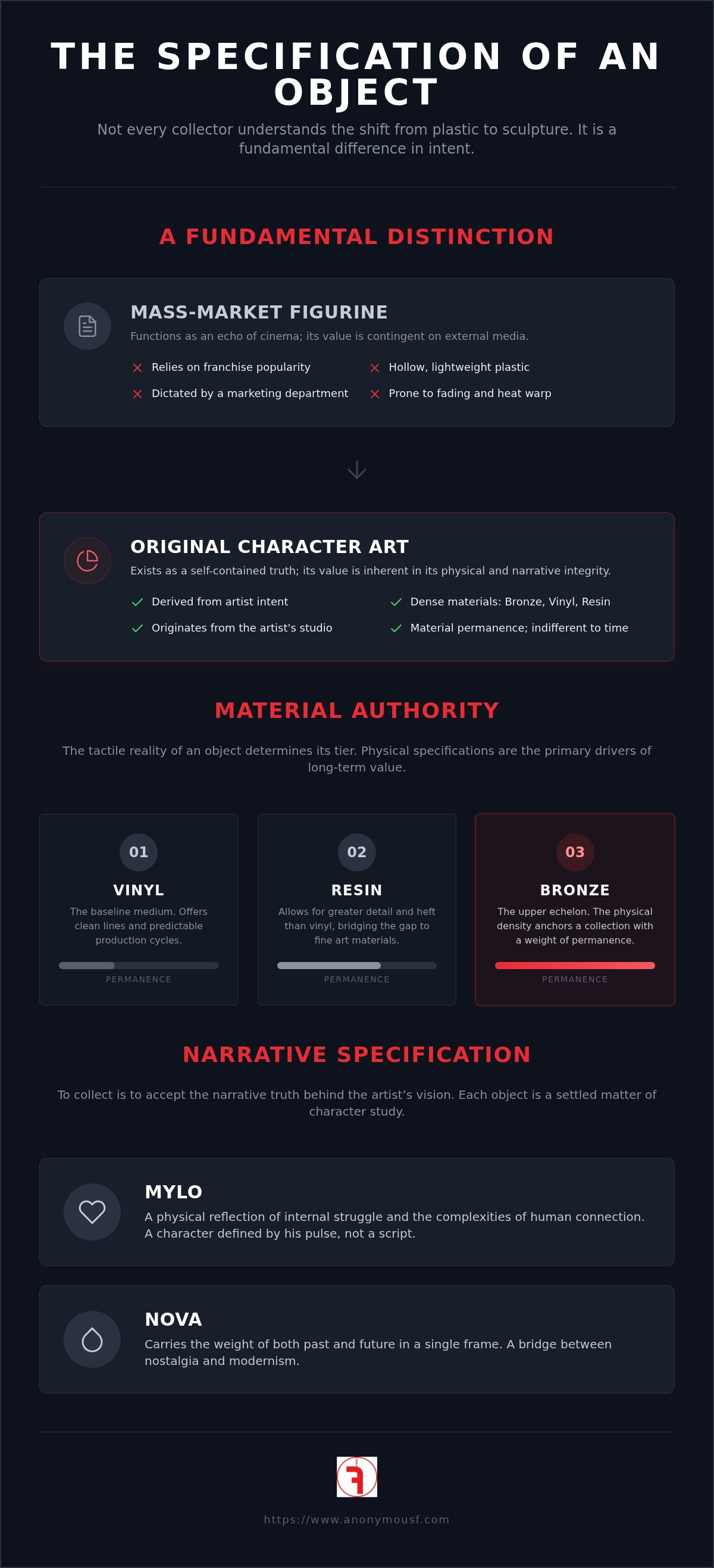
Not every collector understands the shift from plastic to sculpture. It's a fundamental difference in intent. Most mass-market figurines function as echoes of cinema, relying on external media to provide a reason for their existence. Without a film or a series, the object lacks narrative weight. In contrast, pop art collectible toys exist as self-contained truths. They don't need a franchise to justify their presence on a shelf.
The value of these objects is derived from artist intent rather than franchise popularity. When a character is created specifically for the medium of the art toy, it carries a different level of authority. The distinction lies in the origin of the character and the permanence of the material used in its creation.
- Standard figurines rely on external media narratives for relevance.
- Original art toys function as physical manifestations of an internal character narrative.
- Value is dictated by the artist’s studio, not a marketing department.
The Specification of Original Character Art
Characters like Mylo and Nova are not products of a studio. They are products of a canvas. These figures began as oil on canvas works before transitioning into three-dimensional forms. This process allows the narrative weight of the painting to manifest in a tactile, physical space. You can Meet Mylo and Nova: Characters with a Human Pulse to see how this transition from oil to form occurs. The result is a collection of pop art collectible toys that function as sculptures. They maintain the soul of the original art while existing in the physical world.
Material Authority: The Specification of Bronze, Vinyl, and Oil
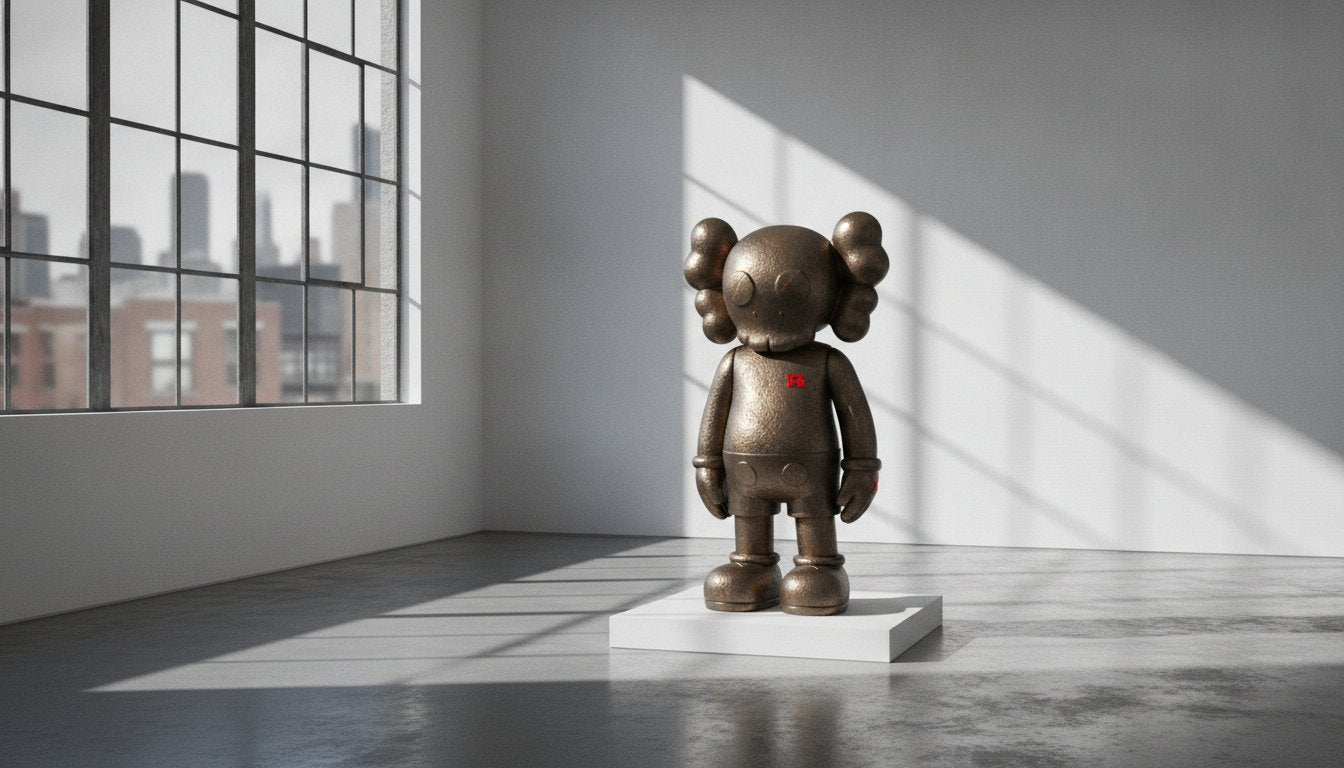
Vinyl is the baseline medium for pop art collectible toys. It offers clean lines and predictable production cycles. However, serious collectors recognize that material choice dictates the longevity of a piece. Bronze provides a weight of permanence that vinyl lacks. It's the physical density of a bronze sculpture that anchors a collection in a way that plastic cannot.
The tactile reality of an object determines its tier in the market. While vinyl is common, oil on canvas and bronze represent the upper echelon. Value in this space is driven by specific physical specifications:
- Material composition: Bronze vs. Vinyl vs. Resin.
- Physical scale: Dimensions often exceed standard 4-inch figurines.
- Weight: The literal mass of the object conveys authority.
- Process: Hand-finished bronze vs. factory-molded plastic.
A collection built on substance requires an appreciation for these physical truths. The market recognizes these materials as the primary drivers of long-term value.
The Paradox of Permanence in Pop Art Sculpture
The Quiet Boy series demonstrates how traditional materials reframe pop art collectible toys. Vinyl is prone to heat warping and color fading. Bronze is indifferent to time. This distinction creates a narrative weight that differentiates a toy from a sculpture. You can read more about The Paradox of Permanence to understand this shift.
For those seeking the intersection of paper and paint, hybrids on paper provide a unique material specification. These works involve oil on paper, creating a physical texture that digital prints cannot mimic. This focus on material integrity is evident across the Quiet Boy bronze series. The object is a settled matter of fact. Its value is inherent in its physical mass and the process of its creation.
The Narrative Specification: Collecting Mylo, Nova, and Gutinke
Collecting pop art collectible toys requires a shift from consuming media to observing human truths. Mylo exists as a physical reflection of internal struggle and the complexities of human connection. He is a character defined by his pulse rather than a script. Nova represents a different intersection. She carries the weight of both the past and the future within a single physical frame, acting as a bridge between nostalgia and modernism.
The Gutinke Meine series serves as a study in character-based complexity. These are not static figures. They are established artistic entities that originated in the studio. To collect these pieces is to accept the narrative truth behind the artist’s vision. Each object is a settled matter of character study. The value is found in the narrative integrity of the physical form.
Building a Collection with Narrative Intent
Limited edition prints and toys function as chapters in a larger artistic statement. In original character art, the multiple is a rare specification. It allows the narrative to exist in several places at once without losing its soul. This philosophy is examined in The Soul of the Object: A Guide to Collectible Designer Toys in 2026.
Building a collection here means prioritizing narrative permanence over the volume of loud culture found in mass markets. A collection of pop art collectible toys becomes a physical record of specific artistic reflections. The rarity is defined by the edition size and the artist’s studio mandate. Facts remain the primary driver of the work.
Defining the Physical Legacy
The distinction between a mass-produced figurine and a sculpture is found in the physical specification of the object. High-end pop art collectible toys prioritize material permanence, such as bronze and oil on canvas, over the temporary nature of plastic licensed merchandise. Characters like Mylo, Nova, and Gutinke exist as original artistic entities, developed within an artist-owned independent studio. This transition from oil to three-dimensional form ensures the narrative weight of the work remains intact. A collection built on these principles values facts, provenance, and the soul of the physical character. Authenticity in this space is a settled matter of material integrity and artist intent. You can access The Fringe Collectable Toy Specification to view these standards in practice. The physical object remains the final authority on its own value, offering a grounded connection to the work.
Frequently Asked Questions
What is the difference between an art toy and a regular action figure?
An art toy serves as a physical manifestation of an artist’s internal narrative, whereas a regular action figure is a derivative product of a mass market license. Regular figurines depend on external media for relevance. Original pop art collectible toys function as self-contained truths. They are sculptures produced in limited editions within an independent studio environment. The value rests in the artist’s specific vision.
How does material choice affect the value of a pop art collectible?
Material choice dictates the physical permanence and tactile authority of the object. While vinyl is a standard medium for its clean production, bronze provides a weight and longevity that plastic lacks. Facts like dimensions and material composition are primary drivers of market value. A bronze sculpture remains indifferent to time, whereas factory molded plastic is prone to degradation and environmental warping over decades.
Why does Fringe focus on original characters like Mylo and Nova?
Fringe focuses on original characters because they represent established artistic entities born from oil on canvas rather than a marketing department. Mylo and Nova act as reflections of human connection and the intersection of past and future. By avoiding licensed franchises, the studio maintains total narrative integrity. These characters exist as physical records of specific human truths and internal reflections.
Are these collectible toys considered fine art investments?
These objects are considered fine art when they possess documented provenance and material integrity. The rarity of the multiple in original character art creates a stable secondary market. Fringe maintains a physical only mandate, rejecting digital trends in favor of bronze and hybrids on paper. Value is a settled matter of edition size and the artist’s studio mandate rather than temporary cultural noise.

Article by
Fringe

Read more
How to Display Pop Art Sculptures: A Curatorial Specification
Not everyone understands Mylo. That’s rather the point. A sculpture is not a decorative accessory; it is a physical truth that demands a specific spatial dialogue. Many collectors struggle with how...
Read more
The Specification of Physicality: Original Character Art for Sale
Not everyone understands Mylo. That’s rather the point.A digital file possesses no weight. It lacks the scent of linseed oil or the cold, heavy pull of hand-cast metal. Most collectors recognize th...
Read more
Leave a comment
This site is protected by hCaptcha and the hCaptcha Privacy Policy and Terms of Service apply.