
Limited Edition Bronze Art: What Collectors Should Examine
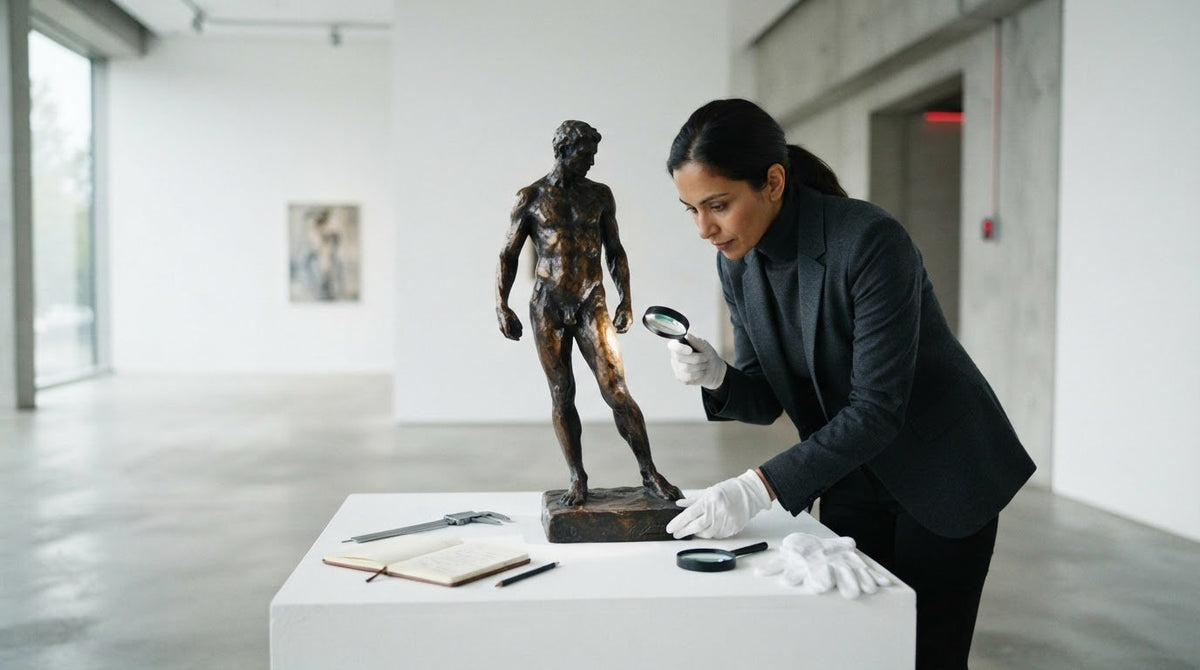
An edition number can establish scarcity, but it cannot establish why a bronze matters. Limited edition bronze art is assessed through more than the fraction stamped beside a signature. The record identifies a work’s place in a finite run, while provenance connects it to its ownership history.
Scarcity is one consideration, not a substitute for artistic context. Examine the bronze itself, including its signature and foundry mark, and consider how the work relates to the artist’s practice. An edition description or marketplace listing may leave those details unclear.
This article explains how to read edition records and provenance, assess physical details, and consider a work’s artistic identity. Fringe’s Quiet Boy bronze work is one example within an original pop art practice. Edition data says how many; artistic identity says why the work belongs in a collection.
Key Takeaways
- For limited edition bronze art, compare the edition notation with supporting records. A number alone is only part of the record.
- Separate verifiable details, such as dimensions and documented provenance, from promotional descriptions when assessing a listing.
- Read physical marks and specifications alongside the work’s title and artist attribution to build a clearer picture of the object.
- Consider Fringe’s Quiet Boy bronze in relation to the artist’s original pop art practice. Do not assume an edition status that its published details do not establish.
Limited Edition Bronze Art: What the Edition Does, and Does Not, Tell You
Limited edition bronze art is a bronze sculpture made as part of a stated, finite edition. The edition record describes the work’s place in that run. It does not establish artistic merit, explain the artist’s intentions, or show how the sculpture relates to a broader practice.
An edition label is evidence about quantity, not a verdict on significance. Treat scarcity, provenance, and artistic identity as separate considerations. Scarcity concerns the edition, provenance traces ownership, and artistic identity locates the work within an artist’s practice.
Bronze has its own history and methods. The overview of bronze sculpture provides context for the medium, but it cannot settle the meaning of an individual work.
Which details make an edition record useful?
Start with the artist attribution and edition notation on the sculpture or in its accompanying records. Numbering often indicates an individual cast and its stated position in an edition, but documentation formats vary. Read the number alongside the artist’s name and the work’s title. A fraction by itself is not a complete identification.
Next, compare the edition notation with other documented details. Provenance can trace ownership history; foundry information can identify the workshop associated with a cast. Look for records that connect those details to the specific sculpture. Do not treat the tone of a listing as evidence.
Fringe’s Quiet Boy bronze collection places bronze work within an original pop art practice. Its relevance is artistic context, not an assumed edition claim. The character and its relationship to the artist’s body of work are separate from edition data.
Read the number as a record, then assess what that record supports.
How to Assess Limited Edition Bronze Art Beyond the Listing
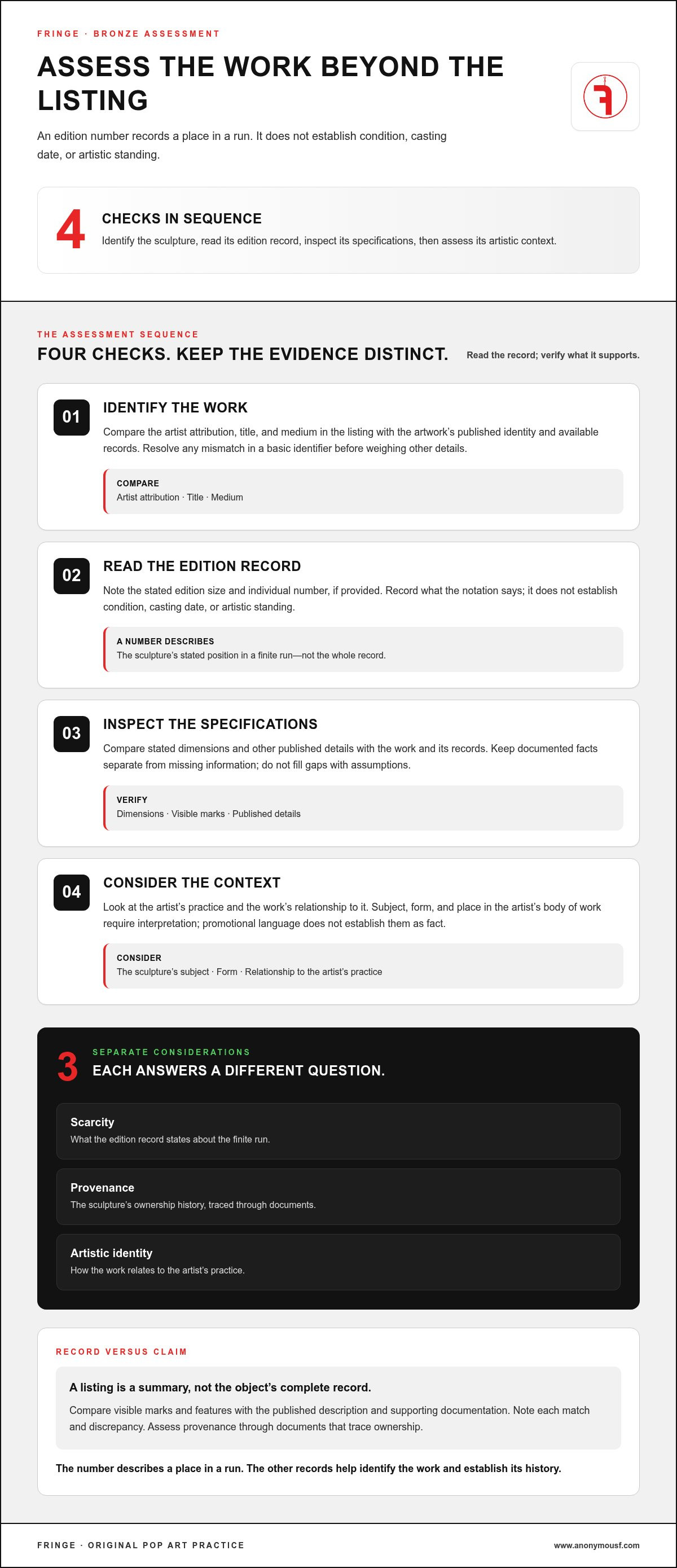
A listing is a summary, not the object’s complete record. Assess limited edition bronze art in a consistent sequence. Keep documented facts separate from claims about importance or rarity.
- Identify the work. Compare the artist attribution, title, and medium in the listing with the artwork’s published identity and available records. Resolve any mismatch in a basic identifier before weighing other details.
- Read the edition record. Note the stated edition size and individual number, if provided. Record what the notation says. It does not establish condition, casting date, or artistic standing.
- Inspect the specifications. Compare stated dimensions and other published details with the work and its records. Separate documented facts from missing information instead of filling gaps with assumptions.
- Consider the context. Look at the artist’s practice and the work’s relationship to it. The sculpture’s subject, form, and place in the artist’s body of work require interpretation; promotional language does not establish them as fact.
Compare the record with the physical work
When images or an in person view are available, compare visible marks and features with the published description and supporting documentation. Note each match and discrepancy. Check dimensions against stated measurements, and assess provenance through documents that trace ownership. A promotional description may express an opinion, but it does not replace these records.
Edition details are useful alongside artist attribution and provenance. The number describes a place in a run; the other records help identify the work and establish its history.
An edition number alone does not establish how or when a sculpture was cast, or what condition it is in. Each detail requires its own evidence.
Where Fringe's Original Bronze Sculpture Fits in a Collection
A sculpture’s place in a collection depends on more than its medium. Fringe creates original pop art, including bronze sculptures and character based work. Consider how a bronze relates to that practice: whether its character, subject, and visual language connect with the artist’s wider body of work.
Character and material as parts of the artwork
The Quiet Boy bronze collection is a direct example of Fringe’s bronze work. Consider its character and relationship to Fringe’s original pop art practice when assessing its place in a collection. These are artistic questions, distinct from edition status. Do not infer edition size or production details without the work’s own published record.
Character led sculpture has an identity that can be read across an artist’s work. Fringe’s original characters include Mylo, Nova, and Gutinke. Consider how recurring characters and bronze works contribute to an individual practice, rather than treating each object as an isolated entry in a marketplace category.
Material shapes how a work occupies space and meets the viewer. In a character based work, bronze gives physical form to a figure developed within the artist’s practice. Fringe’s pop art bronze sculpture article offers a related perspective on the relationship between pop art and the medium.
For limited edition bronze art, artistic identity remains separate from edition records. The records describe a work’s documented status. Its character and relationship to the artist’s practice explain why it may belong in a collection.
Let the Work Earn Its Place
The final decision is specific to the collection. Record what a sculpture adds: a subject not yet represented, a different treatment of the figure, or a distinct use of character and form. Each reason should be grounded in the work and the collection it will join.
For limited edition bronze art, keep that rationale in your collection notes, separate from the seller’s description. It need not predict future value or rely on scarcity language. State why this particular work belongs beside the pieces already held. A precise reason is enough.
Frequently Asked Questions
How should I clean a bronze sculpture?
Dust a bronze sculpture gently with a clean, soft, dry cloth. Avoid abrasive pads, metal polish, household cleaners, and vigorous rubbing, which can scratch the surface or alter its finish. If the sculpture has a coating, applied patina, or delicate attachments, follow its care instructions rather than using water or cleaning products. Routine dusting is usually the least invasive approach.
Can bronze art be displayed outdoors?
Some bronze sculptures are made for outdoor display, but suitability depends on the individual work’s construction, finish, and installation. Outdoor exposure to rain, pollutants, and changing temperatures can affect the surface. Before placing a sculpture outside, follow its published care guidance and consider whether its base and mounting are appropriate for the location. Do not assume every bronze artwork is intended for the elements.
Does bronze change colour over time?
Yes. Bronze can develop a patina as its surface reacts with air and moisture, shifting in tone over time. The change may be uneven, especially where the sculpture is handled or exposed to different conditions. A patina can be part of the work’s intended finish, so cleaning or polishing to restore a uniform shine may remove surface character. Limited edition bronze art can show these changes too.

Article by
Fringe

Read more

Modern Art for Tech Offices: A Considered Buying Guide
A technology office doesn’t need a picture of a circuit board to prove what it does. Modern art for tech company offices works best when the subject, scale, and medium suit the people who use the s...
Read more
How to Start an Art Collection on a Budget Without Buying by Price Alone
Price alone doesn’t identify an artwork’s medium, authorship, or edition. Learning how to start an art collection on a budget means assessing those details against the amount you’ve set aside and t...
Read more
Leave a comment
This site is protected by hCaptcha and the hCaptcha Privacy Policy and Terms of Service apply.