
Commissioning a Sculpture: The Technical and Narrative Transfer
Not everyone possesses the temperament for the foundry.
That is rather the point.
A bronze sculpture is not a purchase.
It is a technical transfer of narrative weight.
Commissioning a sculpture from an artist requires an understanding of material permanence.
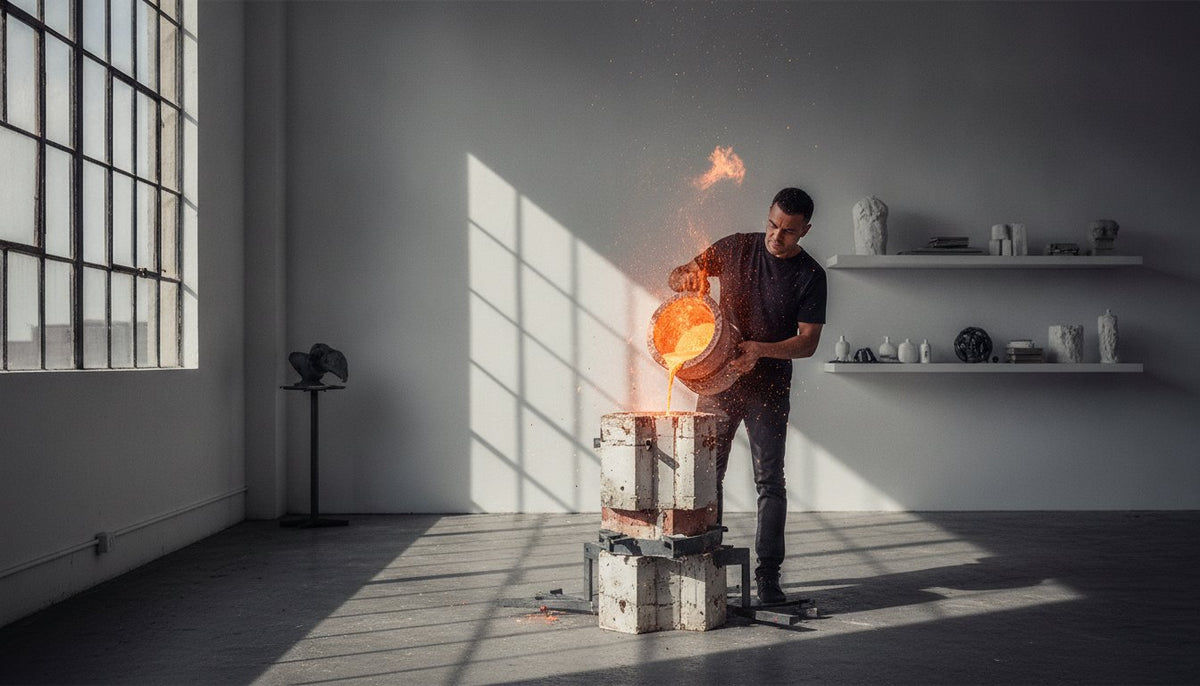
The process utilizes the lost-wax method to resolve abstract intent into molten metal.
This involves a sequence of clay modeling, silicon molding, and metal chasing.
This guide details the technical specifications and narrative requirements of professional bronze work.
It provides a framework for character alignment and the verification of technical specs.
The object exists to contain a silence that outlasts the individual.
The value of the work is a settled matter.
Key Takeaways
- Commissioning is a technical transfer of narrative weight rather than a service-based transaction.
- The timeline for commissioning a sculpture from an artist requires 35 to 50 working days to accommodate the lost-wax casting process.
- Bronze is the required medium for material permanence and the physical containment of complex emotional states.
- Successful commissions require the collector to act as a custodian, aligning the work with the established character lexicon of Mylo or Nova.
The Distinction Between Acquisition and Commission
Acquisition is the act of selecting a finished truth. It is a passive recognition of a completed thought. Commissioning a sculpture from an artist is the intentional creation of a new one. The practice of commissioning art is a technical transfer of narrative weight. The collector acts as a custodian of a new form. This requires a deep understanding of the artist’s existing character lexicon. It is not a service-level transaction for the undecided. Bronze represents a commitment to a physical reality that will outlast the individuals involved.
The distinction lies in the origin of the narrative. An acquired piece arrives with its history intact. A commissioned piece begins as a shared conceptual boundary. The artist brings the soul of characters like Mylo or Nova. The collector brings the requirement for scale and permanence. This duality creates a tension that is resolved only when the bronze is poured. The final object is a physical manifestation of a collaborative intent.
The Narrative Scope of Character-Based Form
Establishing the conceptual boundaries of the piece is the first technical step. This occurs before the first maquette is formed. Integrating established character traits from the Mylo collection into a bespoke bronze scale requires strict narrative alignment. The work must reflect a specific emotional state. It is a vessel for connection or struggle. The narrative weight of the final object depends on this initial clarity. If the alignment is missing, the bronze is merely metal. The artist remains the authority on the character's soul.
Specification of Material and Scale in Bronze
Bronze is selected for its material permanence.
It functions as a physical anchor for the narrative weight of a pop art bronze sculpture.
The alloy's durability ensures the emotional state remains unchanged by time or climate.
Commissioning a sculpture from an artist requires an early commitment to these physical realities.
Dimensions and scale are fixed before the first pour.
A life-size figure, standing approximately six feet, typically weighs between 150 kg and 250 kg.
This mass necessitates specific structural considerations for the intended display site.
The weight of the object is the weight of the intent.
Technical Realities and Casting Timelines
In 2026, the lost-wax casting process remains the standard for modern studio practice.
The method utilizes ceramic shell technology to achieve high-fidelity transfers of character detail from clay to metal.
Commissioning a sculpture from an artist involves a standard production lead time of 35 to 50 working days from the moment the clay model is approved.
This duration accounts for the complex stages of mold-making, metal chasing, and patination.
The patina is not a coating.
It is a controlled chemical reaction on the bronze surface that defines the final color and texture of the character.
The surface treatment is the final step in establishing the narrative pulse of the work.
The foundry moves at its own pace.
The Integration of Character Narrative and Final Form
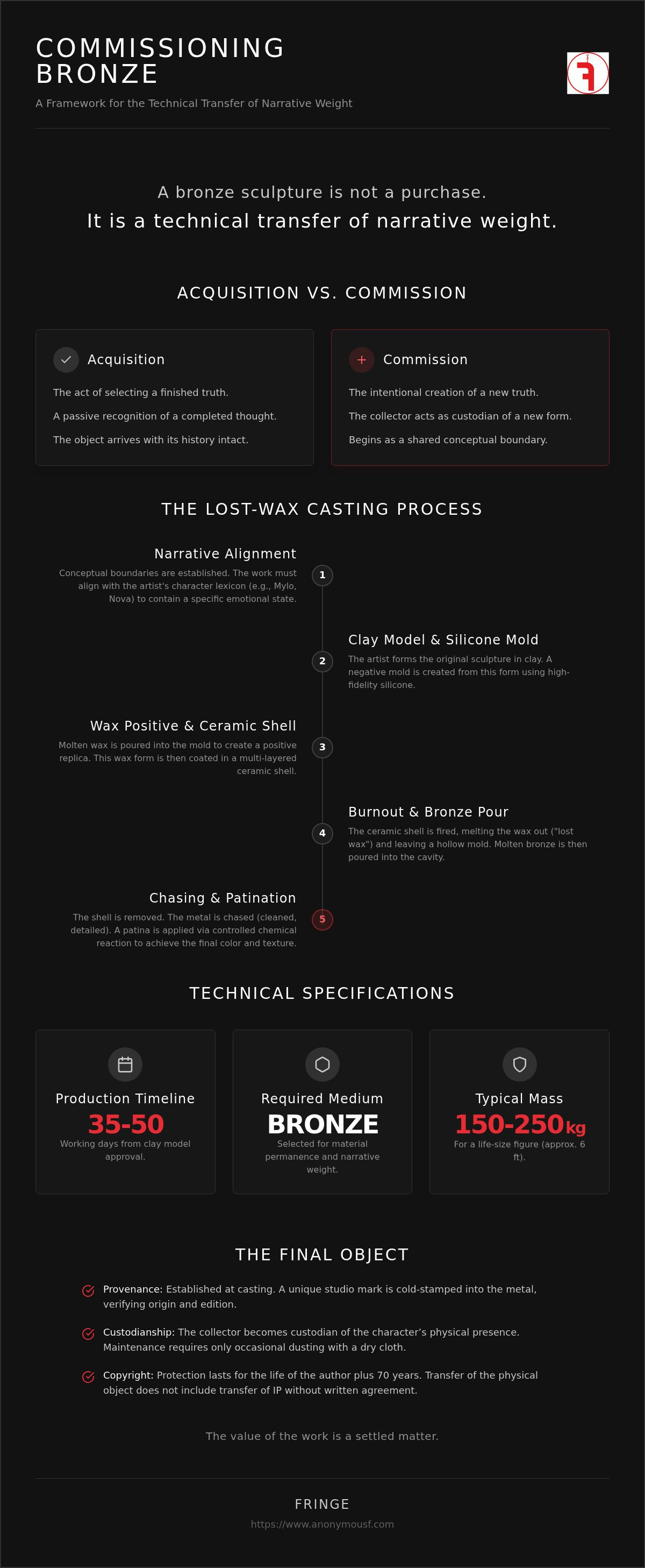
The final object must possess a human pulse. This is achieved through the vulnerability inherent in series like Quiet Boy Bronze. When commissioning a sculpture from an artist, the collector is not merely requesting a physical shape. They are securing a vessel for specific emotional states. Characters like Nova or Gutinke are defined by their internal narratives rather than their physical dimensions. Each form is a container for a shared silence, reflecting the complexities of the heart or the stillness of observation.
Provenance is established at the moment of casting. Each commissioned piece carries a unique studio mark cold-stamped into the metal. This mark verifies the origin and limits the edition size. Commissioning a sculpture from an artist is a commitment to a documented history. Under current law, copyright protection for these works lasts for the life of the author plus 70 years. The transfer of the physical object does not include the transfer of intellectual property unless a written agreement is signed. The authority of the object is a settled matter, determined by the material facts of the bronze and the artist’s standing in the contemporary market.
Finalisation and Custodianship
The transition from the studio to the collector’s environment is the final step in the object’s narrative. The collector becomes a custodian of the character's physical presence. Maintenance of professional bronze is minimal. It requires only occasional dusting with a dry cloth to preserve the integrity of the patina. Chemical cleaners or abrasive materials will damage the surface reaction. The value of the work remains independent of the observer's opinion. It is a permanent record of a specific narrative transfer.
Securing the Narrative Transfer
The object is a settled matter once the bronze cools.
Commissioning a sculpture from an artist is a commitment to the material reality of the alloy.
The 50-day casting cycle dictates the pace of the technical transfer.
A life-size bronze weighing up to 250 kg requires a permanent site for its physical weight.
You are a custodian for a specific emotional state rather than a consumer of a service.
Fringe operates as an independent, artist-owned studio.
Works are produced in bronze, oil on canvas, and hybrid paper.
Original characters like Mylo, Nova, and Gutinke carry the narrative weight of the form.
Each piece carries a unique studio mark to ensure provenance.
The studio remains indifferent to whether the reader is convinced of the work's value.
The character exists.
The bronze ensures it remains.
Frequently Asked Questions
How long does it take to commission a bronze sculpture?
A standard bronze commission requires 35 to 50 working days for the casting process alone. This specific timeline covers the lost-wax method, from the initial clay model approval to the final metal pour. Total lead times often extend across several months to include conceptual alignment and patination. The foundry moves at a methodical pace that respects the material reality of the object.
Who owns the intellectual property of a commissioned art piece?
The artist retains all intellectual property rights by default. Under current law, copyright protection lasts for the life of the author plus 70 years. Commissioning a sculpture from an artist secures the physical object for the collector, while the rights to reproduce the character remain with the studio. Ownership of the copyright isn't transferred without a separate, signed written agreement.
What information does an artist need to begin a commission?
The studio requires a definition of the narrative scope and the intended physical scale. Collectors must select a character from the established lexicon, such as Mylo, Nova, or Gutinke, to act as the vessel for the work. Technical details regarding the installation site are necessary, as a life-size bronze can weigh up to 250 kg. This ensures the form fits the intended space.
How is the price of a custom sculpture calculated?
Pricing is determined by the intersection of material markets and specialized craftsmanship. The cost of raw bronze is tied to global copper prices, while the lost-wax process requires the labor of 8 to 12 specialist artisans. When commissioning a sculpture from an artist, the final value reflects the technical difficulty of the casting and the narrative weight of the edition. The object's value is a settled matter.

Article by
Fringe

Read more
Contemporary Art Pieces for Collectors: The Specification of the Physical Object
Not everyone understands why a physical object must possess a certain material gravity. That’s rather the point. The current market is saturated with low-quality digital assets and gallery fluff th...
Read more
Maintenance of Bronze Sculpture: The Specification of Preservation
Not every collector possesses the discipline to steward a living surface. This is the primary reality of what to know before buying a bronze sculpture. Bronze is an alloy of copper and tin that rea...
Read more
Leave a comment
This site is protected by hCaptcha and the hCaptcha Privacy Policy and Terms of Service apply.