
How to Start an Art Collection on a Budget Without Buying by Price Alone
Price alone doesn’t identify an artwork’s medium, authorship, or edition. Learning how to start an art collection on a budget means assessing those details against the amount you’ve set aside and the reasons you want the work.
Oil paintings, bronze sculptures, hybrids on paper, limited-edition prints, and collectible toys are distinct physical formats. Fringe is an independent artist-owned studio working across these forms.
This guide covers spending limits, format distinctions, and the records that document a purchase. An edition number describes a print’s place within an edition. It does not establish future resale demand. Keep the work’s stated details, your budget, and your reason for choosing it as separate considerations.
Key Takeaways
- How to start an art collection on a budget begins with setting both a total spending limit and a ceiling for each purchase.
- Compare paintings, limited-edition prints, and collectible objects by medium, authorship, and stated edition details, not by format alone.
- An edition describes how a work is issued. It doesn’t guarantee appreciation or resale demand.
- Before buying, name what draws you to the work, review its details, check the full cost against your budget, and record the purchase information.
How to Start an Art Collection on a Budget: Set the Rules Before You Buy
A collection can contain works in different media and at different scales. Its total spend does not define those choices. The motivations and types of art collections vary, so set limits around your own collecting plans rather than an outside benchmark.
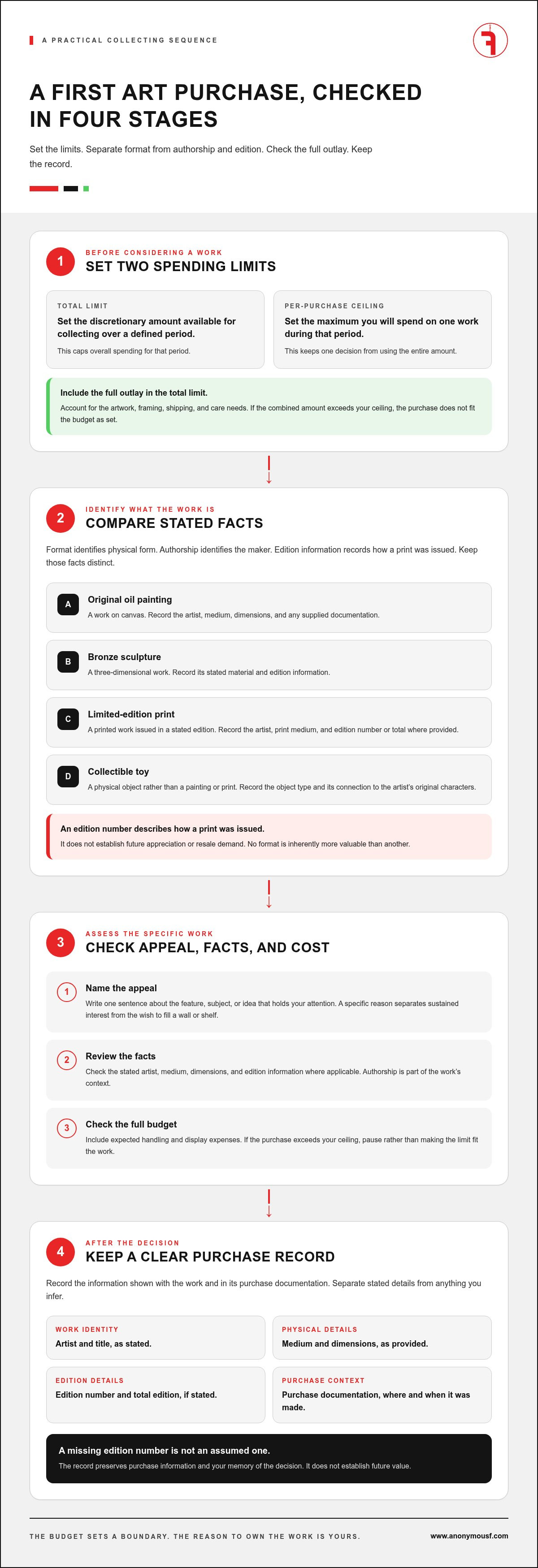
To decide how to start an art collection on a budget, write down two limits before considering a purchase. First, set the total discretionary amount available for collecting over a defined period. Then set the maximum you will spend on one work during that period. The total limit caps overall spending; the per-purchase ceiling prevents one decision from using the entire amount.
Keep the artwork allocation separate from expenses tied to handling and display. Framing and shipping affect the full outlay, and care needs vary by work. Include these expenses in your total limit. If the combined amount exceeds your ceiling, the purchase does not fit the budget as set.
What belongs in a first-time collector's budget?
List the amount reserved for the artwork separately from the amount set aside for related expenses. Decide in advance how often you will consider a purchase. That makes it easier to assess a specific work on its merits rather than buying to fill an empty wall or shelf. The budget sets a spending boundary; it does not determine a work’s artistic legitimacy.
- Set the total discretionary limit for a defined period.
- Set a separate maximum for a single purchase.
- Account for framing, shipping, and care within the total limit.
If no work fits those terms, leave the budget unspent. That is a financial outcome, not a failure to collect.
Compare Affordable Art Formats by What You Actually Collect
Format identifies a work’s physical form. Authorship and edition details identify other facts about its making and issue. For anyone considering how to start an art collection on a budget, these distinctions make comparisons more precise: a painting, print, and character-based object are different kinds of works.
How do originals, prints, and art toys differ as collection choices?
An original oil painting is a work on canvas. Record its artist, medium, dimensions, and any documentation supplied with it. A bronze sculpture is a three-dimensional work; its stated material and edition information are relevant details. Fringe creates oil paintings and bronze sculptures in these formats.
A limited-edition print is a printed work issued in a stated edition. Record its artist, print medium, and edition number or total where provided. An edition identifies how the work was issued, but does not establish future appreciation or resale demand. Fringe’s guide, The Rarity of the Multiple: A Guide to Original Character Art Prints, discusses distinctions related to print editions.
A collectible toy is a physical object rather than a painting or print. Fringe’s collectible toys feature original characters, connecting the object to the artist’s character-based work. Compare the stated information for each format without treating one format as inherently more valuable than another.
- Original works: record the artist, medium, dimensions, and supplied documentation.
- Prints: record the print medium and any stated edition details.
- Collectible objects: record the object type and its connection to the artist’s original characters.
Medium identifies the work’s physical form. Authorship identifies its maker. Edition information records how a print was issued. Keep those facts distinct when comparing works.
Make a First Art Purchase You Can Stand Behind
A considered purchase has a reason and a record. Use the same sequence for an oil painting, print, bronze sculpture, or collectible object: name the work’s appeal, review its stated details, then compare the full purchase with the limit you set. A predicted resale price is not a substitute for your reason to own it.
- Name the appeal. Write one sentence about the feature, subject, or idea that holds your attention. A specific reason helps distinguish sustained interest from the wish to fill a space.
- Review the facts. Check the stated medium, dimensions, artist, and edition information where applicable. The artist’s authorship is part of the work’s context; Fringe’s artist information provides an example of where to consider that connection.
- Check the budget. Account for the full outlay, including any handling or display expenses you expect. If the purchase exceeds your ceiling, pause rather than making the limit fit the work.
What should you record when an artwork joins your collection?
Keep a written record of the information shown with the work and in its purchase documentation. Separate stated details from anything you infer. A missing edition number, for example, should not become an assumed one.
- Artist and title, as stated.
- Medium and dimensions, as provided.
- Edition number and total edition, if stated.
- Purchase documentation and the context of the purchase, such as where and when it was made.
This record preserves the purchase information and your memory of the decision. It does not establish future value. Your reason for keeping the work can be personal, specific, and sufficient.
A small, considered collection needs no justification beyond the collector’s reasons.
Let Your Collection Take Its Own Shape
How to start an art collection on a budget is also a question of what you want the collection to say over time. After a first purchase, note which subjects, forms, or ideas continue to hold your attention. That pattern can guide your choices without turning collecting into a checklist or a contest in accumulation.
There’s no requirement to buy again on a schedule. Let the first work occupy its place before deciding what, if anything, belongs beside it. A collection can remain small and still express a deliberate choice. Its meaning comes from the attention you give each work, not from how quickly the walls fill.
Keep your standards personal and your decisions considered. The next work can wait until it has a reason to belong.
Frequently Asked Questions
How much should I spend on my first artwork?
There’s no universal starting amount. To decide how to start an art collection on a budget, begin with discretionary money that remains after regular expenses and obligations. Consider whether the work requires framing, shipping, or particular display arrangements. Don’t borrow to meet an outside benchmark. A first purchase is appropriately sized when it fits your circumstances and continues to hold your attention.
What does an edition number on an art print mean?
An edition number identifies a print’s position within a stated edition. Read the accompanying information as written: a number alone doesn’t establish demand, rarity, or resale value. If the work is marked with an edition number, keep that notation in your records alongside any stated total edition size. If those details aren’t provided, don’t fill in the gaps by assumption.
Can I collect art without choosing one medium?
Yes. A collection can bring together works in different media without forcing them into one material category. A shared artist, subject, or recurring idea can connect a painting with a print or a sculptural object. Choose the connection deliberately. A collection’s point of view can come from what the works have in common, not only from how they’re made.
Do I need to buy art as an investment?
No. You can buy a work because of its subject, maker, medium, or role in your collection. Resale outcomes are uncertain, and neither an edition nor an artist’s reputation guarantees a financial return. Treat art purchases as collecting decisions, not substitutes for financial planning or funds you may need elsewhere.
View Fringe’s original pop art, limited-edition prints, and collectible toys to consider the works across these formats.

Article by
Fringe

Read more
Limited Edition Bronze Art: What Collectors Should Examine
An edition number can establish scarcity, but it cannot establish why a bronze matters. Limited edition bronze art is assessed through more than the fraction stamped beside a signature. The record ...
Read more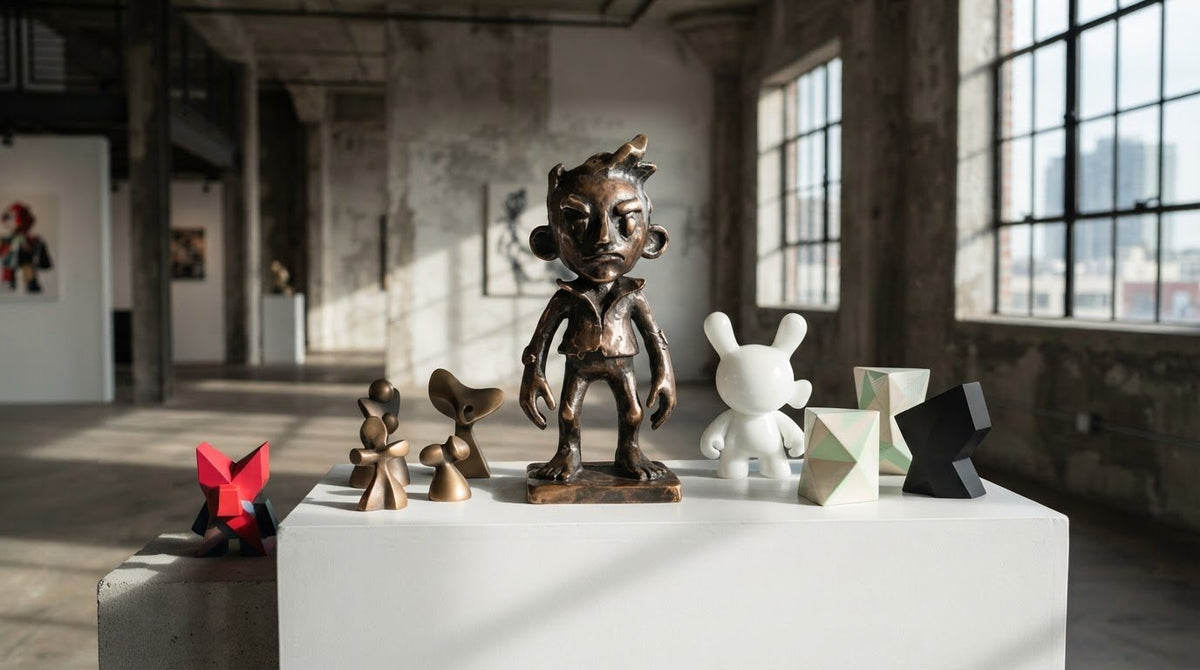
Contemporary Sculpture Collectibles: Material, Character and Authorship
A contemporary sculpture collectible is a physical object whose medium, scale, finish and authorship can be recorded separately. The category label is only a starting point. The object’s stated det...
Read more
Leave a comment
This site is protected by hCaptcha and the hCaptcha Privacy Policy and Terms of Service apply.