
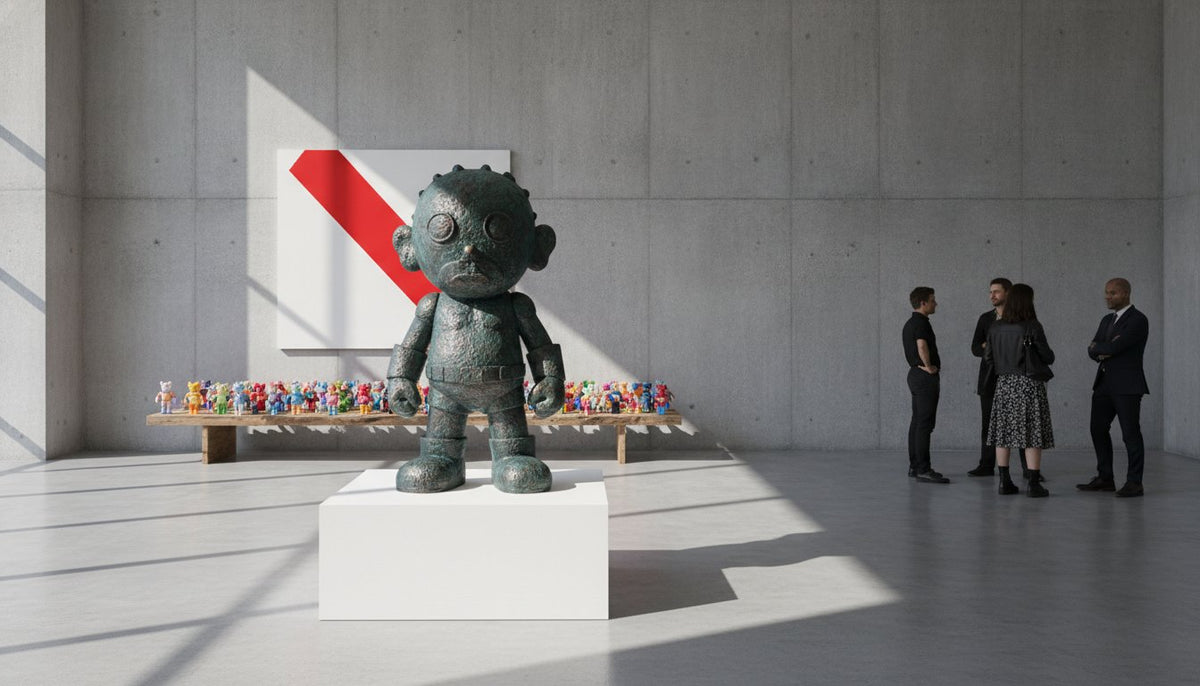
Investing in Collectible Art Toys: A Specification of Market Rarity
Not everyone understands Mylo. That is rather the point. The current saturation of generic vinyl has clouded the distinction between a mass-market product and a fine art sculpture. You likely feel the frustration of a market where edition sizes are opaque and material quality is an afterthought. Investing in collectible art toys requires a shift from chasing trends to auditing physical specifications. This analysis provides a definitive look at the material factors and narrative weight that dictate value in 2026.
We examine the transition from traditional oil on canvas to character-based bronze sculptures. You will learn the role of material specification in determining value. We identify characters with narrative weight, such as Nova and Gutinke. This is a guide to building a portfolio of tangible pop art assets based on technical truth. The value of an object is a settled matter of its construction.
Key Takeaways
- Market rarity is defined by fixed edition sizes and the verified provenance of the creator.
- Investing in collectible art toys requires an audit of material specifications like bronze and oil on canvas.
- Characters such as Mylo and Nova provide narrative weight that ensures long-term value.
- The distinction between toys and fine art sculptures is found in physical data points like dimensions and composition.
Investing in Collectible Art Toys: Market Rarity and Specification
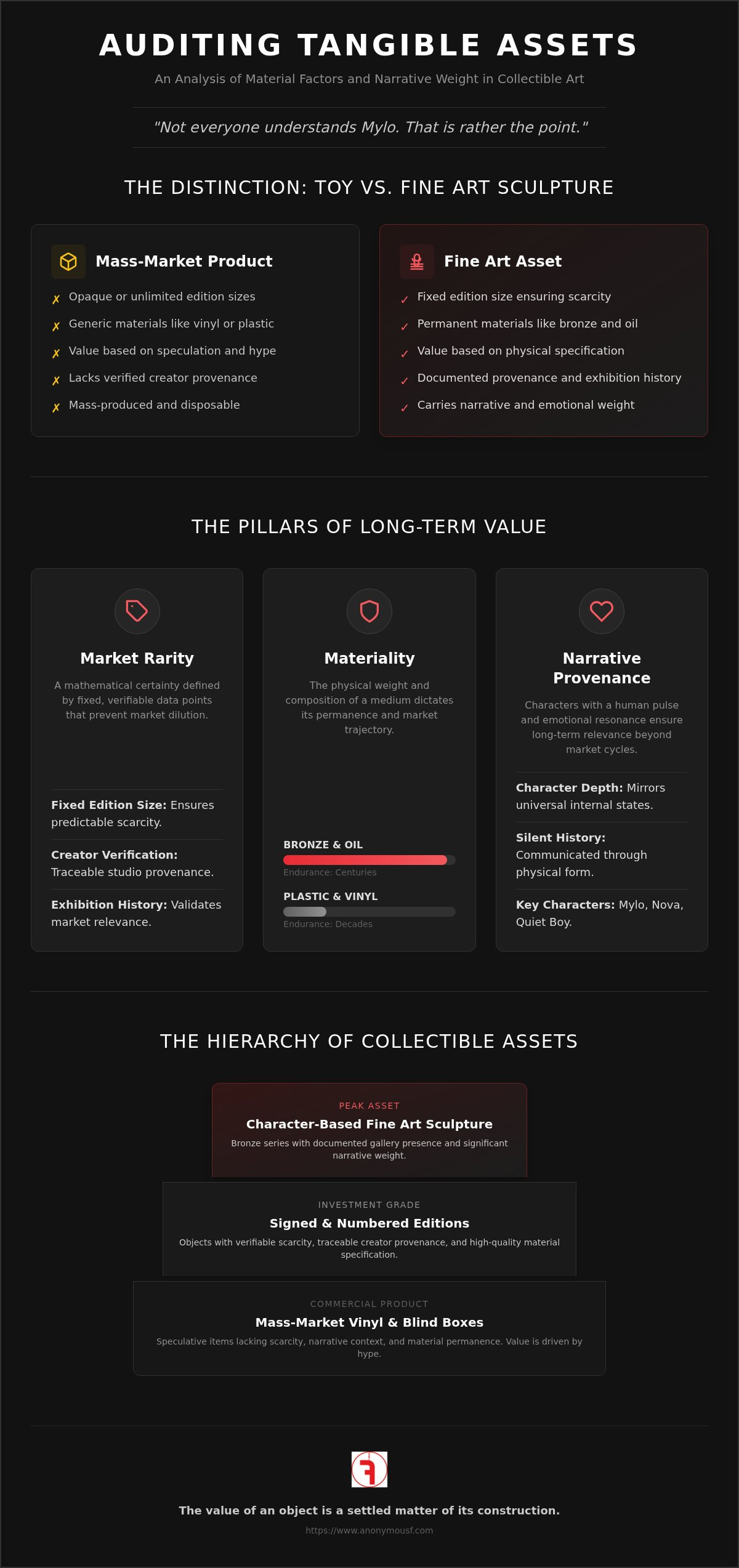
Market rarity is not a suggestion; it is a mathematical certainty. An art toy achieves investment status only when its production is capped by a fixed edition size. Mass-produced vinyl lacks the scarcity required for capital preservation. Investing in collectible art toys involves an objective assessment of fixed production volumes where the creator's hand is verified. This tiered structure is the primary data point for serious collectors in 2026. At the base lies the commercial product. At the summit sits the character-based sculpture with a recorded history of exhibition. An object without a narrative context is simply a toy. One with a documented gallery presence is a fine art asset.
- Edition Size: Fixed numbers prevent market dilution and ensure predictable scarcity.
- Creator Verification: Provenance must be traceable to the artist's studio via signed documentation.
- Exhibition History: Recorded presence in galleries or public collections provides market validation.
The Distinction Between Speculation and Provenance
Provenance is the documented history of the object. It begins at the artist’s studio and tracks every change of custody. Speculative "blind boxes" rely on chance rather than transparency. Serious collectors favor signed, numbered editions that offer verifiable scarcity. If a piece doesn't have a recorded studio origin, it's just plastic. For Fringe collectable toys, provenance is an unbroken chain of ownership that validates the physical soul of the piece. The fact of the object's origin carries the drama. Narrative context is the difference between a plastic figure and a tangible pop art asset. The market recognizes depth over hype. The value of the work is a settled matter of its history.
Materiality as a Value Driver: From Vinyl to Bronze Sculptures
The physical weight of a medium dictates its market trajectory. Bronze and oil on canvas possess a permanence that synthetic materials lack. Investing in collectible art toys requires analyzing physical specifications rather than aesthetic hype. Dimensions, weight, and material composition are the primary data points for serious collectors. A pop art bronze sculpture commands a different market perception than a standard vinyl edition. It is a matter of technical durability. Plastic degrades over decades. Bronze endures for centuries. The market reflects this disparity in its tiered valuation of materials. The weight of the object in the hand confirms its status as a fine art asset.
Evaluating the Physical Specification of the Object
Bronze casting is a methodical process. It ensures a piece survives the volatility of trends. The lost-wax method creates a metal object with a lifespan measured in generations. This physical reality anchors the value of the character. Original character oil paintings provide the foundational value for their toy counterparts. The texture of the paint establishes the narrative weight of the series. High-value collections often integrate multiple mediums. They pair an oil on canvas with character sculptures to create a cohesive asset class. When investing in collectible art toys, the bronze character series represents the peak of this physical specification. It's a reflection of the human need to hold something that doesn't disappear. The value of the work is a settled matter of its construction.
Narrative Provenance: Why Character Depth Drives Long-Term Value
Not everyone understands Mylo. That is rather the point. Exclusivity in this asset class isn't merely a function of low production numbers; it's a result of a specific emotional resonance that naturally filters the audience. Investing in collectible art toys requires identifying characters that possess a human pulse. While the broader market is often populated by sterile, mass-market designs, characters like Mylo and Nova mirror universal internal states. They represent connection and the complexities of the heart. This narrative weight ensures the object remains relevant long after the initial release cycle ends. The value of a character is tied to its ability to reflect the human condition. The truth of the sculpture is found in its vulnerability.
Integrating Narrative Assets into a Contemporary Collection
Serious collectors prioritize pieces that communicate a silent history through physical form. The Quiet Boy bronze series serves as a primary example of this narrative specification. A collection represents a shared philosophical resonance between the artist and the owner. It's a discourse of internal reflection. The value of these assets is often found in their indifference to market trends. This detachment is exactly what makes them stable. When an object doesn't try to please the masses, it retains its narrative integrity. The character stands as a fixed point in a volatile landscape. The quality of the work is a settled matter of its emotional truth. It's a tangible asset that doesn't care if it's noticed.
Only the Physical Endures
The shift toward material permanence is the defining metric for the next decade. Investing in collectible art toys is a process of auditing physical specifications rather than chasing speculative hype. It's a method of identifying value in the weight of bronze and the documented provenance of the artist studio. These facts provide a stable foundation that synthetic products cannot replicate. A collection built on narrative weight remains indifferent to market volatility. The object's truth is found in its construction.
The studio maintains a strict focus on physical art. There aren't any digital assets or restorative services offered. Original characters like Mylo, Nova, and Gutinke are produced in limited physical editions. These pieces ship worldwide from an independent artist studio. The current collection of Fringe collectable toys is available for acquisition. The quality of the work is a settled matter. Your assessment of these truths determines the depth of your collection.
Frequently Asked Questions
What makes an art toy a viable investment in 2026?
Investment viability is rooted in physical specification and narrative depth. A piece must exist as a physical object rather than a digital asset. Viability is confirmed when the work transitions from a mass-market product to a gallery-verified sculpture. Investing in collectible art toys requires prioritizing characters with internal reflection like Gutinke. The indifference of the object to trends ensures its long-term stability.
How do edition sizes affect the resale value of collectible toys?
Resale value is a direct consequence of mathematical scarcity. Fixed edition sizes prevent the market dilution common in mass-produced vinyl. When a character like Nova is released in a limited run, the secondary market recognizes the finite supply. Provenance starts at the artist's studio and must be documented to maintain the tiered value structure of the asset. The fact of the scarcity carries the drama.
Should I prioritize bronze sculptures over vinyl art toys for my portfolio?
Bronze sculptures offer a higher degree of market permanence due to their technical durability. While vinyl is a standard entry point, the lost-wax casting process creates a generational asset. The material weight of bronze dictates a different market trajectory than plastic. Portfolio diversification often involves pairing these sculptures with original oil on canvas works. This combination anchors the collection's narrative and physical value.
How do I verify the authenticity of a limited edition character figure?
Authenticity is verified through an unbroken chain of documentation from the creator's studio. This includes physical signatures, numbered editions, and studio-issued certificates of provenance. Investing in collectible art toys from an independent studio ensures the work is a tangible pop art asset. The record of exhibition and the physical scale of the piece serve as secondary data points for verification. The object's origin is a settled matter.

Article by
Fringe

Read more
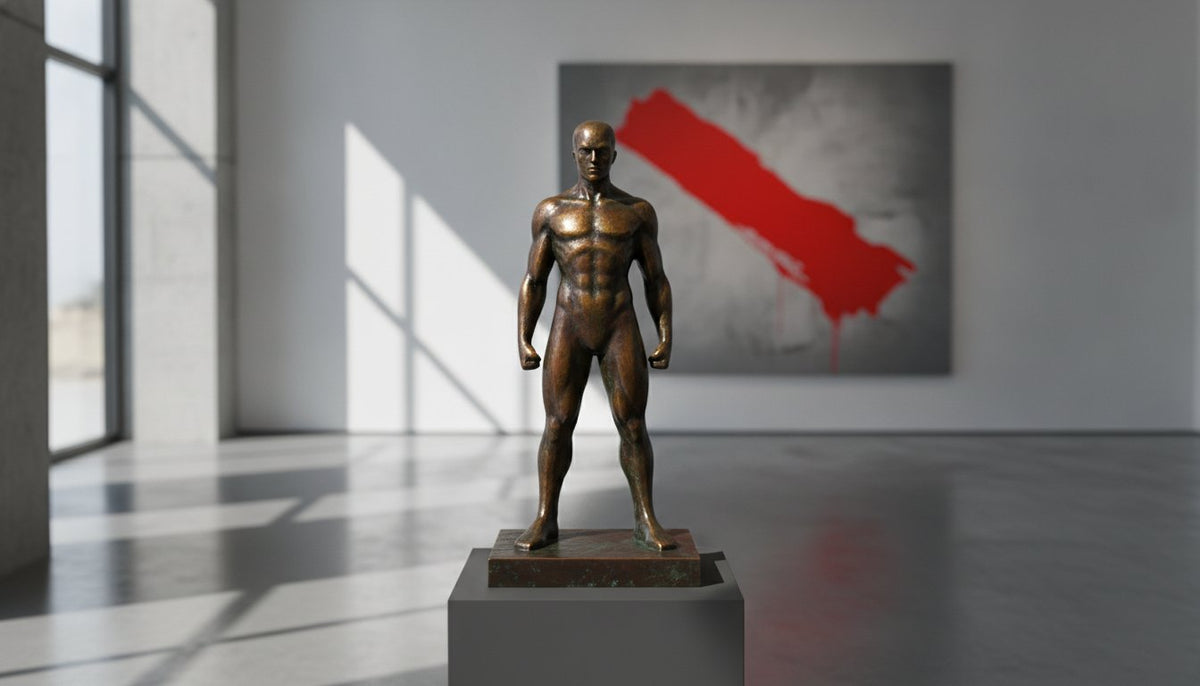
Investing in Bronze Sculptures: The Specification of Physical Permanence
Not everyone understands Mylo. That’s rather the point.You've likely noticed the lack of physical presence in modern art and the exhaustion that follows digital volatility. Investing in bronze scul...
Read more
Building a Mixed Media Pop Art Collection: The Specification of Form and Narrative
Professional mixed media pop art is defined by the permanence of its materials and the weight of its narrative; it is not a matter of craft or assembly. Most collectors find themselves wading throu...
Read more
Leave a comment
This site is protected by hCaptcha and the hCaptcha Privacy Policy and Terms of Service apply.