
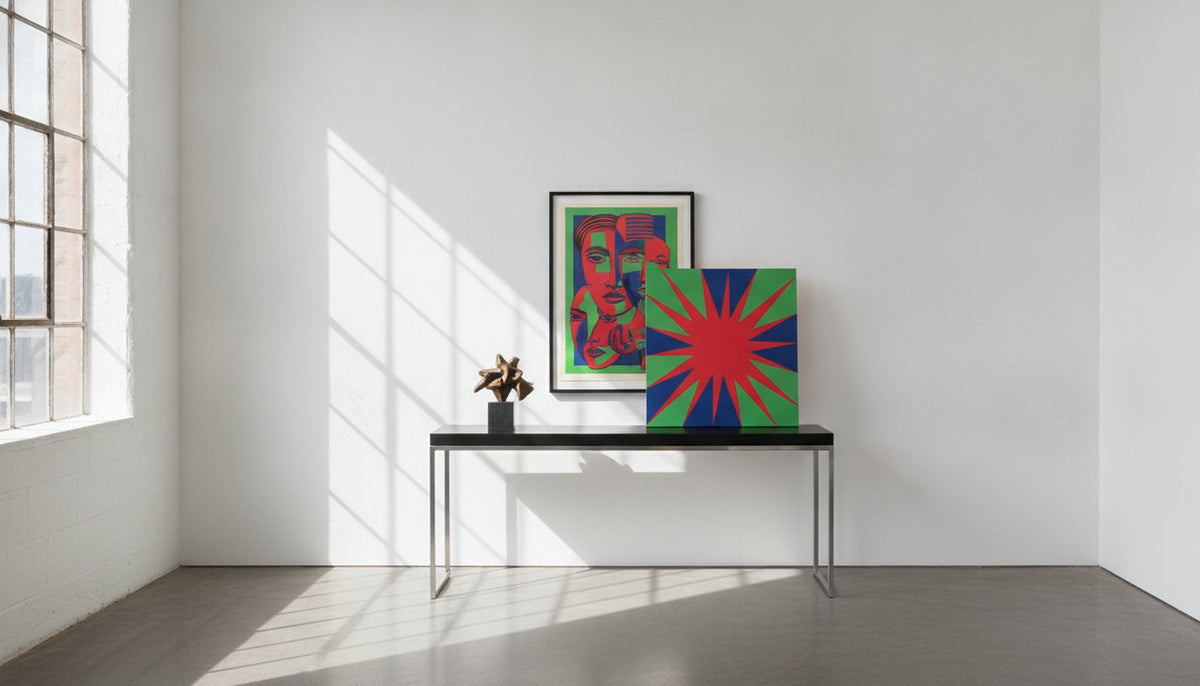
Building a Mixed Media Pop Art Collection: The Specification of Form and Narrative
Professional mixed media pop art is defined by the permanence of its materials and the weight of its narrative; it is not a matter of craft or assembly. Most collectors find themselves wading through a market saturated with low-quality DIY projects that lack structural integrity. It's difficult to find a thread of logic between a bronze casting and an oil painting when the industry hides behind vague gallery language. Not everyone understands the technical friction between these mediums. That's the point.
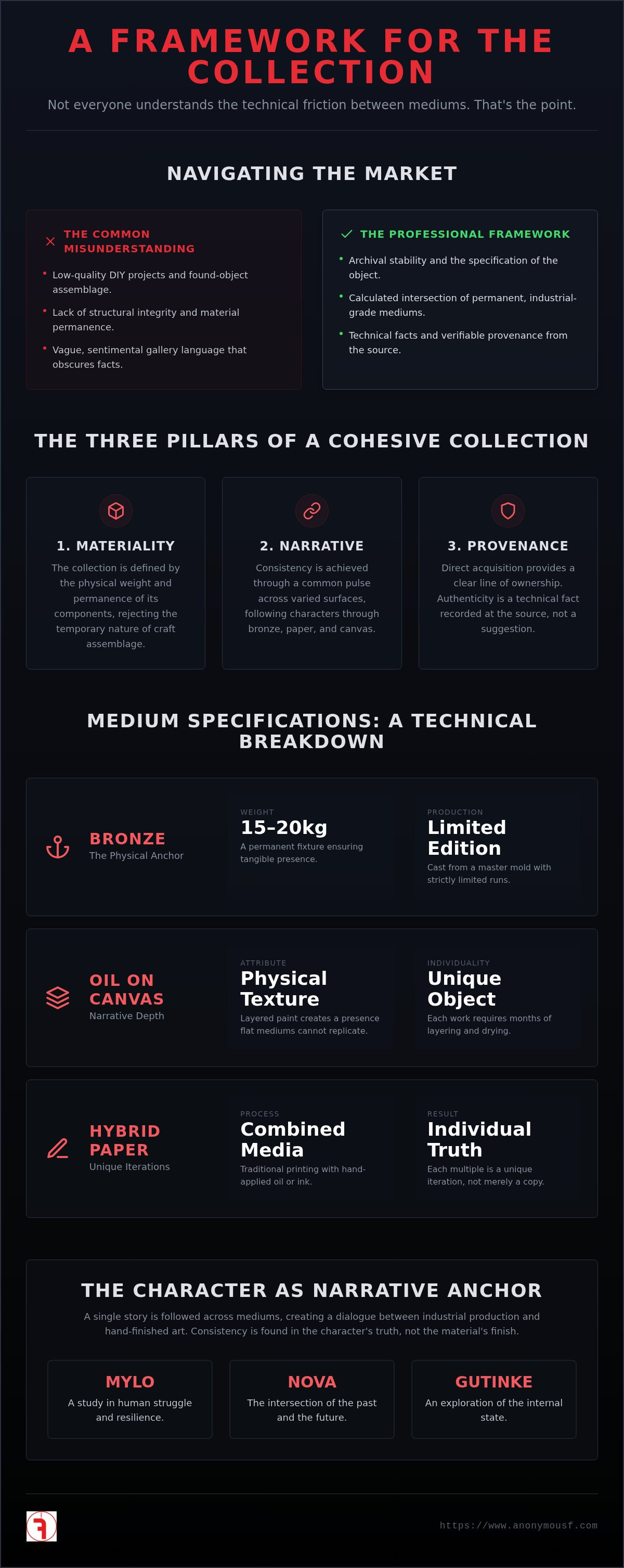
Building a mixed media pop art collection requires a framework that prioritizes material facts over sentimentality. This article provides the specifications for acquiring works in bronze, oil on canvas, and hybrid paper directly from an independent studio. You'll learn the specific technical requirements for these mediums and how to maintain a cohesive narrative. We'll examine the standards that ensure a collection functions as a unified whole rather than a fragmented assembly of objects.
Key Takeaways
- Identify technical requirements for archival stability in mixed media works. Professional pieces prioritize material permanence over the temporary nature of DIY assemblage.
- Building a mixed media pop art collection is achieved through narrative consistency across mediums. Collectors follow characters like Mylo and Nova through bronze, paper, and canvas.
- Navigate the mechanics of direct acquisition from an independent studio. This process ensures the provenance of the work without the sentimentality of the gallery world.
- Evaluate the specific numbering and signed authentication of limited edition prints and sculptures. These facts establish the technical weight of the physical collection.
The Materiality of Mixed Media: Beyond the Assemblage
Mixed media is often misunderstood as a casual craft. That is a mistake. For the serious collector, it is a calculated intersection of permanent physical mediums. Building a mixed media pop art collection begins with the specification of the object rather than the sentiment of the gallery. Fine art mixed media prioritizes archival stability. It rejects the temporary nature of found-object assemblage in favor of material provenance.
While the history of mixed media includes experiments with ephemeral materials, contemporary pop art relies on the structural integrity of industrial and traditional fine art components. A collection is a physical record of intent. It's defined by the weight of the bronze and the tooth of the canvas.
Bronze, Oil, and Hybrid Paper: The Durability of the Object
Bronze sculptures provide a physical anchor for a collection. A character cast like Quiet Boy weighs between 15kg and 20kg. This mass ensures the object remains a permanent fixture in a space. It represents a commitment to the tangible world.
Oil on canvas works utilize texture and layering to create a narrative depth that flat mediums cannot replicate. The paint has a physical presence. It catches light in ways that digital reproductions cannot mimic. Oil on canvas remains the standard for narrative permanence.
Hybrid works on paper combine traditional printing with hand-applied oil or ink. These pieces ensure that each multiple has a unique material truth. They aren't merely copies. They're individual iterations of a character's internal state. The specification of these materials determines the soul of the collection.
Assembling Narrative Cohesion Across Diverse Mediums
A collection is built through the repetition of narrative themes rather than stylistic consistency. When building a mixed media pop art collection, the collector looks for a common pulse across varied surfaces. The value of the work is found in the interplay between the heavy permanence of metal and the vulnerability of paper. Historical precedents, such as those examined in the Mixed Media and Pop Art exhibition, demonstrate that narrative weight often matters more than visual uniformity. A bronze sculpture provides a grounding force, while a hybrid work on paper offers a more intimate, fragile reflection of the same concept.
The Character as Anchor: Mylo, Nova, and Gutinke
Character-based art allows a collector to follow a single story across bronze, paper, and canvas. The Mylo character collection serves as a study in human struggle and resilience. Nova represents the intersection of the past and the future, often depicted in high-contrast oil on canvas. Gutinke completes this triad by exploring different facets of the internal state. Integrating Fringe collectable toys alongside bronze sculptures creates a dialogue between industrial production and hand-finished art. This contrast highlights the duality of modern existence. The industrial object and the hand-finished bronze exist in the same narrative space. For those seeking to expand this dialogue, the Nova collection provides a specific contrast in scale and medium. Consistency is found in the character's truth, not the material's finish.
Provenance and Acquisition: The Mechanics of the Independent Studio
Acquiring art directly from an independent studio ensures the provenance of the piece. This model removes the gallery filter. It allows the collector to access the artist's direct narrative without the secondary interpretation of a dealer. Building a mixed media pop art collection through direct acquisition provides a clear line of ownership. Authenticity is not a suggestion; it's a technical fact recorded at the source. Limited edition prints and sculptures are defined by their specific numbering and signed authentication. These documents are structural components of the acquisition process. They provide the necessary friction against the saturation of low-quality crafts found elsewhere.
Direct Acquisition and Limited Edition Specifications
Every bronze pop art sculpture is cast from a master mold. Edition sizes are strictly limited to ensure rarity. This is a matter of the physical limitations of the casting process and the preservation of the work's integrity. Oil on canvas works are unique physical objects. They require months of layering and drying before they're ready for a collection. The drying time of the oil-based pigment is a fixed physical requirement. The independent studio maintains the records of every edition, providing a level of transparency that's often missing in the broader market.
The fact of the material, whether it's 310gsm paper or the specific weight of a character cast, is the primary driver of value. The collector is treated as a peer who understands the technical requirements of archival stability. There's no need for the flowery language of a traditional showroom. The narrative weight of the characters is supported by the physical weight of the objects. The provenance is established the moment the work leaves the studio.
The Permanence of the Narrative Anchor
Building a mixed media pop art collection is a deliberate exercise in identifying archival stability through bronze, oil on canvas, and hybrid paper. Characters like Mylo and Nova serve as the narrative anchors, existing at the intersection of industrial production and hand-finished truth. When provenance is established directly through the studio, the collector gains access to the undecorated reality of the work without the interference of a gallery filter.
The value of an edition is a settled matter of its physical specifications and numbering. These objects exist to endure. You can view the oil on canvas collection to see how texture and layering define the character's internal state. A collection built on these principles remains a steady record of connection and struggle. It is a commitment to the physical world.
Technical Specifications and Collector Inquiries
How do I authenticate a mixed media pop art piece acquired from an independent studio?
Authentication is established through physical documentation provided at the point of sale. Every piece includes signed authentication and specific edition numbering for bronze and paper works. Direct acquisition from the independent studio creates an unbroken chain of provenance when building a mixed media pop art collection. This record remains the primary proof of origin. It eliminates the ambiguity often found in the secondary gallery market.
What is the difference between a hybrid art piece on paper and a standard art print?
A hybrid art piece on paper combines traditional printing with hand-applied oil or ink. While a standard print is a flat reproduction, the hybrid contains physical texture and unique material variations. It's an individual iteration rather than a mechanical copy. These works are typically executed on 310gsm paper to ensure archival stability. This process is essential when building a mixed media pop art collection.
How should I display bronze sculptures alongside oil on canvas paintings?
Displaying bronze sculptures alongside oil on canvas requires a balance of weight and light. Bronze casts weighing 15-20kg should be placed on stable pedestals or industrial shelving. These physical anchors provide a counterpoint to the layered texture of the canvas. Position the bronze to catch natural light, highlighting the patina. This arrangement creates a dialogue between the permanence of metal and the narrative depth of the oil-based pigment.
Why is character-based narrative important in a contemporary art collection?
Character-based narrative provides a cohesive thread across diverse physical mediums. Characters like Mylo, Nova, and Gutinke allow a collector to follow a specific internal struggle through bronze, paper, and canvas. The narrative gives the collection a logical structure that transcends material differences. It transforms a group of objects into a unified study of human resilience. The character acts as the soul of the physical object.

Article by
Fringe

Read more
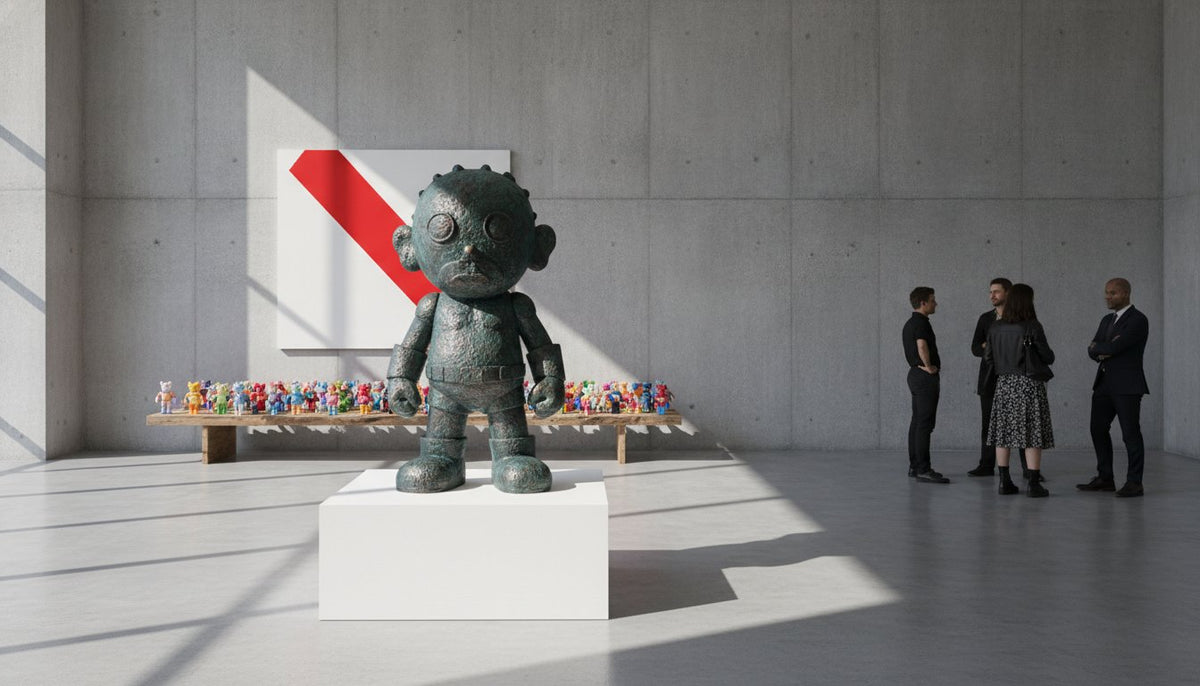
Investing in Collectible Art Toys: A Specification of Market Rarity
Not everyone understands Mylo. That is rather the point. The current saturation of generic vinyl has clouded the distinction between a mass-market product and a fine art sculpture. You likely feel ...
Read more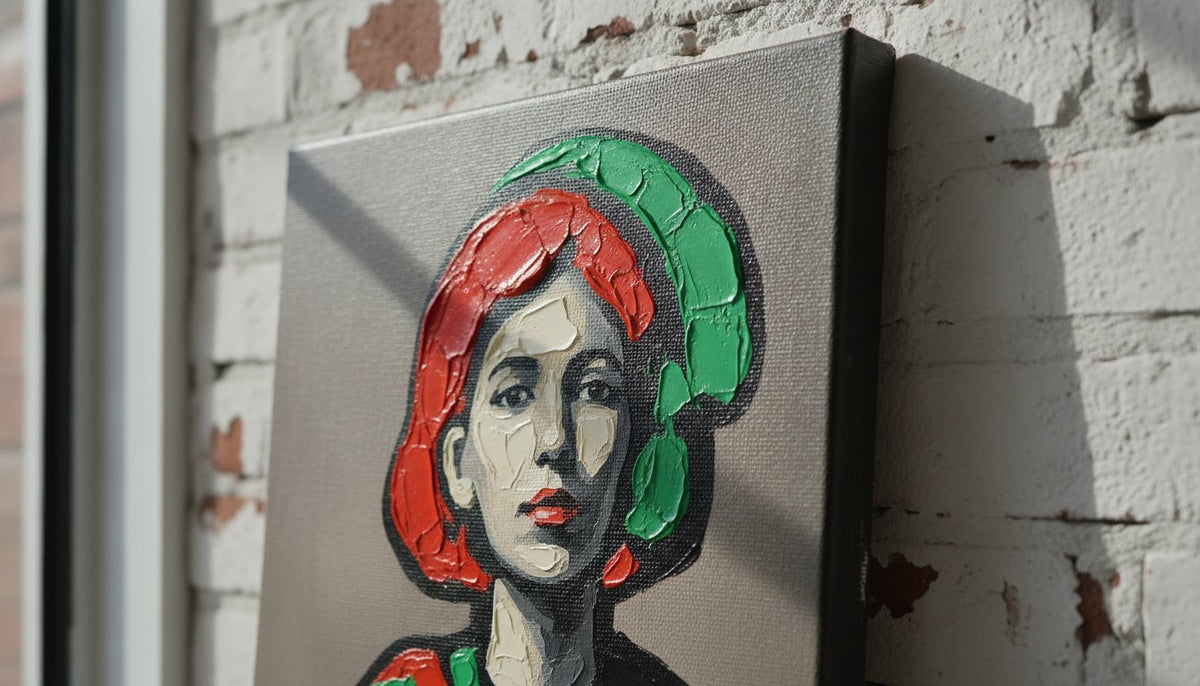
Investing in Pop Art Oil Paintings: The Specification of the Physical Object
Not everyone understands the weight of a physical object. Most are content with the flat convenience of a digital file or a mass-produced print. Investing in pop art oil paintings requires a differ...
Read more
Leave a comment
This site is protected by hCaptcha and the hCaptcha Privacy Policy and Terms of Service apply.