
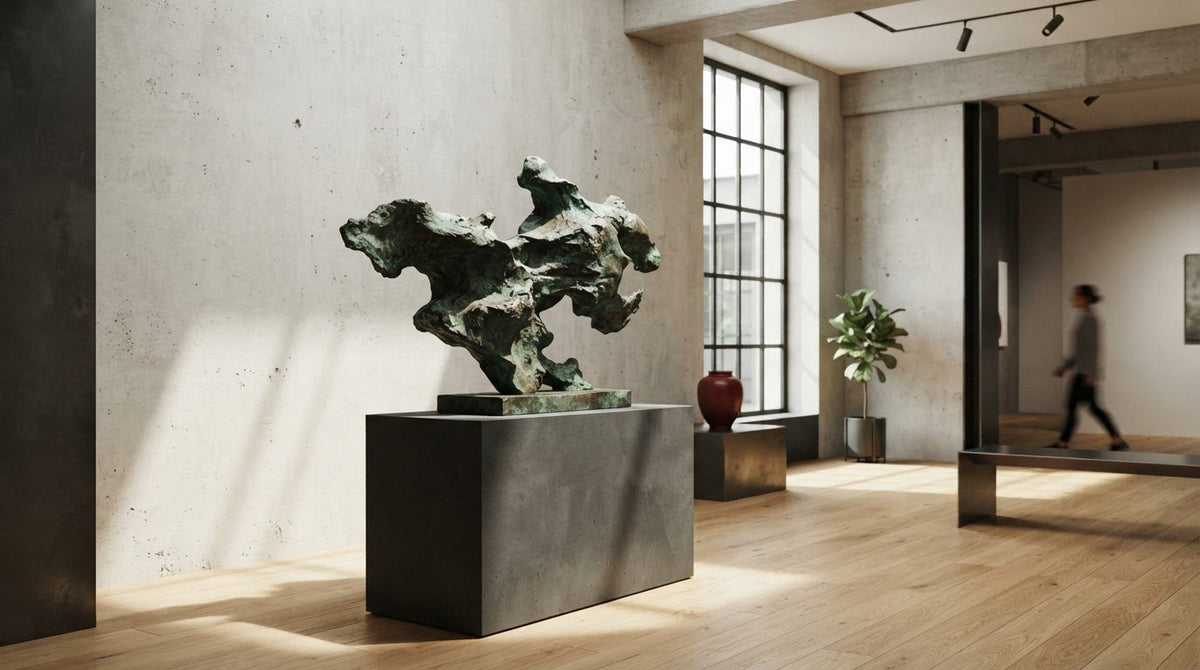
Pedestals and Stands for Bronze Sculptures in Modern Interiors
Choosing bronze sculptures for modern interiors means considering both the artwork and how it will be displayed. A pedestal should support the sculpture, provide stability, and set it at a suitable viewing height. Start with the work’s dimensions, weight, and base configuration, then consider how the support’s material and finish relate to the room.
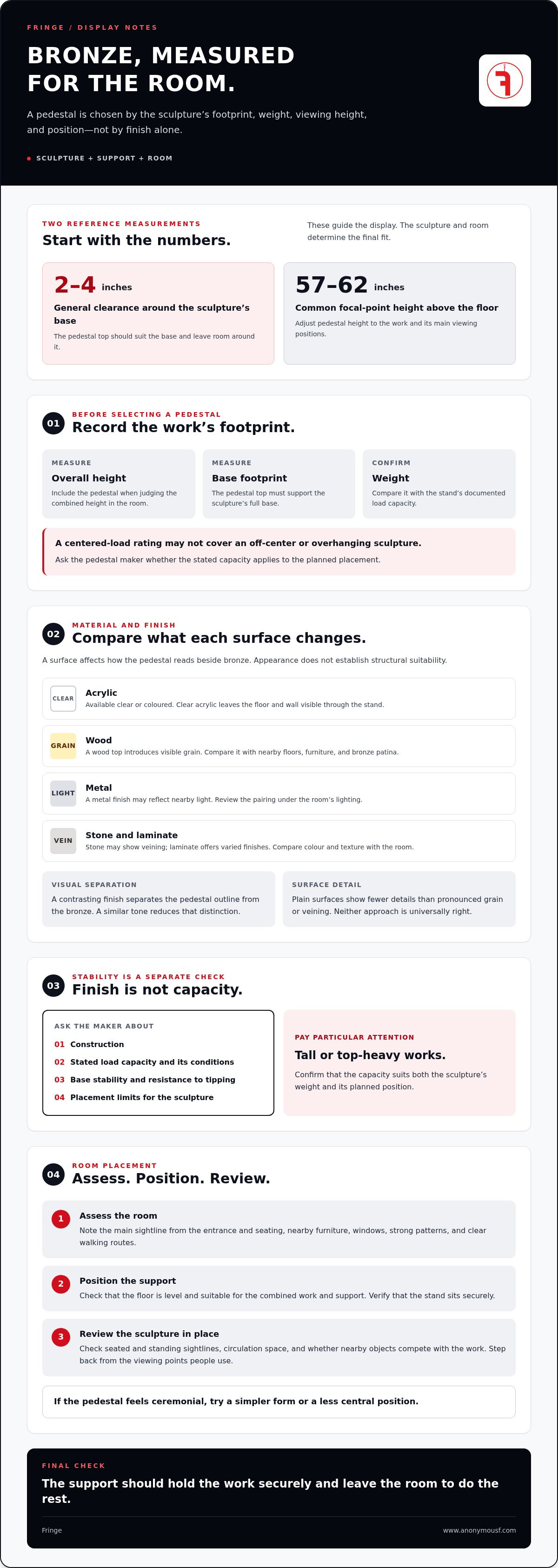
Scale, stability, and finish all matter. A pedestal’s stated capacity may assume a centered load, so an off center or overhanging sculpture needs particular attention. The top should suit the sculpture’s base, with a general clearance of two to four inches around it.
This guide explains how to assess a bronze sculpture, choose a compatible pedestal, and review the display before installation. For gallery style viewing, the sculpture’s focal point is commonly set 57 to 62 inches above the floor, with pedestal height adjusted to the work. The support should do its job quietly.
Key Takeaways
- When choosing bronze sculptures for modern interiors, assess the sculpture’s footprint, height, and viewing angle before selecting a support.
- Compare acrylic, wood, metal, and stone by how each relates to the bronze’s surface and the room’s existing materials.
- Check a stand’s documented load capacity and construction separately from its appearance, especially for tall or top heavy works.
- Assess the room before placing the stand, then review sightlines. A simple form and considered position can keep a pedestal from feeling formal.
How to Match a Bronze Sculpture Pedestal to the Work
Record the sculpture’s height, base footprint, and weight before comparing supports. When choosing bronze sculptures for modern interiors, these measurements set practical limits: the pedestal top must accommodate the base, and the stand’s stated capacity must suit the sculpture’s weight.
Pedestal height adds directly to the sculpture’s overall height. Assess the combined height from the room’s main viewing positions, including seated and standing sightlines. A raised viewpoint can reveal details on a sculpture’s upper surface; a lower viewpoint changes how its silhouette reads. Consider the open space around the work too. Compare its outline with nearby furniture and wall edges rather than judging it in isolation. The bronze sculpture overview provides context on the medium and casting process.
Visual balance is the fit between the sculpture’s measured footprint, the pedestal’s top and height, and the open space around them. The dimensions can be checked, while the appropriate relationship depends on the specific work and room.
Which sculpture measurements should guide pedestal choice?
Ask the maker to confirm the sculpture’s overall height, base footprint, and weight. Check that the pedestal top supports the full base and that the stand’s stated load capacity applies to the planned placement. Capacity ratings may assume a centered load, so ask for specific guidance if the sculpture will sit off center.
Fringe’s Quiet Boy bronze sculpture is one example to assess using the artwork’s published dimensions and display details. Confirm those details for the individual work before selecting a pedestal. When comparing sculptures, consider how each work’s scale, outline, and surface will read in the intended room, not just how it looks in isolation.
Compare Pedestal Materials, Finishes, and Stability
Acrylic is available clear or coloured, while wood, metal, stone, and laminate offer different surfaces and finishes. Compare those surfaces with the bronze’s patina and the room’s existing materials. A clear acrylic stand leaves the floor and wall visible through it; a wood top introduces visible grain; a metal finish may reflect nearby light. These are observable differences, not evidence of structural suitability.
When choosing bronze sculptures for modern interiors, assess the actual sculpture and pedestal together under the room’s lighting. Matte and reflective surfaces can change how light reaches the sculpture. Grain, veining, and colour also affect how the pedestal relates to nearby floors, furniture, and walls. The best visual fit depends on the specific pairing.
How can a pedestal complement bronze without distracting from it?
Compare the sculpture’s outline and surface detail with the pedestal’s shape, colour, and texture. A plain pedestal has fewer visible details than one with pronounced grain or veining. A contrasting finish separates the pedestal’s outline from the bronze; a similar tone reduces that distinction. Neither approach is universally right. Where possible, view the sculpture and pedestal together from the room’s main sightlines.
Evaluate stability separately from appearance. Ask the pedestal maker about the unit’s construction, stated load capacity, and any conditions attached to that rating. Confirm that the rating suits the sculpture’s weight and planned position. For tall or top heavy works, pay particular attention to the base and resistance to tipping.
Confirm the pedestal’s dimensions, construction, rated capacity, base stability, and any placement limits with its maker. A finish describes the surface; it does not establish capacity.
Choosing Bronze Sculptures for Modern Interiors: Placement and Pedestals
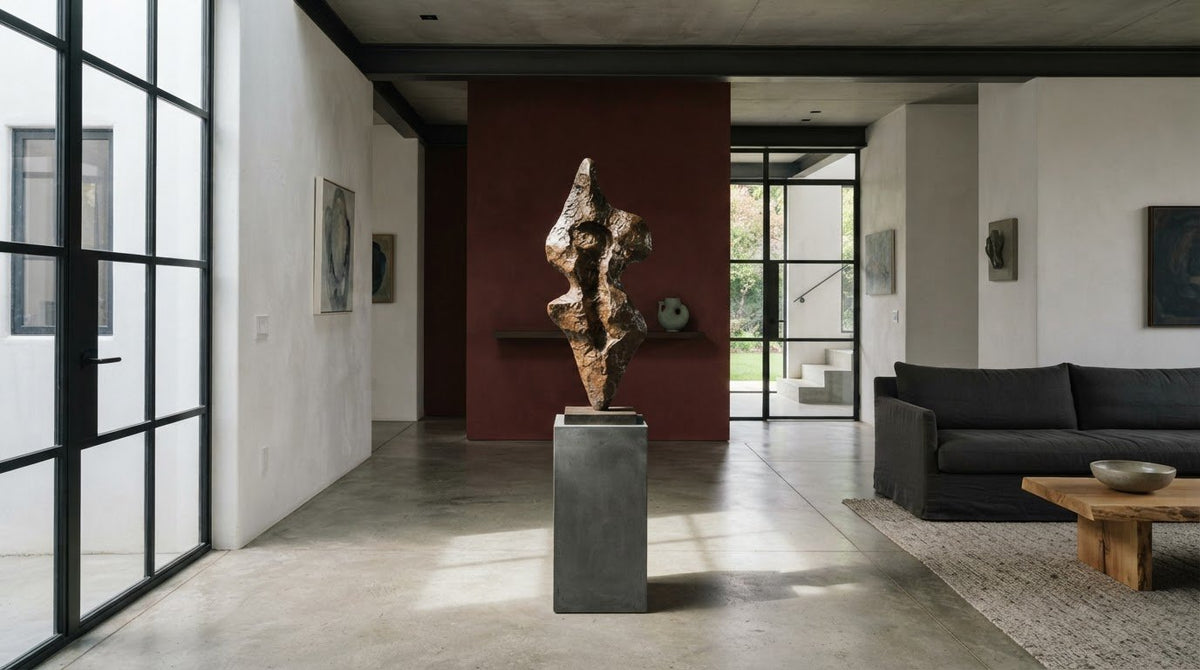
A pedestal need not make a modern room feel formal. Its effect depends on placement, proportion, and how clearly it separates the sculpture from nearby furniture. Choosing bronze sculptures for modern interiors also means assessing the room before settling on a display position.
Use a simple sequence: assess the room, position the support, then review the sculpture from the angles people actually use. Check the main sightline from the entrance and seating. Leave circulation space around the stand, and note whether furniture, windows, or strong patterns compete with the work. If the pedestal feels ceremonial, try a simpler form or a less central position.
What should you check before settling on the display?
Review the viewing height, clear walking routes, nearby furniture, and the sculpture’s presence against the room. Step back from the intended viewing points. The stand should keep the work visible without blocking movement or crowding adjacent objects. Consider how the sculpture relates to the room’s existing arrangement, as discussed in this article on displaying a contemporary art collection.
- Check the floor: Confirm that the surface is level and suitable for the combined work and support.
- Check the support: Verify that the stand sits securely in the selected position.
- Check sightlines: Review the sculpture from standing and seated viewpoints.
If the floor’s capacity or the support’s suitability is uncertain, ask a qualified professional rather than guessing. Fringe’s bronze work can help you consider how a pop art sculpture reads in a room, but the individual artwork’s dimensions and display details should guide its placement.
Let the Sculpture Set the Terms
The support should follow the work. Confirm the sculpture’s height, footprint, and weight before choosing a pedestal, then check the stand’s documented capacity and construction rather than judging by appearance alone.
Material and finish shape the relationship between bronze, pedestal, and room. A restrained surface can recede; contrast can define the sculpture. Neither choice works in every setting. Review the pairing in the room, including sightlines, circulation, and nearby furniture.
When choosing bronze sculptures for modern interiors, visual balance comes from proportion and placement, not a fixed formula. The stand should remain stable and let the artwork hold attention without making the room feel formal.
Measure first, verify the support, then assess the display from the viewpoints that matter. A considered choice gives the sculpture a secure place in the room.
Frequently Asked Questions
How tall should a pedestal be for a bronze sculpture?
There’s no universal pedestal height for a bronze sculpture. Choose based on the sculpture’s dimensions and intended viewing angle, then consider ceiling height, nearby furniture, and where people will view it. Assess the combined height of the sculpture and pedestal in the room rather than selecting a stand by height alone. Confirm the artwork’s display requirements with its maker before finalizing the position.
What material is best for a bronze sculpture stand?
No single pedestal material is best for every bronze sculpture. Acrylic, wood, metal, and stone each create a different relationship with the sculpture’s surface and the room’s materials. Choose a finish for its visual fit, then assess structural suitability separately. Confirm the specific stand’s construction and stated load capacity with its maker; material and appearance alone don’t establish whether it can safely support the work.
Can a bronze sculpture sit directly on a pedestal?
A bronze sculpture can sit directly on a pedestal only if its base suits the pedestal’s surface and dimensions. Sculptures can have different base configurations, so don’t assume direct contact is appropriate. Confirm with the artwork’s maker whether the surfaces can meet, whether the work sits stably, and whether a mounting method is required. Ask a qualified installer if the installation details remain uncertain.
How do I choose a pedestal for a modern interior?
Choose a pedestal by assessing the sculpture’s scale and finish alongside the room’s layout and sightlines. When choosing bronze sculptures for modern interiors, judge whether the support frames the work or competes with it, and whether its placement leaves clear circulation space. If possible, assess the actual sculpture and stand together in the room. The right choice depends on that specific pairing, not a prescribed modern style.
Explore Fringe’s bronze sculptures, including Quiet Boy, and use the artwork’s dimensions and display details to plan a suitable place in your interior.

Article by
Fringe

Read more
How to Display Sculptures in Your Home: A Practical Guide
Knowing how to display sculptures in your home starts with the object itself: its dimensions, shape, and the space it needs to remain visible. Placement depends on the sculpture and how people use ...
Read more
How to Clean a Bronze Sculpture Safely: A Collector’s Guide
Polish is not proof of care. If you’re searching for how to clean a bronze sculpture safely, first distinguish loose dust from patina, corrosion, or another surface change. The goal of routine clea...
Read more
Leave a comment
This site is protected by hCaptcha and the hCaptcha Privacy Policy and Terms of Service apply.