
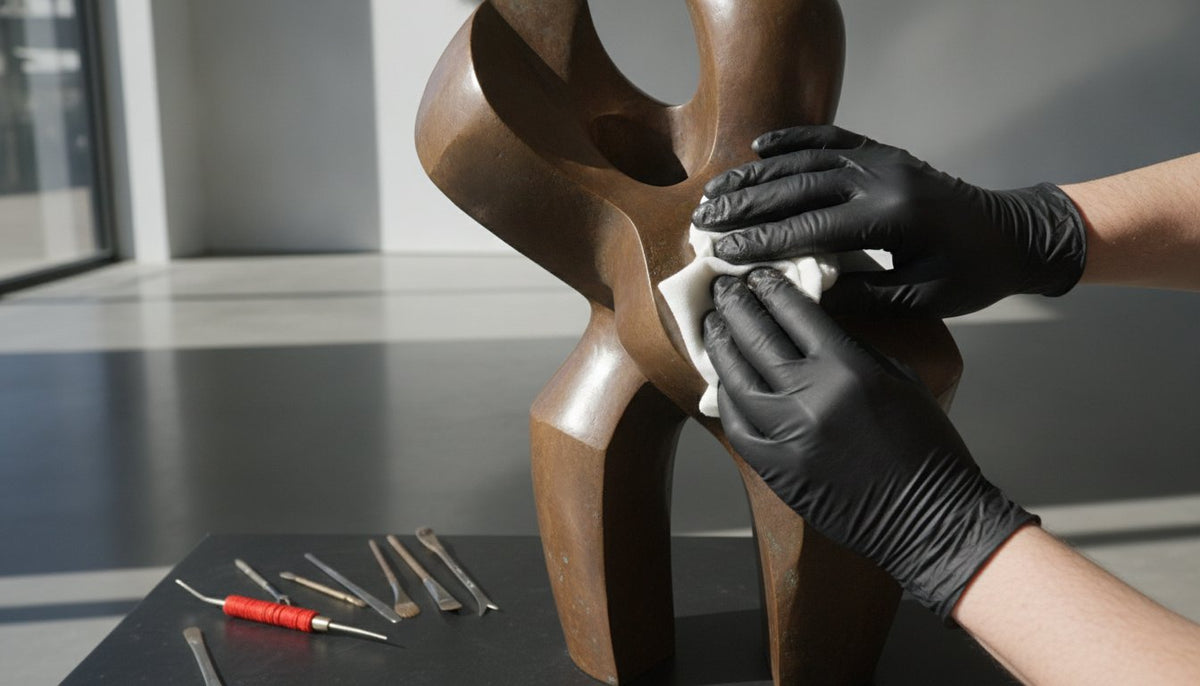
How to Care for a Bronze Sculpture: A Technical Specification
Not everyone understands that a bronze sculpture is a living chemical record. That's rather the point. To own a solid bronze piece is to accept stewardship of a surface that never truly stops reacting to its environment. If you've held a Mylo or Nova, you've felt the physical weight of this permanence. Learning how to care for a bronze sculpture is not a matter of aesthetics; it's a technical requirement for managing a perpetual chemical dialogue between the alloy and the atmosphere.
You likely worry that an incorrect cleaning agent or a lapse in maintenance might lead to irreversible oxidation. It's a rational concern for any serious collector. This protocol provides a factual, non-sentimental framework for preserving the material integrity of your work. We will detail the specific application of archival microcrystalline waxes, clarify why products like SC Johnson’s Paste Wax are no longer viable options after their 2021 discontinuation, and establish a maintenance schedule that ensures your bronze retains its narrative depth for generations.
Key Takeaways
- Bronze is a copper-based alloy where the patina acts as a controlled oxidation layer requiring precise chemical stabilization.
- Master the technical protocol for how to care for a bronze sculpture by removing particulate matter without the use of abrasive mechanical force.
- Evaluate placement based on atmospheric reactivity and the structural requirements of solid bronze, which has a density of approximately 8.8 g/cm³.
- Utilize archival microcrystalline waxes to maintain the surface integrity and narrative intent of the work for multiple generations.
The Material Reality: Bronze Chemistry and Patina Stability
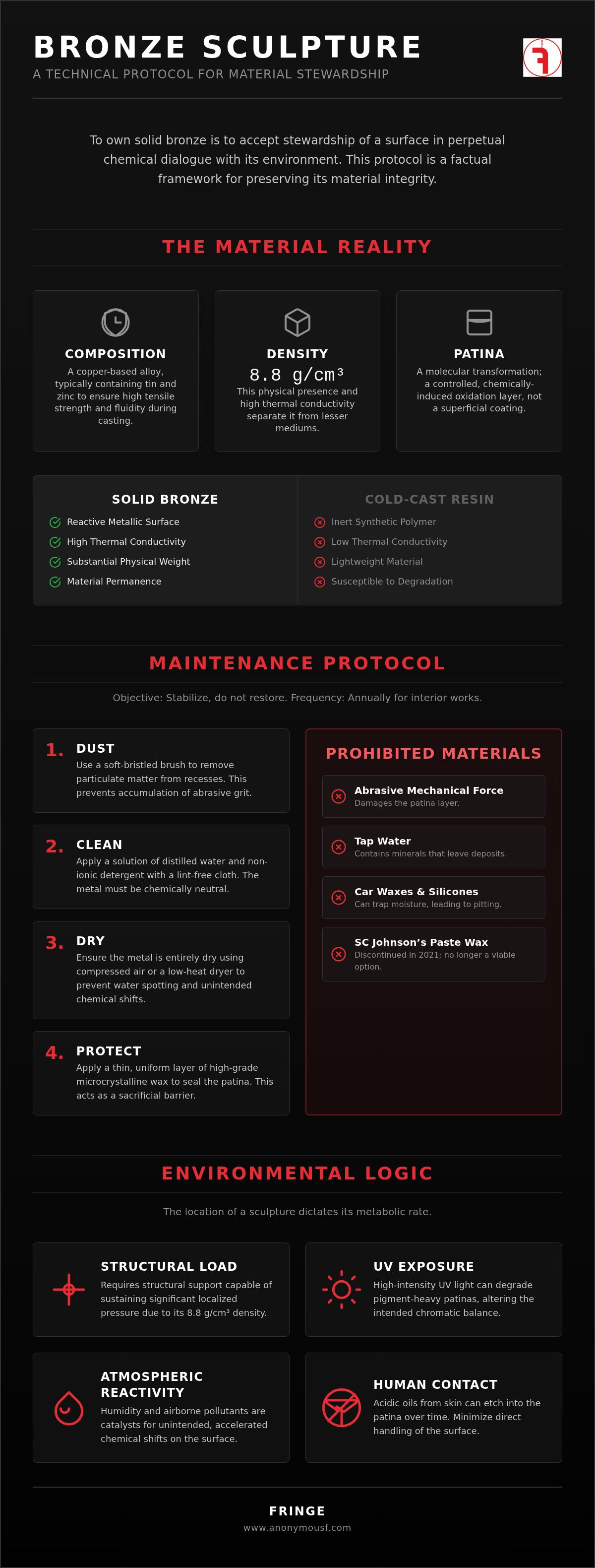
Bronze is a copper-based alloy. It typically contains tin and zinc to ensure high tensile strength and fluidity during the casting process. This specific composition results in a material with a density of approximately 8.8 g/cm³, providing a physical presence that separates it from lesser mediums. Unlike cold-cast resin, which is a synthetic polymer, solid bronze possesses high thermal conductivity and a reactive surface. Understanding how to care for a bronze sculpture requires an awareness of these material truths. Environmental factors like humidity and the acidic oils from human skin trigger unintended chemical reactions that can shift the patina over time.
Understanding the Patination Process
The original surface finish is the result of patination. Foundries use chemical salts and intense heat to force a specific oxidation layer on the metal. This is a molecular transformation rather than a superficial coating. Verdigris is the natural result of copper-acetate or copper-carbonate formation on the surface. When collectors look at the Conservation of outdoor bronze, they see the extreme version of this process. The patina determines the final color and texture of the work. It's the artist's method of freezing a moment of chemical beauty.
The Logic of Material Permanence
Bronze survives for millennia because its oxidation eventually forms a protective seal. This layer prevents the underlying metal from further atmospheric degradation. Character-based forms like Mylo rely on this material stability to maintain their narrative weight across generations. The metal acts as a vessel for the story. While the human heart is fragile, the alloy is indifferent to time. Maintaining the surface isn't about fighting nature; it's about managing the pace of the metal's inevitable evolution. The physical weight of the bronze serves as a permanent marker of artistic intent.
Maintenance Protocol: Surface Intervention and Cleaning
Proper care requires a methodical approach that avoids abrasive mechanical force. The physical weight of the Quiet Boy Bronze Collection demands a cleaning protocol that respects the solid-cast character forms. We don't clean to restore; we clean to stabilize. The primary goal of maintenance is the removal of particulate matter and the stabilization of the protective wax layer. For interior pieces, this intervention should occur on a fixed schedule, typically once per year. Learning how to care for a bronze sculpture is a commitment to the object's narrative longevity.
Step-by-Step Cleaning Specification
Use a soft-bristled brush to remove dust from recesses and character details. This prevents the accumulation of grit that can act as an abrasive. Apply a solution of distilled water and non-ionic detergent with a lint-free cloth. Tap water contains minerals that can leave deposits. Ensure the metal is entirely dry using compressed air or a low-heat dryer to prevent water spotting. Moisture is the catalyst for unintended chemical shifts. The metal must be chemically neutral before any protective layer is applied.
Surface Protection with Microcrystalline Wax
Apply a thin, uniform layer of high-grade microcrystalline wax to seal the patina. This barrier is essential for the professional conservation of outdoor sculptures and interior high-end art alike. Buff the surface with a clean cotton cloth once the wax has reached a matte state. Avoid car waxes or products containing silicones. These substances can trap moisture against the metal, leading to pits or uneven oxidation. The wax acts as a sacrificial layer, absorbing environmental stress so the bronze doesn't have to. If you are managing a growing collection of solid bronze pop art, this protocol remains the industry standard.
Environmental Logic: Placement and Longevity
The location of a sculpture dictates its metabolic rate. It is the silent variable in determining how to care for a bronze sculpture. Solid bronze is a dense alloy, weighing approximately 8.8 g/cm³, which necessitates structural support capable of sustaining significant localized pressure. While light and heat are often viewed as secondary concerns, high-intensity UV exposure can eventually degrade pigment-heavy patinas, altering the artist's intended chromatic balance. Understanding these environmental stressors is central to The Paradox of Permanence: A Guide to Pop Art Bronze Sculpture.
Interior vs. Exterior Specifications
Interior environments provide a shield against the volatility of the weather, yet they introduce the subtle risk of human contact. Skin acids from frequent handling can etch into the patina over time. Conversely, exterior placement subjects the metal to the aggressive chemistry of acid rain and bird droppings. These environments require a heavier, more frequent application of microcrystalline wax to maintain a barrier. Characters like Nova demand placement that respects their narrative silhouette, ensuring that light interacts with the form without accelerating surface degradation.
The Collector’s Duty to the Object
Acquiring a unique collectible sculpture is an act of stewardship. It's a commitment to the preservation of a physical truth. Provenance is often discussed in terms of paperwork and signatures, but it's equally found in the condition of the metal itself. A well-maintained patina serves as a record of the object's history and the collector's discipline. The metal doesn't care for itself. It simply exists, waiting for the collector to intervene with the necessary technical protocol to ensure its survival for generations. A stable, aging patina is the reward for this quiet observation.
Preserving the Narrative Weight of Bronze
Bronze is an indifferent material. It doesn't ask for attention, yet it records every environmental shift on its surface. By following this technical protocol, you move from being a mere owner to a curator of a living chemical history. We've defined the necessity of using archival microcrystalline waxes and the environmental logic of placement. Knowing how to care for a bronze sculpture is the final step in ensuring the patina remains a stable reflection of the artist's intent. It's a quiet, methodical process that preserves the narrative weight of the metal.
The objects within the Fringe Bronze Collection are defined by their solid bronze alloy composition and limited edition numbering. Each piece carries direct artist studio provenance, ensuring the integrity of the work from the moment of casting. These sculptures are built to survive the fluctuations of time and the complexities of human touch. The physical weight of the bronze is a marker of permanence. Your care ensures that the story told by the metal remains as clear in a century as it is today.
Frequently Asked Questions
What is the difference between solid bronze and cold-cast bronze maintenance?
Solid bronze maintenance focuses on managing the chemical oxidation of a copper-based alloy, whereas cold-cast bronze is a resin-metal hybrid requiring protection against polymer degradation. Because cold-cast pieces lack the thermal conductivity and density of solid metal, they don't develop a true chemical patina. Solid-cast work requires a sacrificial wax layer to prevent atmospheric moisture from reaching the core metal. Cold-cast maintenance is simpler but lacks the generational permanence of the solid alloy.
How often should I wax my original bronze sculpture?
Interior sculptures require a technical intervention once per year to ensure the microcrystalline barrier remains intact. If you are determining how to care for a bronze sculpture kept in a climate-controlled environment, a single annual application is sufficient. Exterior pieces demand more frequent attention, often requiring wax reapplications every three to six months. This schedule accounts for the erosion of the protective layer by rain, wind, and UV exposure.
Can I use household cleaners on a bronze patina?
Household cleaners should never touch a bronze patina. Common products contain ammonia, bleach, or acidic agents that strip the molecular oxidation layer, leading to irreversible surface damage. Professional protocols dictate the use of distilled water and non-ionic detergents only. These substances remove dirt without altering the metal's chemistry. If a substance is safe for a kitchen counter, it is likely too aggressive for high-end art.
Is it safe to display a bronze sculpture outdoors in a coastal environment?
Coastal environments are high-risk zones due to salt-laden air, which acts as a catalyst for rapid corrosion. While solid bronze is structurally resilient, the chloride ions in sea spray can trigger "bronze disease," a destructive chemical reaction. Outdoor placement in these areas necessitates monthly rinsing with distilled water to remove salt deposits. A thick, multi-layer coating of microcrystalline wax is the only effective defense against the aggressive coastal atmosphere.

Article by
Fringe

Read more

How to Buy Art Directly from an Independent Studio
Not everyone understands why a bronze sculpture requires a direct conversation with the studio. That's rather the point. The decision to buy art directly from artist studios is often a quiet reject...
Read more
Investing in Collectible Art Toys: A Specification of Value
Not everyone understands the distinction between a toy and an asset. That's rather the point. The saturation of mass-produced vinyl in 2026 has turned much of the secondary market into a landscape ...
Read more
Leave a comment
This site is protected by hCaptcha and the hCaptcha Privacy Policy and Terms of Service apply.