
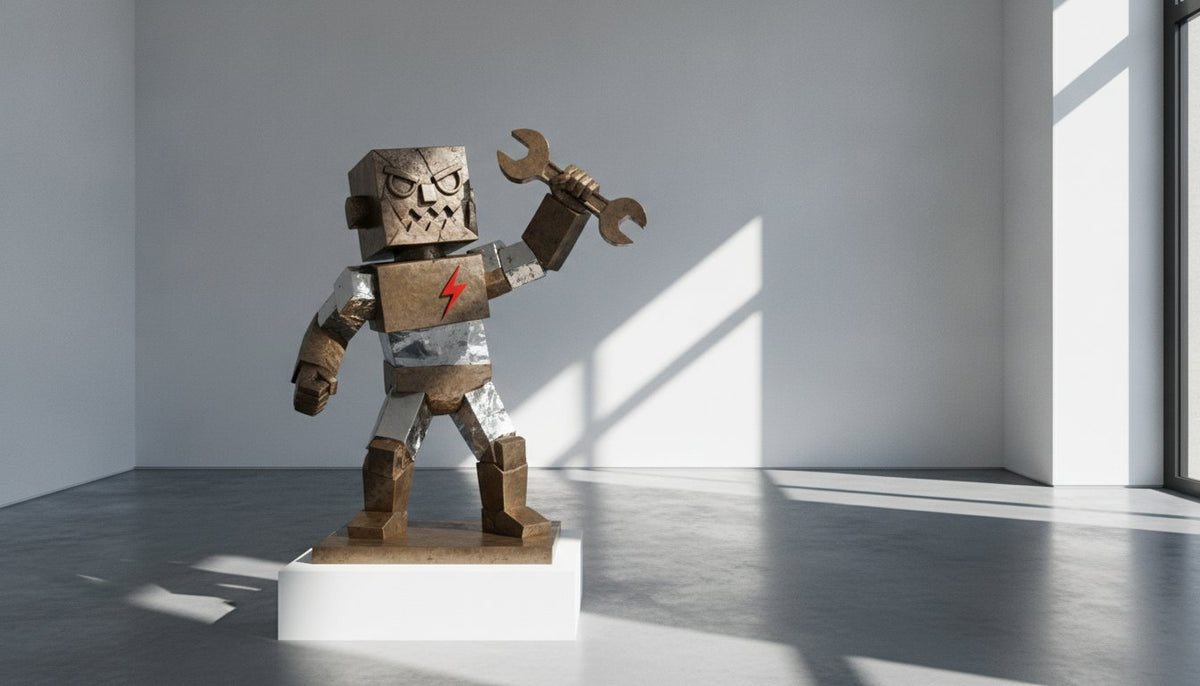
Unique Collectible Sculptures: The Specification of High-End Form
Not everyone understands Mylo. That’s rather the point. Most modern collections are crowded with mass-produced figures that occupy physical space while remaining narratively vacant. You've likely felt the disconnect between a plastic art toy and a piece that carries genuine weight. True unique collectible sculptures demand a different level of technical and philosophical rigor.
It's difficult to find objects that reflect a human truth when the market favors the disposable. This article provides a technical analysis of character-based bronze and the architecture of high-end pop art. We'll examine the lost-wax process used for the Nova series, which is restricted to a limited edition of seven. We'll also address the necessity of documented provenance and why the physical reality of a medium defines its permanence. The following sections offer a plain context for the serious collector who values material facts over decorative trends. The value of a sculpture is found in its material weight and the specific truth of its narrative. Whether you choose to engage with that truth is a matter of personal consequence.
Key Takeaways
- Bronze offers a material density and resistance to time that synthetic resins cannot replicate.
- Limited edition frameworks and documented provenance provide the necessary architecture for scarcity in unique collectible sculptures.
- The lost-wax bronze process ensures a technical superiority and physical weight that remains the standard for three-dimensional permanence.
- Characters like Mylo and Nova act as physical vessels for complex human narratives and internal reflection.
- Rarity is a deliberate choice made by the artist to ensure the integrity and narrative depth of the work.
Materiality in Contemporary Sculpture: Bronze and the Weight of Permanence
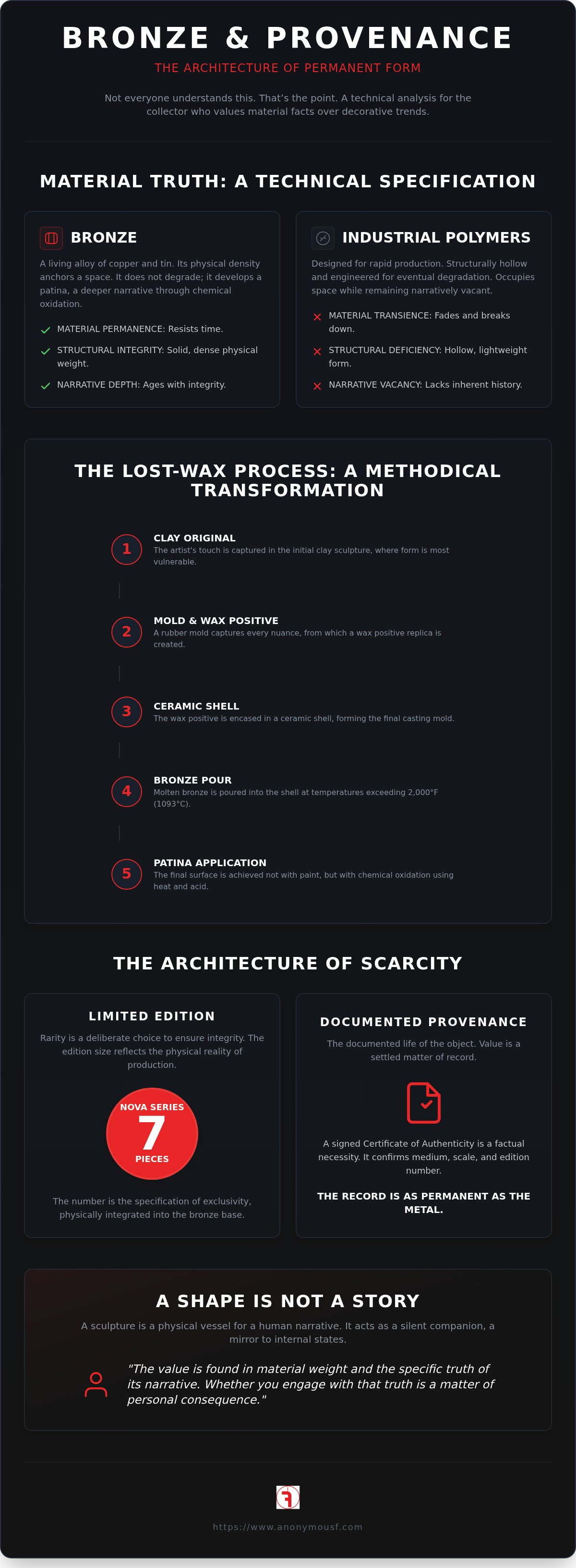
The physical reality of a sculpture begins with its material density. Bronze remains the global standard for permanence in three-dimensional form. It offers a resistance to time that industrial polymers like resin or vinyl cannot replicate. While mass-produced figures dominate the entry-level market, collectible sculptures cast in metal possess a distinct narrative weight. The value of these objects is a settled matter of material truth and the complexity of their execution. A bronze piece does not just occupy space; it anchors it.
The Technical Superiority of Lost-Wax Bronze
The lost-wax casting process involves a methodical transformation of states. It begins with a clay original where the artist's touch is most vulnerable. A rubber mold captures these nuances before a wax positive is created. This wax is encased in a ceramic shell and placed in a kiln. Molten bronze is then poured into the cavity at temperatures exceeding 2,000 degrees Fahrenheit. This process ensures that every detail of the original character is preserved in a permanent medium. A pop art bronze sculpture carries a physical presence that resin lacks. The final character is defined by the patina. This is not paint; it is a chemical oxidation achieved through heat and acid. It reflects a human truth about the beauty found in weathering and internal resilience.
Bronze vs. Mass-Produced Mediums
The Architecture of Scarcity: Limited Editions and Provenance
Rarity is a deliberate choice made by the artist. It is not a marketing tactic. Not every object is intended for a general audience. For unique collectible sculptures, scarcity is a technical requirement. It ensures the integrity of the work remains intact from the moment of casting to the final acquisition. A single fact regarding edition size carries more narrative weight than a thousand adjectives. Rarity is the structure upon which value is built.
The Significance of the Numbered Edition
A numbered edition provides a transparent framework for long-term value. Open runs prioritize distribution over depth. Strictly limited editions, such as the Nova series restricted to seven pieces, prioritize the narrative. These numbers are physically integrated into the bronze base. This permanent marking serves as a record of the piece's place within the series. Because The Bronze Casting Process is inherently labor intensive, the edition size reflects the physical reality of production. The number is the specification of exclusivity.
Authentication and Artist Documentation
Provenance is the documented life of the object. It begins at the Fringe studio and ends with the collector. A signed certificate of authenticity is a factual necessity. It confirms the medium, scale, and specific edition number. Physical markings on the sculpture itself prevent the dilution of the work. This level of documentation is essential for unique art for collectors who understand that value is a settled matter of record. Independent studio records offer a level of security that secondary marketplaces cannot match. You may view the current specifications of the collection to understand these requirements in practice. Authentication is the final specification of high-end form. The record is as permanent as the metal.
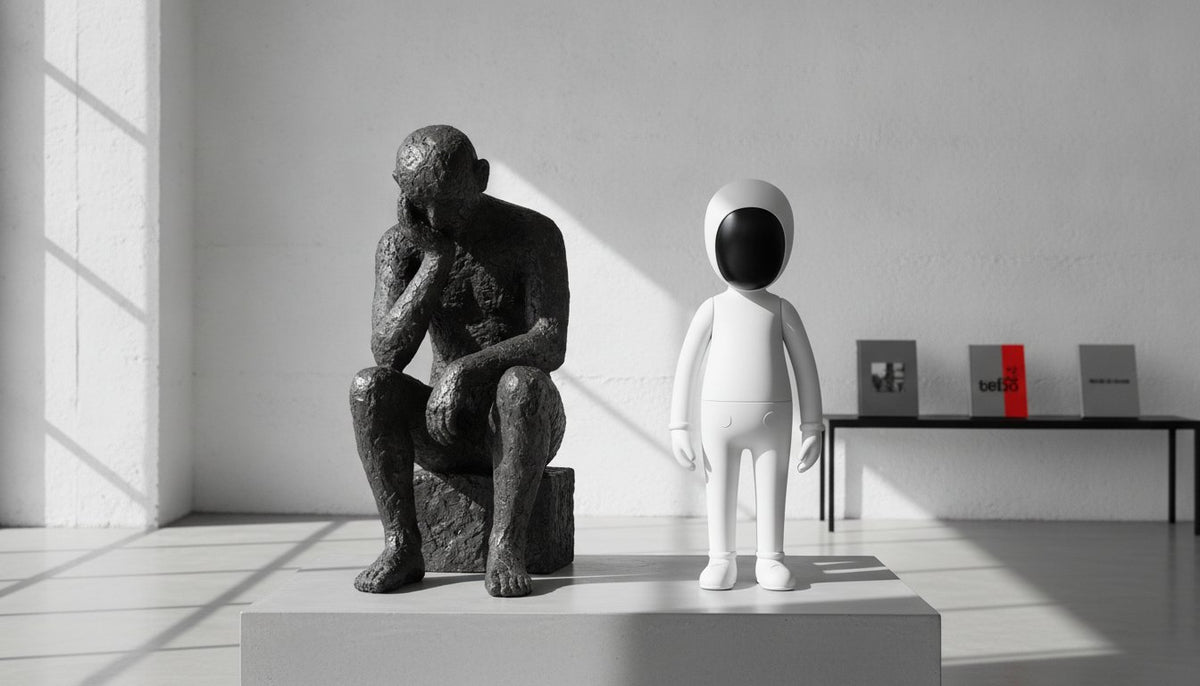
Character-Based Form: The Physicality of Mylo and Nova
Not everyone understands that a shape is not a story. High-end unique collectible sculptures are not mere geometric exercises; they are physical vessels for specific human narratives. Giving form to a character requires a balance of anatomical truth and pop-art abstraction. This isn't about decoration. The provenance of a character piece establishes its history of ownership, transforming it from a commercial product into a documented artifact. A character based sculpture lives as a silent companion in the collector’s space. It acts as a mirror to internal states.
Mylo: A Study in Bronze and Vulnerability
The Quiet Boy bronze series utilizes a specific scale to emphasize isolation. Mylo's posture is a technical specification of vulnerability. The slumped shoulders and downward gaze are captured in metal to fix a moment of reflection in time. The weight of the bronze provides the necessary resistance to the character’s perceived fragility. This series is defined by its silence. It doesn't scream for attention. It simply occupies its space with total narrative confidence.
Nova: Narrative Weight in Three Dimensions
The Nova collection represents the intersection of modern pop motifs and classical weight. The transition from a two-dimensional sketch to a three-dimensional form involves a deliberate translation of emotional registers. Nova is restricted to a limited edition of seven. This ensures that the narrative remains concentrated rather than diluted. These unique collectible sculptures bridge the gap between the avant-garde and universal struggle. The physicality of the object is the only way to ground an abstract emotion. The character exists because the form demands it. The value of the work is a settled matter of its physical reality.
The Acquisition of Permanent Form
The material truth of a sculpture is its only real specification. We've examined the technical superiority of lost-wax bronze and the necessity of documented provenance. These unique collectible sculptures are defined by their physical weight and the limited nature of their series. Rarity is a deliberate constraint. It ensures that the narrative remains concentrated rather than diluted by mass production. The density of the metal is the evidence of its intent.
The work produced in this independent, artist-owned studio relies on the physical reality of bronze casting. Every piece in the series is supported by limited edition documentation to ensure its long-term integrity. This is the standard for collectors who understand that form and story are inseparable. You can examine the specifications of The Mylo Bronze Collection by Fringe to see these principles in practice. The bronze exists to give weight to the internal struggles of characters like Mylo and Nova.
A sculpture acts as a silent companion. It's a reflection of a specific human truth that resin or plastic often can't hold, though high-quality resin can be used for specialized artistic preservation, such as a dandelion resin paperweight. The value of the object is already a settled matter. It remains for the collector to decide if they're prepared for the weight of the work. Authenticity is found in the metal.
Frequently Asked Questions
What is the difference between an art toy and a collectible sculpture?
The distinction lies in material density and intent. Art toys are typically mass-produced industrial polymers like resin or vinyl. Unique collectible sculptures are cast in permanent alloys like bronze through the lost-wax process. The sculpture is a technical specification of form intended for permanence. The toy is a distributed pop-culture object. One occupies space for a season; the other anchors a room for a lifetime.
How do you maintain the patina on a bronze pop art sculpture?
Minimal intervention preserves the chemical integrity of the work. A patina is an oxidation layer achieved through heat and acid; it's not a paint finish. Dust the surface with a soft, dry cloth. Avoid chemical cleaners that strip the metal's character. Bronze is designed to age. Its narrative weight evolves as the metal matures over decades. The weathering is part of the character's truth.
Why are limited edition sculptures more valuable than open editions?
Scarcity is a technical requirement for long-term value. Open editions prioritize commercial distribution over narrative depth. Strictly limited runs, such as the Nova series restricted to seven pieces, ensure the integrity of the artist's specification. Rarity is a deliberate constraint. It fixes the object within a specific history of ownership. Value is a settled matter when the production run is closed.
How can I verify the authenticity of a sculpture bought directly from an artist?
Physical markings and studio documentation are the only valid proofs. Check for the edition number integrated into the sculpture's base. A signed certificate of authenticity from the artist-owned studio provides the record of medium, scale, and casting date. These facts establish the provenance of unique collectible sculptures without the need for secondary market verification. The document is as permanent as the work itself.

Article by
Fringe

Read more
Original Character Collectible Toys: Specifications of the Physical Narrative
Not everyone understands Mylo. That's rather the point. Most collectors are content with mass-produced vinyl that carries no internal weight and lacks a history. You likely recognize the hollowness...
Read more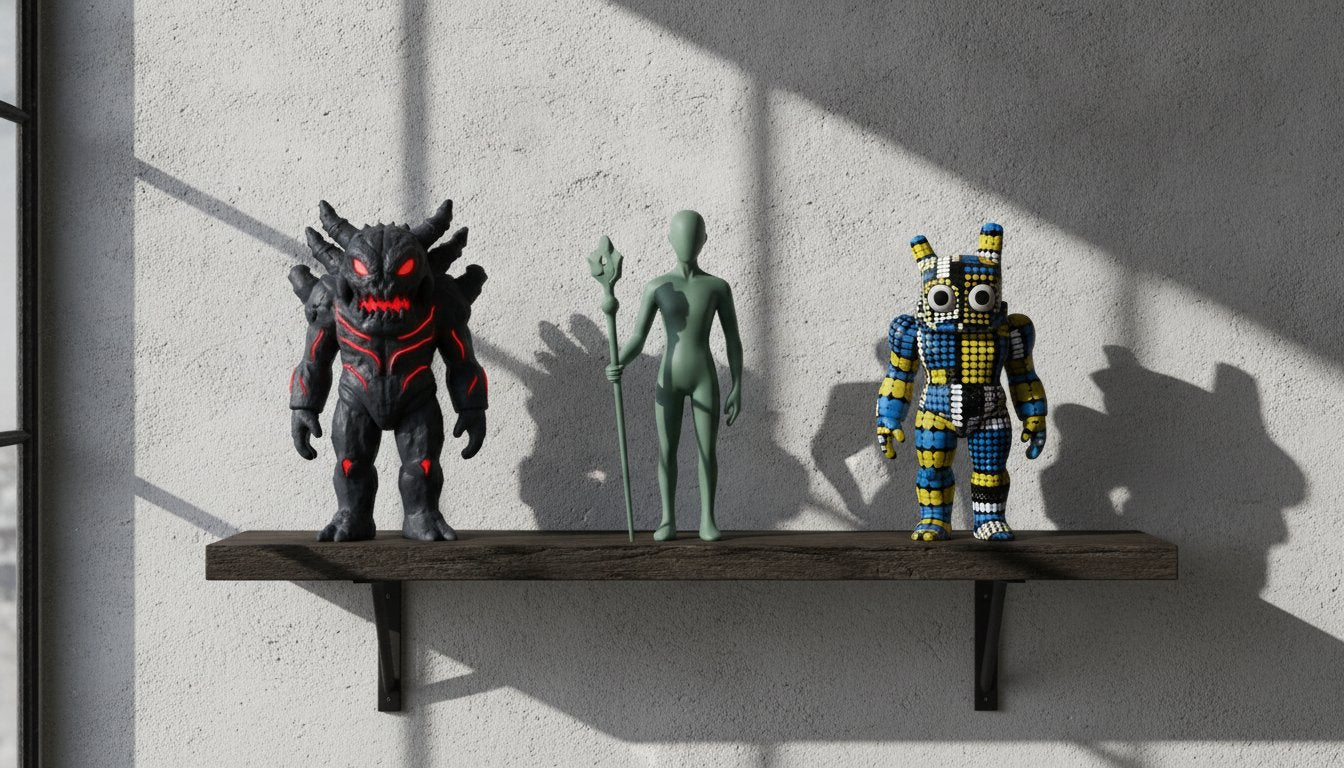
The Specification of Form: A Guide to Fringe Collectable Toys
Not everyone understands Mylo. That’s rather the point. To some, the distinction between mass-market vinyl and hand-finished resin is negligible, but for the serious collector, the weight of the ob...
Read more
Leave a comment
This site is protected by hCaptcha and the hCaptcha Privacy Policy and Terms of Service apply.