
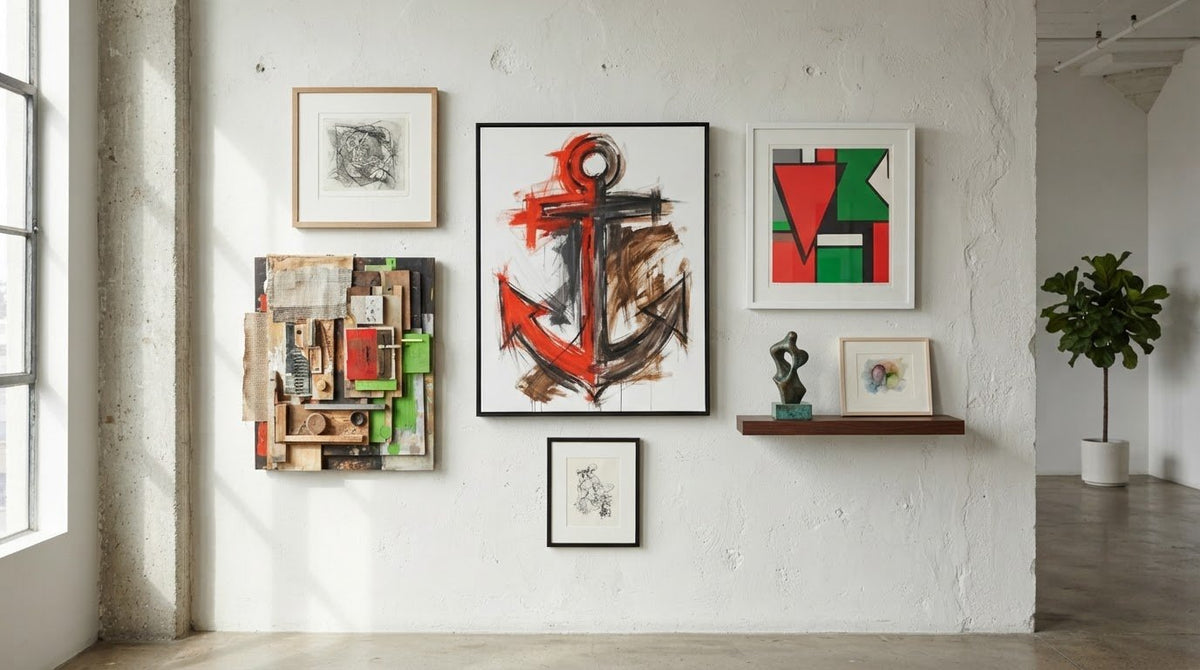
Creating a Gallery Wall with Mixed Media Art
Different materials do not make a gallery wall incoherent. Unplanned relationships do. Creating a gallery wall with mixed media art means deciding how scale, spacing, surface, and image relate before anything is hung. A work on paper, painting, print, or sculpture carries a different visual weight. A frame can connect it to the arrangement or compete with it.
The challenge is to preserve each work’s character while building a coherent group. Start with an anchor, map the available wall, and set a consistent approach to spacing. Then balance material and scale through shared visual cues such as colour, line, or rhythm. The steps below help you plan the composition before hanging, without flattening the differences between the works.
Key Takeaways
- Creating a gallery wall with mixed media art starts with a visible connection, not matching frames or identical materials.
- Measure the usable wall and assess it from the usual viewing position before arranging works.
- Choose one anchor work, then test how smaller or materially different pieces sit around it.
- Remove repeated visual roles so each work contributes something distinct to the composition.
Creating a Gallery Wall with Mixed Media Art: Start with Visual Cohesion
Cohesion comes from a visible relationship among works, not from matching their materials or frames. A painting, work on paper, and sculpture can sit together when one feature connects them: a repeated colour, a related shape, a shared subject, or a consistent frame detail. Choose a link you can see clearly. If every surface and frame is made to match, the arrangement can lose the differences that give it structure.
Mixed media uses more than one material or process in a work. The visual art definition of mixed media provides context on combinations such as collage, assemblage, textiles, and found objects. When planning a gallery wall, identify the materials and surfaces first. A textured work can contrast with a flat image, while a repeated colour or line gives the eye a point of return.
What makes a mixed-media gallery wall feel connected?
Lay the works out and name the link you can actually see. It might be a dark outline repeated in two images, a geometric shape echoed by a frame, or a related subject across different materials. Then check that the connection does not erase each work’s separate role. One piece may carry visual weight through scale. Another may introduce a change in surface or image. The relationship should be clear without making the objects interchangeable.
Mixed-media variety is difference with a visual link; visual clutter is difference without one. Fringe makes original pop art across oil on canvas, bronze sculpture, hybrids on paper, limited edition prints, and character-based collectable toys. Each piece is One of a kind, hand-signed, and framed. Each is accompanied by a Certificate of Authenticity (COA) issued by Anonymous F ©. Let the material character of each work remain visible, then connect the grouping through a considered visual detail.
Plan the Mixed Media Gallery Wall Before You Hang Anything
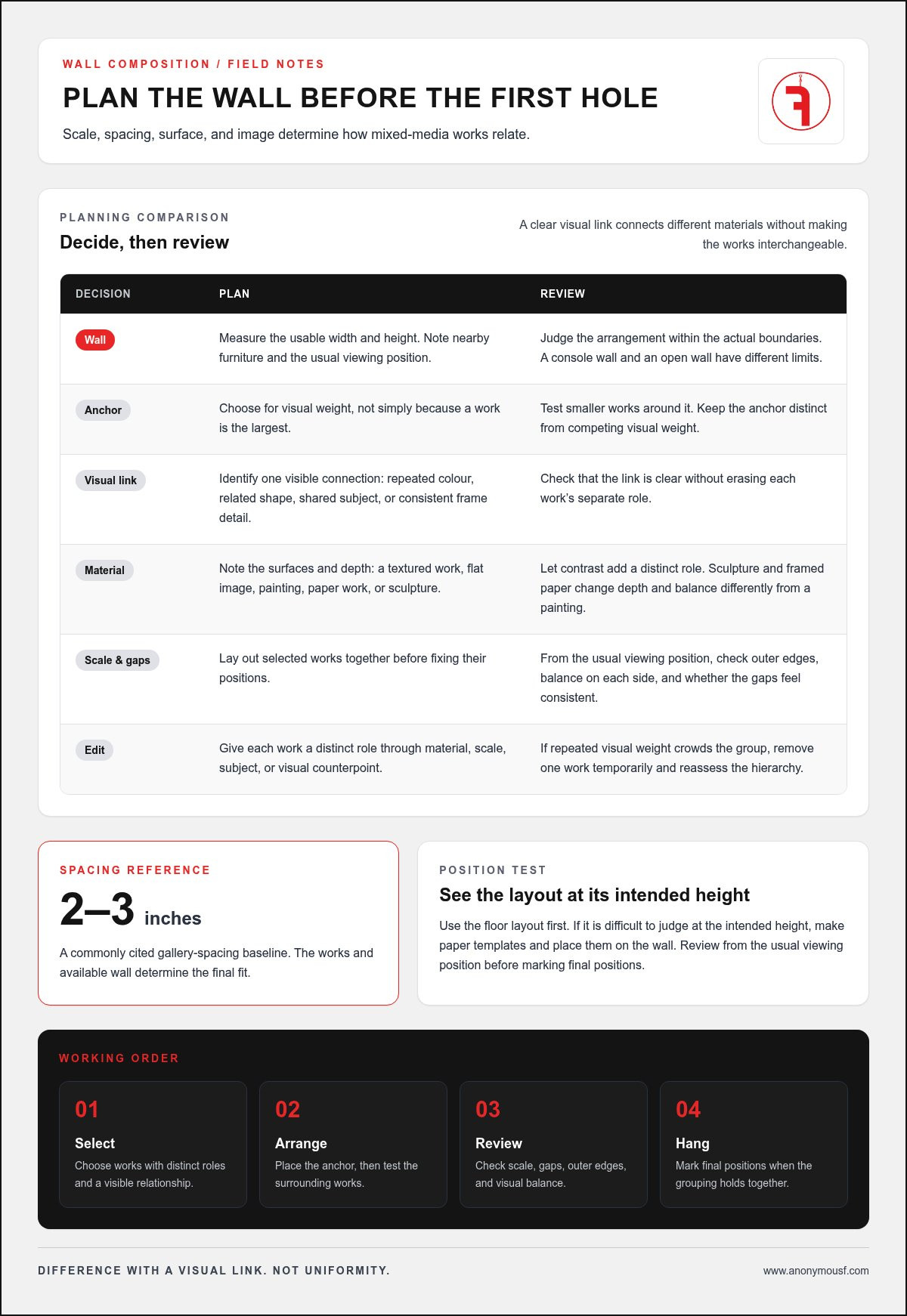
Start with the wall. Measure its usable width and height, note nearby furniture, and identify where the arrangement will usually be viewed from. Record the boundaries rather than imposing a standard size on the composition. A layout above a console has different limits from one on an open wall.
Choose an anchor for its visual weight, not simply because it is the largest work. Place it in the proposed layout, then test smaller works around it. A bronze sculpture or framed paper work changes the depth and balance of a group differently from a painting. Tate's guide to mixed media provides context on how distinct materials operate within one work. On a gallery wall, consider how separate objects relate without treating them as interchangeable.
How do you test scale, spacing, and placement?
Lay out the selected works together before fixing their positions. If the floor layout is difficult to judge at the intended height, make paper templates and place them on the wall. From the usual viewing position, check the outer edges, the visual weight on each side, and whether the gaps feel consistent. A 2-to-3-inch gap is a commonly cited gallery spacing baseline, but the works and available wall determine the final fit.
Placement also affects how the works read together. The sibling guide How to Display a Contemporary Art Collection with Narrative Intent considers how position can support a larger relationship among pieces.
Select, arrange, review, then hang. When creating a gallery wall with mixed media art, this sequence gives you room to adjust scale and position before making holes. Review the layout from the place where it will be seen. Mark final positions only when the grouping holds together as a whole.
Edit the Final Mixed Media Art Arrangement Without Erasing Its Differences
Review each work by the role it plays. Does it contribute a distinct material, scale, subject, or visual counterpoint? A piece can earn its place through contrast rather than similarity. For example, a work on paper introduces a different surface from a painting on canvas. The oil on paper collection gives a reference for considering that distinction.
Look for repetition that adds no new relationship. Two works with similar scale and visual weight may compete for the same position. Several strong edges can make the group feel crowded. Repositioning one work may restore hierarchy. If moving it does not clarify the composition, take it out temporarily and assess what changes.
When should you simplify a gallery wall?
Simplify when the eye has no clear place to settle, the outer edges feel crowded, or repeated visual weight makes the anchor difficult to distinguish. Remove one work and review the remaining arrangement before deciding whether it belongs back. This is a useful test when creating a gallery wall with mixed media art: each object should contribute something the others do not already provide.
A distinct material or image can give a grouping necessary contrast. Another work that repeats an existing role may only add noise. The point is not to reduce the wall to uniformity. Preserve the differences that make each work legible without asking every object to carry equal weight.
A deliberate edit preserves difference better than adding more objects.
Let the Arrangement Change with the Collection
A gallery wall can change as the collection changes. A new work may alter the balance, so treat the arrangement as revisable rather than permanent. Creating a gallery wall with mixed media art is an ongoing decision about how the pieces sit together, not a fixed template.
Before changing the grouping, photograph its current state. Compare the arrangement after moving or removing a work, then keep the version that gives each piece a clear place without forcing uniformity.
The composition can remain open to change. Its structure comes from the relationships among the works, not from keeping every position fixed.
Frequently Asked Questions
Can framed and unframed art hang together?
Yes. Framed and unframed works can share a wall without matching frame finishes. Compare frame profiles and mat borders with the exposed edges of unframed pieces. A wide mat creates a different border from a narrow frame. Seeing these details together helps you decide whether they support the arrangement or draw attention for their own sake.
Should a gallery wall be symmetrical?
Symmetry is an option, not a requirement. A mirrored layout creates a formal structure, while an asymmetrical composition guides the eye differently. Build order by aligning selected edges or keeping a shared horizontal line, then let other positions vary. The works do not need identical counterparts for the arrangement to feel resolved.
How high should a gallery wall be hung?
There is no universal height. Consider where the work will be viewed and how nearby furniture affects its position. Check the arrangement from seated and standing positions. Account for lamps, switches, door trim, and other features that could interrupt it. Paper outlines placed temporarily on the wall show how the composition sits in the room before you fix it.
Can sculpture be part of a mixed-media gallery wall?
Yes. A three-dimensional work can sit near wall-hung art if its silhouette remains visible and it does not obscure another piece. Include its viewing angle and cast shadow in your assessment. Rotating the sculpture may change how its form relates to the surrounding works. Choose a position that suits the object rather than treating it as a flat frame.

Article by
Fringe

Read more
How to Choose Art That Complements Your Decor and Style
Exact color matching isn't necessary. To choose art that complements your decor, relate its colors to the room’s dominant, secondary, and accent colors, then decide whether the piece should harmoni...
Read more
Leave a comment
This site is protected by hCaptcha and the hCaptcha Privacy Policy and Terms of Service apply.