
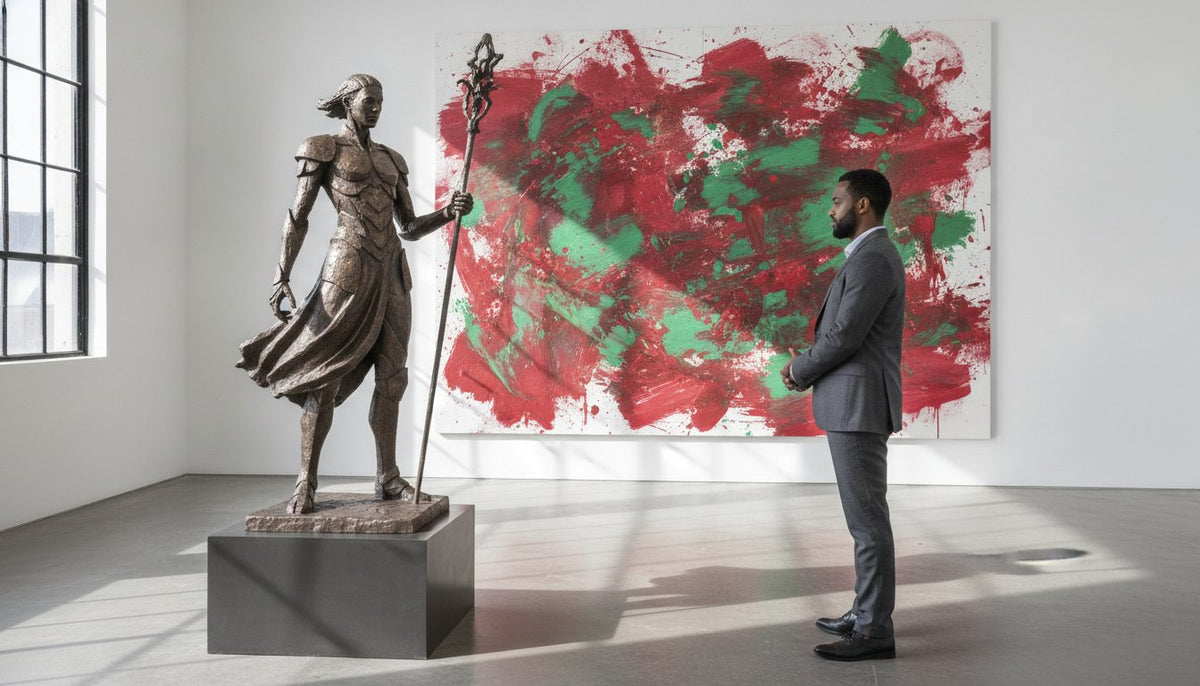
Contemporary Art Pieces for Collectors: The Specification of the Physical Object
Not everyone understands why a physical object must possess a certain material gravity. That’s rather the point. The current market is saturated with low-quality digital assets and gallery fluff that lacks transparency. The collector seeks a tangible soul. This examination focuses on the specification of contemporary art pieces for collectors, prioritizing material authority over aesthetic trends.
We provide a clinical examination of how bronze sculptures, oil on canvas, and hybrids on paper command space through narrative weight. We analyze the physical requirements of modern collecting without decorative language. This is a review of process, scale, and the direct authority established between the artist and the collector. These objects act as vessels for human truth, reflecting the complexities of connection through their physical presence. The value of the work is a settled matter; we're simply reviewing the facts of its existence.
Key Takeaways
- Permanent mediums like bronze and oil on canvas provide a physical durability that digital assets cannot replicate.
- Characters such as Mylo and Nova serve as vessels for human truth, documenting the intersection of vulnerability and modernism.
- Collectors identify the authority of contemporary art pieces for collectors through an artist's mastery over physical materials and strict edition sizes.
- Hybrids on paper utilize multiple mediums to create a layered surface complexity that moves beyond standard print categorization.
The Material Specification of Contemporary Art Pieces for Collectors
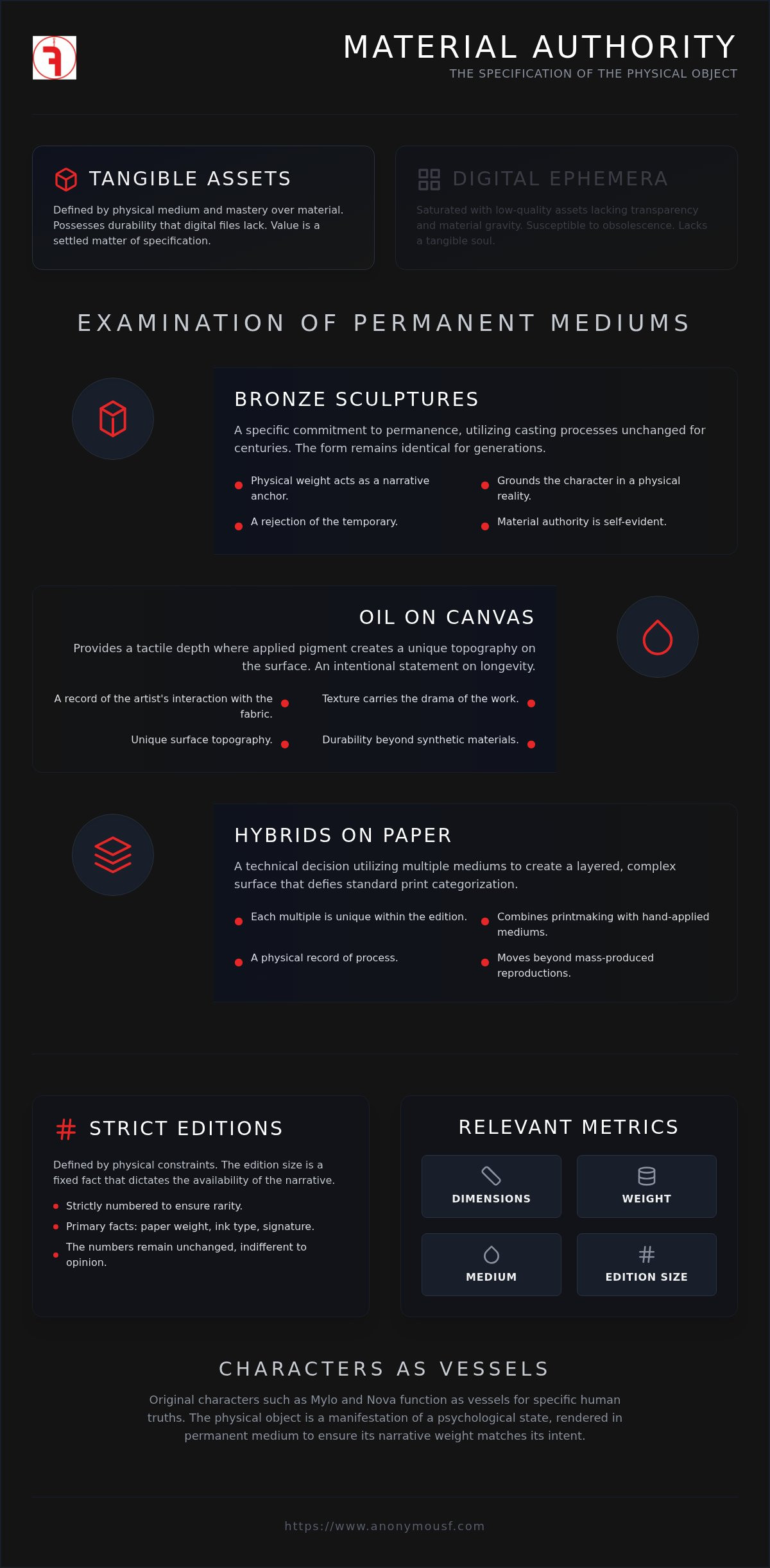
The weight of a work is often its most honest attribute. Not everyone understands why a physical object must possess a certain material gravity, but for the serious collector, that's the starting point. A contemporary art piece is defined by its physical medium and the artist’s mastery over that material. While organizations like the Contemporary Art Society have historically influenced the acquisition of works for public spaces, the private collector today demands absolute material transparency. Oil on canvas and bronze offer a durability that digital files or low-grade synthetic materials lack. The value of a piece is a settled matter of its specification. Dimensions, weight, and medium are the only metrics that remain relevant over time. These material facts carry the drama of the work, rendering decorative adjectives unnecessary. When the object possesses authority, it doesn't need to be described as impressive.
Bronze and Oil: The Durability of Form
Bronze sculptures represent a specific commitment to permanence. They utilize casting processes that have remained unchanged for centuries; this ensures that the form captured today remains identical for generations. The physical weight of the bronze acts as a narrative anchor, grounding the character in a reality that digital assets cannot occupy. Similarly, oil on canvas provides a tactile depth where the physical application of pigment creates a unique topography on the surface. This texture is a record of the artist's interaction with the fabric. For a deeper examination of these requirements, review the analysis on Pop Art Original Artwork: The Specification of the Physical Object. Collecting contemporary art pieces for collectors is an exercise in identifying these physical truths. The choice of medium is an intentional statement on longevity and a rejection of the temporary.
Narrative Weight and Original Character Collectibles
Character-based art often lacks material depth in the broader market. For the serious collector, characters like Mylo and Nova are not merely figures. They function as vessels for specific human truths. The Mylo collection exists to document the intersection of vulnerability and modernism. This is not a stylistic choice. It's a narrative necessity.
Collecting contemporary art pieces for collectors requires an understanding of the narrative arc established by the artist. The physical object acts as a manifestation of a psychological state. It's rendered in bronze or oil to ensure the weight matches the intent. Every character carries a history. The collector is not a spectator. They are an observer of a shared condition. The object remains indifferent to the viewer's approval. It simply exists as a factual record of human experience.
The Human Pulse of Mylo, Nova, and Gutinke
Nova represents a specific duality of hope and struggle, captured in physical form through deliberate material choices. This character does not exist in a vacuum. Gutinke serves as a narrative anchor within the broader character universe created by Fringe. These characters function as peers to the collector. They reflect a shared philosophical state rather than a commercial trend. The relationship is one of quiet observation and mutual recognition. The bronze casting or oil application provides a permanence that respects the weight of the story. Understanding these original character collectibles requires a shift in perspective. The narrative weight is the value. The medium is the proof.
The Physical Selection of Hybrids and Limited Editions
The selection of a hybrid is a technical decision. It's not about visual preference. Hybrids on paper utilize multiple mediums to create a layered, complex surface. This topography defies standard print categorization. Unlike mass-produced reproductions, these contemporary art pieces for collectors involve a specific physical interaction between the artist and the substrate. Each hybrid combines traditional printmaking with hand-applied oil or ink. This makes each multiple unique within the edition. The acquisition of a Quiet Boy Bronze or a hybrid piece is a strategic addition to a narrative-focused collection. The object is a record of process.
Limited edition prints are strictly numbered. This ensures the rarity of the multiple within the 2026 market. Selection is based on the technical specification of the edition. Paper weight, ink type, and the artist's signature are the primary facts. These contemporary art pieces for collectors are defined by their physical constraints. In a market saturated with low-quality digital assets, the physical specification is the only guard against obsolescence. The edition size is a fixed fact. It dictates the availability of the narrative. It doesn't matter if the reader is convinced of the value. The numbers remain unchanged.
Numbered Editions and the Hybrid Process
The hybrid process bridges the gap between the multiple and the original. By applying oil or ink by hand over a printed base, the artist introduces a variable that cannot be replicated by machine. This creates a duality. The work is part of a series, yet it possesses an individual soul. For those focused on sculpture, The Paradox of Permanence: A Guide to Pop Art Bronze Sculpture provides the necessary data on bronze editioning. Material facts carry the drama. The paper's texture and the ink's opacity are the narrative. The work doesn't care if it's understood. It simply exists as a specified object.
The Authority of the Specified Object
The acquisition of contemporary art pieces for collectors remains a technical and philosophical commitment. Permanent mediums like bronze and oil on canvas provide the necessary physical weight to anchor a collection. Characters such as Mylo, Nova, and Gutinke serve as vessels for human truth, moving beyond mere visual appeal to represent settled psychological states. These are strictly physical art pieces. The independent studio manages global distribution directly, ensuring the provenance of every limited edition and hybrid multiple. Rarity is a fixed fact of the edition size, not a marketing claim. The specification of the object is its most enduring narrative.
View the physical specifications of the current collections
The work stands on its own authority. It's a matter of material truth. We invite those who recognize the value of the physical to observe the results of our process.
Frequently Asked Questions
What defines a contemporary art piece for a serious collector?
Contemporary art pieces for collectors are defined by the intersection of physical medium and narrative intent. Serious collectors prioritize material specifications, such as oil on canvas or bronze, to ensure durability. The value exists in the artist’s ability to translate complex human truths into a physical object. This object maintains its presence over time through its material authority and narrative weight.
Why are bronze sculptures prioritized in modern collections?
Bronze is prioritized due to its permanence and the intensive casting process required for its creation. It offers a physical weight and historical authority that temporary materials cannot match. This medium doesn't ask for attention but commands it through inherent durability and the precision of its form. It serves as a narrative anchor within a collection, remaining indifferent to market trends.
What is the difference between an oil painting and a paper hybrid?
An oil painting is a singular work on canvas defined by texture and depth of pigment. A paper hybrid is a sophisticated multiple that combines printmaking with hand-applied mediums. Both are essential contemporary art pieces for collectors that maintain a tactile quality. While the oil painting is a unique specimen, the hybrid allows a narrative to be shared across a limited edition.
How does character narrative affect the value of a collectible?
Narrative specificity transforms a physical object into a storyteller. Characters like Mylo and Nova are not decorative; they are representations of internal states. The value lies in the resonance between the character’s narrative and the collector’s own experience. This transformation makes the piece a meaningful philosophical investment rather than a mere acquisition. It acts as a vessel for human truth.

Article by
Fringe

Read more
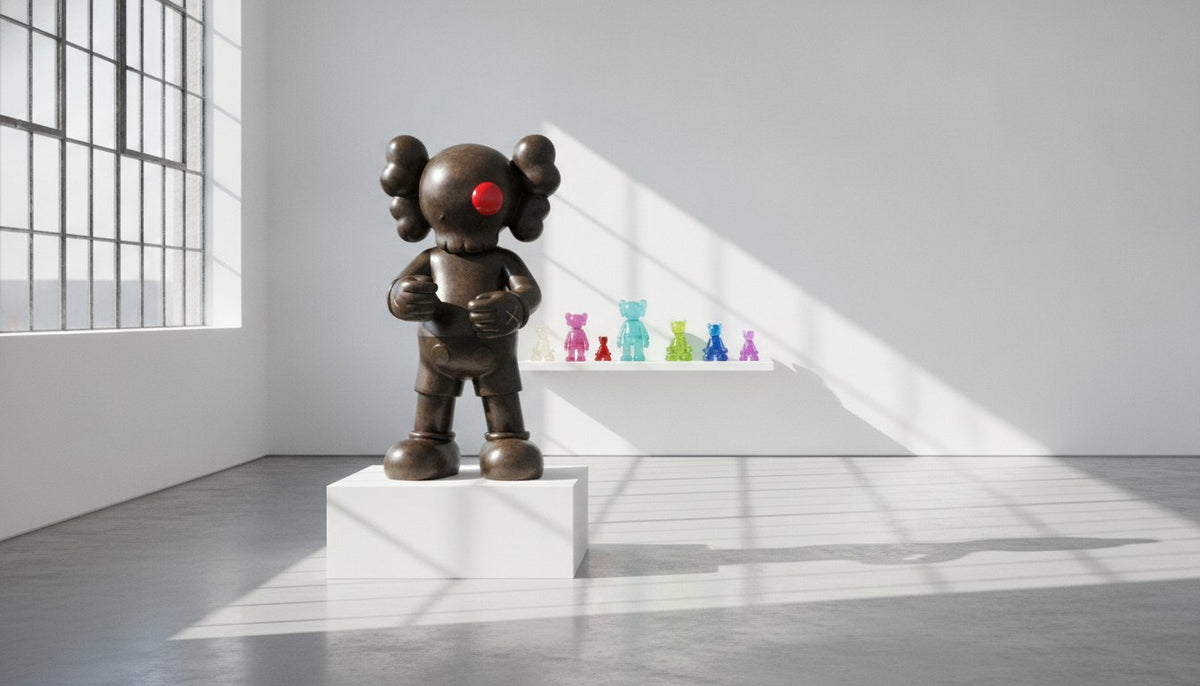
Pop Art Character Sculptures: The Specification of the Physical Object
Not everyone understands Mylo. That’s rather the point. Most modern pop art character sculptures are hollow resin shells, manufactured for a market that prioritizes volume over weight. The fatigue ...
Read more
Commissioning a Sculpture: The Technical and Narrative Transfer
Not everyone possesses the temperament for the foundry.That is rather the point.A bronze sculpture is not a purchase.It is a technical transfer of narrative weight.Commissioning a sculpture from an...
Read more
Leave a comment
This site is protected by hCaptcha and the hCaptcha Privacy Policy and Terms of Service apply.