
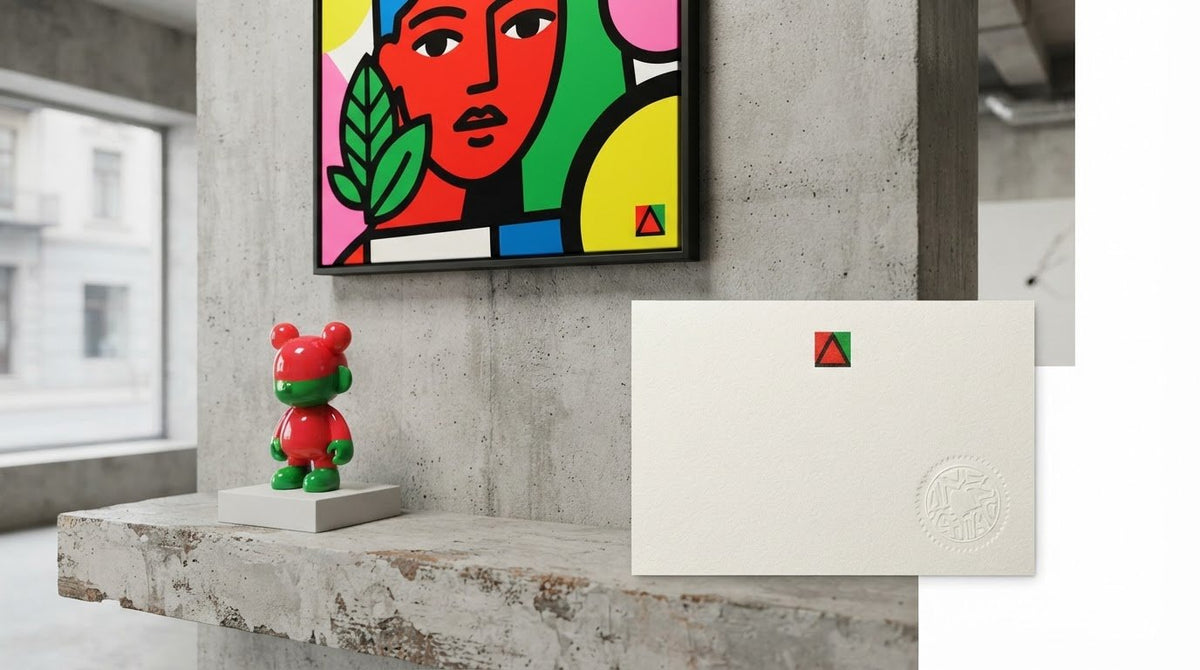
Certificate of Authenticity for Artwork: Why It Matters
A certificate doesn’t make an artwork genuine; it records the work’s identity and can travel with it. A certificate of authenticity for artwork names the artist and work, notes details such as the title, medium, dimensions and creation date, and includes a signed statement of authenticity. It can also contribute to provenance, the record of a work’s origin and history.
It’s natural to want clear evidence of what you’re buying, particularly when an artwork may pass between owners. A certificate can support confidence in the work, but its absence alone doesn’t prove that it is not genuine.
This guide explains why certificates matter, what information they can contain, and how physical markers, matching codes and digital records can connect a certificate to a specific work. It also covers when creating one makes sense and what a certificate can, and cannot, establish.
Key Takeaways
- Use clear artwork details and a signed authenticity statement to make a certificate more useful to future owners.
- Learn how seals, matching codes and QR codes can help connect a certificate with the artwork it describes.
- See why documenting a work’s history can support collector confidence and strengthen its provenance.
- Explore Fringe’s collectable toys as artworks with a distinct identity and story of their own.
Why Do You Need a Certificate of Authenticity for Artwork?
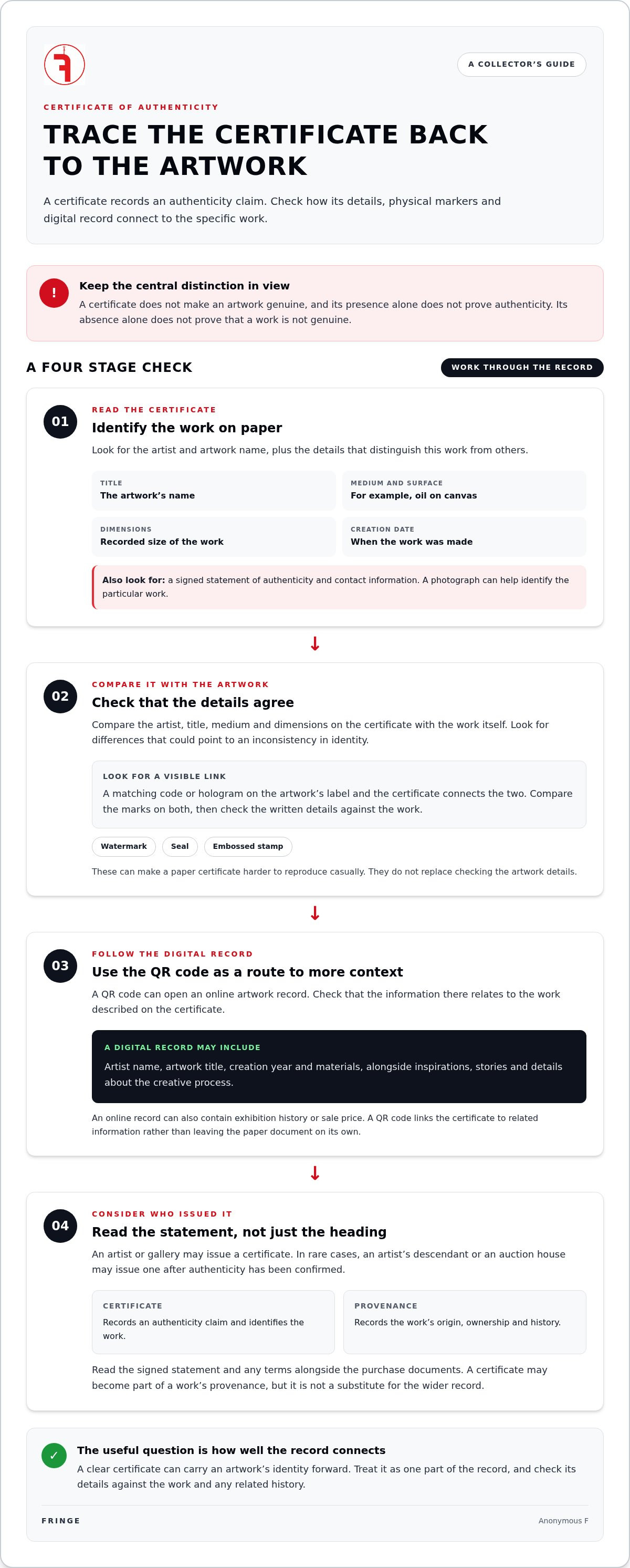
A certificate of authenticity identifies an artwork and records the artist’s statement that it is genuine. Its details help distinguish one painting or print from another.
A useful certificate names the artist and artwork, and records the title, medium, substrate, dimensions and creation date. It should also include a signed statement of authenticity and contact information. A photograph can help identify the specific work, while care advice, exhibition or sales history, and background information can add context. For example, “oil on canvas” identifies both the medium and surface, while the title distinguishes the work from others by the same artist.
An artist or gallery may issue a certificate. In rare cases, an artist’s descendant or an auction house may issue one after authenticity has been confirmed. To create a certificate for a painting or print, record the work’s identifying details, add a signed authenticity statement, then print and sign the document. A certificate asserts authenticity; a provenance document records ownership and the work’s history. The certificate may later become part of that history.
Legal Status and Cost
In the United States, a certificate’s legal effect depends on its wording and the sale agreement, not simply its title. Read the signed statement and any terms alongside the purchase documents: a certificate is not automatically a separate, legally binding guarantee. There is no fixed cost to create one; the work involved depends on who prepares it and what documentation it includes.
Authenticity Claims and Buyer Risks
A certificate records an authenticity claim, but its presence alone doesn’t prove that the artwork is genuine. A false or inaccurate document can repeat a false claim. Compare the artist, title, medium and dimensions on the certificate with the work, and consider who signed it and how it is linked to the artwork. Relying on the certificate alone risks overlooking inconsistencies in the work’s identity or history.
Physical and digital verification features
A certificate may include physical markers or link to a digital record. These features can help connect its details to a particular artwork.
A watermark, seal or embossed stamp can make a paper certificate harder to reproduce casually. A matching code or hologram on the artwork’s label and certificate creates a visible link between them. Compare the marks on both, then check that the certificate’s details match the work.
A QR code can open an online artwork record containing details such as exhibition history and sale price. This gives collectors a direct route from the certificate to related information, rather than relying only on a paper document kept separately from the work.
Digital Certificates of Authenticity
A digital certificate of authenticity is an electronic record of an artwork and its details. It can keep the work’s information accessible without requiring a paper copy. A QR code on a printed certificate can link the two formats, while a digital record can make the work’s story easier to access as ownership changes.
Information in Digital COAs
A digital COA can store the artist’s name, artwork title, creation year and materials, along with inspirations, stories and details about the creative process. For example, a record might pair a print’s title and materials with context about the idea behind it. These details offer collectors more than an identifier: they preserve context around the work.
When a digital COA replaces a printed copy, it can reduce paper use and the need to store another physical document. The artwork itself still needs thoughtful care, while its digital record can be kept separately.
For another perspective on how artworks hold meaning, explore artworks and their stories.
Reasons to create a certificate of authenticity
A certificate gives collectors a written record linking an artwork to its maker. It can support confidence in the work’s identity and value, particularly when the work changes hands. It may become part of the artwork’s provenance, the account of its origin and history. A document created at the time of sale can preserve details that might otherwise be harder to trace.
For artists, preparing a certificate creates a useful record while the details are close at hand. It brings together the work’s title, materials, creation date and signed authenticity statement. For a print, recording identifying details helps distinguish it from other works or versions. The certificate can also preserve relevant context, such as exhibition or sales history.
Galleries often ask artists for a certificate, particularly after a work has sold. Having one ready gives the buyer a document to keep with the artwork and gives the gallery a clear record of the sale. If ownership changes later, that record may help support the work’s resale value, though it cannot guarantee a future price or sale.
The strongest reason to create a certificate is continuity. A painting may outlast its first owner, and a print may travel far from the artist’s studio. A clear certificate helps carry the work’s identity forward, while ownership records and other documentation can add to its wider provenance. Treat it as one part of the record, not a substitute for the artwork itself.
Explore artworks and the stories they carry as you consider what makes a work meaningful to collect.
Fringe: Collectable Toys
Fringe creates collectable toys alongside bronze sculptures, oil on canvas works and limited edition prints. For collectors considering an artwork, a clear record can help preserve its identity as it moves from the studio into a collection.
Fringe’s original characters, including Mylo, Nova and Gutinke, give the collectable toys a distinctive presence. A certificate has a practical role: it can record the specific work and its details, while the artwork carries the visual character that first draws someone to it. Together, they tell different parts of the story.
Explore Fringe’s collectable toys if you’re drawn to character-led artworks. To discover more of Fringe’s work, visit Anonymous F.
Let the Record Begin with the Work
Once a certificate of authenticity for artwork is explained in clear terms, its purpose becomes part of a larger conversation: what draws you to a work, and what story will travel with it? A document can support that story, but collecting begins with looking closely. Notice the choices, details and feelings that stay with you after you look away.
That personal response deserves space beside the practical record. A considered collection takes shape through attention over time, not paperwork alone. Let the artwork lead, then keep its identity and history close as it finds its place with you.
Explore Fringe’s artwork and find a piece that speaks to you. Your next discovery can start with a single look.
Frequently Asked Questions
What Information Should a COA Include?
A COA should identify the individual work, not merely name its artist. Use precise descriptions to distinguish it from similar pieces, and include a signed authenticity statement. If two works share a title, additional identifying context or a photograph can help prevent their records from being confused. The aim is a document that clearly belongs with that particular artwork.
What is a certificate of authenticity for artwork?
Here, a certificate of authenticity for artwork is explained through its practical role: it records an attribution to the maker and accompanies the work. It isn’t an invoice or an appraisal. For example, a certificate for a gifted painting can help the recipient retain its attribution even without a purchase receipt.
What information should an art certificate of authenticity include?
Choose a level of detail suited to the work and its history. A straightforward certificate may be enough for a newly made piece, while a work with documented exhibitions or publications can benefit from including those records. Keep contextual details factual and relevant. An unsupported anecdote may add atmosphere, but it doesn’t strengthen the artwork’s record.
How can you verify an art certificate of authenticity?
Consider how the certificate came to accompany the artwork. One kept with the work since its original sale has a clearer chain of custody than one that appears separately years later. Keep the original with purchase or gift records, and note any inconsistencies between the documents. Together, these records provide a more useful account than an isolated certificate.

Article by
Fringe

Read more

Ways to Reduce Art Damage Risk During Storage and Handling
Protecting your art collection from damage starts with controlling its surroundings and handling each work with care. Light, moisture, temperature changes, dust, knocks and poor storage can all tak...
Read more
Leave a comment
This site is protected by hCaptcha and the hCaptcha Privacy Policy and Terms of Service apply.