
Buy Bronze Sculpture Online: A Collector’s Guide
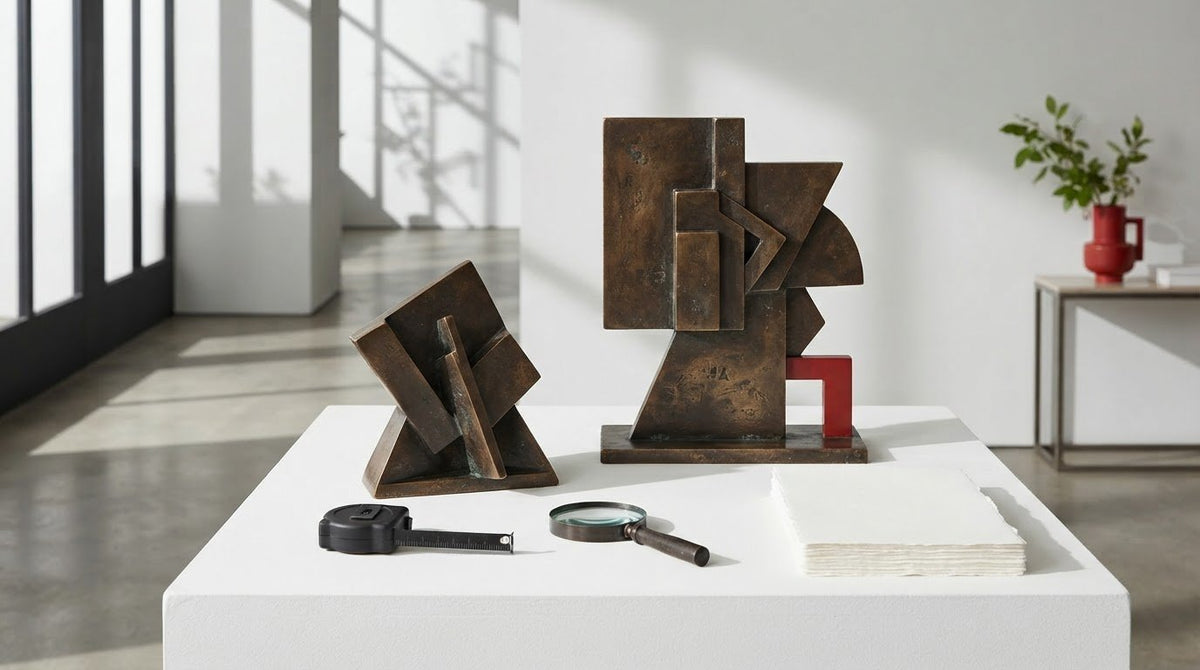
A bronze label identifies a material category, not whether a particular work belongs in your collection. To buy bronze sculpture online, assess the object itself: photographs can flatten scale and obscure surface, while a short listing may leave details such as finish, edition, or provenance unclear.
A screen offers a partial view. The description, measurements, images, and any accompanying records each provide a different kind of information. This guide explains how to assess those details and decide how a sculpture might sit within your collection. Bronze is part of Fringe’s original pop art practice, alongside oil on canvas, limited edition prints, collectible toys, and hybrids on paper. The Quiet Boy bronze collection gives that practice a sculptural form. The decision, as ever, rests on the individual work.
Key Takeaways
- When you buy bronze sculpture online, treat each listing as information about one physical work, not proof of every material or process detail.
- Read the description, compare images and dimensions, then review any documentation. Keep stated facts separate from visual impressions.
- Photographs can show form and visible surface, but they cannot establish an alloy or casting method on their own.
- Consider how a Fringe bronze sculpture relates to the visual language of your collection and the artist’s original pop art practice.
Buy Bronze Sculpture Online: What the Object Details Actually Tell You
An online purchase of bronze sculpture is a purchase of a physical object. The listing describes the work being offered; it is not the sculpture itself.
Separate the stated facts from your interpretation. An artist’s name identifies authorship as presented in the listing. “Bronze” identifies the stated medium, and dimensions establish the listed scale. Edition information and provenance describe different things: edition information concerns the work’s edition, while provenance records its documented ownership history. Treat each as established only when the listing or accompanying documentation supplies it.
A photograph’s surface color may suggest a finish, but it cannot establish the alloy or casting method. For context on the medium and its processes, consult this overview of the history and techniques of bronze sculpture.
Which details make a bronze sculpture listing useful?
Start with the description. Look for the stated medium, dimensions, edition information, and provenance. Do not fill gaps by inference. Images from several angles help you assess the outline, volume, and visible surface, but they do not prove the sculpture’s composition.
Scale determines how a work occupies a room and relates to nearby objects. Authorship places it within an artist’s practice. Edition details distinguish a specified edition from an unspecified example. These are separate considerations, and each should be assessed on its own terms.
Fringe makes bronze sculptures as physical works within its original pop art practice. The pop art bronze sculpture guide is represented by the Quiet Boy bronze collection. Read each listing for the details of that work. A category label cannot supply them.
How to Evaluate a Bronze Sculpture Listing Before You Buy
Review a listing in a fixed order. Read the description, compare the images, use the measurements to plan the display position, then review any accompanying records. This keeps a persuasive photograph from outweighing the rest of the available information.
A collector’s checklist for comparing bronze sculptures online
Keep a short note for each work. The aim is not to assign a score. It is to see whether the description, images, measurements, and records give a coherent account.
- Description: Record how the work is identified. Check that its name and stated details remain consistent across the listing.
- Images: Compare the overall view with closer views. Note differences in visible form or finish between angles, and whether lighting or cropping makes comparison difficult.
- Display planning: Use the supplied measurements to map the sculpture’s height and footprint against its intended position. A paper outline can help test the available space.
- Records: Read accompanying documentation alongside the listing. Note which details the records support and whether they clearly refer to the work shown.
Keep observations separate from conclusions. “The side view shows a raised edge” is a visual note. It does not establish how that feature was made. Precise observations make comparisons more useful without asking a photograph to answer questions beyond its frame.
Fringe’s Quiet Boy bronze sculptures are part of the brand’s bronze offering. Apply the same method to each listing: compare what is stated, what is visible, and what the documentation supports.
Choosing a Fringe Bronze Sculpture for a Collection
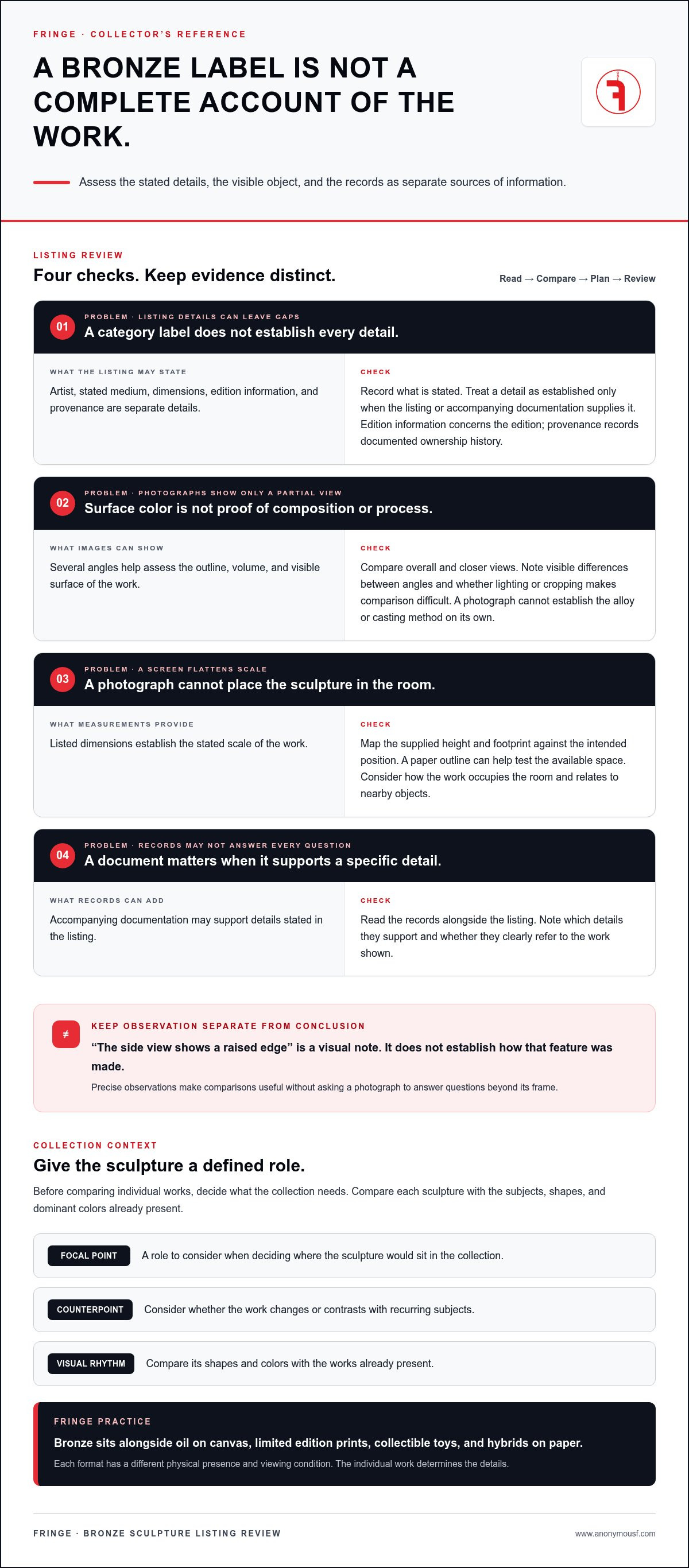
A sculpture earns its place through its relationship with the works around it. Before comparing individual pieces, decide what the collection needs: a focal point, a counterpoint to recurring subjects, or a change in visual rhythm. That gives the choice a purpose beyond adding another object.
Where bronze sits in Fringe’s wider art practice
Fringe works across bronze, oil on canvas, limited edition prints, collectible toys, and hybrids on paper. Each format has a different physical presence and viewing condition. The Fringe bronze sculpture collection can sit alongside these other forms without asking a sculpture to serve the same role as a work on paper. The wider practice provides context for authorship; the collector decides how that context relates to the collection.
Make the comparison specific. List the subjects, shapes, and dominant colors already present, then note what a potential sculpture would repeat or change. Consider its position from the main viewpoints in the room. Beside a painting, it may create a visual exchange. Set apart, it may form a separate focal point. Neither arrangement is automatically better.
Contrast can give a collection coherence, but it should be deliberate. Decide which relationship matters before letting one feature dominate the choice. A sculpture’s place in a collection is a matter of arrangement and meaning, not a forecast of financial return.
Let the Collection Take Its Next Shape
Before you buy bronze sculpture online, write one sentence about the role the work would serve in your collection. That rationale separates a considered addition from an impulse based on a single image.
Keep the note with your collection records. Over time, it can show which subjects and forms recur, where deliberate contrasts appear, and which questions remain open. The record belongs to the collector, not the listing.
A collection’s direction is visible in the choices it contains. The next work should have a reason to be there.
View the Fringe Quiet Boy bronze collection.
Frequently Asked Questions
How can I assess a bronze sculpture’s authenticity when buying online?
Separate documentary evidence from visual impressions. For a work you may buy bronze sculpture online, note whether the listing identifies the artist and states the medium, edition, and provenance. Then distinguish those claims from what the photographs show. A surface detail or signature-like mark may be visible, but appearance alone cannot establish authenticity. Treat unsupported conclusions as open questions, not evidence.
What should I check in a bronze sculpture listing before buying?
Check the description, stated medium, dimensions, photographs, and any edition or provenance information. Compare the listed measurements with the space where you expect the sculpture to sit. Record details as stated, visible, or unestablished. Color and surface in a photograph cannot fill gaps in the written record. This distinction helps you compare listings without treating an impression as a fact.
Can I judge the size of a bronze sculpture from online photographs?
Photographs can distort scale through camera angle, distance, and framing. Use stated dimensions when available, then compare several views to understand the sculpture’s proportions and form. A close crop may make an object appear larger, while a distant view can flatten its presence. Images communicate appearance; they do not replace measurements or establish material, provenance, or casting details.

Article by
Fringe

Read more
Original Art vs Print Investment Value: What Collectors Should Compare
An original isn’t automatically the stronger investment. The question of original art vs print investment value comes down to evidence about the specific work: an original is a distinct physical ob...
Read more
Collectible Art Toys in Limited Editions: Read the Object, Not the Hype
An edition number records a declared quantity. It does not establish authorship, material, or provenance. Listings for collectible art toys limited edition may emphasize release language while omit...
Read more
Leave a comment
This site is protected by hCaptcha and the hCaptcha Privacy Policy and Terms of Service apply.