
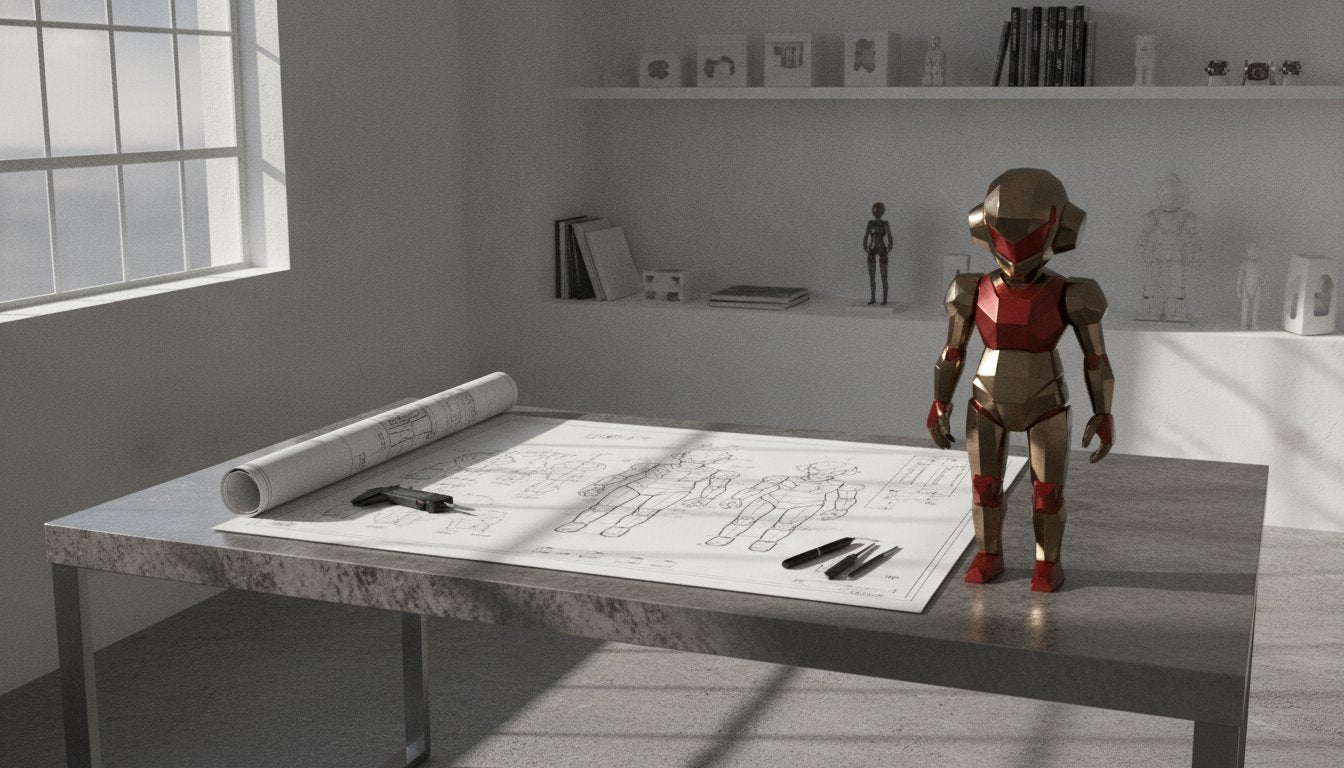
Art Toy Design Process: The Specification of Character and Form
Not everyone understands Mylo. That’s rather the point. Most people view a collectible as a byproduct of a marketing campaign or a simple plastic mold. They see the surface but miss the narrative weight that anchors a character to its physical form. You likely understand that a true object of art requires more than a generic manufacturing description.
The art toy design process is a technical transition from a character's internal soul into a three-dimensional reality. This text moves beyond oversimplified DIY tutorials to identify the hallmarks of high-end production. We will analyze the specific requirements of translating a sketch into a physical sculpture; we focus on the technical specifications of materials like bronze and the precise dimensions that define a collectible. This is the structural reality of character-based art.
Key Takeaways
- Characters like Mylo and Nova are defined by emotional registers before a single structural line is drawn.
- A technical examination of the art toy design process reveals how narrative weight is translated into physical, collectible dimensions.
- Physical sculptures utilize bronze to establish a sense of permanence that contrasts with the ephemeral nature of digital assets.
- Edition sizes function as technical specifications of a production run to define the rarity of limited edition prints and sculptures.
Narrative Logic and the Structural Sketch
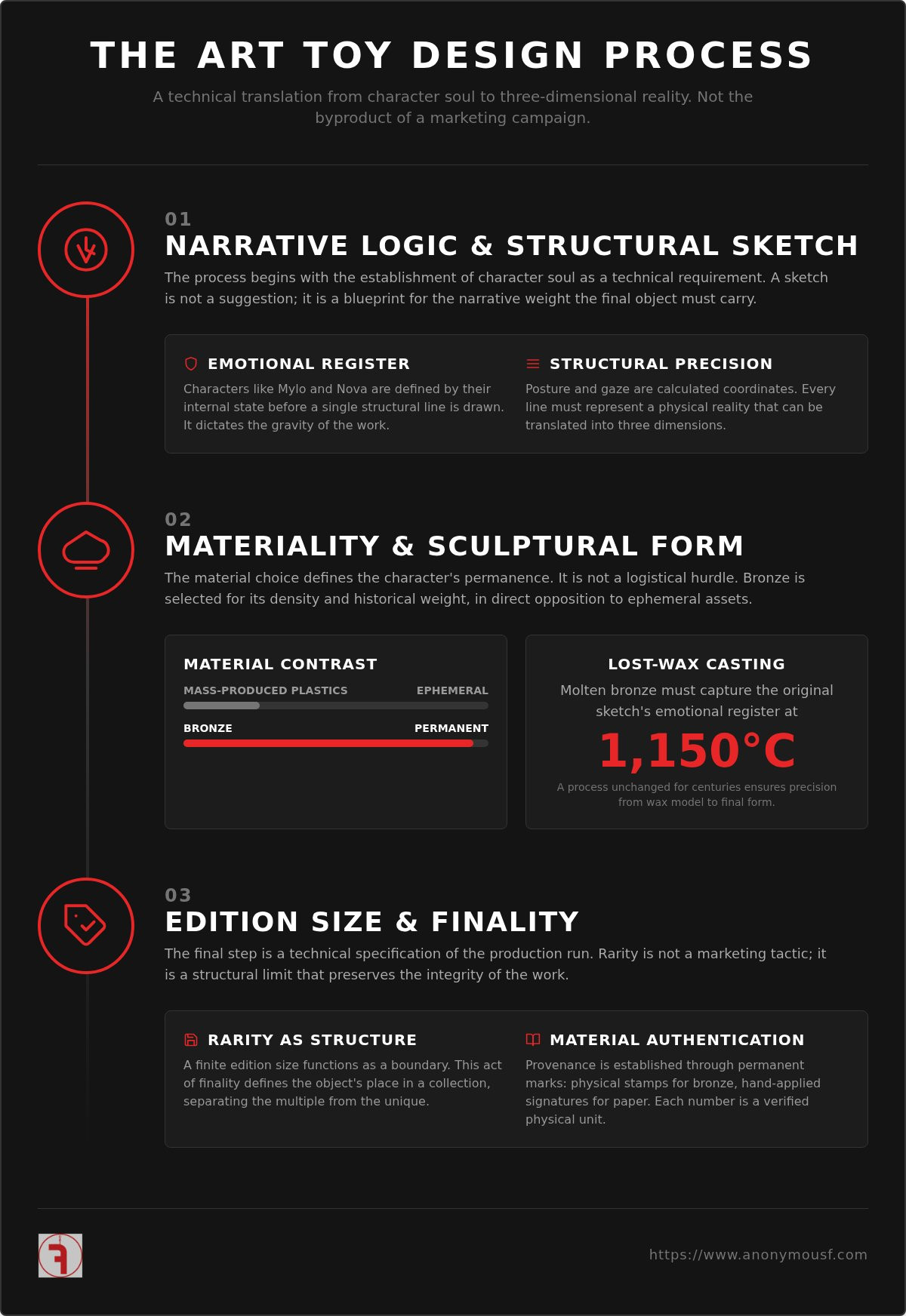
The art toy design process begins with the establishment of character soul as a technical requirement. This is a deliberate act of definition. Original characters like Mylo and Nova are defined by their specific emotional register long before their physical dimensions are recorded in a digital file. A sketch is not a suggestion. It is a blueprint for the narrative weight the final object must carry. It dictates the gravity of the work.
The transition from internal reflection to a two-dimensional form is a matter of precision. Sentimentality has no place in a structural drawing. Every line must represent a physical reality that can be translated into three dimensions. This stage dictates how the character will eventually occupy space. It's the moment where an abstract idea becomes a set of technical specs. The drafting process ensures that the character's internal state is visible in its external posture.
Character Blueprints: The Specification of Mylo and Nova
Technical drafting of proportions ensures structural integrity across various mediums, from oil on canvas to bronze. The Mylo character functions as the primary baseline for the Fringe design aesthetic. His form dictates the visual language of subsequent works. Posture and gaze are not decorative choices. They are calculated responses to the character's history. We determine the exact degree of a head tilt to convey a specific human truth.
A comprehensive Art Toy Overview shows that the most successful pieces rely on this foundational logic. The gaze of Nova is a specific coordinate in a drafting program. The posture of Mylo is a center of gravity. We use these blueprints to bridge the gap between the avant-garde and the tangible. The result is an object that stands with quiet authority. It's a settled matter of form and function.
Materiality and the Prototyping of Sculptural Form
The choice of material is not a logistical hurdle. It is the final definition of the character's permanence. In the art toy design process, the transition from paper to three-dimensional form requires a decision on the material's soul. Bronze is selected for its density and historical weight. It stands in direct opposition to the ephemeral nature of digital assets or mass-produced plastics. This material choice is a critical stage in the broader art toy design process.
Prototyping for bronze pop art utilizes the lost-wax method. This process has remained largely unchanged for centuries. It involves creating a wax model that is encased in a ceramic shell and melted away to leave a void for molten metal. Academic rigor, such as that found in a leading Toy Design Program, emphasizes this rigorous design cycle from brainstorming to final manufacturing. The scale of the object is then determined by its intended resonance within a contemporary art collection.
The Weight of the Physical Object
Comparing collectible designer toys to traditional sculpture reveals a shared reliance on tactile reality. The technical challenge lies in maintaining character expression during the bronze casting process. Molten bronze at 1,150 degrees Celsius must still capture the subtle emotional register of the original sketch. Precision in the mold is the only way to preserve the narrative weight of the character's gaze.
Scale influences the narrative weight of a piece. For the Quiet Boy, the dimensions are not arbitrary. They are calculated to ensure the figure possesses a grounded authority. The Quiet Boy bronze specifications reflect this balance. The physical presence of the sculpture is a settled matter of volume and mass. It is a truth that exists independent of the viewer's gaze.
Edition Size and the Finality of Production
The final step of the art toy design process is the determination of edition size. This is a technical specification of the production run. Rarity is not a marketing tactic. It is a structural limit that preserves the integrity of the work. Provenance is established through physical signatures and numbering applied directly onto the material. The object is complete once it exists as a physical truth. It remains independent of the viewer's interpretation. The art toy design process concludes with this act of finality. This boundary between the multiple and the unique defines the object's place in a collection.
Authentication and the Signature of the Artist
The protocols for numbering original character art prints and sculptures follow strict archival standards. Material facts define the authenticity of each piece. We use physical stamps for bronze sculptures and hand-applied signatures for oil on paper hybrids. These marks are permanent. They anchor the work to its specific place in the production sequence. Every number represents a verified physical unit. This is the moment where the character's soul is tied to its provenance.
The closing of an edition serves as a definitive end to the character's design cycle. It ensures the integrity of the series. Once the production run is met, the molds are retired. The character's physical existence in that specific form ends. This finality is what transforms a design into a collectible. It is a matter of record. The character of Mylo or Nova is thus fixed in time. The work stands as a settled fact of material and number. It doesn't require a witness to be real.
The Physical Manifestation of Narrative
The transition from a character's internal soul to a physical object is a settled matter of technical specification. Every stage of the art toy design process requires a deliberate decision regarding material and scale. We've examined how a sketch functions as a blueprint for narrative weight and how bronze casting provides a permanence that digital assets cannot match. Characters like Mylo and Gutinke are not merely shapes; they are limited to specific, numbered editions that define their rarity. This rigorous production spans physical mediums including bronze, oil on canvas, and hybrid paper works. It's a methodical journey from internal reflection to a tangible reality that exists independent of the viewer. The Fringe collection of collectible toys exists for those who understand the weight of the object. These pieces represent the intersection of human struggle and artistic sophistication. The work remains long after the conversation ends.
Frequently Asked Questions
What is the primary difference between a designer toy and a traditional sculpture?
The distinction lies in the character-led origin of the form. A designer toy begins with an established narrative logic and IP, whereas traditional sculpture often prioritizes the abstract exploration of material. In the art toy design process, the character's identity serves as the primary structural constraint. The object is a physical vessel for a specific, pre-existing personality.
How do materials like bronze affect the art toy design process?
Bronze introduces a requirement for permanence and mass that lighter vinyls don't possess. It necessitates a transition from digital prototypes to high-temperature casting at 1,150 degrees Celsius. This material choice forces the art toy design process to account for the physical weight of the object. It ensures character expression remains precise through the density of the final metal form.
Why is the narrative weight of a character considered a technical specification?
Narrative weight dictates the center of gravity and the specific posture of the character. It's a technical requirement that determines the degree of a head tilt or the tension in a limb. These elements are recorded as precise coordinates in the initial structural sketch. This ensures the character's soul remains intact during the transition from internal reflection to a physical dimension.
What role does the lost-wax method play in high-end art toy production?
The lost-wax method is the standard for producing bronze sculptures with high fidelity. It involves creating a disposable wax model that is replaced by molten metal, ensuring that subtle details of characters like Mylo are preserved. This centuries-old process provides a level of detail and material permanence that distinguishes these collectibles from the high-volume output of mass-market manufacturing runs.

Article by
Fringe

Read more
Art Toy Design Process: The Specification of Character and Form
Not everyone understands Mylo. That’s rather the point. Most people view a collectible as a byproduct of a marketing campaign or a simple plastic mold. They see the surface but miss the narrative w...
Read moreArt Toy Design Process: The Specification of Character and Form
Not everyone understands Mylo. That’s rather the point. Most people view a collectible as a byproduct of a marketing campaign or a simple plastic mold. They see the surface but miss the narrative w...
Read more
Leave a comment
This site is protected by hCaptcha and the hCaptcha Privacy Policy and Terms of Service apply.