
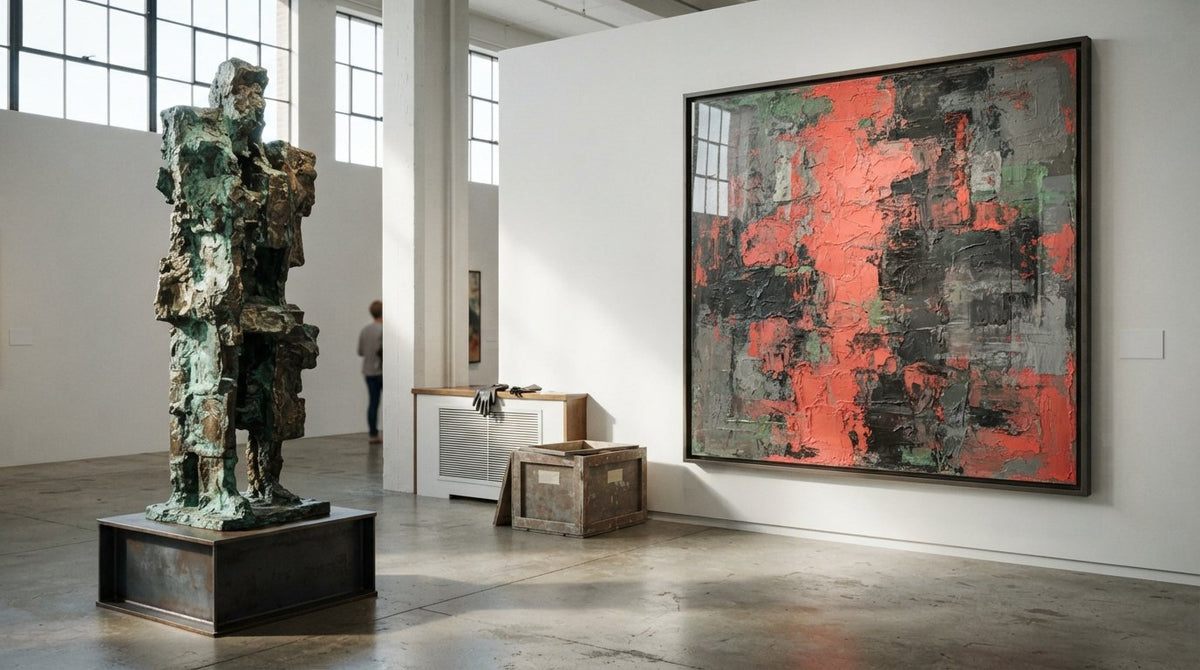
Art as a Long Term Investment Strategy: The Specification of Physical Value
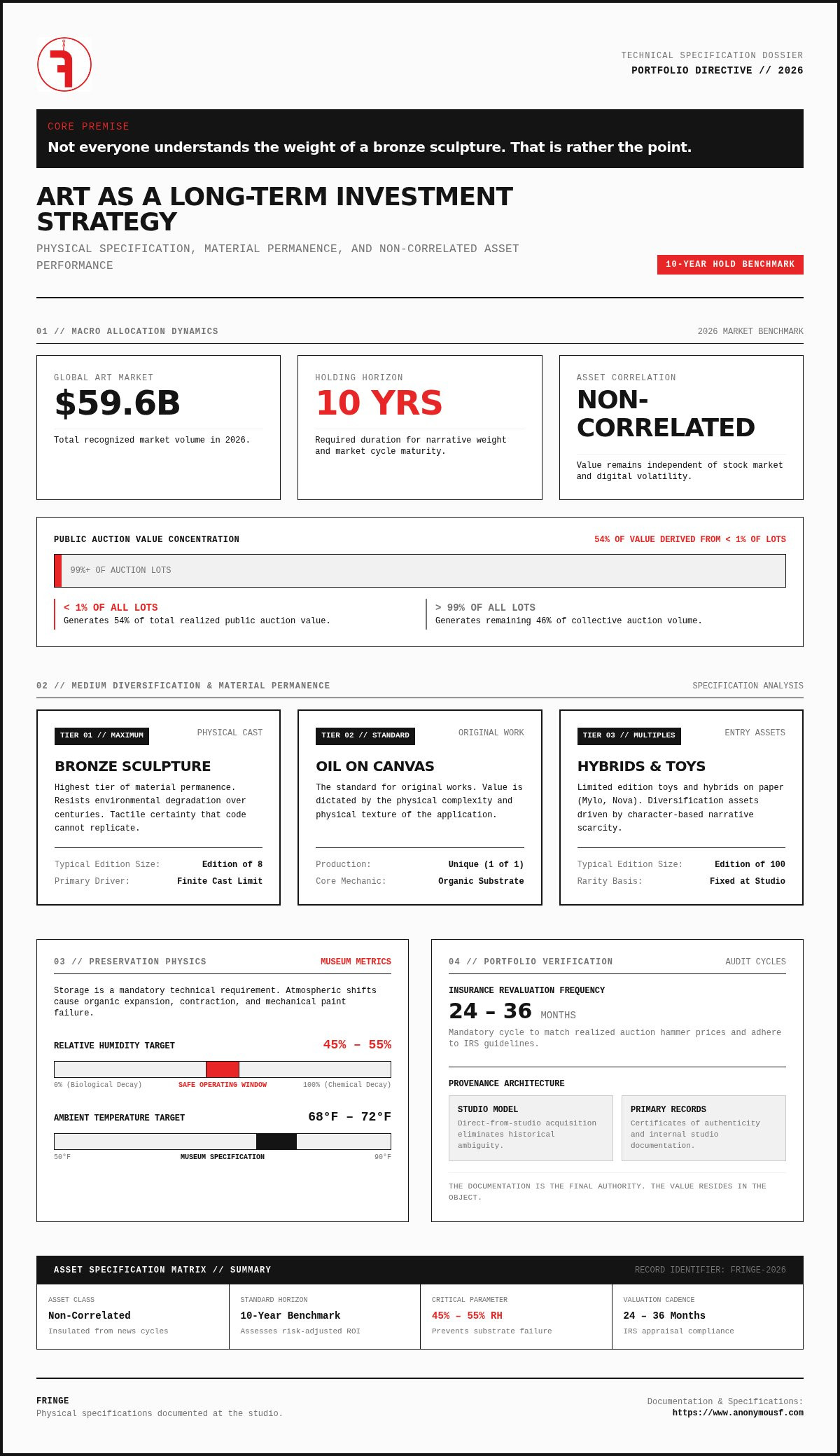
Not everyone understands the weight of a bronze sculpture. That is rather the point. While the global art market reached 59.6 billion in 2026, the real value lies in the physical specification of the object. You likely recognize that market volatility has made traditional equities feel fragile. The lack of tangible, non-correlated assets in a portfolio creates a specific kind of anxiety. Adopting art as a long term investment strategy isn't about chasing trends; it's about the cold calculation of material permanence.
This analysis examines the material facts and provenance that dictate value over decades. We look at why 54 percent of public auction value comes from less than 1 percent of lots. You'll learn which mediums, such as oil on canvas and bronze, maintain their integrity. We will establish a framework for a ten year hold strategy based on narrative weight and physical durability.
Key Takeaways
- Art functions as a non-correlated asset class that does not follow traditional market volatility. A 10-year holding period is the required benchmark for art as a long term investment strategy.
- Bronze sculptures provide the highest tier of material permanence. Oil on canvas remains the standard for original works due to the physical complexity and the weight of the application.
- Environmental control is a mandatory requirement for portfolio maintenance. Relative humidity must remain between 45 percent and 55 percent to prevent chemical decay and biological degradation.
- Insurance valuations must be updated every 24 to 36 months. This schedule accounts for the fact that 54 percent of public auction value is concentrated in less than 1 percent of lots.
The Strategic Shift Toward Physical Asset Acquisition in 2026
Art isn't for the impatient. That is rather the point. Traditional equities move with the pulse of the news. Art functions as a non-correlated asset. Its value remains indifferent to the fluctuations of stock markets. This independence makes art as a long term investment strategy a necessary anchor for a resilient portfolio. The 10-year horizon is the standard benchmark for assessing ROI. This duration allows market cycles to mature and for the narrative weight of a work to settle into the collective consciousness.
The recent volatility in digital speculation has increased the demand for physical objects with verifiable material weight. A heavy bronze sculpture or a thick application of oil on canvas provides a tactile certainty that code cannot replicate. Collectors are returning to the material fact as they refine their approach to art as a long term investment strategy. The dynamics of the art market require an appreciation for physical specification. The market reached 59.6 billion in 2026. However, 54 percent of public auction value comes from less than 1 percent of lots. The weight of the object is the weight of the investment.
Provenance and the Independent Studio Model
Traditional gallery models often obscure the direct link between the artist and the collector. This separation can complicate the historical record of a piece. Direct-from-studio acquisition eliminates these ambiguities and ensures the integrity of the original pop art and its supporting documentation. Certificates of authenticity and internal studio records are the primary documents that dictate secondary market liquidity. Provenance begins at the source. A clean chain of ownership is a factual record of an object's path from the studio to the collection. It is a shared understanding between the creator and the collector. The documentation is the final authority.
Medium Diversification and the Rarity of the Multiple
Rarity is not an opinion; it is a mathematical fact. Bronze sculptures represent the highest tier of material permanence, resisting environmental degradation over centuries. This material reality supports the Stanford GSB analysis on art as an asset class, which evaluates risk-adjusted returns and the true diversification effects of physical objects. Oil on canvas remains the gold standard for original works. The complexity of the medium and the physical texture of the application carry a narrative weight that digital assets cannot replicate.
Diversification requires a range of price points. Limited edition toys and hybrids on paper allow for portfolio growth without sacrificing rarity. Character-based art, such as Mylo or Nova, leverages narrative scarcity to drive demand. As the established narrative of a character evolves, the demand for the physical object follows. This is a core mechanic of art as a long term investment strategy. Scarcity is not manufactured; it is documented.
The Economics of Limited Edition Collectibles
Rarity is a function of edition size. A bronze edition of 8 carries significantly different market weight than a print edition of 100. Secondary market demand for bronze pop art is driven by the limited availability of physical casts. Each cast represents a finite material fact. Collectable toys function as entry-level assets that appreciate based on character popularity and narrative development. The studio fixes the edition size at the moment of creation, ensuring the rarity remains constant. You can observe these physical specifications in the studio’s current output. The value resides in the object, not the trend.
The Logistics of Maintaining Long-Term Portfolio Value
Storage is not optional. It's a technical requirement. For oil on canvas, environmental stability is the primary defense against material degradation. Relative humidity must stay between 45 percent and 55 percent. Ambient temperature must remain between 68 and 72 degrees Fahrenheit. These are the recognized museum standards for preservation. Fluctuations cause the organic substrate to expand and contract, leading to mechanical failure of the paint layer.
Portfolio management requires constant verification. Insurance valuations should be updated every 24 to 36 months to reflect current market trends. This cycle ensures coverage matches the realized hammer prices seen at auction. Adhering to IRS guidelines for art appraisals and valuation provides a defensible financial record for the collection. Standalone fine art policies typically range between 0.1 percent and 0.5 percent of the total appraised value.
Liquidity is a deliberate process. The exit strategy for an art asset requires a minimum of 6 months for proper placement in the secondary market. This period allows for authentication, cataloging, and reaching the specific demographic of collectors who value the work. Rushing a sale results in a price penalty. A single fact remains: the object is the only truth in art as a long term investment strategy.
The Human Truth of the Physical Object
Maintaining art as a long term investment strategy requires an understanding of narrative weight. Beyond financial metrics, the work anchors a collection through its physical presence. The collector acts as an empathetic observer of the human condition, holding a piece of a shared philosophical narrative. This role requires a level of reflection that traditional asset management lacks. It's a settled matter of value; the reader is merely the temporary custodian of a physical truth. Its permanence is the ultimate metric of its worth.
The Permanence of the Physical Record
The transition from speculative digital assets to material certainty is a settled trend. Success in art as a long term investment strategy relies on the cold calculation of medium and provenance. The 10-year horizon requires objects that resist decay and documentation that remains beyond doubt. Collectors aren't just buying work; they're securing a physical truth that exists outside market noise. The studio provides the foundation for this strategy through precise material specification and a clean chain of ownership.
You can view the current output of The Fringe Studio Collection, which includes original character bronze sculptures, limited edition oil on canvas, and physical hybrids on paper. The object remains the only truth. It's a steady anchor in an unpredictable landscape. This is the quiet authority of a well-maintained collection.
Frequently Asked Questions
What is the typical ROI for contemporary pop art over 10 years?
Empirical analysis across 50-year indices shows art has a low statistical correlation with equities. While specific returns vary, the 10-year horizon allows for market cycles to mature. This duration is the required benchmark for art as a long term investment strategy. Masterworks at the high end sometimes underperform general market composite appreciation, making acquisition discipline at the tier of verified editioned works a recognized value-preservation method.
How do I verify the provenance of a piece bought directly from an artist?
Direct acquisition from an independent studio establishes a clean chain of ownership from the moment of creation. You verify provenance through the Certificate of Authenticity and the artist’s internal studio records. These documents are the primary authorities that dictate secondary market liquidity. Buying directly eliminates the ambiguities often found in traditional gallery models and ensures the documentation remains a factual record of the object's path.
Is bronze a better investment than oil on canvas?
Bronze represents the highest tier of material permanence. It resists environmental degradation over centuries. Bronze sculptures maintain physical integrity in conditions that compromise organic substrates. Oil on canvas remains the standard for original works due to the medium's complexity and narrative weight. Neither is objectively better; they serve different roles in a diversified portfolio focused on art as a long term investment strategy.
How do limited edition sizes affect the secondary market value of art toys?
Rarity is a function of edition size. It's a fixed mathematical fact. A smaller edition size carries more market weight than a larger run. For collectable toys like Mylo or Nova, the studio fixes the edition at the time of production. Secondary market demand is driven by this narrative scarcity. When the physical supply is finite, the object’s value is dictated by the availability of documented pieces.

Article by
Fringe

Read more
Determining Your Art Style: A Framework for the Serious Collector
Collecting is not for the indecisive. Most individuals acquire objects based on a fleeting impulse. That is decoration, not a collection. If your walls feel disjointed, it's because you've prioriti...
Read more
How to Identify Emerging Talent in the Contemporary Art World
Not everyone understands the difference between a fleeting trend and a lasting legacy. That's rather the point. The secondary market is frequently a graveyard for works that lacked material integri...
Read more
Leave a comment
This site is protected by hCaptcha and the hCaptcha Privacy Policy and Terms of Service apply.