
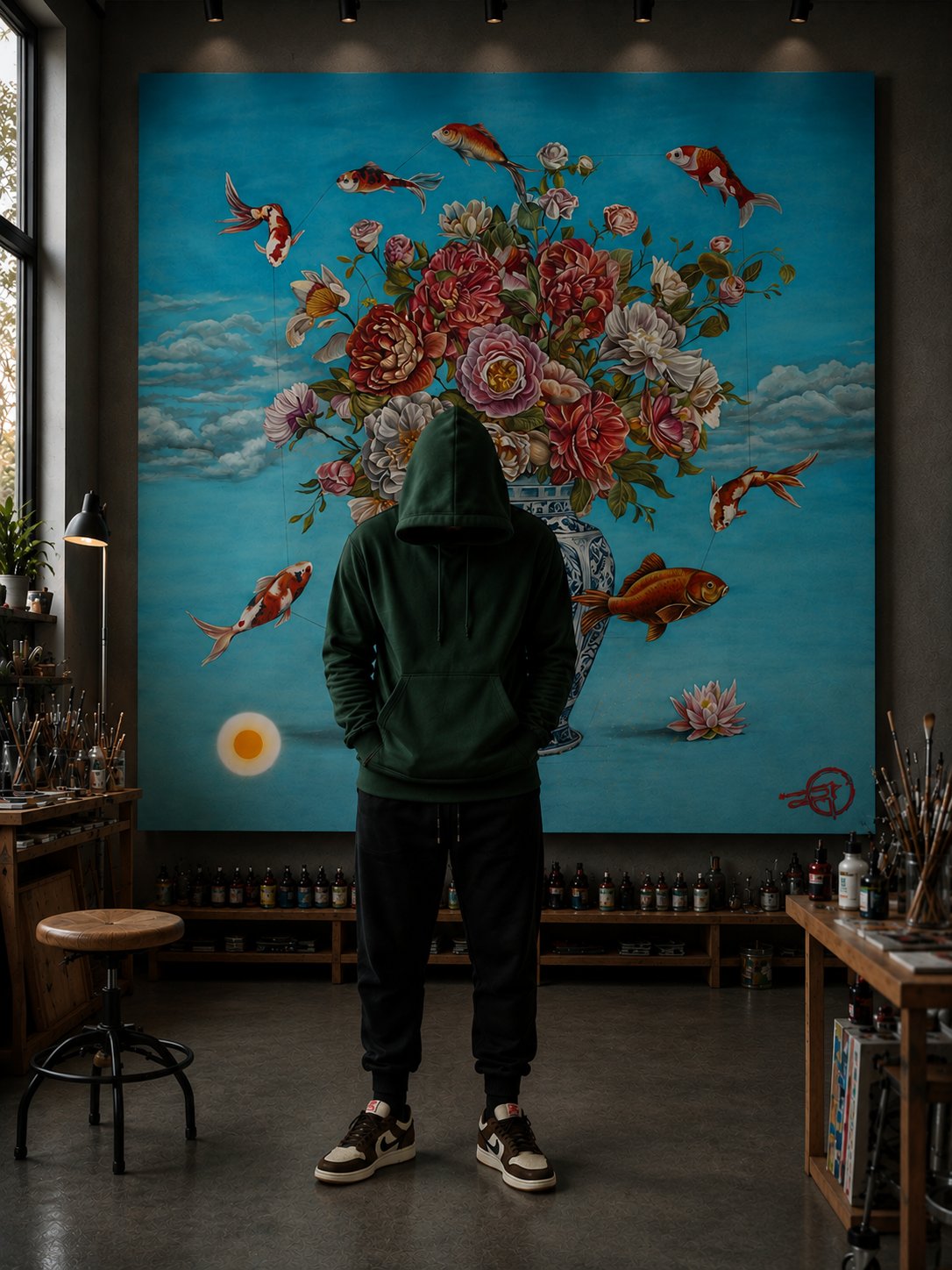
The Collector’s Guide to Oil on Canvas: Acquiring Contemporary Pop Art with a Soul
The most rebellious act in a digital, mass-produced age is the pursuit of something that breathes. While the art world often chases the fleeting spark of a trend, the enduring depth of an oil on canvas offers a gravity that pixels and prints simply cannot replicate. You might find yourself drawn to the bold, irreverent energy of contemporary pop art, yet hesitate because you fear the work lacks the soul required to anchor a sophisticated home. It is a valid concern. A painting should be more than a decorative splash of color; it should be a silent conversation between the artist’s hand and your own history.
We understand the quiet frustration of searching for art that feels both modern and meaningful. This guide will show you how to evaluate the technical mastery of original oil paintings and select pieces that bridge the gap between classical tradition and provocative modern narratives. We'll explore how to identify visible texture that speaks to a piece's physical presence and how to find a narrative weight that reflects your personal journey. You'll gain the clarity needed to build a collection that doesn't just fill a wall, but tells a story worth keeping.
Key Takeaways
- Understand the archival gravitas of oil on canvas, exploring how the medium’s slow-drying nature preserves the artist’s physical intention and depth of color.
- Learn to identify "symbols behaving badly," a framework for evaluating how contemporary pop art uses corporate branding to explore deeper human truths.
- Gain insight into the figurative complexity of the Mylo and Nova series, discovering how these characters bridge the gap between childhood dreams and adult reflection.
- Follow a streamlined five-step guide to acquiring original works directly from an independent studio, ensuring a seamless transition from the easel to your home.
- Master the nuances of placement by understanding how natural light interacts with traditional oil glazes differently than artificial gallery lighting.
The Enduring Gravity of Oil on Canvas
To own an oil on canvas is to possess a physical record of time. While other mediums offer speed and convenience, oil demands a grueling, meditative patience. It is widely regarded as the gold standard of fine art, a status earned through centuries of archival longevity and a depth of color that remains unmatched by synthetic pigments. The Enduring Gravity of Oil on Canvas lies in its unique vulnerability. Because the medium dries with such deliberate slowness, it captures every hesitation, every correction, and every surge of the artist’s intention. This is the soul of the work. It stands in stark opposition to the flat, mechanical perfection of digital creations. It is a bridge where the meticulous techniques of 17th-century masters meet the bold, disruptive energy of contemporary pop art.
Texture, Depth, and the Artist’s Hand
The physical presence of an original painting is defined by its topography. Through the impasto technique, an artist applies paint in thick, deliberate layers that create actual ridges on the surface. These ridges catch the light. They create shadows that shift as you move through the room, a phenomenon no high-definition print can ever replicate. This texture carries a specific narrative weight. When you look closely, you aren't just seeing a subject; you're seeing the ghost of the creator’s hand. The canvas holds the weight of every hour spent in the studio. It is a tangible object in an increasingly intangible world.
Why Original Works Outlast Trends
In a market often distracted by the latest digital novelty, original oil paintings remain remarkably resilient. They maintain their value because they are finite. They cannot be deleted or infinitely reproduced without losing their essence. While experimental mediums may fade or become obsolete, oil remains constant. An oil painting is a three-hundred-year conversation between the canvas and the collector. It is an investment in permanence that transcends the passing whims of the art world.
Decoding the Narrative: How to Choose Your Piece
Evaluating a contemporary work requires a shift in perspective. You aren't just looking for a color palette that matches your home. You're looking for a collision. In the world of Fringe, this manifests as "Corporate Strategy meets Childhood Dreams." It's a framework where high-stakes commercialism crashes into the purity of early memory. When you examine an oil on canvas, look for what we call "symbols behaving badly." This occurs when iconic branding references are stripped of their sterile marketing power and forced to interact with the messy, visceral reality of art history.
Decoding the Narrative: How to Choose Your Piece involves looking past the subject to the light itself. High-end pop art shouldn't feel plastic. It should possess an internal luminosity. This "glow" is achieved through the patient application of underpaintings and translucent glazes, techniques perfected by the old masters but repurposed for a modern edge. While the initial cost of an original work might give a new collector pause, it's a tactical acquisition. An original painting is an asset with a soul, providing a depth of character that a print can never achieve.
Characters with a Human Pulse
Characters like Mylo or Nova aren't mere caricatures. They act as vessels for universal human emotions, rendered with the gravity that only the oil medium can provide. There's a delicate interplay here between nostalgia and modernism. These figures evoke the comfort of the past while navigating the complexities of the present. They invite you to explore a collection where every brushstroke feels like a heartbeat.
Evaluating Composition and Statement
A truly compelling piece often contains "emotional crashes." This happens when a rigid, formal structure is suddenly disrupted by raw, painterly expression. To find a piece that resonates, ask yourself:
- Does the work provoke a shared philosophical journey?
- Is there a visible tension between the refined and the rebellious?
- Does the "vibe" of the piece linger in your mind long after you look away?

Standout Works: A Curation for the Discerning Eye
Selecting an oil on canvas is an act of curation that requires looking for narrative complexity beyond the surface. The current collection consists of 145 unique works, each serving as a physical vessel for what we describe as unresolved childhood dreams captured in glazes. These pieces don't just occupy space; they demand an emotional response. By placing a modern superhero within a field of references from the history of oil painting, the artist creates a unique dialogue between legendary archetypes and the quiet, often overlooked moments of human reflection. It is a bold, historical awareness that makes each figurative statement feel both timely and timeless.
The Mylo Series: Vulnerability in Color
The Mylo series offers a profound study in vulnerability. Rendered in rich oils, Mylo possesses a multifaceted personality that seems to shift as the day’s light moves across the canvas. This character-based approach acts as a bridge between the avant-garde and the everyday. It allows the collector to engage with high-concept art through a lens that feels intimate and deeply personal. Mylo isn't just a figure; he is a mirror for the complexities we all carry within us.
Bold Statements and Corporate Symbols
Many of these works employ familiar branding symbols to illustrate the intricate complexities of the heart. These corporate icons are stripped of their commercial power and repurposed to tell stories of connection, struggle, and hope. It is a sophisticated subversion. When a symbol of mass production is painstakingly recreated by hand, it gains a narrative weight that no factory could ever provide. To find a piece that speaks to your specific journey, you can browse the full Oil on Canvas collection and discover a narrative that resonates with your own.
The true value of these works lies in their ability to act as a companion to the collector. They are silent storytellers that grow more familiar over time. View the available original paintings to find the one that anchors your space with both color and soul.
The Collector’s Checklist: Acquisition and Care
Acquisition is a transition. When you bring an original work into your home, you aren't merely decorating a room; you're inviting a new voice into your daily life. To ensure this transition is as seamless as the art is profound, we recommend a methodical approach. Acquiring a work of oil on canvas directly from an independent studio allows the narrative to remain untarnished from the artist’s hand to your own. Follow this 5-step guide to secure your piece:
- Resonance: Identify the character or symbol that mirrors your internal state.
- Connection: Engage with the studio to understand the specific "why" behind the work.
- Technical Review: Confirm dimensions and the specific glaze techniques used.
- Logistics: Arrange for specialized art handling to protect the physical impasto.
- Integration: Prepare a space where the work can breathe and speak.
Practicality also demands foresight. Specialized art insurance typically costs between $1 and $3 per $1,000 of value, a small price for the security of a legacy. Should the work ever require cleaning decades from now, professional conservation generally ranges from $100 to $250 per hour, ensuring the pigments remain as vibrant as the day they were applied.
Lighting and Placement for Texture
The soul of an oil painting is revealed through its texture. Use directional lighting to highlight the physical ridges of the paint, allowing the shadows to define the character's depth. While natural light reveals the subtle nuances of traditional glazes, avoid placing the canvas in direct sunlight. UV rays are the enemy of longevity. A well-placed LED with a high color rendering index (CRI) will mimic the "glow" of a gallery without compromising the integrity of the pigments.
The Custodian’s Mindset
Ownership is a fleeting term. In the context of fine art, you are less a consumer and more a custodian. You're holding a piece of history that is designed to outlive the trends of the present. This is the narrative weight we speak of. It is the quiet confidence of knowing your collection holds a story that will be told for generations. Choose your original oil on canvas piece today and begin your journey from spectator to storyteller.
Securing a Legacy in Paint
Building a collection is an exercise in intentionality. You've seen how the archival gravity of an oil on canvas preserves the artist's struggle and how to decode the rebellious symbols of contemporary pop. It's about finding that rare piece where technical mastery meets a narrative that mirrors your own. With 145 unique original works currently available, each crafted with archival quality oil glazes, the opportunity to own a piece of multi-generational history is within reach. These works ship directly from the artist’s independent studio, ensuring the story remains intimate and unbroken from the easel to your walls.
You aren't just buying a painting; you're becoming the custodian of a conversation that will continue long after the trends of today have faded. It is time to move beyond the role of a spectator and anchor your space with a work that possesses a genuine human pulse. Explore the Oil on Canvas Collection and find the work that speaks to the complexities of your heart. Your journey into a more meaningful collection begins with a single, resonant choice. We invite you to find the piece that will tell your story for years to come.
Essential Questions for the Modern Collector
What does 'oil on canvas' actually mean for the longevity of the art?
An oil on canvas signifies a commitment to permanence that spans centuries because the medium creates a durable, flexible film as it oxidizes. Unlike water-based paints that can fade or flake, oil pigments are suspended in binders like linseed oil, which deepens in character over time. This chemical resilience ensures that the work you acquire today remains a vibrant legacy for your grandchildren. It's the most enduring medium in the history of art.
How do I know if an original pop art painting is a good investment?
Evaluating the investment value of contemporary pop art requires looking beyond the bold colors to the artist's historical awareness and market momentum. Research from 2025 shows that works under $50,000 accounted for 61% of auction lots, indicating a strong market for emerging and mid-career artists. Look for pieces that possess a unique narrative weight. These are the works that tend to hold their value through shifts in the barbell market.
Does an oil painting require special lighting to look its best?
Directional lighting is essential to reveal the physical topography and impasto of a painting. While natural light can beautifully illuminate traditional glazes, direct UV exposure will degrade pigments over time. It's best to use LED fixtures with a high color rendering index placed at a 30-degree angle. This setup creates subtle shadows that bring the character's multifaceted personality to life. It allows the texture to breathe.
What is the difference between an original oil painting and a limited edition print?
The difference lies in the soul of the object: an original painting is a unique physical record of the artist's struggle and intention. While a limited edition print is a faithful mechanical reproduction, it lacks the tactile ridges and shifting luminosity of the original medium. An original oil on canvas is a finite, singular object. It possesses a narrative weight that a reproduction simply cannot replicate or replace.
How do I clean or maintain an oil painting on canvas at home?
Maintenance at home should be minimal and gentle to preserve the delicate surface of the oil glazes. Use a soft, dry natural hair brush to lightly remove dust, but never apply water, soaps, or household cleaners to the canvas. If a piece requires deeper restoration, professional services typically cost between $100 and $250 per hour. Trusting a professional ensures the integrity of the work remains intact for the next several decades.

Article by
Fringe

Read more

Pop Culture Fine Art: Why the Next Era of Collecting Favors Narrative and Craft
The most enduring piece in your home isn't the one that simply mirrors a famous face. It's the one that captures a feeling you thought was yours alone. You've likely noticed the quiet exhaustion se...
Read more
Figurative Pop Art Painting: The Narrative Pulse of Modern Collecting
What if the most honest reflection of your inner life wasn't found in a mirror, but in the stylized gaze of a stranger on a gallery wall? We often mistake the vibrant hues of a figurative pop art p...
Read more
Leave a comment
This site is protected by hCaptcha and the hCaptcha Privacy Policy and Terms of Service apply.