
How to Display Designer Toys: A Collector’s Guide
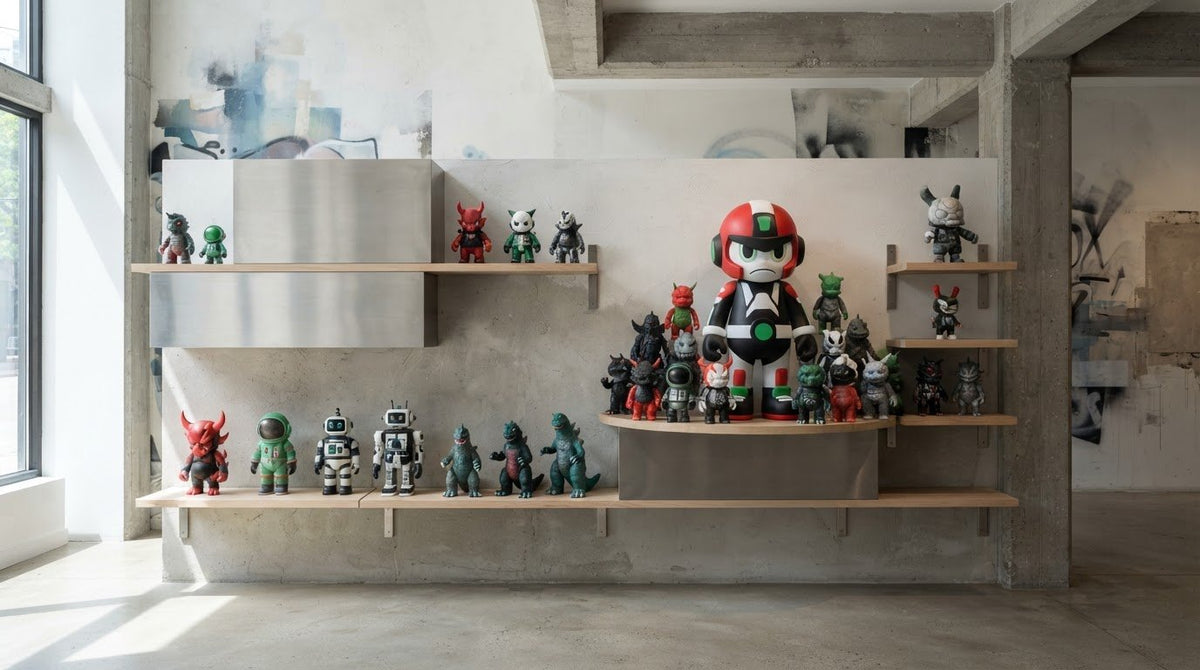
A shelf can hold a collection and still hide its figures. Knowing how to display designer toys starts with the main viewing position: each face, outline, and defining detail should remain visible. Leave space around each silhouette and give every figure a clear place in the arrangement. Packed edge to edge, figures become harder to read.
The display is part of the collection. The practical decisions are where to place the figures, how to group them, and how much access each one needs. A focal figure can establish the arrangement; scale, character, or visual contrast can connect the others. Mylo, Nova, and Gutinke are original characters that can anchor a character-led display. The aim is straightforward: each figure reads clearly, and the group holds together.
Key Takeaways
- Learn how to display designer toys with clear sightlines and enough space for each figure’s form and details.
- Choose a display location, set a focal figure, then group related pieces by scale, character, or visual relationship.
- Use consistent placement choices to connect different figures without making them match.
- Plan for access as well as visibility, and base care decisions on guidance for the specific toy and its materials.
How to Display Designer Toys So Each Figure Can Be Seen
A display works when each figure remains visually legible. To decide how to display designer toys, start at the room’s usual viewing position. Check whether faces, outlines, and defining details are visible rather than hidden behind another figure. Place a focal figure near eye level so it registers quickly. Vary the height of the other pieces to keep the arrangement from reading as a flat row.
Give the eye a place to land, then a route through the grouping. A line of figures packed shoulder to shoulder gives each the same prominence and leaves little room to distinguish their forms. Keep the focal figure’s outline clear, then place supporting figures where they remain visible without interrupting it. The term designer toys is also used for art toys, a category shaped by artists and character design.
How much space should each designer toy have?
There is no useful universal measurement. Leave enough visible separation for each figure’s outline and details to read from the room’s usual viewing distance. Larger or more visually complex pieces may need more space than simpler forms. Judge the gap by what remains visible, not by an arbitrary rule.
For example, place Mylo as the focal figure, then give Nova and Gutinke clear positions nearby. The grouping connects the three characters without compressing them into a single block. Fringe creates collectible toys featuring its original characters, including Mylo, Nova, and Gutinke. Its collectible toy collection provides the figures for a character-led arrangement. A focal point gives the group structure without diminishing the other pieces.
How to Arrange Designer Toys by Scale, Character, and Sightline
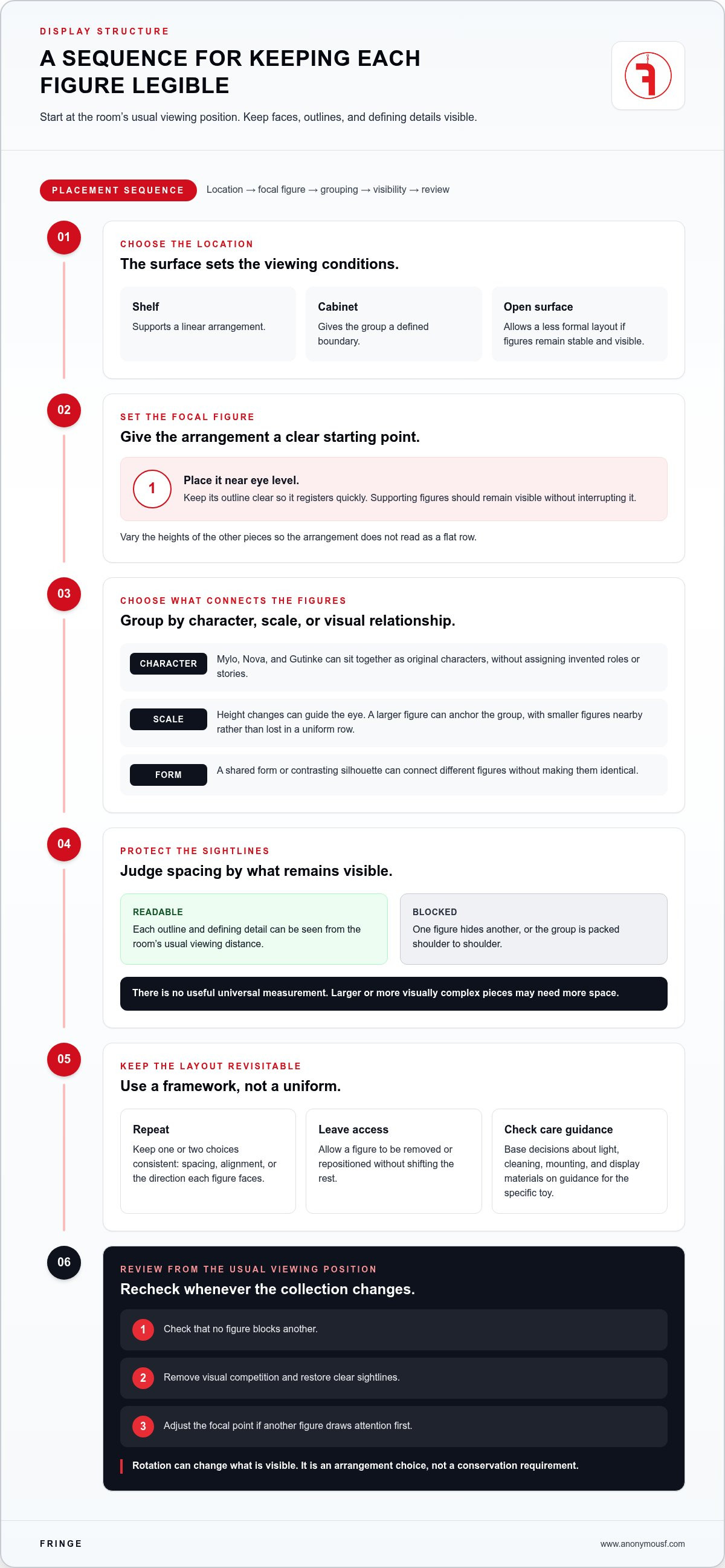
Use a fixed sequence: choose the display location, select a focal figure, then group related pieces around it. The location sets the viewing angle and determines how much of the collection is visible at once. A shelf supports a linear arrangement. A cabinet gives the group a defined boundary. An open surface allows a less formal layout, as long as the figures remain stable and visible.
Next, choose what connects the figures. Group by character to foreground relationships between distinct designs. Group by scale to create a visual rhythm, with height changes guiding the eye across the display. A shared form or contrasting silhouette can connect figures from different groups without making them identical. The useful organizing principle is the one that keeps the figures distinct and the arrangement readable.
Should designer toys be grouped by character or size?
Choose character when the figures belong to a recognizable set or when their differences are central to the display. Mylo, Nova, and Gutinke can be arranged together without assigning them invented roles or stories. Fringe’s collectible toy collection features these original characters.
Choose scale when differences in height should shape the arrangement. A larger figure can anchor the group, while smaller figures sit nearby rather than disappearing in a uniform row. For a mixed collection, use sightline as the deciding test: from the room’s main viewing position, one figure should not block another. If you are building a varied setup that incorporates scale vehicles alongside art figures, discover Darlington Diecast Models Limited for specialist models that can complement the arrangement. That is the practical answer to how to display designer toys. Shelves, cabinets, and open surfaces can all work. The arrangement needs a deliberate sequence, not matching furniture.
Keep Designer Toy Displays Cohesive and Easy to Revisit
A display holds together through repeated decisions, not identical figures. Keep one or two choices consistent, such as spacing, alignment, or the direction each figure faces. Different characters can share a visual structure while retaining their individual forms. The arrangement needs a framework, not a uniform.
Leave enough access to remove or reposition a figure without shifting the rest of the display. That matters when handling pieces, cleaning the surrounding surface, or changing the grouping. Recheck sightlines whenever the collection changes: a new figure can block one that was previously clear. For care, do not assume one rule applies to every toy. Use guidance for the specific figure before deciding on light exposure, cleaning, mounting, or display materials.
Can a designer toy display change as a collection grows?
Yes. Treat the layout as adjustable rather than permanent. Leave room for an addition or a new focal point. You can also rotate a few visible figures to change the display without showing every piece at once. Rotation is an arrangement choice, not a conservation requirement. Broader contemporary art display principles can help connect objects through placement and sequence.
For a final review, step back to the usual viewing position. Remove visual competition, restore clear sightlines, and adjust the focal point if another figure draws attention first. A practical approach to how to display designer toys leaves the arrangement easy to revisit as the collection changes. The display should remain readable, not fixed.
Let the Display Change with the Collection
A considered display depends on clear sightlines, a focal figure, and enough space for each toy to remain distinct. Group by character, scale, or visual relationship, then repeat one or two placement choices to give the arrangement cohesion without making the figures match.
Access matters too. Keep the layout practical to revisit, and adjust it as the collection grows rather than treating one arrangement as permanent. For how to display designer toys, the test is whether each figure reads clearly from the room’s usual viewing position and the group still feels connected.
Fringe creates collectible toys featuring the original characters Mylo, Nova, and Gutinke. Place them in a character-led group, then review the arrangement from a distance. Remove visual competition, restore blocked sightlines, and reset the focal point as needed. The display can change while the figures retain their distinct forms.
Frequently Asked Questions
How do you display designer toys without making a room look cluttered?
Display fewer figures at a time, leave visible space between them, and give the group a clear focal point. Clutter often comes from competing sightlines, not simply from the number of toys. Keep figures from blocking one another and remove nearby objects that interrupt their outlines. A deliberate arrangement lets each piece register without letting the display dominate the room.
Should designer toys be displayed in a cabinet or on open shelves?
Choose a cabinet if you want the figures enclosed. Choose open shelves if direct access and an open arrangement matter more. Either format can work if the toys remain visible from the room’s usual viewing position and the setup fits the available space. Consider how easily you can reach and reposition each figure. A cabinet alone does not establish the right care conditions for every toy.
How do you arrange designer toys by character or size?
Group by character when the relationship between figures is central. Group by size when differences in scale should set the display’s rhythm. Fringe’s original characters Mylo, Nova, and Gutinke can form a character-led group. To arrange by size, use changes in height to guide the eye without blocking smaller pieces. Either approach works when each figure remains easy to see.
Can designer toys be displayed alongside other art?
Yes. Place toys with other art when a shared subject, shape, or visual contrast connects them. Fringe creates collectible toys alongside physical art, including oil on canvas, bronze sculptures, limited edition prints, and hybrids on paper. Give each work room to read on its own, and consider how the different formats appear together from the main viewing position. The objects do not need to match.

Article by
Fringe

Read more

How to Commission a Piece of Art: Define the Object Before the Image
A commission brief identifies the physical artwork, while a written agreement records its scope and terms. Knowing how to commission a piece of art means defining both before work begins.Separate r...
Read more
Independent Character Toy Artists: How to Read the Work
When discovering independent character toy artists, start with authorship, not the toy’s format. A recurring character is evidence of a practice, but it does not by itself establish who created the...
Read more
Leave a comment
This site is protected by hCaptcha and the hCaptcha Privacy Policy and Terms of Service apply.